Cycling reshapes urban policies across European cities
On World Bicycle Day, attention often gravitates toward visible markers of progress: kilometres of cycle lanes, bike-sharing fleets, and the latest infrastructure investments are lined up on display. There is nothing wrong with that, because how else could progress in cycling policy be measured without clear and comparable metrics? No cycling policy could ever be properly assessed without them. But there is, of course, more to it, and by 'it' one means cycling.
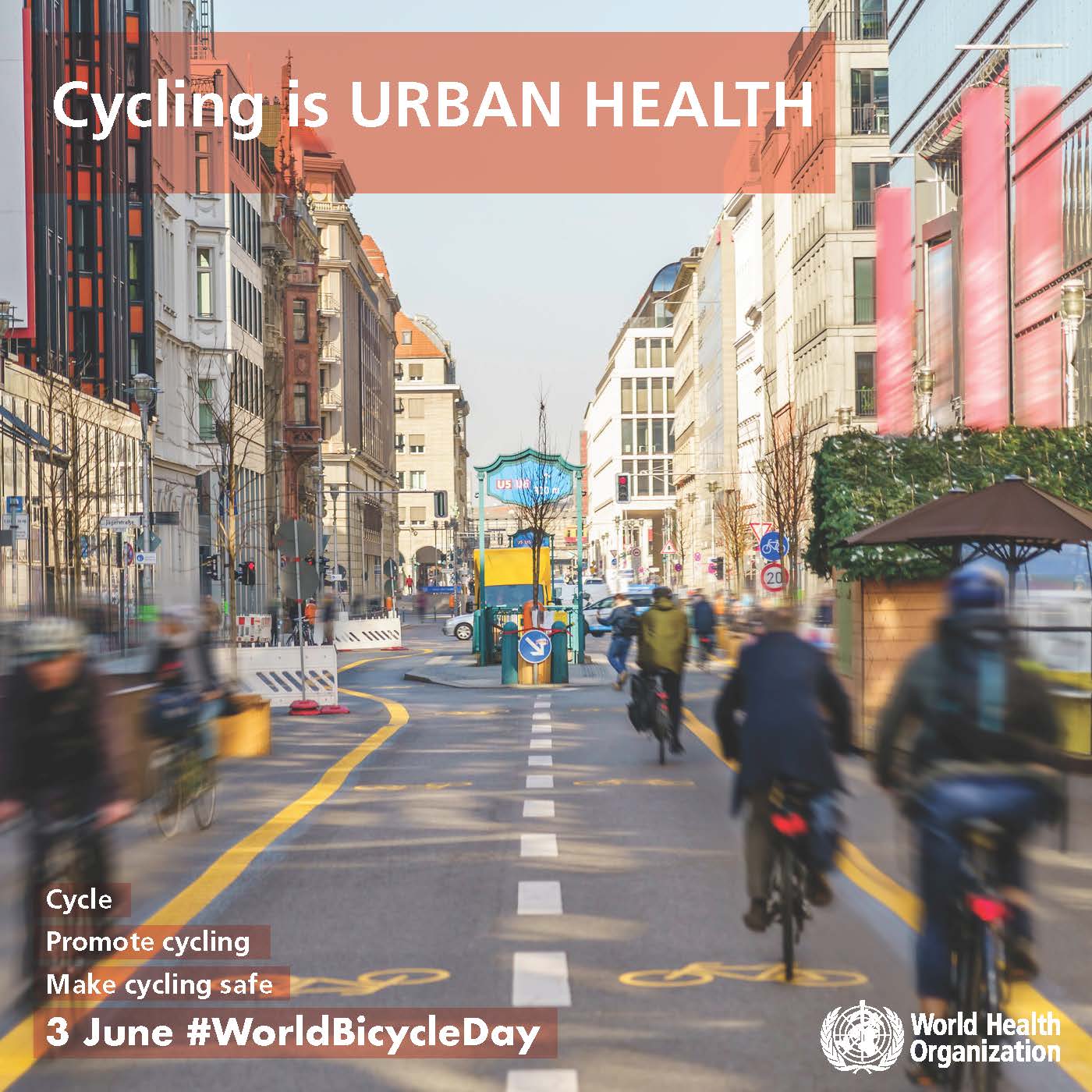
#WorldBicycleDay by WHO — Credit: World Health Organisation
There is a shift in perception, though it is not always named as such. Across Europe, cycling is gradually being pulled out of the category of niche transport/virtue signal/environmental add-on (we all have our pick!) and placed somewhere closer to the centre of urban strategy as a working instrument of policy—one that touches accessibility, safety, energy use, and the distribution of public space all at once.
What makes this shift interesting is that it rarely appears in isolation. It shows up instead through a series of experiments, exchanges, and incremental adjustments between cities that are often solving similar problems without initially describing them in the same way. In European cities, cycling is woven into wider reorganisations of urban systems: traffic management that reallocates priority at intersections, streets that are redesigned as shared public space, incentive schemes that reshape daily choices, and governance reforms that decide, often implicitly, who the city is being designed for.
Taken together, these developments do not resolve into a single model. There is no unified theory of the perfect 'cycling city' emerging here. What appears instead is a set of overlapping strategies, each responding to local constraints, but collectively pointing toward the same conclusion: cycling matters not because it solves one problem particularly well, but because it alleviates many problems at once. Indeed, congestion, health, affordability, emissions, liveability are usually treated as separate policy domains, yet cycling keeps turning up at their intersection.
Prioritising through data
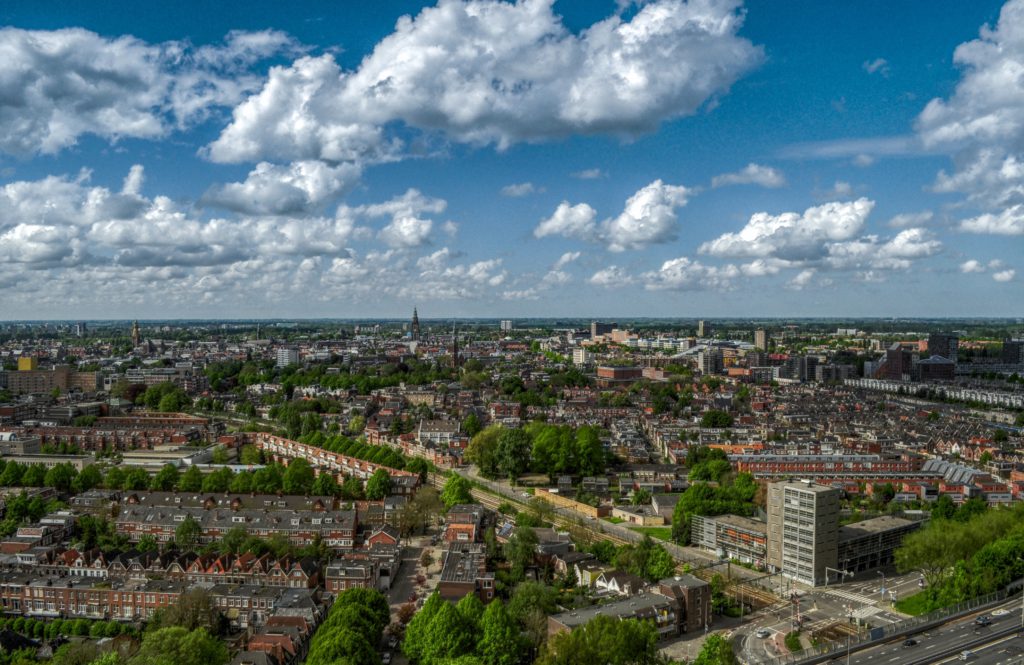
A key shift underway in cities like Groningen is the redefinition of cycling as a system-level priority embedded in how traffic is managed.
Through its Multimodal Traffic Management Framework developed in collaboration with Turku, Groningen translates high-level mobility goals into operational rules that govern intersections, signal timing, and network behaviour. Instead of relying solely on new infrastructure, the city reprograms existing systems to favour walking and cycling.
At intersections, this means reducing waiting times for cyclists, improving crossing reliability, and integrating cycling into real-time and predictive traffic management tools. Short-term forecasting of network conditions, combined with multimodal data from cars, cycling, public transport, and walking, enables the city to actively manage cycling conditions as part of everyday operations. The effect is subtle but powerful, with cycling becoming faster and more predictable not because streets are fundamentally rebuilt, but because the operating logic of the network changes.
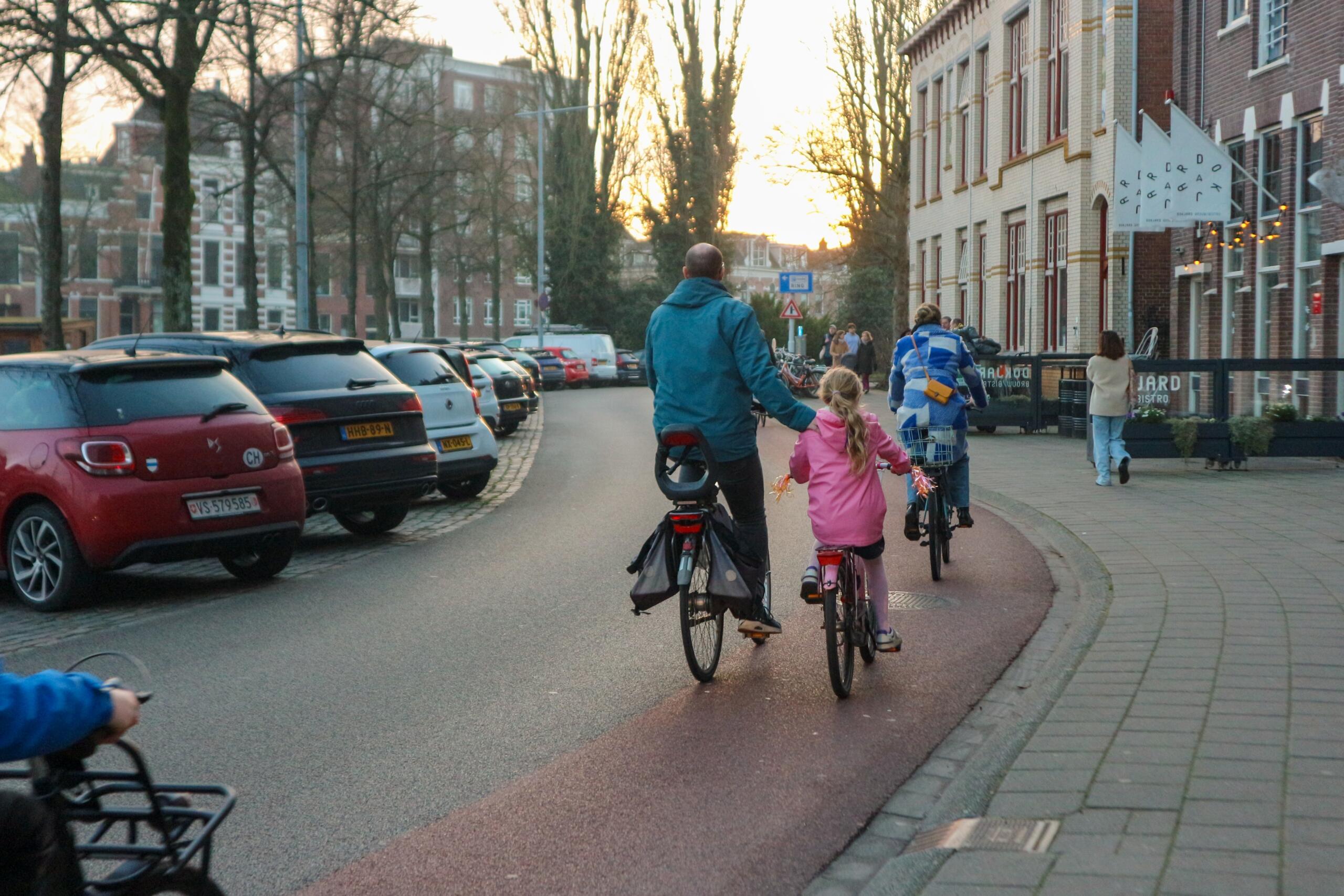
Cycling in Groningen — Credit: Seyma Mektepli
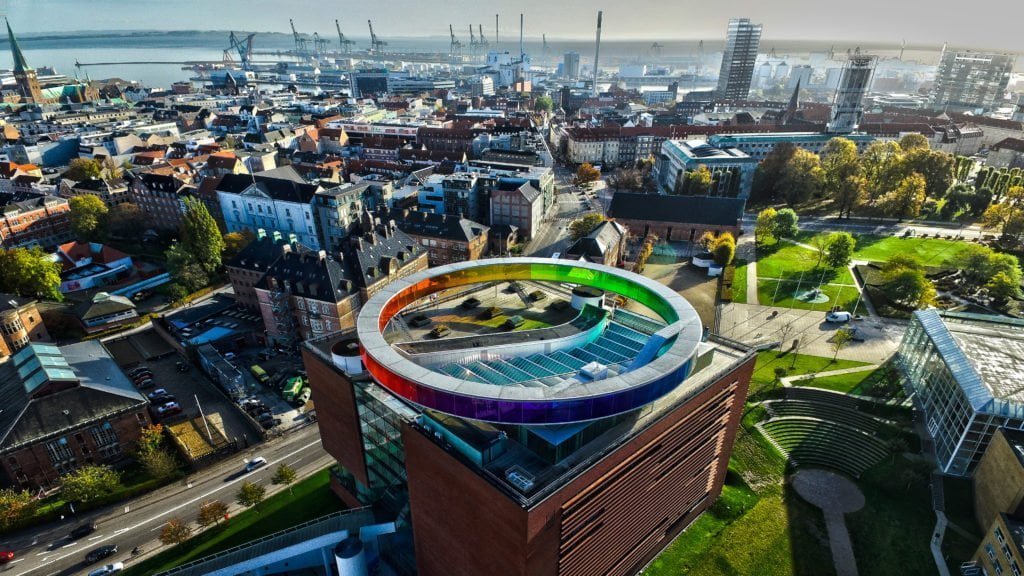
A related but distinct approach emerges in Aarhus, where the focus shifts from real-time system control to pre-implementation simulation through digital twins. Within the CITWIN framework, the city works with virtual models of urban environments that allow planners to test how changes in infrastructure might affect walking and cycling conditions before any physical intervention takes place. Instead of adjusting signal systems or traffic flows in real time, Aarhus uses modelling environments to anticipate behavioural responses, evaluate trade-offs, and reduce uncertainty in infrastructure investment. In this sense, digital twins function as a decision-support layer sitting above operational traffic management, connecting long-term planning with expected mobility outcomes, particularly for active modes such as cycling.
What connects these approaches is a shared shift in how cycling is understood as something that can be actively shaped through system intelligence, whether in real time, as in Groningen, or in simulated futures, as in Aarhus.
This systems perspective is increasingly echoed beyond individual cities' cases. In the recent POLIS Smart Cycling roundtable, which saw the POLIS Active Travel & Health and Smart Mobility & Traffic Systems Working Groups exchanging with Dutch, Belgian, and German municipalities, cycling policy is increasingly described through 'use cases' and 'building blocks' rather than standalone infrastructure projects. These use cases break cycling policy into operational components: how cycling is measured, how data is structured, and how interventions can be compared across different urban contexts. Rather than focusing on a single model of cycling optimisation, cities are identifying repeatable elements: data collection on cycling flows and safety, standardisation of information systems such as real-time shared mobility feeds, and evaluation frameworks that allow cycling interventions to be assessed consistently. The emphasis is not on replacing infrastructure approaches, but on making them interoperable across governance systems.
What emerges from these exchanges is not a new cycling city model, but a shared operational language: cycling as something that can be described, measured, and improved through common building blocks.
An opportunity for access, equity, and multimodality
In Barcelona, cycling is increasingly understood through the lens of accessibility rather than mobility alone. The expansion of the Bicivia cycling network, AMBici bike-sharing system, and secure parking infrastructure is designed not simply to increase cycling rates, but to connect peripheral communities to employment, education, and services.

Nesciobrug Bicycle Bridge in Amsterdam — Credit: Dutchmen Photography
This reflects a wider shift in European mobility planning: cycling is becoming an instrument for territorial equity. In metropolitan regions where public transport access is uneven, cycling provides a low-cost, flexible layer of connectivity that extends the reach of urban opportunity without requiring full-scale transit expansion. The emphasis is on cycling as an enabling system that fills gaps between neighbourhoods and major transport corridors.
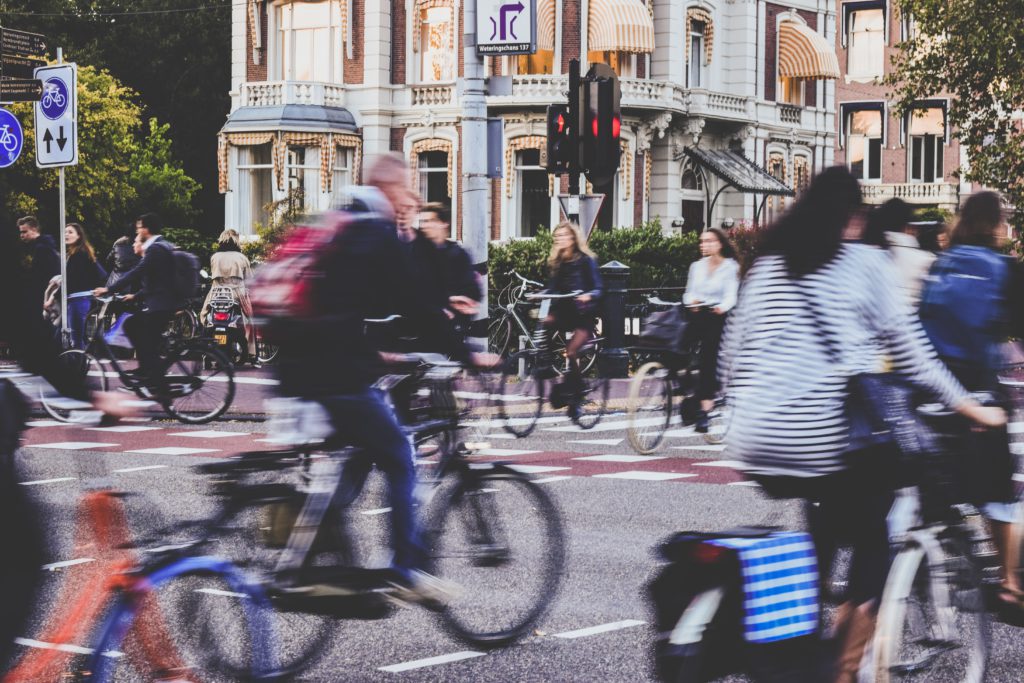
In Amsterdam, cycling is embedded in a multimodal urban system where proximity-based mobility and metropolitan connectivity are structurally interdependent rather than functionally separate. The bicycle enables fine-grained access to everyday destinations, especially for care-related routines such as school journeys, local errands, and healthcare visits, which define a large share of daily movement patterns in the city. However, this accessibility has clear limits, because not all residents can cycle, and not all journeys fit within its spatial reach. Therefore, public transport functions as the system’s backbone for longer distances and for users with reduced mobility, ensuring citywide and metropolitan accessibility.
The interaction between both modes is structured rather than incidental: multimodal hubs, including major interchange points such as the IJ river area facilities, enable seamless transitions between cycling and high-capacity public transport, supported by extensive short-stay bicycle parking. Shared mobility services extend this network further, filling gaps where neither cycling nor fixed-route transit offers sufficient coverage. Alongside this, inclusive cycling policies target groups historically underrepresented in cycling uptake, reinforcing the role of public transport as a parallel access system for equity and coverage.
Ruling public space?
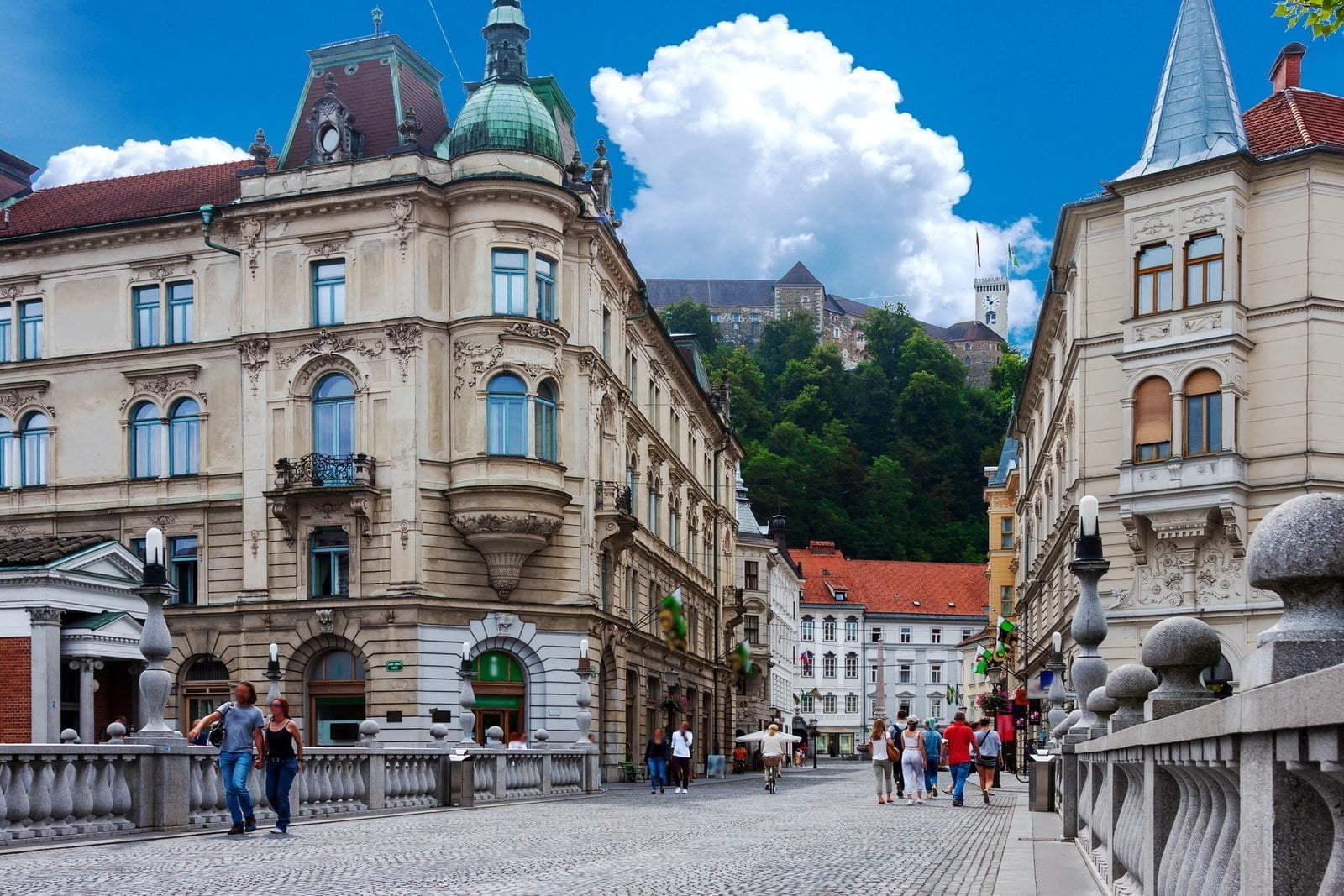
In Ljubljana, cycling gains relevance not through network expansion alone, but through the reorganisation of public space itself. The city’s pedestrianisation strategy removes private cars from central streets and reconfigures them as shared environments structured primarily around walking. Cycling is permitted, but within a clear pedestrian-first hierarchy. As motor traffic is withdrawn, streets become quieter, more permeable, and more suitable for low-speed cycling. Yet cycling is not established as a dominant central network; its strongest functional role sits at the edges of pedestrian zones, where it connects into wider mobility systems, while remaining secondary within the core.
Beyond the centre, cycling is supported through a substantial, well-integrated network. The city provides more than 230 kilometres of designated cycling paths and benefits from a compact, predominantly flat urban form that makes cycling a practical everyday option. Within pedestrian areas, cycling remains allowed under shared-space rules, with cyclists yielding to pedestrians and adapting to reduced speeds.
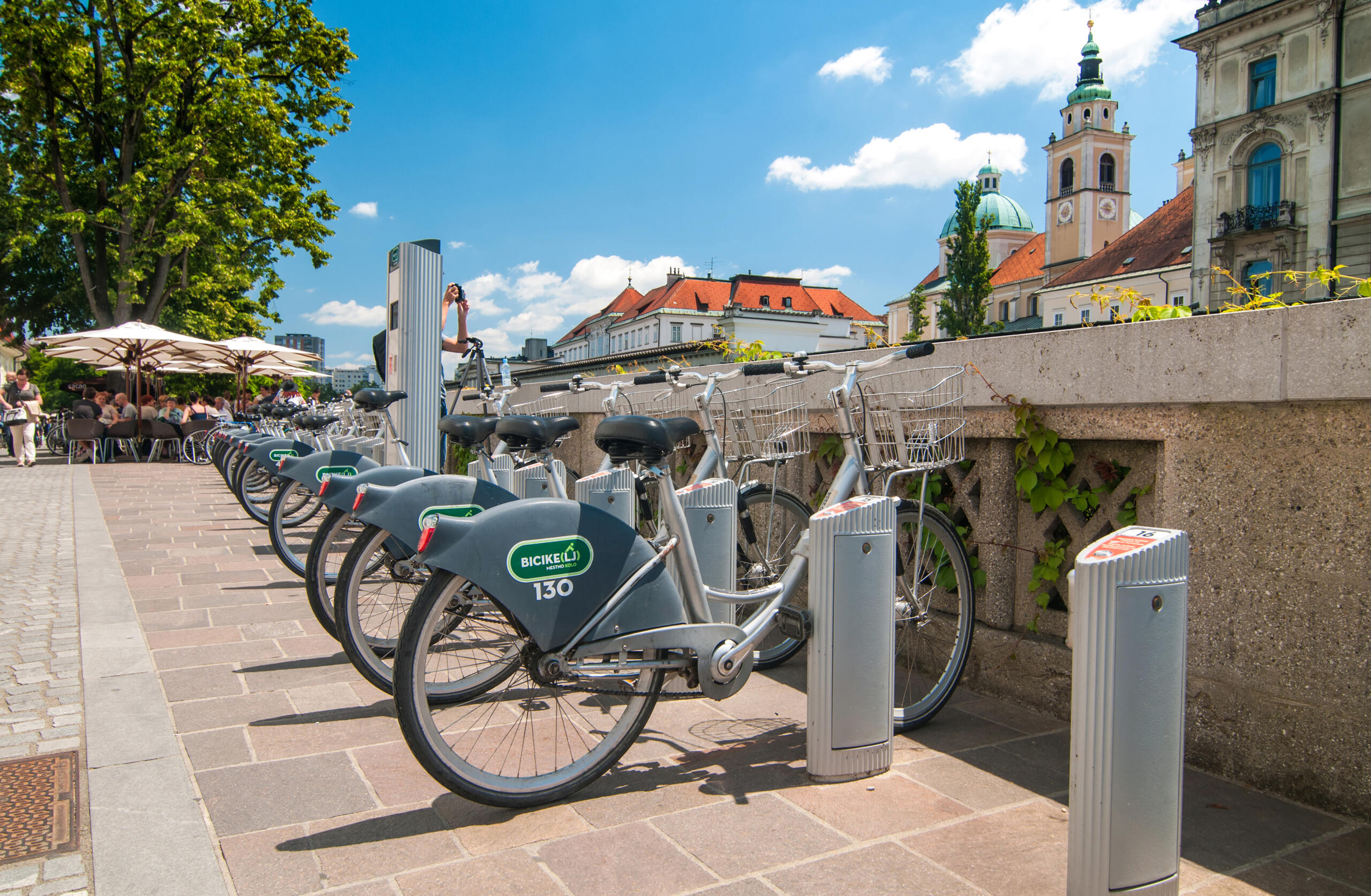
Bicycle sharing system in Ljubljana — Credit: Soru Epotok, Shutterstock
This everyday use is reinforced by service infrastructure. The BicikeLj bike-sharing system offers low-cost access across the city centre, complemented by additional rental options through the Ljubljana Bike project. The city is also consistently ranked among the world’s most bicycle-friendly, including 24th place in the Copenhagenize Index (2025), reflecting both infrastructure and policy direction.
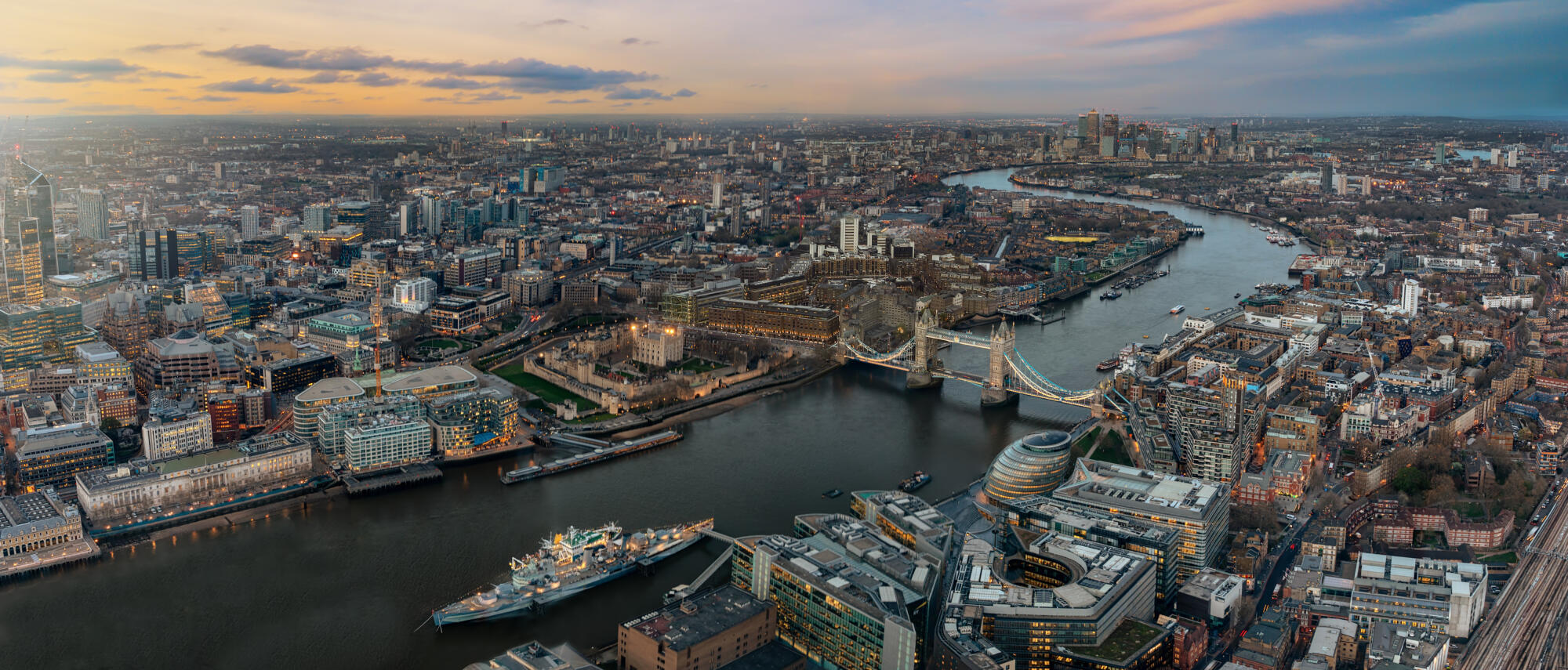
A different but complementary mechanism emerges in London, where cycling policy is shaped less by spatial reconfiguration and more by safety governance. Within its most recent Vision Zero framework, systematic reductions in speed limits and the widespread introduction of traffic calming measures have produced measurable declines in serious injuries, particularly among vulnerable road users, while coinciding with sustained growth in cycling volumes.
This alignment is not incidental. It reflects a structural relationship in which cycling uptake and road safety are mutually reinforcing rather than separate policy objectives. Streets designed to reduce vehicle speeds and conflict intensity lower risk exposure for all users, including pedestrians, while simultaneously making cycling a more viable mode of everyday travel.
Taken together, Ljubljana and London illustrate two distinct but complementary logics of public space transformation: one operates through the reallocation of spatial priority away from cars; the other through the redefinition of acceptable levels of risk within the street environment. In both cases, cycling is not primarily expanded as a standalone system, but strengthened through broader shifts in how cities govern, design, and regulate public space.
These spatial and safety-oriented transformations also connect to a wider environmental reconfiguration of the city, where cycling contributes to outcomes that extend beyond transport performance alone.
The environmental 'cost' that benefits all
Beyond mobility and safety, cycling is increasingly framed as an intervention in environmental pressures that extend well beyond carbon emissions. In cities like Barcelona, pedestrianisation strategies and 'superblock' models illustrate how reducing car dominance reshapes not only movement patterns but also urban soundscapes. Road traffic remains the dominant source of transport-related noise in European cities, with well-documented implications for public health and everyday liveability. By lowering car volumes, cycling-oriented policies contribute to quieter, less stressful urban environments. This effect is often secondary in policy narratives, yet it plays a significant role in shaping perceived quality of life in dense urban areas. In a way, cycling operates not only as a zero-emission transport mode, but also as a direct modifier of the sensory conditions of the city, affecting how space is experienced as much as how it is used.
This environmental role extends further into questions of energy consumption. Across European cities, a substantial share of short urban car trips could be shifted to cycling, particularly within distances that are routinely and efficiently covered by bicycles. Given the sharply lower energy demand of cycling per kilometre compared to motorised transport, even marginal modal shifts can translate into meaningful reductions in fuel consumption at system scale.
This reframes cycling as part of a broader energy resilience agenda rather than a narrow transport intervention. In contexts of energy insecurity and price volatility, reducing reliance on motorised mobility becomes not only an environmental objective but also an economic and strategic one. Seen in this light, cycling is not limited to emissions reduction. It functions as a mechanism for reducing systemic exposure to energy constraints while simultaneously improving the environmental quality of urban life.
From experimentation to system change

Web-based digital map of Sofia's selected green corridors on OpenStreetMaps — Credit: INNOAIR project
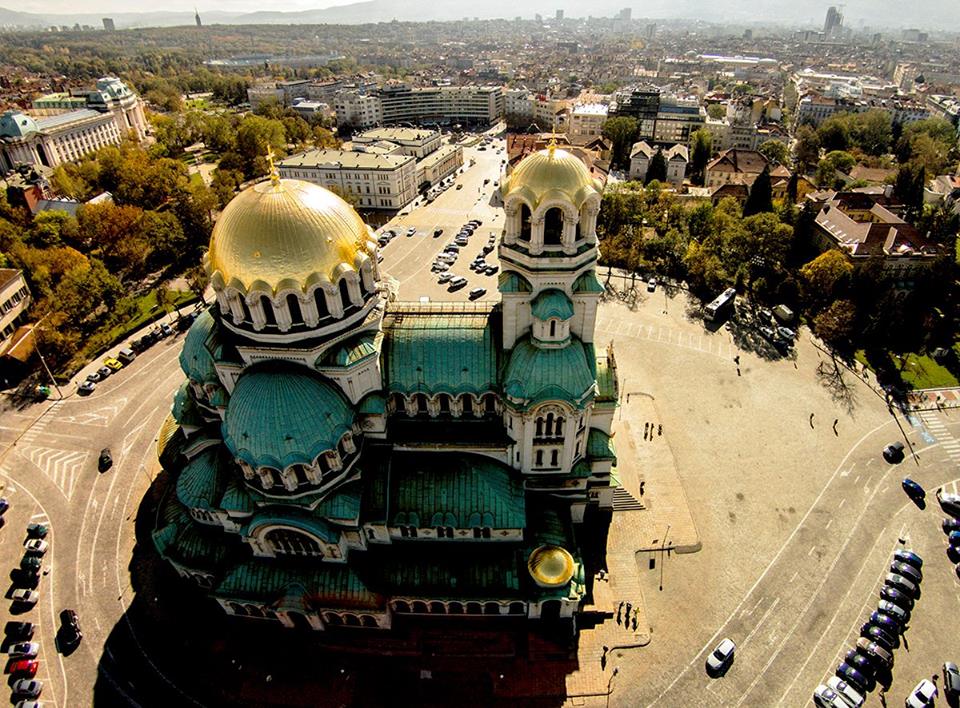
This environmental and energy framing increasingly feeds into how cycling is being operationalised across European cities, particularly in contexts where change is still emergent rather than fully consolidated. In more car-dependent environments, transition tends to unfold incrementally rather than through comprehensive redesign. In Sofia, the INNOAIR initiative reflected this logic through a combination of green corridors, low-emission zones, behavioural incentives such as SofiaCoin, and data-led identification of cycling demand. Cycling is not introduced as a complete network, but as something progressively enabled through adjustments in regulation, street management, and the interpretation of emerging mobility patterns.
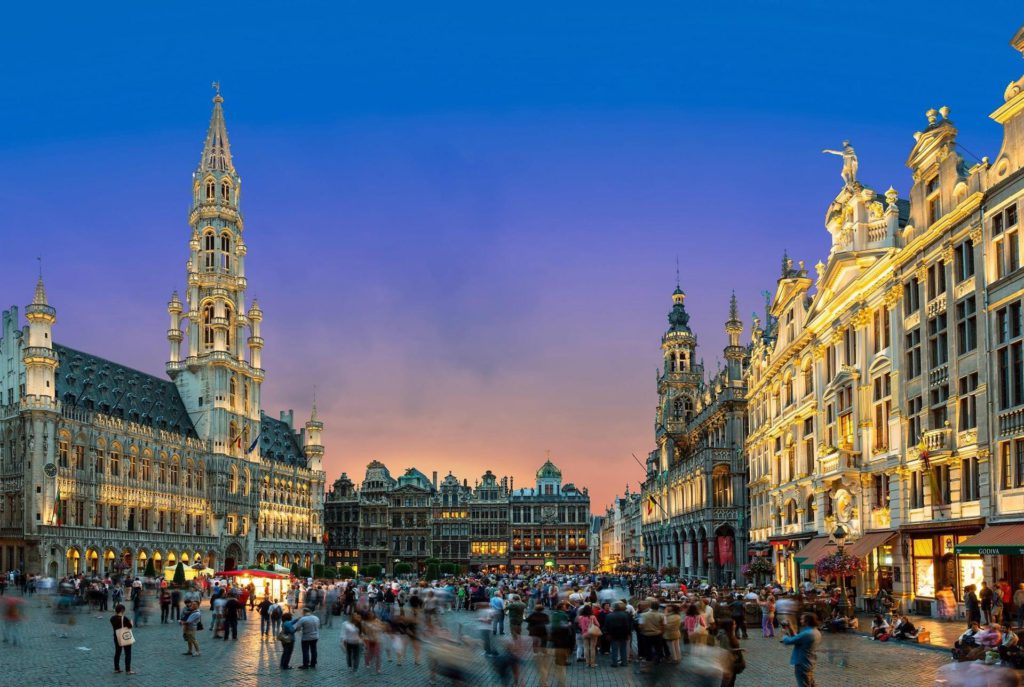
A comparable dynamic appears in Brussels, where the CAIRGO project extendend cycling into urban logistics through cargo bike integration. Supported by targeted subsidies, training schemes, and access programmes, cycling is inserted into freight systems historically structured around vans. Rather than replacing these systems, it coexists within them, producing hybrid delivery chains in which cycling becomes one operational layer among others.
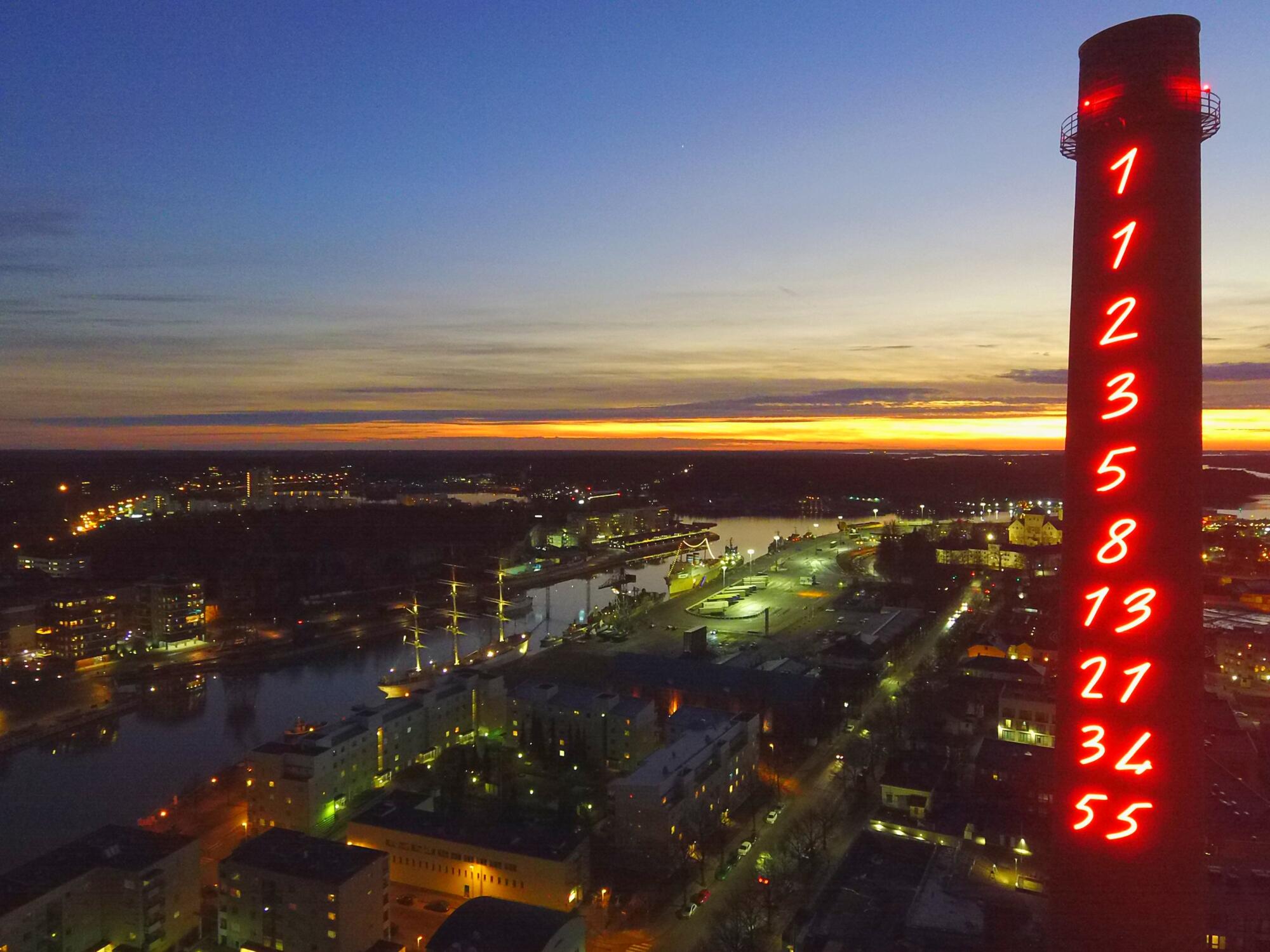
A similar logic operates earlier in the mobility lifecycle in Turku through the more recent SCHOOLHOODS initiative. Here, interventions around schools focus on traffic calming, safer crossings, and structured engagement with parents and pupils. The effect is to lower perceived risk and strengthen confidence in independent mobility. Cycling uptake in this context is shaped less by infrastructure provision than by behavioural norms and trust, particularly at the point where travel habits are formed.
Across these cases, cycling is something truly shaped by how cities organise space, data, risk, and access, and depends as much on governance, design, and behaviour as on the presence of infrastructure.
What connects developments in Groningen, Aarhus, Amsterdam, Sofia, Brussels, Turku, Ljubljana, and London is not a single model of a 'cycling city', but a shared shift in how cycling is shaped within urban systems. It is increasingly governed through data, operational choices, spatial priorities, and everyday travel realities, rather than infrastructure alone.
Seen this way, the shift is much less about increasing cycling rates and way more about what cycling itself makes visible in the functioning of cities: how decisions are taken, how priorities are negotiated, and how space and opportunity are ultimately allocated.

- Related Members