International Noise Awareness Day 2026: How noise pollution affects our cities and health
29 April is International Noise Awareness Day, an annual observance dedicated to turning down the volume on noise. As transport is one of the main sources of noise pollution, on this day we shine a spotlight on its effects on health and the role of urban spaces in preventing hearing damage.
Noise is one of the leading causes of hearing loss among the 466 million people around the world with moderate to severe hearing loss. The World Health Organisation (WHO) estimates that 1.1 billion individuals aged 12-35 are at risk of noise-induced hearing loss from recreational activities. International Noise Awareness Day seeks to raise awareness about the detrimental effects of noise on hearing, health, and quality of life.
Noise affects everything
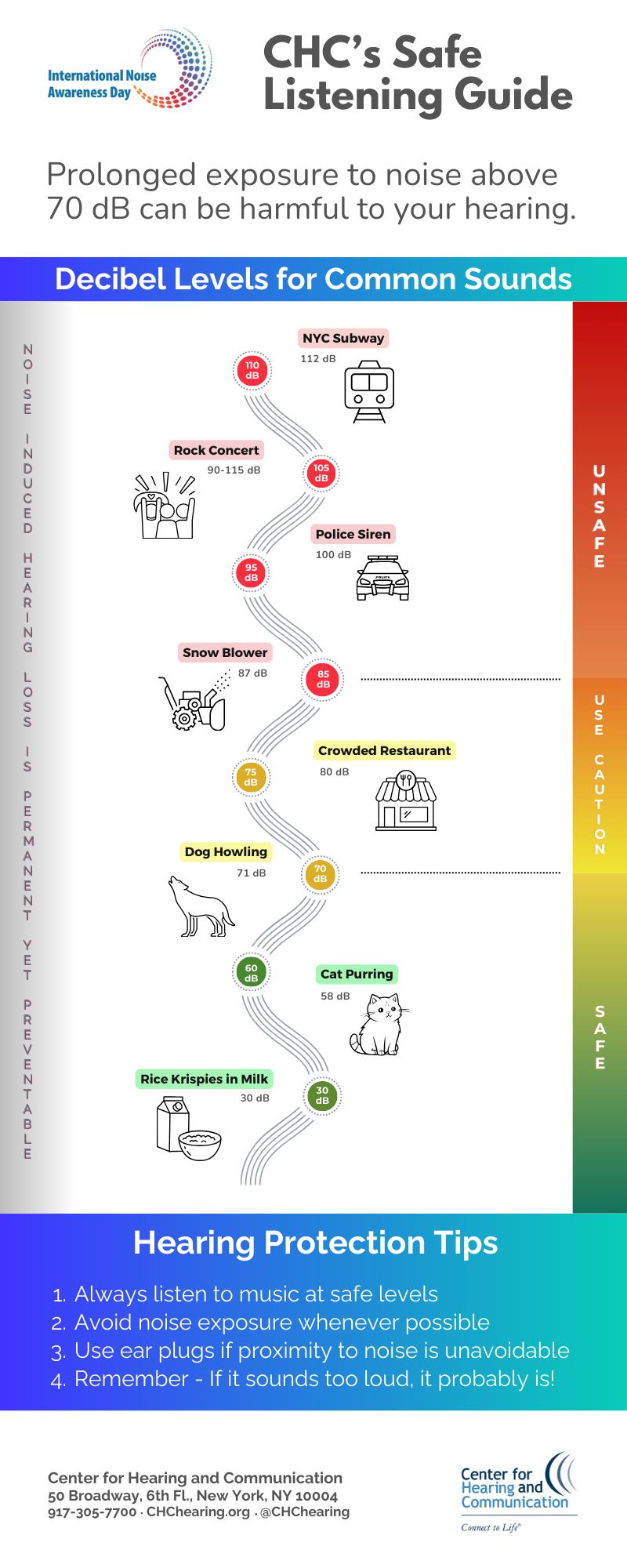
The Center for Hearing and Communication (CHC)'s Safe Listening Guide with decibel levels for everyday sounds — Credits: CHC
Environmental sound intensity is measured in decibels (dB). The majority of sounds that people are exposed to daily are at safe listening levels. Still, prolonged exposure to noise above the safe level of 70 dB can critically harm hearing, leading to permanent damage to the inner ear's nerve fibres and an increased risk of tinnitus.
While hearing loss due to noise exposure is permanent, the good news is that it is completely preventable by using adequate hearing protection, such as earplugs, or avoiding or limiting noisy environments.
Beyond hearing loss, noise pollution poses significant health risks. Excessive noise exposure can take a toll on the body, causing adverse cardiovascular issues such as elevated blood pressure, increased risks of heart failure, and stroke. In addition, a growing body of research is revealing connections between hearing loss and dementia diseases such as Alzheimer’s.
Whether ongoing or intermittent, noise also impacts the quality of life. Besides causing stress and anxiety, noise is one of the most common forms of sleep disturbance.
A silent killer
Noise pollution is the second-largest environmental health risk in Europe, following air pollution. The main sources of environmental noise are transport, industrialisation, construction, and leisure activities. According to the European Environment Agency (EEA), over 20% of Europeans are exposed to harmful transport noise levels, a figure that increases to over 30% when considering the stricter WHO recommendations.
Road traffic represents the main source of transport noise. In the EU, around 92 million people are exposed to noise levels above the recommended threshold of 55 dB for the day-evening-night period, compared to 18 million affected by rail traffic and 2.6 million by aircraft noise.
The EEA estimates that chronic exposure to transport noise contributes to approximately 73,000 premature deaths, 49,000 new cases of cardiovascular diseases, and 23,000 cases of type 2 diabetes annually, resulting in the loss of 1.5 million healthy life years. Economically, this is equivalent to an annual cost of at least EUR 100 billion, around 0.6% of the EU’s GDP.
Urban residents are particularly affected, with half exposed to high road noise levels. The negative effects of noise are not equally distributed, as they are more likely to impact some communities and groups, such as children, who can experience behavioural issues, overweight, or reading difficulties during their learning and developmental phase, or people with lower incomes, who tend to live and work in more polluted areas.
Europe lags in noise reduction goals
The Environmental Noise Directive (END) is the European legislative framework for addressing noise pollution. It requires Member States to prepare and publish noise maps and management action plans every five years. The framework is the Zero Pollution Action Plan, which aims to cut the number of people chronically disturbed by transport noise by 30% by 2030. POLIS is part of the Zero Pollution Stakeholder Platform, bringing together experts from different policy areas to mainstream the zero pollution agenda.
As shown in the Zero Pollution Dashboard, which tracks the main environmental pollution indicators, over half of the capital cities where data is available meet EU noise reduction targets. However, looking at a broader perspective, the current efforts are insufficient, and the EU is off track in meeting the 30% noise reduction goal.
This is further explored in a 2025 report by the European Court of Auditors dedicated to urban pollution in the EU, which has found considerable gaps in the reporting and mapping of noise pollution. The lack of regular noise mapping by the Member States undermines the efforts to assess the scale of the problem and its impact on public health.
Bringing quiet to the city
Since road traffic is one of the main contributors to noise pollution, cities should plan and implement measures targeting the transport sector. The first (obvious) step is to promote sustainable mobility solutions, such as public transport and non-motorised options including cycling, which can significantly reduce vehicular noise.
Besides targeting traffic congestion by private cars, an often overlooked source of noise is light vehicles (LVs). Despite their size and weight, LVs such as motorbikes greatly aggravate air and noise pollution in urban areas, producing more pollutants per kilometre in comparison to bigger vehicles.
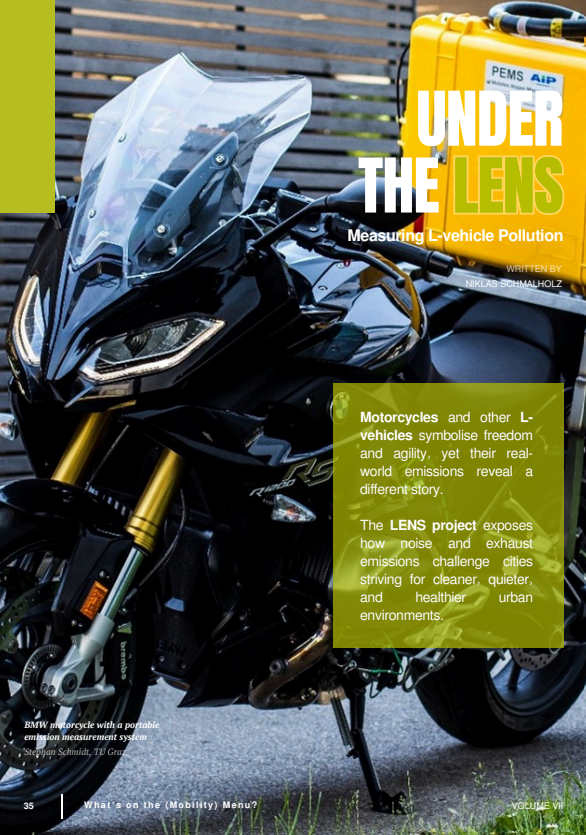 The LENS project examined the impact of LVs on noise levels in POLIS members Leuven, Paris, and Barcelona. After extensive testing, real-world measurements, and technical analysis, the findings revealed that current type-approval procedures fail to accurately reflect real-world conditions, as actual noise levels often exceed regulatory limits, underscoring the need for stricter regulations.
Low-emission zones (LEZs) are among the most effective tools, as they restrict the circulation of the most polluting vehicles. Cities that have implemented them, such as Brussels, Rome, or London, which went a step further by introducing a Ultra Low Emission Zone, have seen great benefits in terms of improved air quality and reduced traffic congestion, therefore reducing noise pollution. However, the primary focus of LEZs has been on air quality, with scarce evidence of their impact on noise pollution.
An innovative measure is the concept of ‘superblocks’, introduced by POLIS member Barcelona in 2016 to reduce both air and noise pollution. Within a superblock, the internal streets are repurposed into pedestrian zones, while vehicles are redirected to the surrounding perimeter roads. Almost ten years after the introduction of the first superblock, results prove its success in reducing air and noise pollution and fostering the quality of life for the residents.
Besides regulating measures, cities can also invest in urban design that takes noise into account. In the EU, only 34% of the population can access green and quiet areas within a 400-metre walking distance from their homes. Quiet environments generate calm and tranquillity, supporting the mental well-being of residents, particularly for those living in noisy areas. Urban planners should therefore include areas that contribute to mitigating noise, such as parks or tree-lined streets, since trees and shrubs act as natural barriers that absorb and reflect sound, creating more relaxing and quieter environments.
- Related Projects
- Related Members