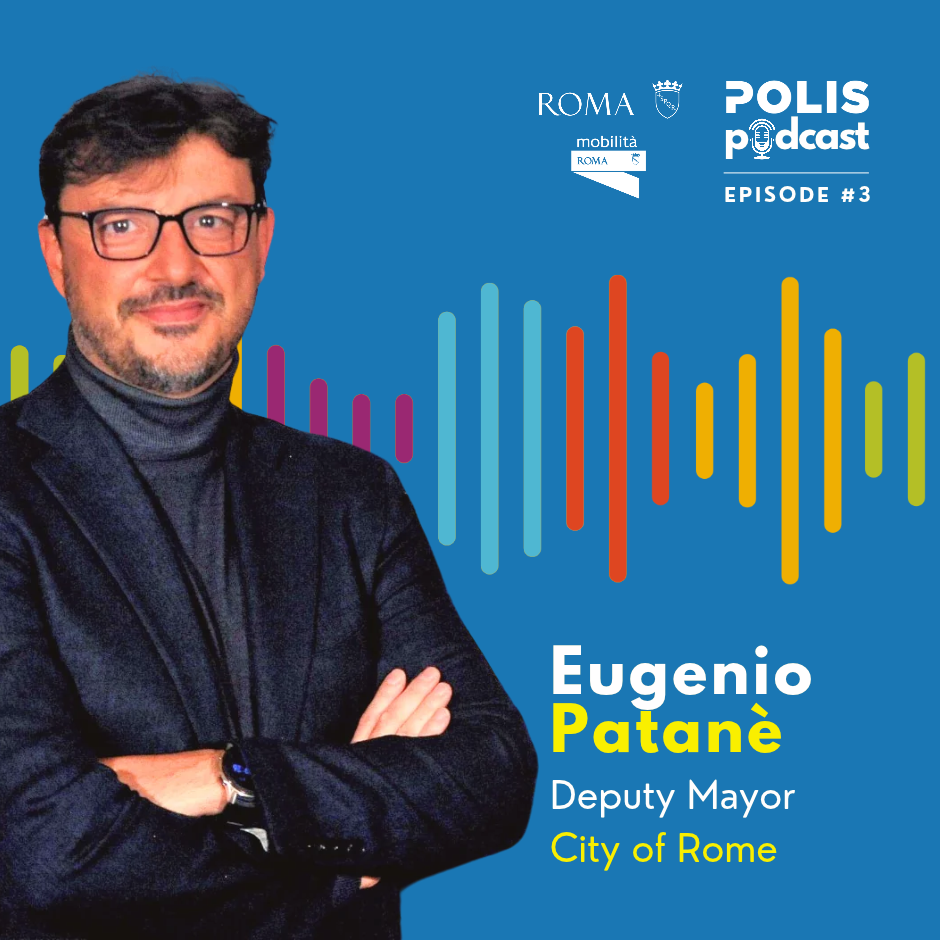
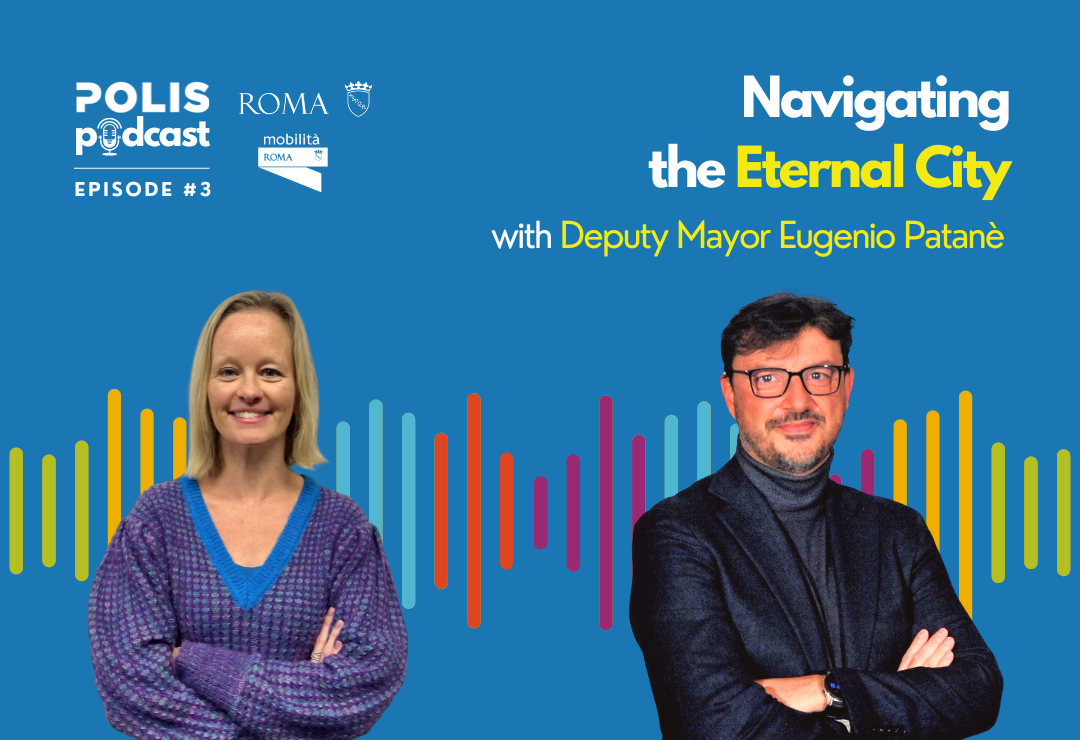
POLIS Podcast – Episode #3
Navigating the Eternal City with Deputy Mayor Eugenio Patanè
In the third episode of the POLIS Podcast, Eugenio Patanè, Deputy Mayor for Mobility of Rome, discusses the Italian capital's ambitious transport plans, the challenges of political leadership, and the importance of European cooperation.
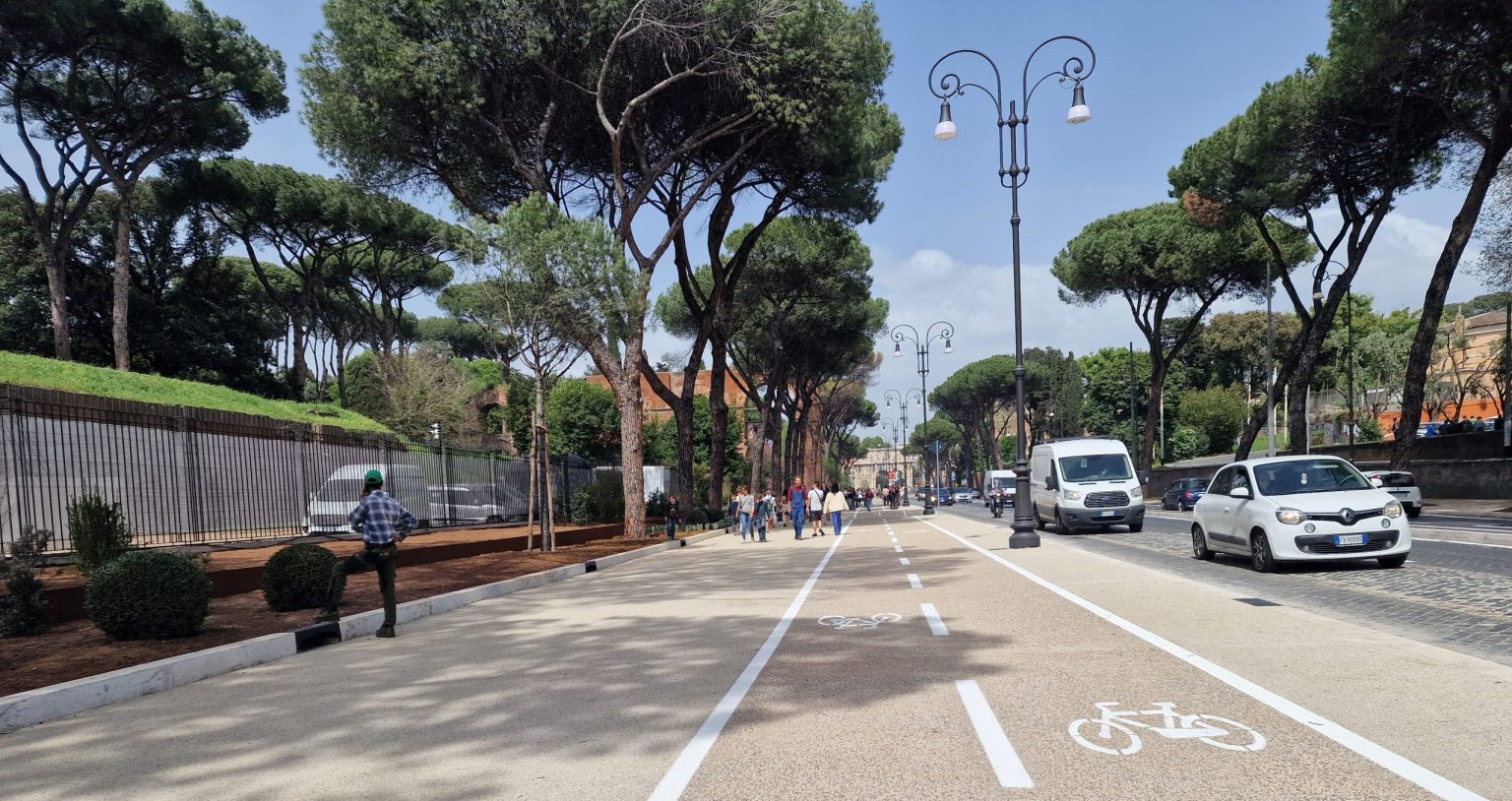
GRAB, the Roman cycle path. Credit — Rome Mobility Services
How can Europe's capital cities balance the demands of residents, visitors, and sustainable mobility? From ancient streets to modern metro networks, Rome faces a unique set of mobility challenges.
As one of Europe's largest and most visited capital cities, it must accommodate the everyday needs of its residents while managing millions of visitors, major events, and the complexities of its historic urban fabric.
In the latest episode of the POLIS Podcast, Deputy Mayor Eugenio Patanè, who also chairs the POLIS Capitals Working Group, shares how Rome is addressing these challenges through investments in public transport, cycling infrastructure, shared mobility, and innovative transport services. As usual, POLIS Secretary General Karen Vancluysen conducted the interview.
Rome at a glance
- Country: Italy
- Population: Approximately 2.8 million inhabitants
- Metropolitan area: Nearly 5 million inhabitants across Rome and 120 surrounding municipalities
- Mobility focus:
- Public transport expansion
- Cycling infrastructure
- Multimodal integration
- Traffic management
- Sustainable tourism
- Key initiatives:
- Metro Line C expansion
- GRAB cycling network
- Demand-responsive transport
- Shared micromobility integration
- Roma Corre in Bici cycling incentive programme
- POLIS membership: Rome is an active POLIS member, chairs the Capitals Working Group, and received the POLIS Award in 2025.
The unique challenges of capital cities
As Deputy Mayor Patanè explains, being a capital means serving two different purposes simultaneously: providing reliable mobility for residents while accommodating visitors, institutions, and large events. For Rome, these challenges are amplified by its size, history, and extraordinary concentration of tourist attractions. The city's stratified ancient infrastructure presents additional difficulties: Expanding underground networks routinely becomes an archaeological endeavour.
Tourism is another central consideration. Rather than discouraging visitors, Deputy Mayor Patanè argues for better managing their distribution across the city through improved transport capacity, access regulations and more balanced visitor flows.
These challenges were also explored in ‘Over Capacity, Under Control’, the Cities in motion article featuring the Deputy Mayor. In this interview, we examined how European destinations can manage tourism-related mobility pressures.
In the podcast, Deputy Mayor Patanè revisits these issues, highlighting the lessons learned from Rome's Jubilee preparations and the importance of coordination between local, regional, and national authorities.
Building a more connected and sustainable Rome
At the heart of Rome's mobility transformation is a commitment to strengthening public transport while making sustainable alternatives more accessible.
credit — Gabriella Clare Marino, unsplash
Alongside these long-term projects, Rome is investing in more immediate improvements, including electric buses, tram infrastructure, and demand-responsive transport services in neighbourhoods where conventional fixed routes are less effective.
However, ambitious infrastructure projects require substantial financial resources. As a major urban node on the Trans-European Transport Network (TEN-T), Rome faces important obligations concerning sustainable mobility planning and multimodal connectivity.
Although the city adopted its Sustainable Urban Mobility Plan (SUMP) in 2022, Patanè stresses that meeting European objectives requires stronger financial support and closer cooperation between European institutions, national governments, and local authorities.
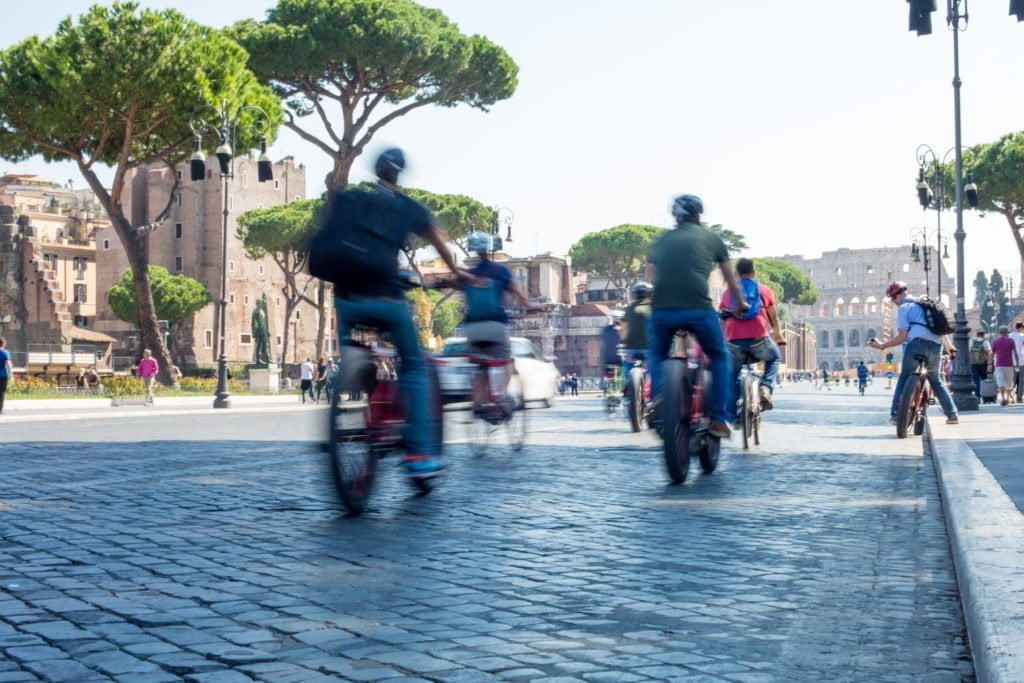
Cycling and shared mobility are equally important to Rome's strategy. The city has developed 87 kilometres of new cycling infrastructure over two years and expanded shared micromobility services beyond the historic centre. Annual public transport pass holders can also access shared bicycles and e-scooters free of charge, encouraging their use for first- and last-mile journeys.
Navigating the politics of sustainable mobility
Beyond infrastructure and innovation, the conversation explores one of the most difficult aspects of mobility policymaking: managing public resistance to change.
From reducing speed limits to reallocating road space, sustainable mobility reforms often generate criticism. For Deputy Mayor Patanè, responding effectively means acknowledging concerns, communicating decisions transparently, and being able to adjust measures without abandoning the objectives. As he puts it:
"A capital is not a problem to be solved. It is a network to be completed."
Listen to the episode now on your preferred platform!
- Related News
- Related Members
- Related Pages
- Related Working Groups
POLIS Podcast publishes new episode featuring Rome Deputy Mayor Eugenio Patanè