Over Capacity, Under Control
The EU Sustainable Tourism Strategy will reshape Europe’s approach to tourism, decarbonisation, and territorial balance, with mobility at its core. NECSTouR, Île-de-France Region, and the City of Rome converge on a shared conclusion: tourism and mobility can no longer be treated separately, as managing visitor flows becomes a defining policy challenge across Europe.
Interview with Cristina Núñez, Françoise Guaspare, and Eugenio Patanè, elaborated by Sara Mecatti.
POLIS: The European Commission will soon launch its Sustainable Tourism Strategy—which is now officially backed by the Council of the EU’s Strategic Guidelines adopted on 28 May 2026, and the European Parliament’s Resolution adopted on 28 April 2026. What should its main priorities be for mobility?
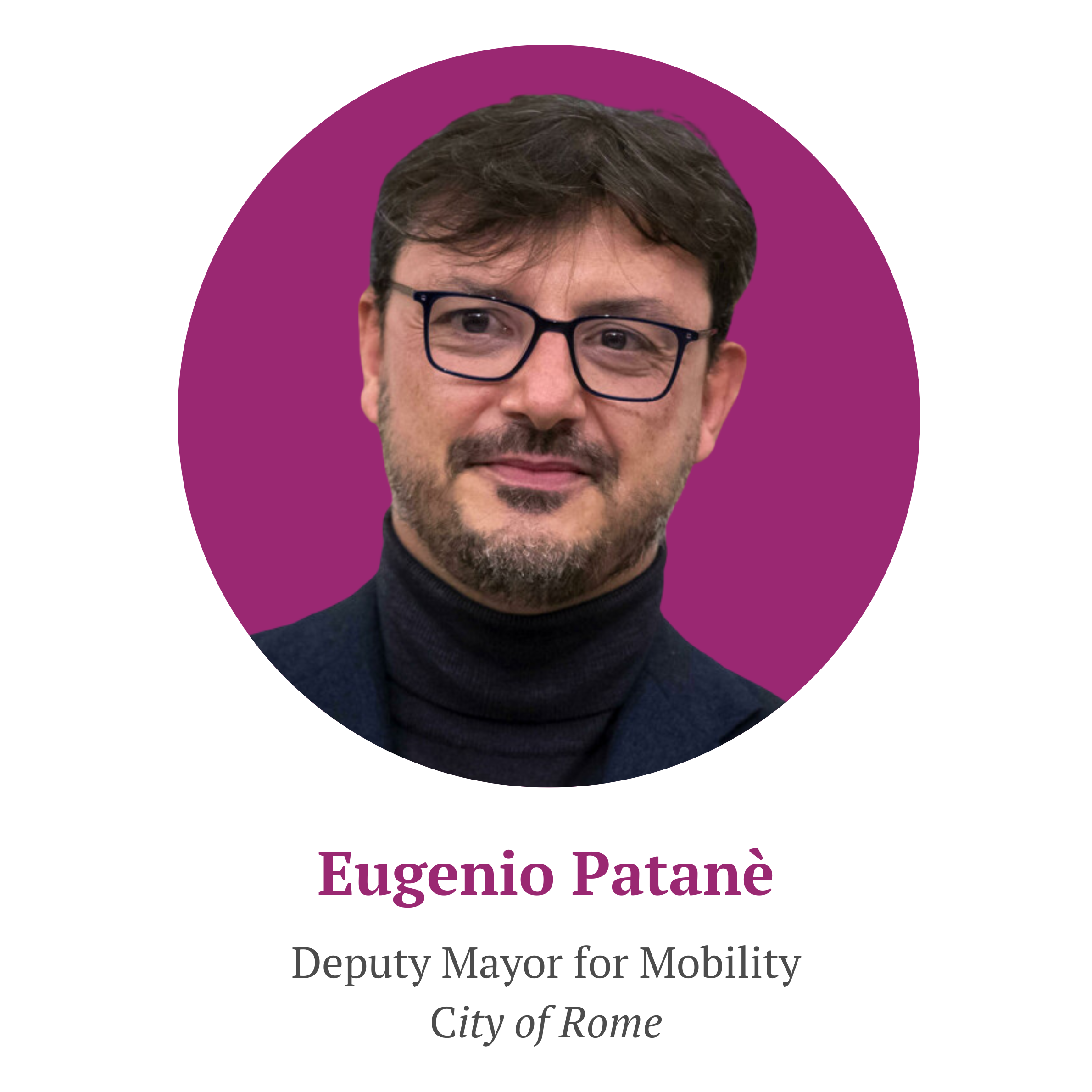 Eugenio Patanè (Rome): The EU is moving in the right direction, particularly in recognising overtourism, decarbonisation, and territorial redistribution as central issues. But for cities like Rome, the key question is implementation under real pressure conditions.
Tourism mobility must shift from road-based to rail-based systems, supported by infrastructure investments that were delayed for decades. Major events, including the Jubilee, have accelerated this transition, but structural change is still ongoing.
We see four priority areas. First, capacity, because the current infrastructure cannot absorb 21st-century demand patterns. Second, access regulation, which must be clear, predictable, and enforceable. Third, digitalisation, including real-time crowd management, dynamic coach access, and integrated booking systems. Fourth, redistributing flows beyond the historic centre, because Rome cannot remain a city where 90% of visitors concentrate within just 5% of its territory. Here, our Sustainable Urban Mobility Plan (SUMP) is instrumental in opening up the eastern and southern quadrants, making the peripheries more accessible and encouraging a more balanced distribution of visitor flows.
The objective is to distribute tourism more intelligently across space and time—this is what regenerative tourism means in practice, at least to us. Rome’s scale and complexity also make it a useful European test case. Managing millions of visitors in a city with archaeological constraints and overlapping governance levels offers lessons that can be transferred to other urban contexts.
 Cristina Núñez (NECSTouR): The future EU Sustainable Tourism Strategy, while not yet published, is clearly moving toward a more sustainable and territorially balanced model. Within this framework, mobility is not an accessory policy area, but a structural pillar.
Transport accounts for nearly 80% of tourism-related emissions: this means there is no credible sustainability pathway for tourism without addressing mobility directly. The challenge in Europe is no longer simply attracting visitors, but
managing flows in a way that preserves territorial balance, environmental quality, and quality of life for residents.
What is needed now is a double integration: tourism strategies must embed mobility considerations from the outset, while mobility planning must better reflect tourism realities and seasonal demand patterns.
We expect the EU strategy to prioritise three elements. First, sustainable connectivity across modes and territories. Second, stronger governance and data capacities to manage flows more intelligently. Third, resilience, particularly in the face of climate, geopolitical, and economic disruptions.
Regions are central in this equation. Tourism impacts transport systems, public space, and infrastructure in very direct ways. This requires coordinated governance across transport, tourism, and territorial planning.
As Mathieu Cuip, President of NECSTouR, notes, tourism ‘cuts across transport, environment, culture, digital systems, and economic development’. Without stronger coordination between these domains, sustainable tourism remains out of reach. The integration of long-distance transport networks with local public transport is particularly decisive for accessibility and cohesion across Europe.
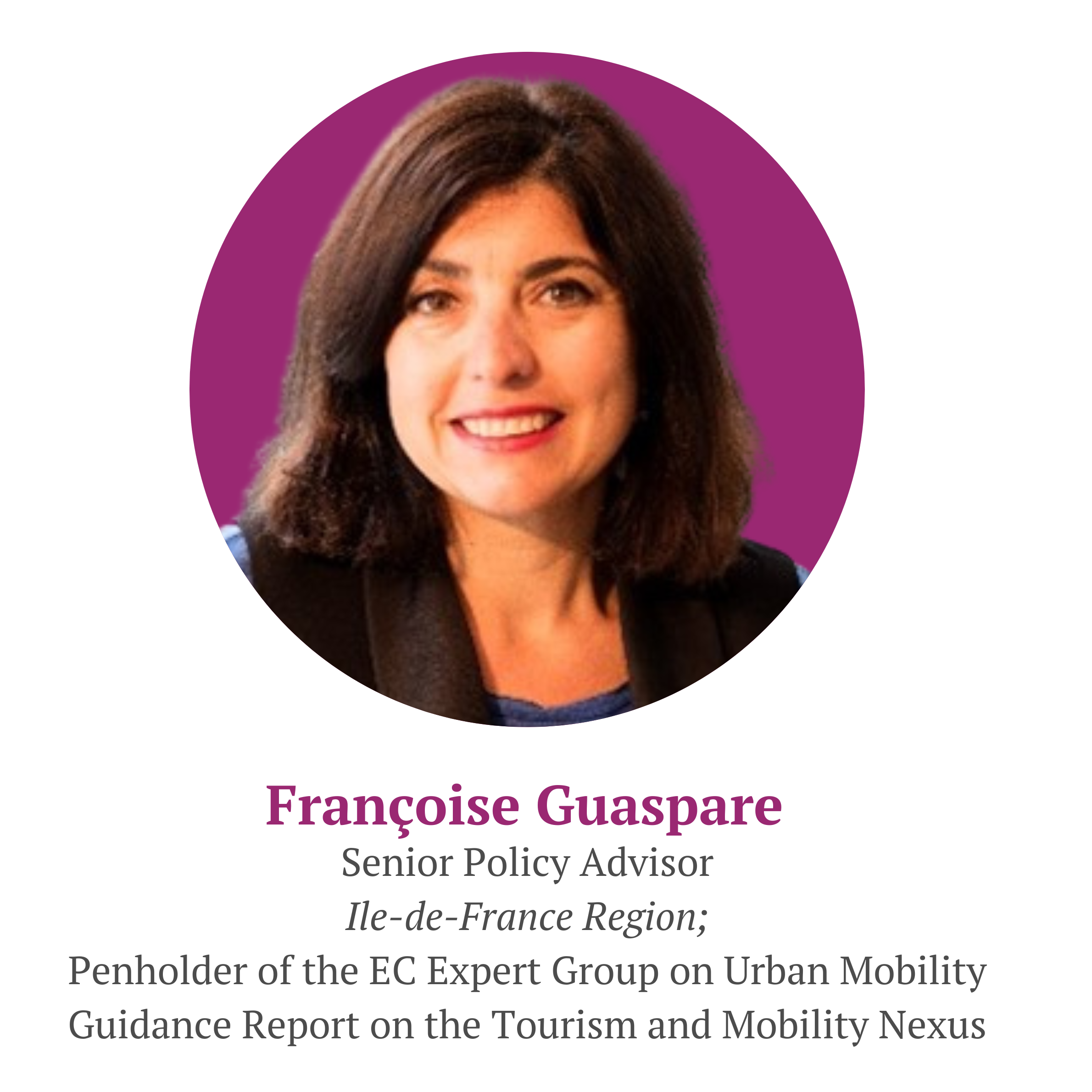 Françoise Guaspare (Île-de-France Mobilités): The EU Sustainable Tourism Strategy must address a persistent structural issue: tourism growth is still too often coupled with emissions growth, and decoupling the two remains a central challenge.
At the regional level, we also face increasing exposure to climate risks, alongside skills shortages in sustainable mobility, digitalisation, and low-carbon service delivery. Tourism resilience is then both a strategic and economic concern.
A major obstacle remains governance fragmentation. Tourism and transport are still frequently planned and managed separately, despite their deep interdependence. In Île-de-France, we are addressing this through a more integrated approach, linking mobility planning, tourism development, and territorial balance within our Regional Mobility Plan 2030.
The EU strategy should support this integration while aligning tourism policy with the European Green Deal and the Clean Industrial Deal to ensure coherent decarbonisation across transport and tourism.
It should also recognise that seamless mobility is central to the visitor experience. Simple ticketing, real-time information, and interoperable systems are not technical details; they are prerequisites for sustainable tourism. Through the European Metropolitan Transport Authorities (EMTA), Île-de-France Mobilités and other European metropolitan public transport authorities are working on a Europe-wide federated ticketing solution that would allow visitors to access public transport networks across Europe without creating a new account, downloading a new app, or purchasing a separate ticket in every destination.
Finally, stronger investment under the next Multiannual Financial Framework will be essential. Meeting the objectives of the revised TEN-T Regulation on multimodal passenger hubs and urban nodes by 2030 will require continued support through the Connecting Europe Facility to finance low-carbon mobility infrastructure that benefits both residents and visitors.
POLIS: What are the main challenges the EU strategy needs to address, and what opportunities could it create?
CN (NECSTouR): At NECSTouR, we see three structural challenges that stand out. The first is integration, because tourism and mobility systems are often developed in parallel, not in coordination. As a result, sustainable transport options usually remain fragmented and difficult to access for visitors.
The second is governance: visitor flows do not respect administrative boundaries, yet coordination between authorities, operators, and destination managers remains limited.
The third is investment. Without targeted financial support, particularly under the next Multiannual Financial Framework, destinations will struggle to develop multimodal hubs, improve last-mile connectivity, and deploy digital systems that enable sustainable travel choices.
At the same time, there is a significant opportunity—many regions are already experimenting with integrated ticketing, multimodal hubs, rail-tourism initiatives, and digital flow management tools. The EU strategy can help scale these solutions and create shared standards that allow replication across Europe.
Tourism is largely a regional and national competence, but the EU can provide the framework conditions for it to thrive, such as data standards, interoperability, and coordination mechanisms that could enable better planning and anticipation of demand.
EP (Rome): For us, the main challenge is institutional fragmentation combined with the physical and historical complexity that makes Rome unlike any other European capital.
Rome covers more than 1,285 square kilometres, the largest municipal territory among European capitals. Added to this is an unparalleled concentration of archaeological heritage and a fragmented governance framework involving the State, the Region, the Metropolitan City, and the Vatican: each has a legitimate role to play, but together they create one of the most complex governance puzzles in European urban mobility.
This complexity is not a limitation; it is an opportunity to innovate. During the Jubilee, Rome welcomed around 33 million pilgrims, with daily averages of 100,000 visitors, while ordinary tourism continued uninterrupted. Managing these flows required coordinated transport operations, the reorganisation of multimodal hubs, real-time passenger information, and close cooperation across institutions.
How do you move millions of people without paralysing a metropolis of three million inhabitants? How do you operate modern public transport in a millennia-old city while preserving an open-air museum? These are the kinds of questions Rome is confronting every day. The solutions are not always perfect, but they provide practical experience that other European cities facing increasing tourism pressure can build upon.
This is why Rome sees itself not only as a beneficiary of the future European framework, but also as a contributor to it. We need stable financial instruments, a regulatory framework that supports micromobility, shared mobility and clean fleets, and a stronger political space where European capitals can work together. In return, Rome offers what few cities can: scale, complexity, and a willingness to pilot new solutions.
FG (IdFM): The central challenge remains governance fragmentation, combined with insufficient integration between tourism planning and mobility systems. This is particularly evident in the management of visitor flows, where transport networks are often not designed with tourism demand in mind. At the same time, tourists represent a unique opportunity for modal shift; their mobility choices are more flexible than commuters—something that makes them a powerful lever for accelerating sustainable transport use. Better integration can also help redistribute flows beyond congested city centres, improving both visitor experience and local quality of life.
In Île-de-France, we are addressing this through multimodal transport networks, rail-tourism connections, cycling infrastructure linked to leisure routes, and eco-shuttle systems in natural areas. Digital tools are also essential in managing flows more dynamically.
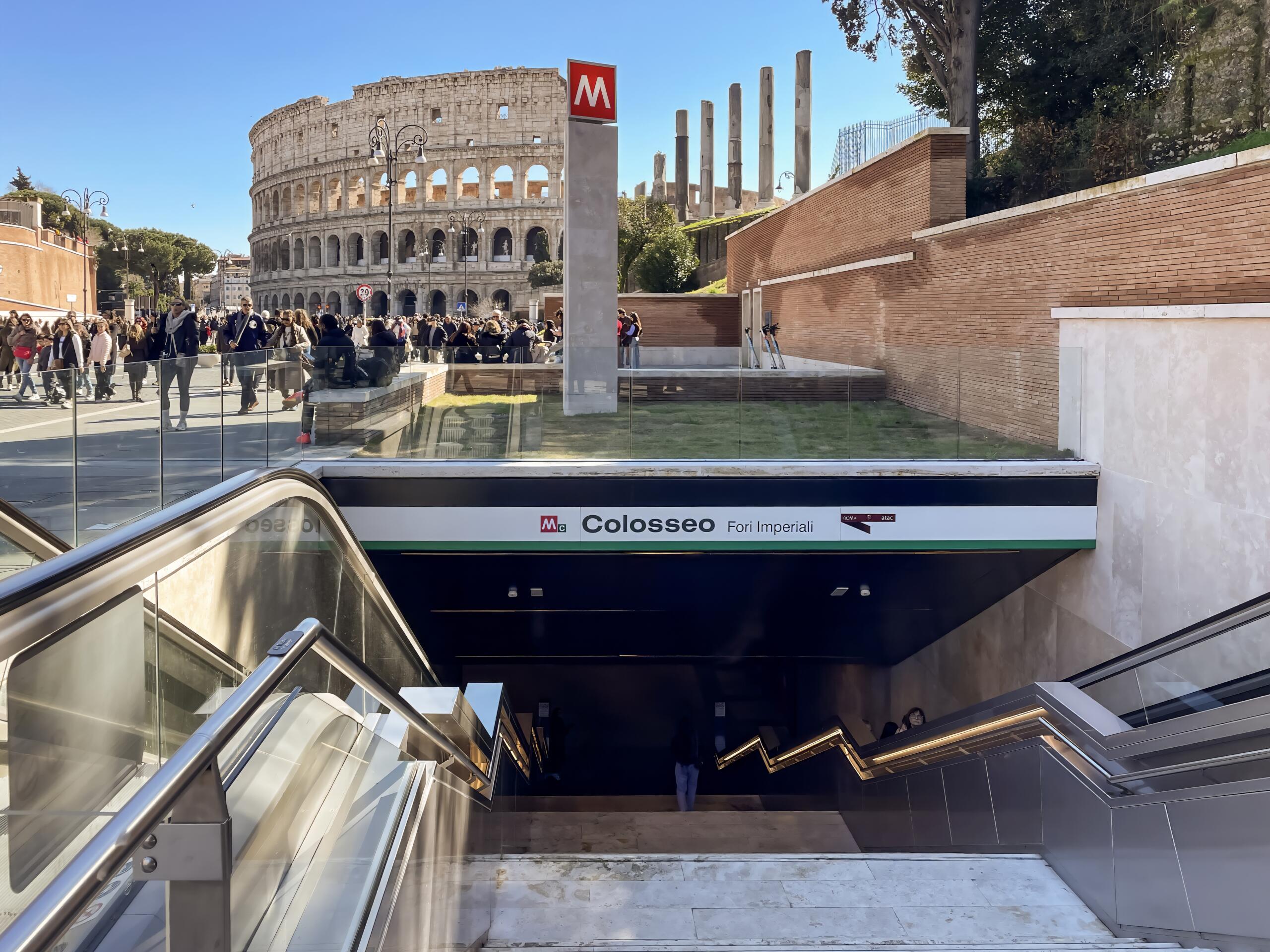
Colosseo Fori Imperiali metro station in Rome, Italy — Credit: rarrarorro, Shutterstock
POLIS: How can cities and regions increase synergies between mobility and tourism?
FG (IdFM): By treating mobility not as a service layer added to tourism, but as its structural backbone. As I mentioned before, this approach is already visible in Île-de-France, and the experience of the Olympic Games further confirmed this logic. In 2024, we showed that high passenger flows can be managed effectively when public transport, active mobility, digital tools and communication are fully coordinated. Under our leadership, the Games relied on close cooperation between operators, infrastructure managers, local authorities, the State, and event organisers.
The Olympics also highlighted the importance of anticipating multimodal hub reorganisation, improving passenger circulation, wayfinding, cycling facilities, eco-bus infrastructure and real-time information systems. These investments were not limited to major events; they strengthened the long-term performance and attractiveness of everyday urban mobility from then onward.
CN (NECSTouR): For us, a key priority is also breaking down the persistent silos between mobility and tourism. To do so, collaboration with networks such as POLIS is essential: stronger cooperation helps ensure that both policies are developed in a more coherent and integrated way, better aligned with sustainability, accessibility, and territorial cohesion objectives.
This logic also extends to implementation. In the Normandy Region, initiatives such as the D-Day Bus Line and the Low Carbon Rate scheme demonstrate how linking transport planning with tourism offers improve accessibility, encourage sustainable travel choices, and support more balanced territorial development. Data remains a key enabler, and by combining tourism and mobility datasets, regions can better forecast demand, monitor impacts, and improve both visitor experience and local quality of life.
Moreover, stronger governance is essential. Tourism authorities, mobility planners, and destination management organisations must work together from the outset, ensuring that mobility is embedded as a strategic pillar of destination development rather than treated as an operational layer.
EP (Rome): Indeed, true synergy requires institutional redesign: mobility and tourism departments often operate with different objectives, timelines, and success indicators. Without alignment of metrics, coordination remains superficial.
For us, three changes are necessary. First, shared data systems that allow cities to track mobility and tourism patterns together. Second, joint planning instruments that integrate tourism strategy with mobility planning. Third, integrated funding mechanisms that reflect the overlap between the two sectors. Networks like POLIS can play a crucial role in supporting this transition, particularly by bridging cities and European-level policy development as the EU strategy moves into implementation.
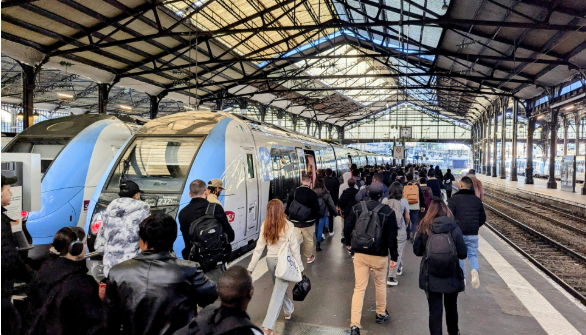
Passengers at the Gare de Paris-Saint-Lazare, France — Credit: Brice Perrin
Click here to read the article in its original format.
About the contributors:
Interviewees: Cristina Núñez, Strategy Director, NECSTouR. Expert in regional development, public policy and EU funding, with more than 15 years of experience leading European networks and interregional projects. Núñez specialises in sustainable tourism, EU public affairs, fundraising, stakeholder engagement, and strategy development across multi-level governance.
Eugenio Patanè, Deputy Mayor for Mobility, City of Rome. A lawyer by training, Patanè has served in Rome's City Council, the Lazio Regional Council—where he chaired the Committee on Infrastructure, Public Works, Mobility and Transport—and now leads the mobility transformation of one of Europe's largest municipal territories, covering public transport, tram network renewal, cycling infrastructure, road safety, and access regulation.
Françoise Guaspare, Senior Policy Advisor, Île-de-France Region, Penholder of the European Commission Expert Group on Urban Mobility Guidance Report on the Tourism and Mobility Nexus. Guaspare is a long-standing member of POLIS’ Management Committee and provides extensive expertise in the intersection of mobility, tourism, and regional policy.
Interviewer: Sara Mecatti, Project & Communications Officer, POLIS. Mecatti's role at POLIS is divided between projects and the Comms team. She holds a BA in Politics, Philosophy and Economics and an MA in Communications and New Media. Passionate about social inclusion, when she is not busy working on active mobility, she plays guitar and edits podcasts.
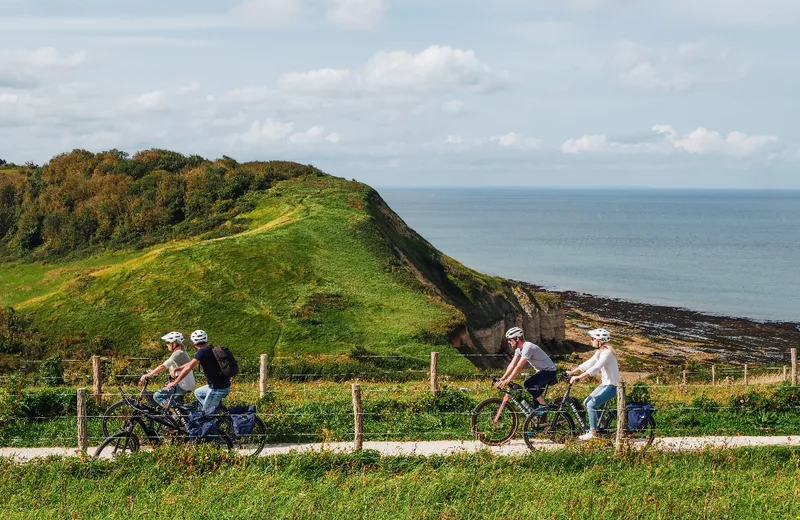 Credit: Loc Vélo, Normandy Tourism