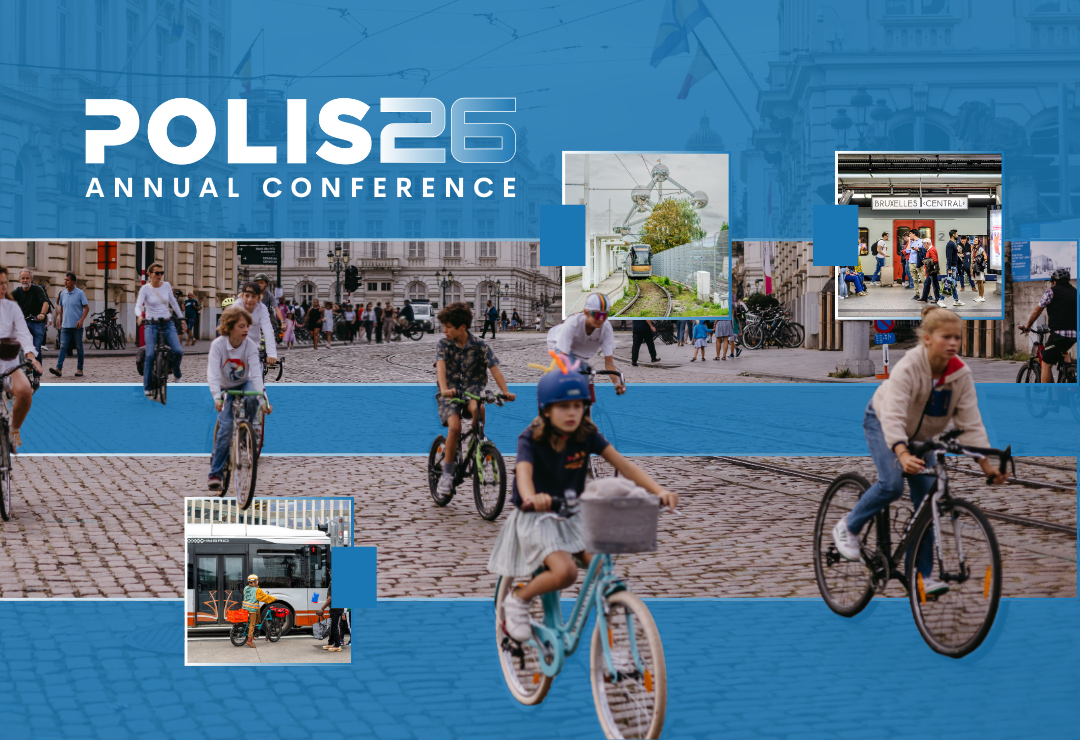
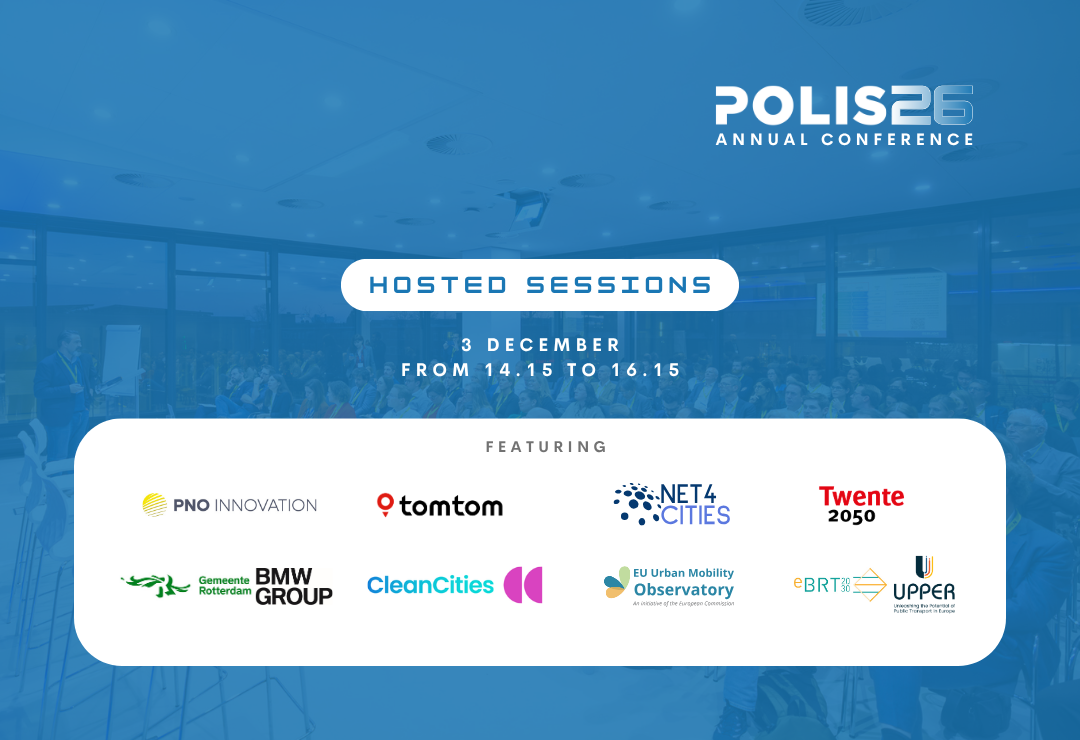
Annual POLIS Conference 2026 features hosted sessions on 3 December
For the first time, the Annual POLIS Conference will feature a series of eight hosted parallel sessions on 3 December, from 14.15 to 16.15, showcasing the ideas, innovations and implementation strategies shaping the next generation of urban mobility, from smarter cycling and stronger public transport, to cleaner air and fairer mobility systems.
Governing The Transition: Aligning Stakeholders And Funding For Zero-Emission Mobility
Moving to zero-emission mobility requires more than new vehicles and infrastructure. This session explores how cities can coordinate public authorities, operators, technology providers and investors to create the governance frameworks needed to deliver large-scale change. Drawing on experiences from a range of cities, speakers will share practical approaches to aligning stakeholders, systems and financing to accelerate the transition from ambition to implementation.
Featuring speakers:
- Jeanett Bolther, PNO Innovation
- Tanja Ballhorn, City of Copenhagen
- Luca Bellinato, Municipality of Bologna
- Chris Van Maroey, City of Antwerp
From Data to Decisions: How Cities and Regions Turn Mobility Insights into Action
Data is playing an increasingly important role in how transport networks are managed, monitored and planned. This session brings together public authorities and industry partners to showcase how data-driven approaches are being applied in practice, from congestion monitoring and incident management to long-term infrastructure planning. Through real-world examples, speakers will explore how transport agencies are using data to support more informed operational decisions and develop effective mobility strategies for the future.
Featuring speakers
- Saurav Miglani, TomTom
- Pierre Maere, Geosquare
- David Conlon, National Transport Authority (NTA), Ireland
- Pieter Morlion, MORE LION
Ultrafine Particles And (Non-) Exhaust Emissions: Supporting Cities With New Air Quality Challenges
As cities make progress on reducing tailpipe emissions, attention is increasingly turning to less visible sources of transport-related pollution. This session will explore how new monitoring approaches for ultrafine particles and non-exhaust emissions can help cities better understand air quality challenges and identify more effective mitigation measures. Bringing together experts from European institutions, research organisations and environmental agencies, the discussion offers a glimpse into the next frontier of urban air quality policy.
Featuring speakers:
 Erika von Schneidemesser, Net4Cities
- Lucia Bernal Saukkonen, European Commission, Directorate General Environment
- Joonas Vanhanen, Aerosol CoE, ENVEA Global SAS
- Saskia Drossart van Dusseldorp, Zurich University of Applied Sciences (ZHAW)
- Roel Vaneerdeweg, Flanders Environment Agency
- Markus Knoll, Technical University of Graz
 Erika von Schneidemesser, Net4Cities
How Can Smart Cycling Accelerate The Mobility Transition? Building On The Knowledge From Megabits, Verkko And Meridian
Can smart cycling accelerate the mobility transition? This interactive session explores how connected bikes, intelligent infrastructure and digital tools are helping cities improve safety, comfort and network performance. Drawing on experiences from the MEGABITS, VERKKO and MERIDIAN projects, participants will discover practical approaches to bringing smart cycling from concept to reality.
Featuring speakers:
- Robin Kleine, Mobycon
- Benjamin Groenewolt, Region Twente/Twente2050
- Luuk Misdom, City of Helmond
- David Brunner, City of Hamburg/NAPCORE CDT Cycling & Walking
Rethinking The Mobility System: Pricing, Fairness And The End Of Car-Centric Cities
As cities face growing pressure on public budgets, public space and transport affordability, this session asks a bold question: what if mobility systems were redesigned from the ground up? Challenging conventional thinking on transport planning and funding, the discussion explores how principles of efficiency, scarcity and social fairness could shape the next generation of urban mobility.
Featuring speakers:
- Carl Friedrich Eckhardt, BMW Group
- Vincent Joanknecht, City of Rotterdam
The Child-Friendly City Advantage: The Fastest Route To Safer, Greener And More Liveable Streets
Could designing cities for children unlock broader support for active mobility? This session explores how child-friendly streets and neighbourhoods can deliver benefits far beyond young people themselves, helping cities create safer, healthier and more attractive urban environments while building public momentum for change.
Facilitator:
- Barbara Stoll, Clean Cities
Panel 1: Beyond the Backlash and Big Budgets: Quick Wins for Child-Friendly Cities:
- Andréia Lopes Azevedo, POLIS
- Dan Lert, City of Paris
- Eugenio Patanè, City of Rome
- Petra Jens, Mobilitätsagentur Wien
 Dan Lert,
Panel 2: Child-Friendly Cities: Small Changes, Big Benefits:
- Tim Gill, Independent Scholar
- Elliot Treharne, Greater London Authority
- Claire McDonald, Solve the School Run
- Sandra Gugerell, BikeBus Austria
From Planning To Action: Updated Guidance For Developing Sustainable Urban Mobility Plans (SUMPs)
As cities develop the next generation of Sustainable Urban Mobility Plans, effective planning requires more than vision alone. This session explores the European Commission's updated SUMP guidelines, offering practical insights into how cities can develop people-centred mobility strategies that align transport planning with climate, sustainability and quality-of-life goals.
Featuring speakers:
- Robert Szúcs, European Commission, DG MOVE
- Wolfgang Backhaus, Rupprecht Consult
Buses And Beyond: How To Enhance And Promote Efficient Public Transport Solutions
Public transport remains the backbone of sustainable urban mobility, but growing ridership requires services that are reliable, attractive and responsive to users' needs. Drawing on the experiences of cities involved in the eBRT2030 and UPPER projects, this workshop will present practical recommendations and ready-to-use tools for improving public transport performance.
Featuring speakers:
- Hana Peters, Rupprecht Consult
- Eli Nomes, City of Leuven
- Flavio Grazian, UITP
- Vojtech Majer, DPP
The hosted session programme highlights the breadth of innovation taking place across Europe's mobility ecosystem. Bringing together city leaders, researchers, practitioners, industry partners, and policymakers, these discussions move beyond theory to focus on the tools, partnerships and strategies needed to deliver change. For attendees looking for inspiration, practical knowledge, and new connections, the hosted sessions will be among the highlights of the Annual POLIS Conference.
- Related Events