POLIS and Baden-Württemberg advance sustainable mobility as a driver of Europe’s competitiveness and resilience
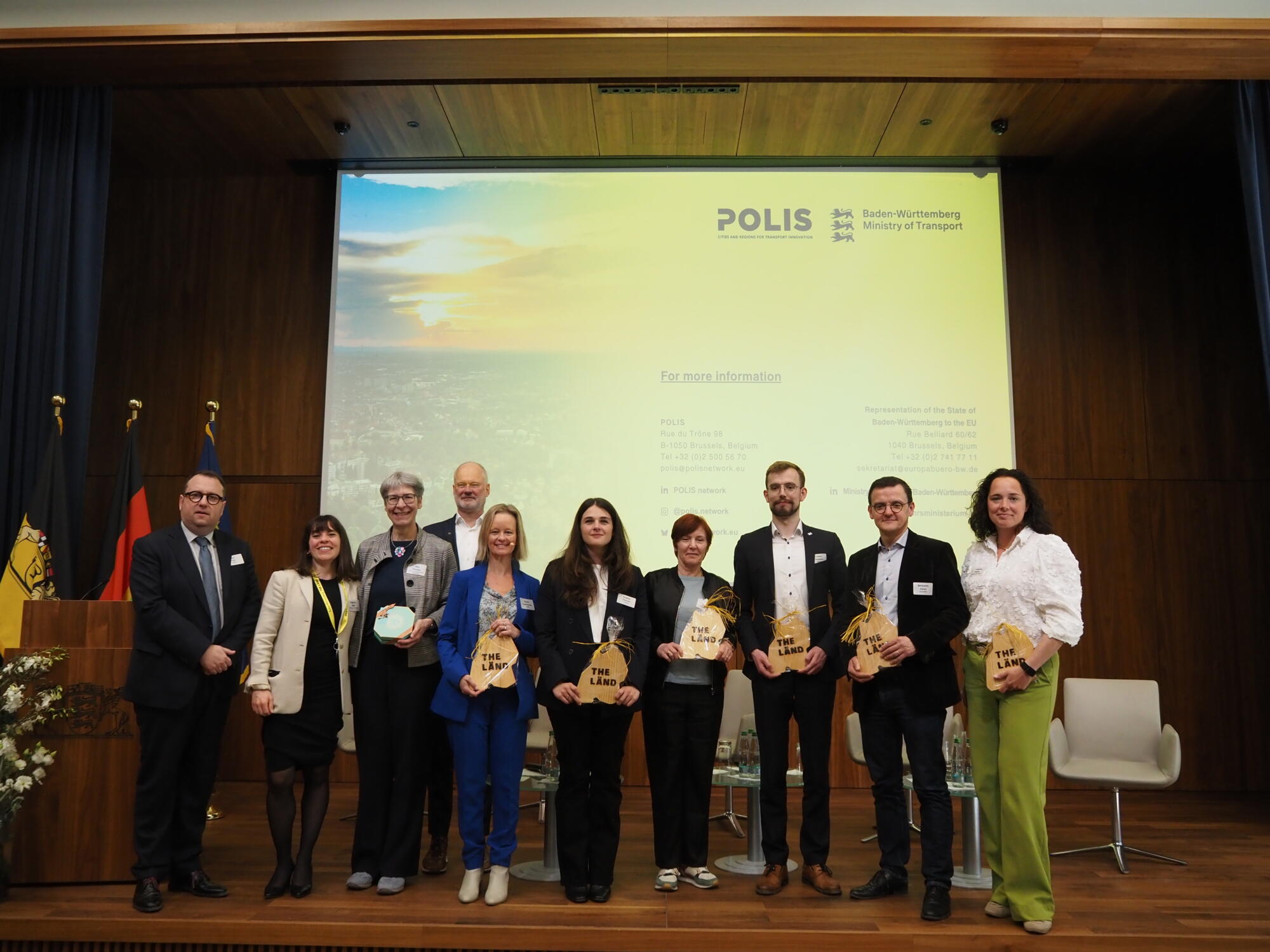
On 23 April 2026, policymakers, industry leaders, and city representatives gathered at the Representation of the State of Baden-Württemberg to the EU in Brussels to discuss sustainable mobility as a core element of Europe’s competitiveness, industrial strategy, and resilience agenda.
The exchange, co-hosted by POLIS and the State of Baden-Württemberg, rested on a shared premise: in 2026 (and, arguably, even before that), sustainable mobility has been sitting well beyond a standalone environmental topic. Embedded in questions of competitiveness, industrial strategy, public investment, and the broader European budgetary framework, it has become a lever for autonomy and a structuring element of how Europe defines and delivers its economic transformation.
Within this framing, cities and regions are identified as central actors shaping mobility outcomes. Their influence extends beyond implementation into system design, investment direction, and the pace at which new technologies scale across Europe.
The geopolitics of mobility

Axel Volkery (DG MOVE) speaks to the audience at the BW x POLIS event
Recent disruptions in global energy supply chains have exposed Europe’s dependence on external fossil fuel sources. This has reframed electrification and clean transport as instruments of strategic autonomy.
Transport policy, therefore, now extends beyond emissions reduction and increasingly touches on economic sovereignty and resilience. As highlighted in the discussion, cities and regions play a decisive role because they control procurement, infrastructure deployment, and service design, shaping which technologies scale and which remain marginal.
As Axel Volkery, Head of Unit B3 'Innovation and Urban Mobility' at DG MOVE, noted:
'Public authorities are shaping the new wide mobility market'
This means that cities and regions are not only implementers of policy but active system builders, with Volkery emphasising their role in enabling 'innovative cooperation, allowing experimentation in real-life conditions, and bringing together stakeholders', and positioning them as key intermediaries between EU objectives and real-world deployment. He further underlined that this role is structurally embedded in investment decisions, where cities and regions act through procurement, funding, and infrastructure planning. In this sense, they do not simply respond to market dynamics, but actively configure them over time.
Finally, Volery stressed the importance of institutional alignment across governance levels, noting that it is 'crucial that European policymaking acknowledges the role of regional and local actors as peer actors for driving change and contributing to a sustainable and competitive European economy'.
Cities and regions as clients of the mobility market

From left to right: Karen Vancluysen (POLIS), Isabelle Prohn (Brainport Bereikbaar), Clotilde Charaix (Transdev), Silke Conrad (Daimler Trucks), Koen Tengrootenhuysen (Decathlon on behalf of European Cycling Industries), and Benedek Jávor (Representation of Budapest to the EU)
Across the first panel, 'Cities and regions: Principal clients of the EU’s mobility market', accessibility emerged as a central concept, both as a transport objective and as a condition for economic participation and territorial cohesion.
In the Eindhoven region, this shift is reflected in a data-driven approach to mobility governance. Facing congestion, fragmented shared mobility services, and population growth, the region has moved towards performance-based coordination supported by continuous dialogue with operators.
As Isabelle Prohn, Programme Manager at Brainport Bereikbaar, explained:
‘We use mobility scans and give them the insights and talk about what the real issues are’
Rather than prescribing solutions, the approach focuses on behavioural and operational data to make constraints visible and guide system design.
However, Eindhoven also illustrates structural limits. Corporate mobility schemes, long-term car ownership patterns, and spatial planning continue to shape behaviour, making rapid change difficult. The challenge is therefore not only to provide alternatives, but to embed them structurally through redesigned incentives across employers, users, and service providers.
Budapest highlighted two other dimensions: institutional fragmentation and fiscal constraint. As Benedek Jávor, Head of the Representation of Budapest to the EU, noted:
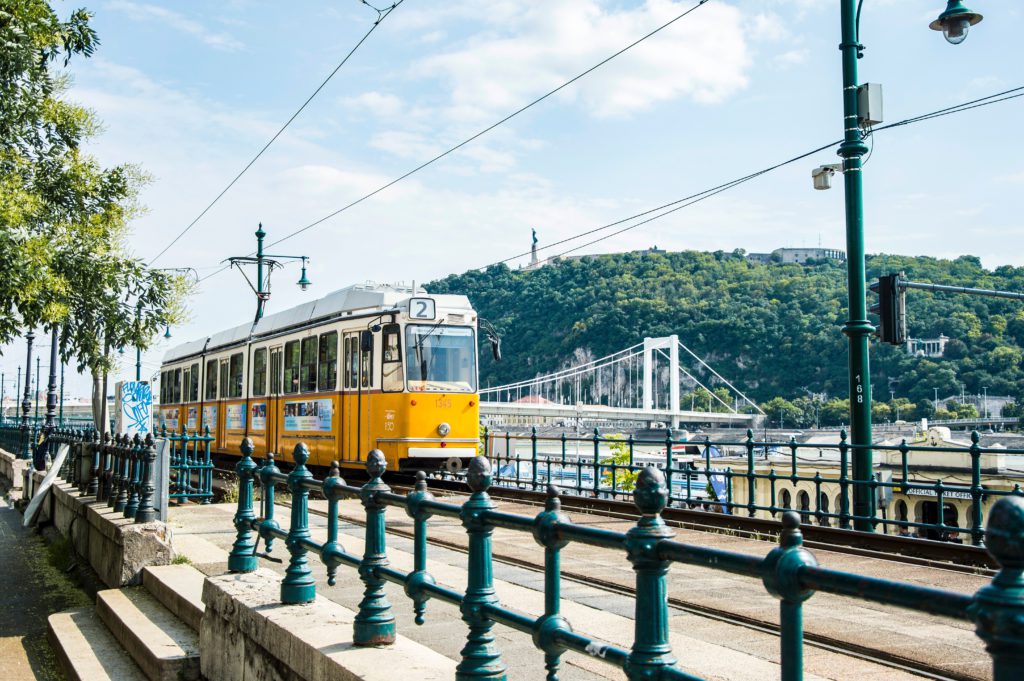
‘We are at a stage where we try to map out what the opportunities are, practically and on an everyday level, for the city to invest a lot into sustainable and accessible mobility’
A persistent mismatch exists between mobility geographies and governance boundaries, intensified by suburbanisation and metropolitan expansion. As a result, cities are shifting from direct operators to system coordinators.
Budapest’s hybrid model, combining public rail infrastructure with outsourced bus operations, reflects this shift. Increasingly, emphasis is placed on contract design, system integration, and performance monitoring.
A key insight was that mobility depends not only on physical infrastructure but also on 'invisible infrastructure': IT systems, maintenance regimes, and operational coordination.
The path to electrification and the scalable alternative of cycling
From the operator perspective, Clotilde Charaix, Director Climate & Environment Strategy at Transdev, emphasised the fragility of poorly aligned transitions:
‘It is absolutely easy to mess up a transition from fuel buses to electric buses, and the difference is information’
Electrification, she argued, is not a simple technology substitution but a systems coordination challenge involving grids, depots, vehicles, and operations.
Silke Conrad, Head of EU Regulatory Affairs Trucks and Buses at Daimler Trucks, reinforced this:
‘We have to really see it as a whole. We cannot electrify a city or the buses without looking at the infrastructure, the charging infrastructure, and the energy grid’
Electrification was thus framed as a full systems transformation, requiring alignment across energy, transport, and regulatory frameworks operating on different timelines. However, high upfront costs remain a constraint, and even if the total cost of ownership improves over time, cities face immediate fiscal pressure.
Within this context, cycling was presented as a high-impact, low-barrier mobility solution. Koen Tengrootenhuysen, Director Public Affairs Europe at Decathlon speaking for European Cycling Industries, stated:
‘We need to think as the kids of our kids think. We cannot take a look at the main problems that we have on our plates today with the same traditional point of view’
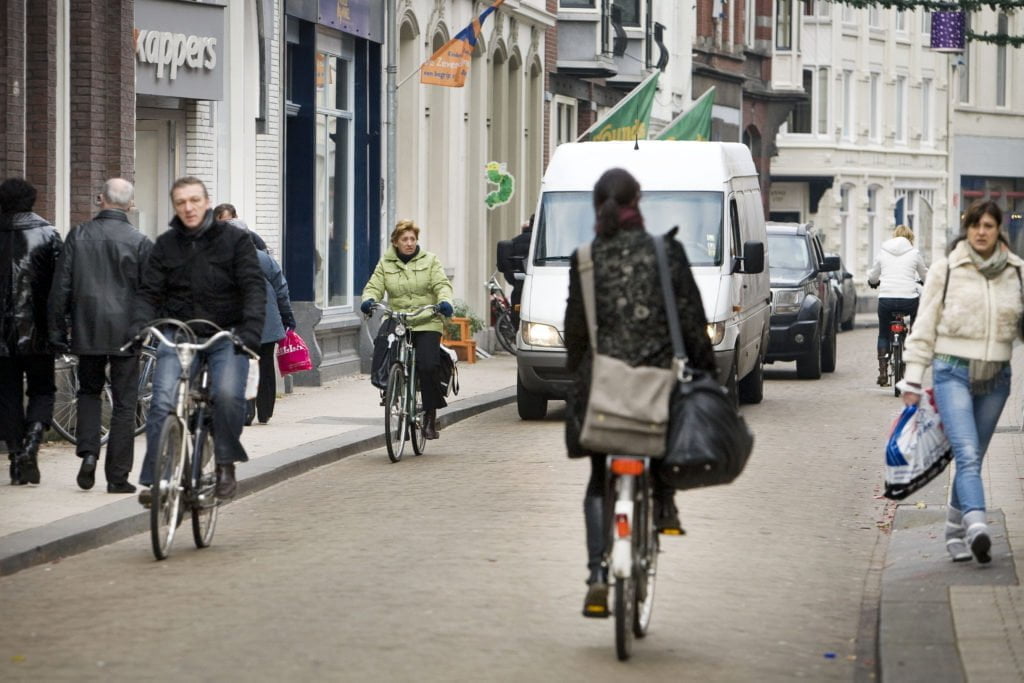
Cycling was framed as a system-level mobility option addressing congestion, transport poverty, and health outcomes, supported by relatively low infrastructure costs. Policy tools such as bike leasing and cycling schemes were highlighted as mechanisms to broaden access.
The pipeline from data to system cohesion
Across all interventions, data emerged as both an enabler and a limitation. From Eindhoven’s behavioural insights to Budapest’s system mapping and Transdev’s operational coordination, a shared tension was visible: systems are becoming more data-rich, but not necessarily more integrated or usable. Information is increasingly available, yet fragmented across platforms, operators, and governance levels. Basically, the mobility transition is no longer primarily constrained by technological feasibility, but by its systemic coherence (or lack thereof) across governance, financing, procurement, and institutional coordination.
Cities and regions are therefore not only implementing policy but actively shaping its direction in line with Europe’s industrial and environmental trajectory—anything but a piece of cake.
Cities and regions as drivers of accessible economic areas

From left to right: Karen Vancluysen (POLIS), Edwin Mermans (Province Noord-Brabant), Elke Zimmer (State of Baden-Württemberg), Fabian Haybach (SME United), and Benjamin Denis (IndustriAll)
The second panel, 'Cities and regions creating accessible economic areas', shifted focus to EU instruments such as the Connecting Europe Facility, the European Competitiveness Fund, and the upcoming 10th Framework Programme for Research and Innovation: these instruments were framed as decisive in determining whether local experimentation and innovation can move beyond isolated pilots and scale into systemic European impact.
Within this context, Elke Zimmer, State Secretary at the Ministry of Transport of Baden-Württemberg, reframed regions not as passive recipients of policy, but as active system shapers. As she put it:
‘Public authorities, through long-term investment in infrastructure, research ecosystems, and regulatory frameworks, often create the conditions in which technological breakthroughs become possible’
From this perspective, competitiveness is a governance result rooted in sustained, place-based investment and institutional coordination.
This logic becomes particularly visible when confronted with demographic and spatial pressures at the regional level. From Noord-Brabant, Edwin Mermans, Strategic Advisor International Affairs for the Province, described urban nodes as interconnected systems facing significant population growth:
‘We have 200,000 more people there in 10 years, and we do not want to buy them a car.’
His intervention underlined how such pressures are already reshaping mobility priorities on the ground, accelerating a gradual shift away from private car dependency towards more integrated public transport and shared mobility systems. However, this transition is constrained by a persistent gap between evolving responsibilities at regional level and the available governance and funding tools needed to implement them at scale.
The structural bottlenecks of scaling Europe’s mobility transition
A further set of contributions shifted attention to the structural conditions underpinning Europe’s mobility transition, particularly the role of SMEs, procurement systems, and labour dynamics.
Fabian Haybach, Policy Advisor for Sectoral, Regional and Rural Policy, SME United, highlighted a persistent mismatch between policy design and business reality. With 26 million SMEs in Europe, 93% of which are micro-enterprises, regulatory frameworks often fail to reflect operational constraints at the smallest scale of the economy. As was emphasised:
‘You need to take into account those small enterprises, those micro-enterprises’
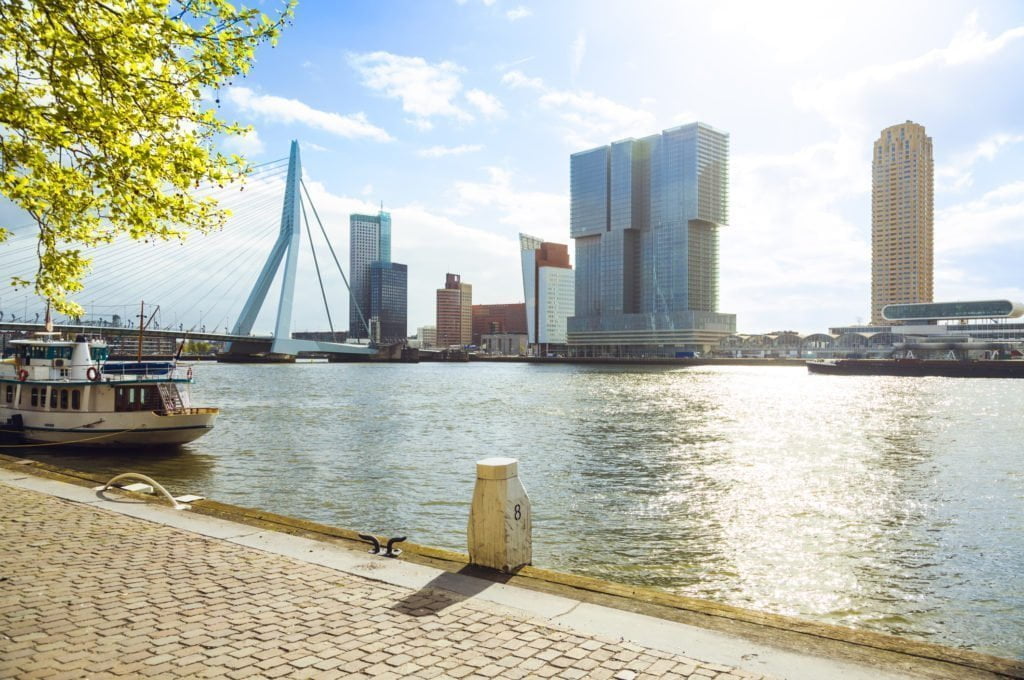
Within this context, the Rotterdam case was presented as a more effective approach. Its five-year transition process combined early-stage engagement, continuous dialogue with stakeholders, and targeted support measures. Rather than treating policy change as a one-off regulatory intervention, it embedded transition into an ongoing governance process.
Building on this question of implementation, Benjamin Denis, Head of Industrial Policy Coordination at IndustriAll, introduced the labour dimension of industrial transformation, pointing to a growing tension between strategic narratives and lived realities within the workforce:
‘There is an increasing discrepancy between the kind of narrative that we have been promoting about industrial transition, and on the other hand, the reality they have to cope with’
The intervention underlined that without stronger alignment between climate policy, industrial strategy, and social protection frameworks, the legitimacy and social acceptance of the transition risk would be undermined.
Against this backdrop, the discussion turned to procurement and system scaling as critical but underdeveloped levers of change. Procurement was described as both a central instrument of transformation and a recurring bottleneck. Cities, in particular, were seen to engage too late in innovation cycles, focusing primarily on purchasing decisions rather than shaping upstream system conditions such as charging infrastructure, energy networks, or integrated deployment frameworks.
These structural delays were further amplified by the challenge of technological scaling, particularly in the context of automation. While other global regions are advancing towards deployment, Europe remains largely in pilot and demonstration phases. From a regional governance perspective, Elke Zimmer, State Secretary at the Ministry of Transport of Baden-Württemberg, reinforced how these tensions reflect broader systemic constraints in aligning policy ambition with implementation capacity across infrastructure, regulation, and investment cycles.
In parallel, start-ups and scale-ups were identified as key but underutilised drivers of innovation, constrained by fragmented regulatory pathways and limited access to scalable market environments.
A systemic challenge
Europe’s mobility transition is not primarily limited by technology or ambition, but by system integration. Procurement frameworks, governance capacity, financing structures, and institutional coordination now determine outcomes, and the central question is therefore not direction, but speed: whether Europe can scale coherent mobility solutions quickly enough to meet both internal expectations and external competitive pressure.
______
MORE
- Related Events
- Related Members
Baden-Württemberg-POLIS Policy Event: Sustainable mobility in cities and regions for a competitive Europe

Baden-Württemberg