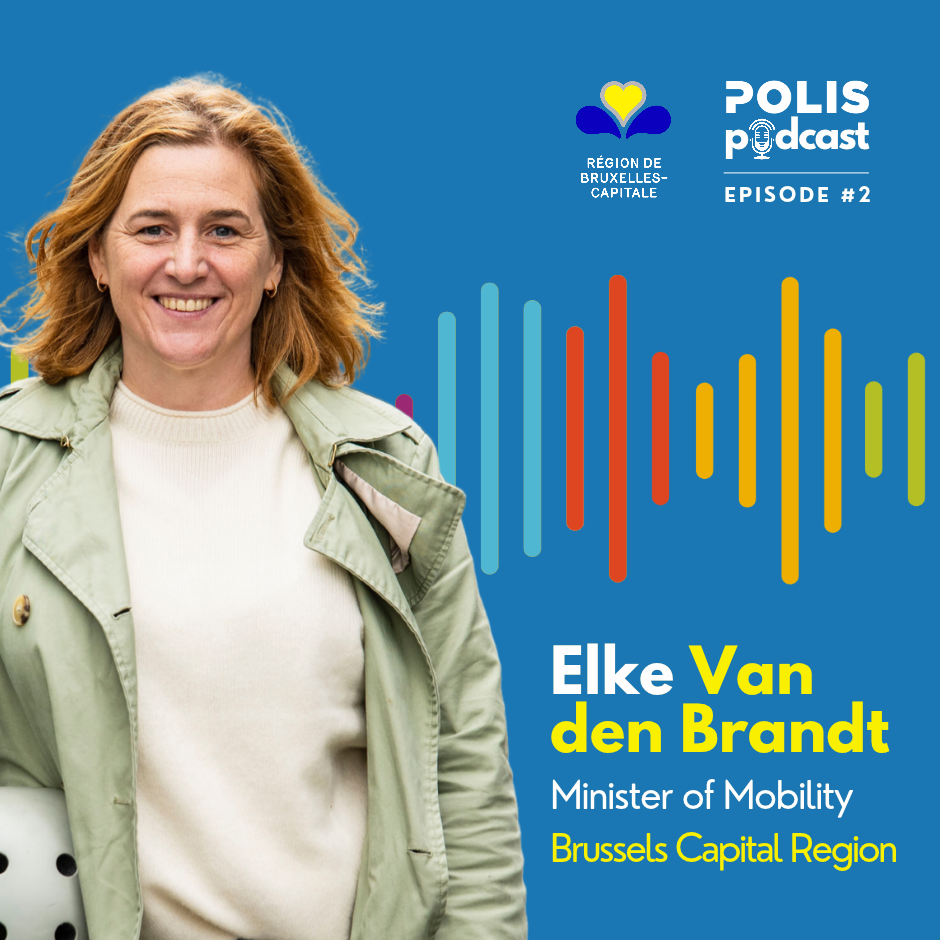
POLIS Podcast – Episode #2
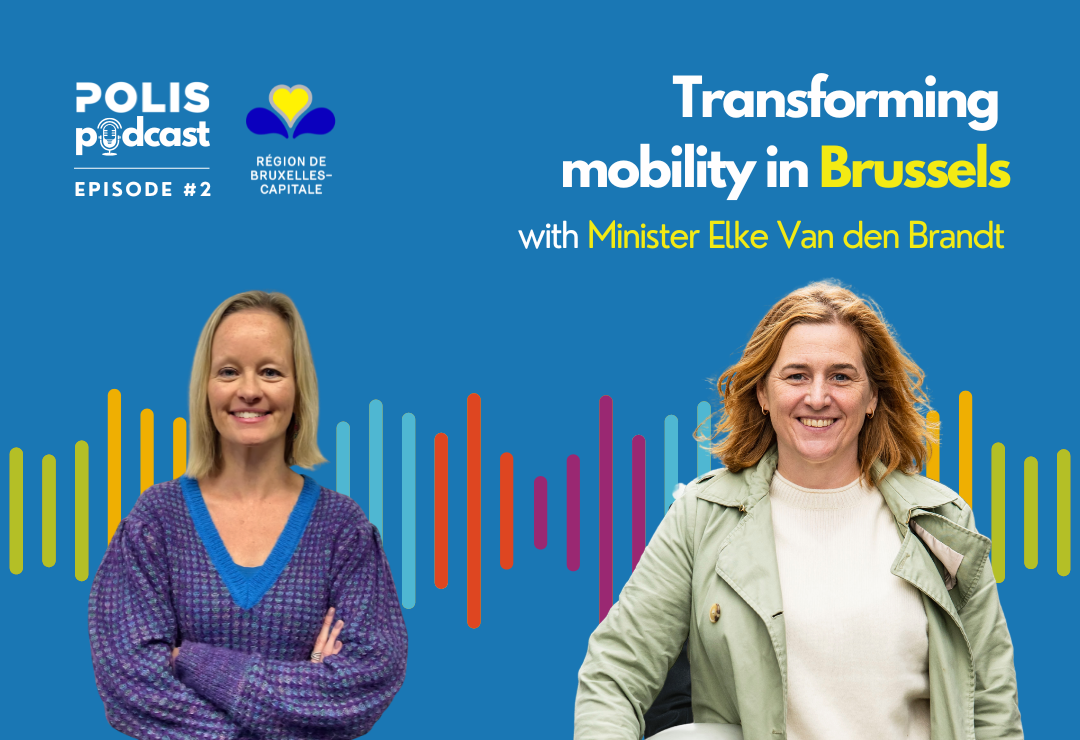
Transforming mobility in Brussels with Minister Elke Van den Brandt
In the second episode of the POLIS Podcast, Brussels Minister for Mobility Elke Van den Brandt discusses the city’s mobility transformation, from Good Move and safer streets to public space, climate resilience, and the political challenges of changing how people move around the city.
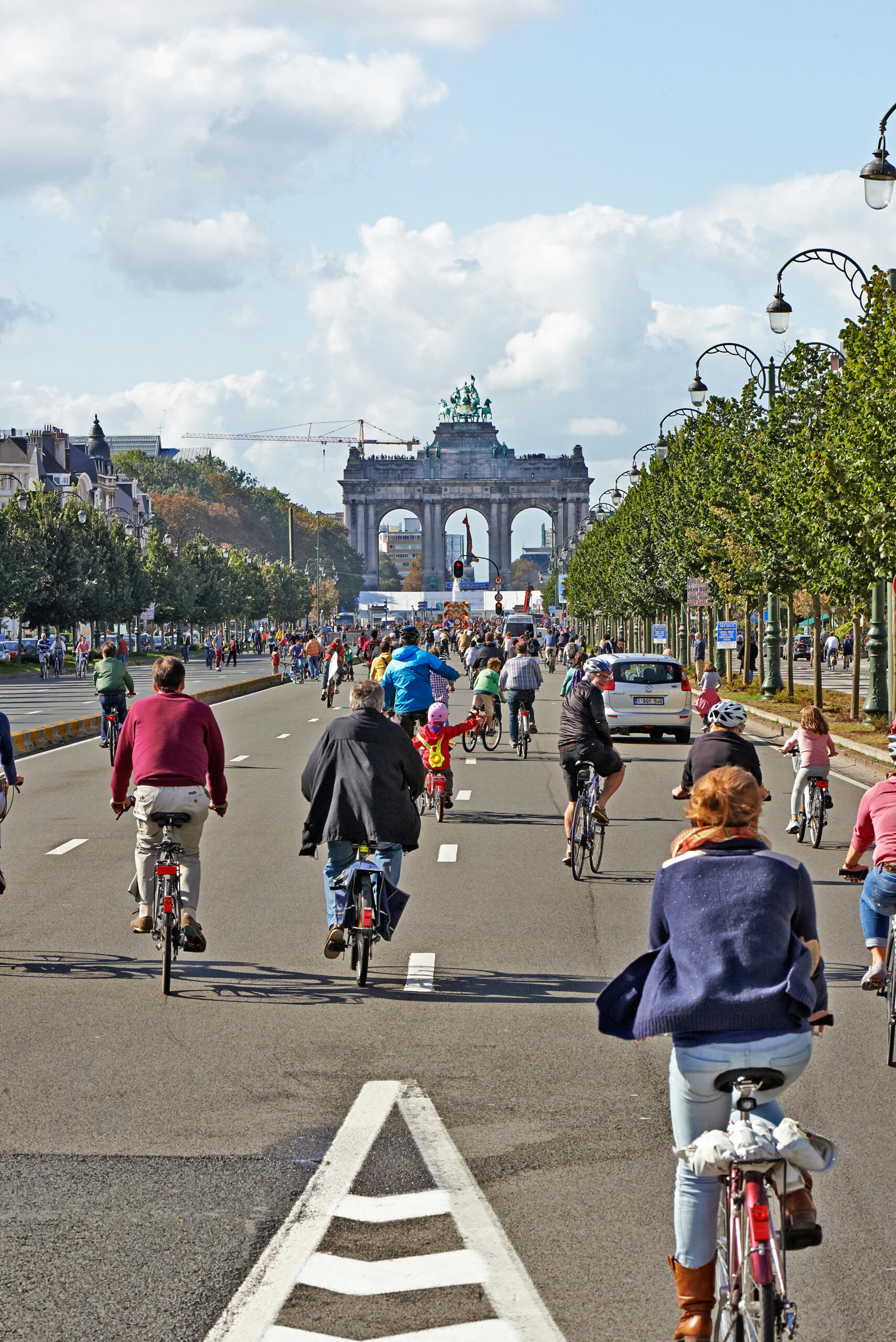
Credit — Leonid Andronov
What does it take to transform mobility in a capital city? And how can cities make the shift towards safer, healthier, and more sustainable transport while bringing residents along?
Ahead of the Annual POLIS Conference 2026 taking place in Brussels, the second episode of the POLIS Podcast explores how the city is rethinking the role of mobility and what it takes to turn long-term ambitions into actual changes on the ground.
In conversation with POLIS Secretary General Karen Vancluysen, Elke Van den Brandt, Minister for Mobility of the Brussels-Capital Region, reflects on the development and implementation of Good Move, the city-region’s sustainable mobility plan, and the wider shift towards a city where public space is safer, greener, and more welcoming for people.
Brussels-Capital Region at a glance
- Country: Belgium
- Population: ~1.2 million inhabitants
- Municipalities: 19
- Mobility focus:
- Improving quality of life and public space;
- Making neighbourhoods safer and supporting walking and cycling;
- Strengthening public transport and multimodal mobility;
- Improving road safety, with an ambition of zero deaths and serious injuries by 2030;
- Reducing the environmental and health impacts of mobility.
- Key initiatives:
- Regional Mobility Plan 2020–2030 (Good Move), approved in 2020 and subject to continuous evaluation;
- City 30, with 30 km/h as the general speed limit across the Region since January 2021;
- Good Neighbourhood, including low-traffic neighbourhoods, School Streets and projects to improve public space;
- Good Network, organising transport networks around accessibility, multimodality, walking, cycling and public transport;
- Low Emission Zone (LEZ), covering the Brussels-Capital Region;
- Continued development of the STIB-MIVB public transport network.
From mobility plan to liveable city: Brussels’ approach
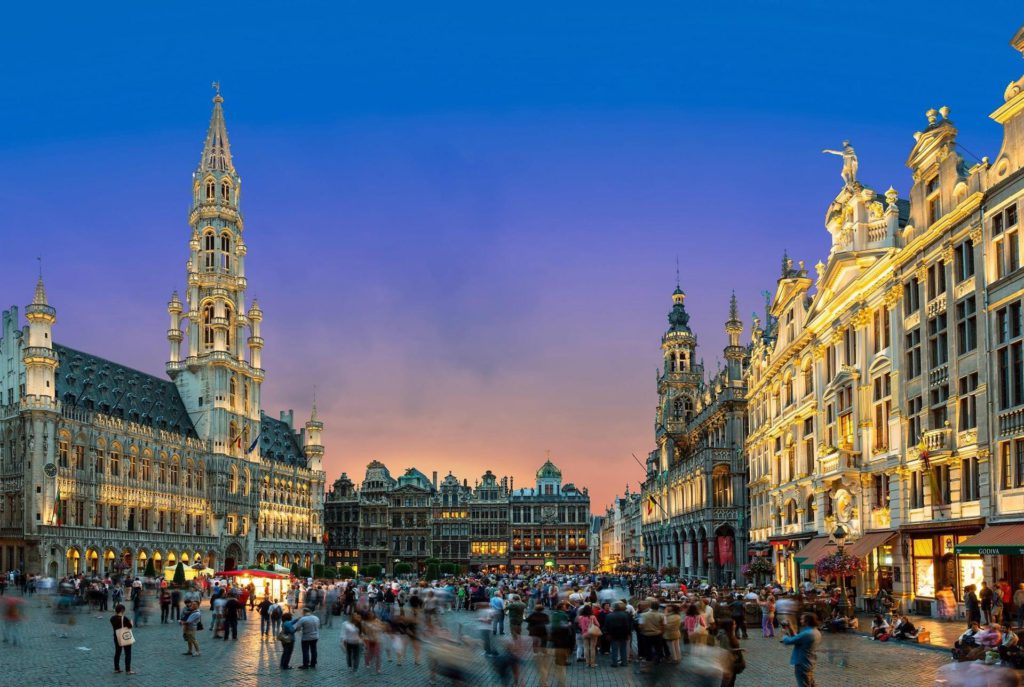
At the heart of Brussels’ mobility transformation is the idea that mobility is about more than getting from A to B. It is also about how public space is designed and shared, and ultimately about what kind of city people want to live in.
The episode explores how Brussels has sought to put this principle into practice through Good Move and a range of measures designed to improve safety, accessibility, public transport, walking, and cycling.
A major focus is road safety, including the region-wide 30 km/h speed limit and the ambition to create streets where children can safely walk or cycle to school. The discussion also examines the links between mobility and health, from air quality to the unequal environmental conditions experienced across different parts of the city.
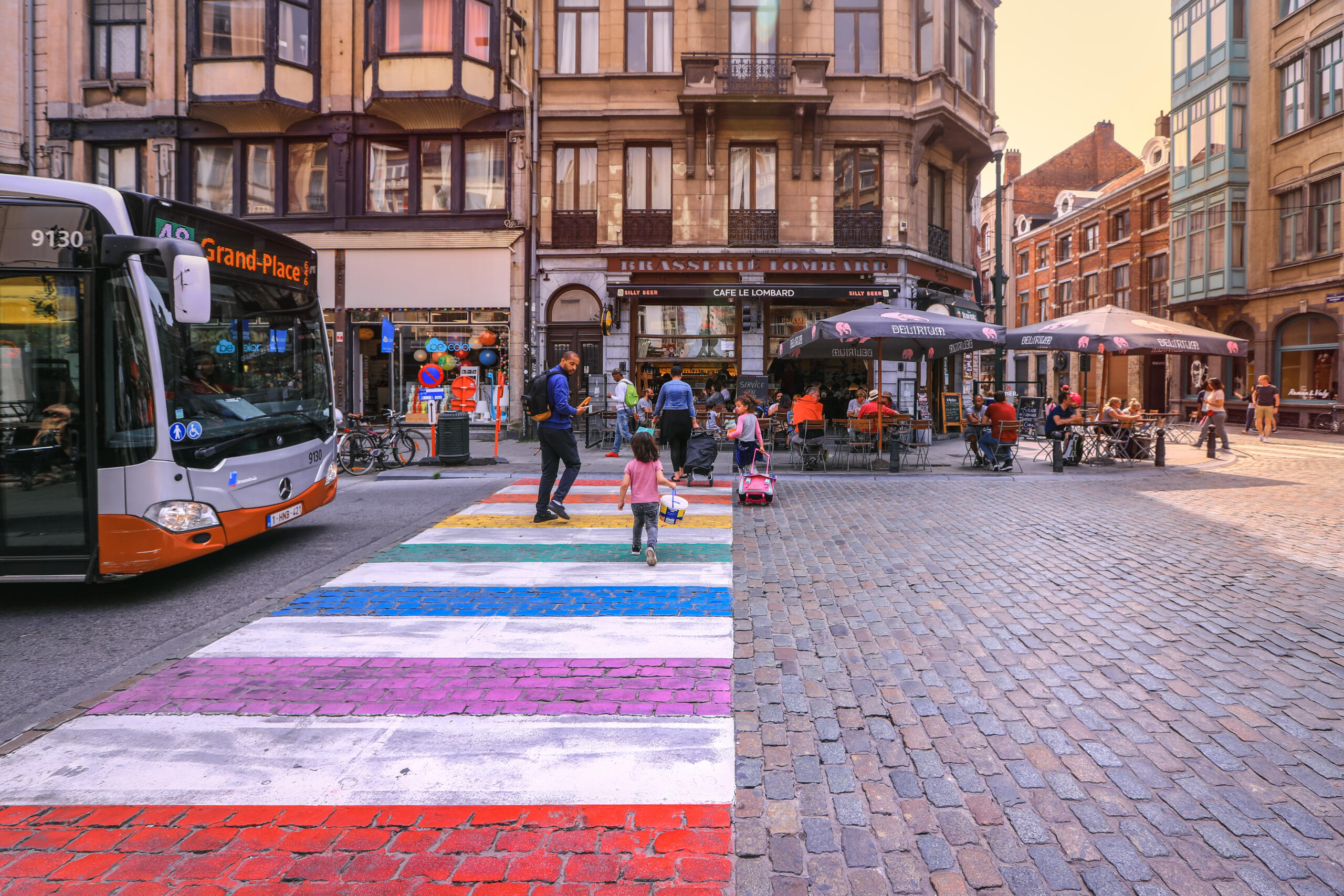
The conversation then looks beyond transport, considering how urban mobility can contribute to climate resilience. As cities face heat waves, flooding, and increasing pressure on public space, Brussels is exploring how greenery, trees, and better-designed streets can become part of a broader approach to urban planning.
The experience of Good Move also highlights the challenge of implementation. Transforming streets and reallocating public space can generate strong reactions, making political leadership, public engagement, and the ability to adapt policies important parts of the process.
As Minister Van den Brandt reflects throughout the episode, adapting the way policies are implemented does not necessarily mean abandoning the long-term destination. For Brussels, the wider objective remains a city where mobility contributes to quality of life, safety, health, and sustainability.
Listen to the episode now on your preferred platform!
- Related News
- Related Events
- Related Members
- Related Pages
POLIS Podcast returns with second episode featuring Brussels Mobility Minister Elke Van den Brandt