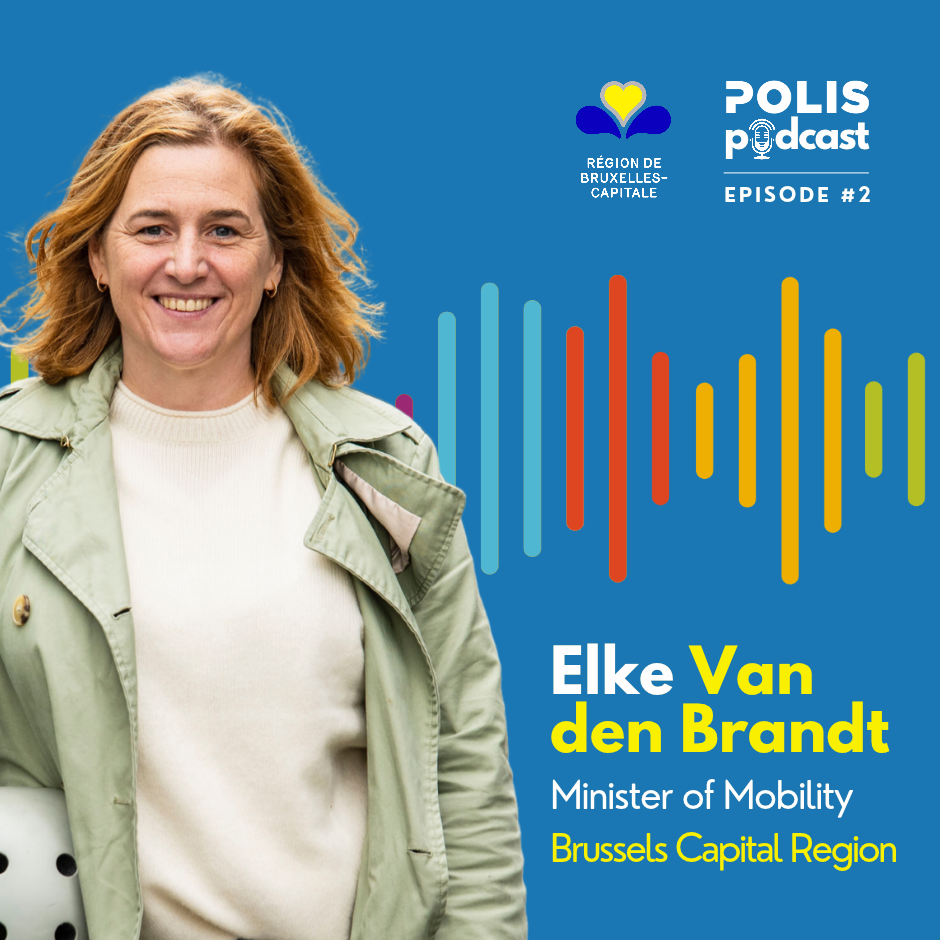
POLIS Podcast returns with second episode featuring Brussels Mobility Minister Elke Van den Brandt
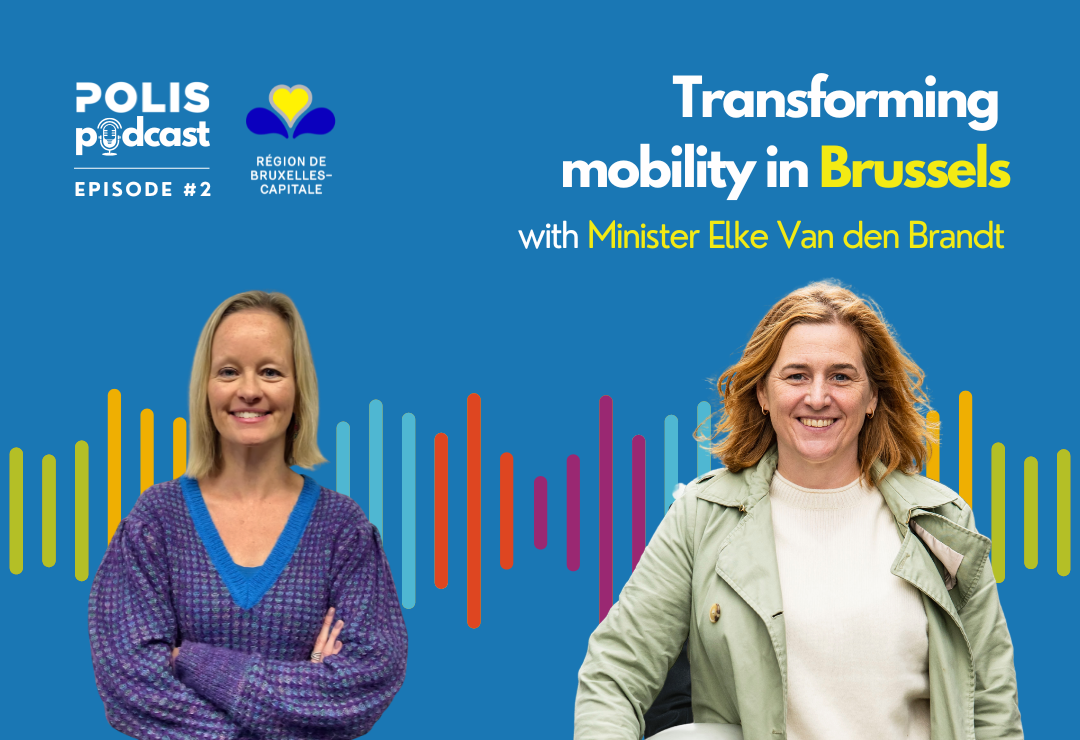
The second episode of the POLIS Podcast turns to Brussels, where Minister for Mobility Elke Van den Brandt discusses how the Belgian capital is rethinking mobility, public space, and quality of life ahead of the 2026 Annual POLIS Conference.
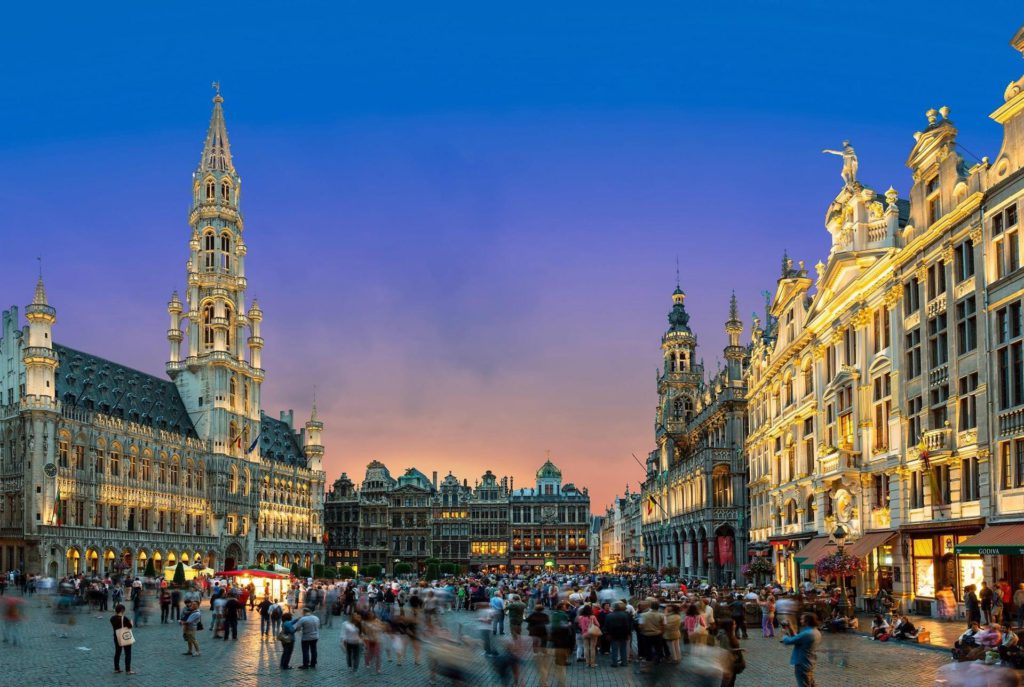
Credit — Leonid Andronov / Shutterstock
The POLIS Podcast, a series dedicated to bringing you inside Europe’s cities and regions to hear how local leaders are shaping the future of sustainable mobility, has now launched its second episode!
POLIS Podcast host and Secretary General, Karen Vancluysen, talks to Elke Van den Brandt, Minister for Mobility of the Brussels-Capital Region, to reflect on the transformation of Brussels and the experience of implementing Good Move, the city-region’s sustainable mobility plan. The conversation looks at how mobility policy can reshape public space, improve road safety, support active travel, and contribute to better health and quality of life.
Episode #2 - Rethinking mobility in Brussels
For Minister Van den Brandt, mobility is about much more than getting from A to B. It is also about what kind of city residents would want to live in, and how streets and public spaces can become safer, greener, and more welcoming for everyone.
The episode explores Brussels’ experience of putting this vision into practice. From transforming streets and pedestrianising central areas to introducing 30 km/h across the Region, Brussels has been testing how mobility changes can drive a broader shift in how urban space is used.
The discussion also addresses the realities of implementation. Good Move has generated strong public and political debate, particularly around circulation plans and the reallocation of road space. Minister Van den Brandt reflects on what Brussels has learned from this experience, the importance of listening and adapting, and how cities can maintain long-term ambitions while responding to concerns on the ground.
Making space for a safer, healthier Brussels
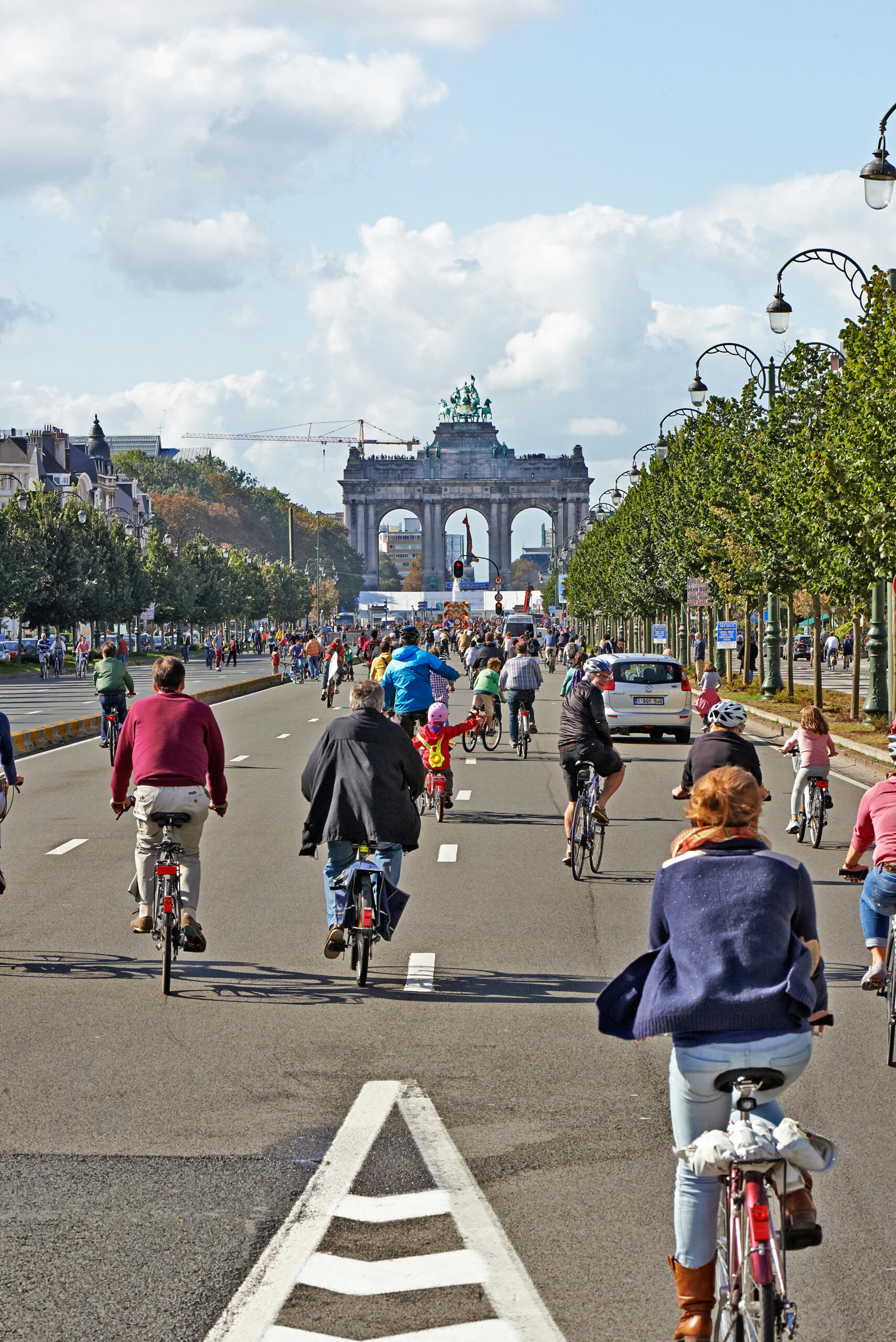
The episode highlights how mobility decisions are also decisions about public space, safety, health, and liveability. Reallocating space between different modes of transport can change how neighbourhoods function and how people experience the city, while measures such as lower speeds and safer streets can make walking and cycling more accessible, particularly for children.
Road safety is also a major theme of the conversation. Brussels’ Vision Zero ambition for 2030, alongside the region-wide 30 km/h limit, reflects a wider effort to reduce deaths and serious injuries and create streets where people feel safe moving around the city.
The discussion also explores the links between mobility and public health, including air quality and the unequal environmental impacts experienced across the city. Climate change adds another dimension, with greener public spaces, trees, and better urban design increasingly seen as part of how Brussels can prepare for heat waves and flooding.
For Brussels, the experience of Good Move also illustrates that long-term mobility transformation is as much about implementation and political dialogue as it is about infrastructure. As policies are tested and adapted, the broader objective remains to create a safer, healthier, and more liveable city for all.
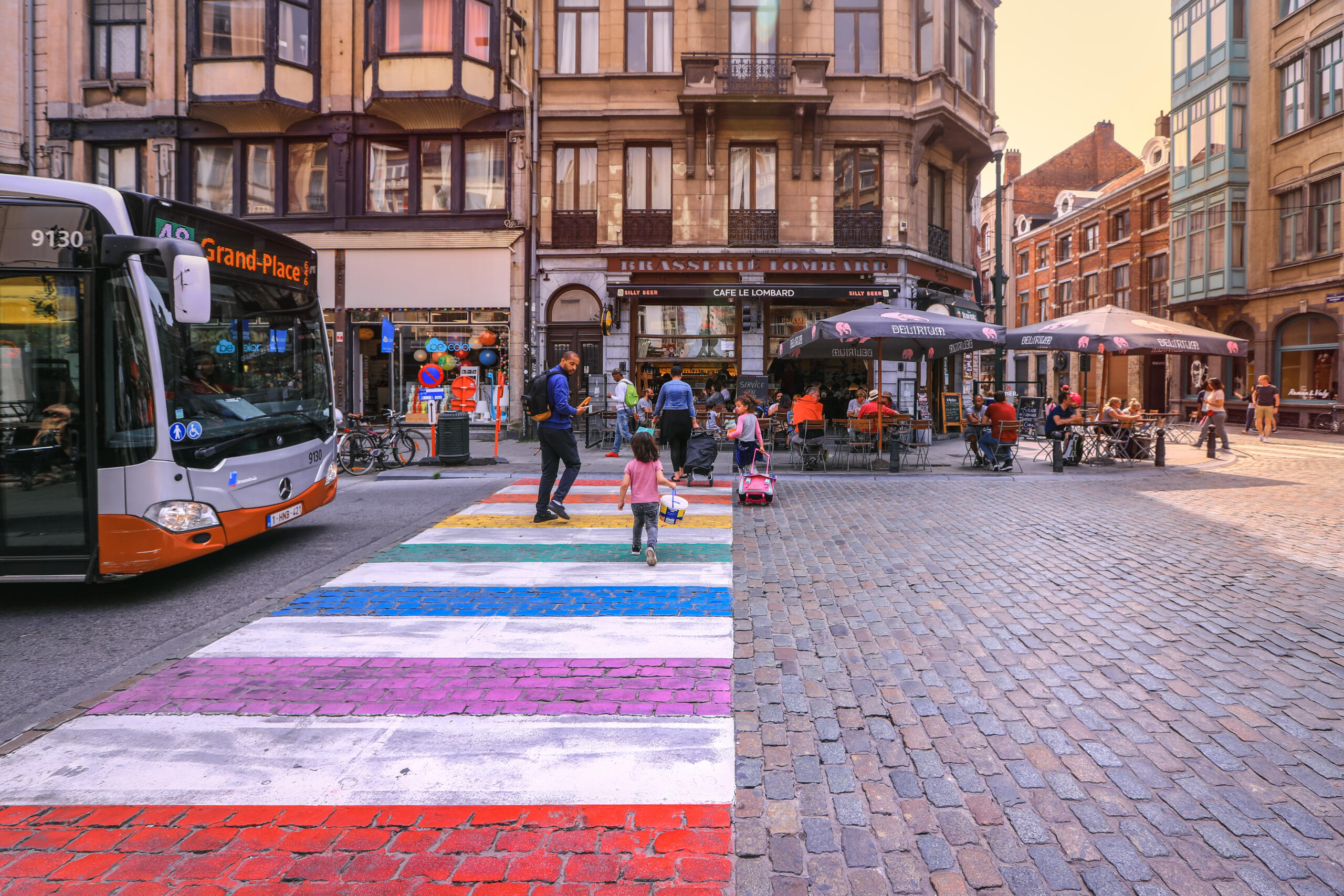
Credit — Eo naya / Shutterstock
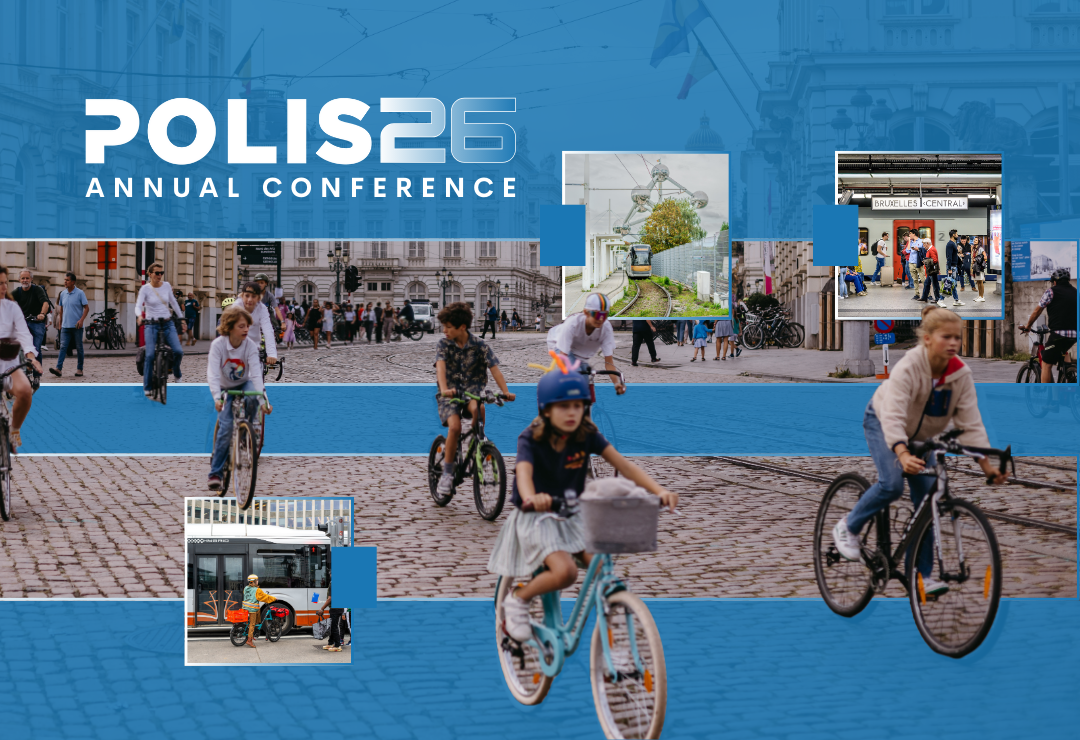
Join us in Brussels for #POLIS26!
On 2–3 December 2026, the Annual POLIS Conference will return to Brussels, bringing together more than 1,000 mobility professionals from cities, regions, industry, research, and the wider transport community.
With registrations now open, #POLIS26 will provide two days of high-level discussions, technical sessions, networking, and exchange on the latest developments in sustainable urban mobility. The 2026 programme features 40 parallel sessions, two high-level plenaries, and eight hosted sessions, covering topics ranging from active mobility and public transport to decarbonisation, digitalisation, logistics and governance.
This episode offers a timely insight into Brussels’ own mobility journey and an invitation to continue the conversation in the city itself.
Find out more and register for the Annual POLIS Conference here.
Listen to the episode now on your preferred platform!
Find out more about the POLIS Podcast here.
- Related Events
- Related Documents
- Related Members
Annual POLIS Conference 2026