Political leaders discuss competitiveness and sustainable mobility pathways at the POLIS Political Group meeting in Zagreb
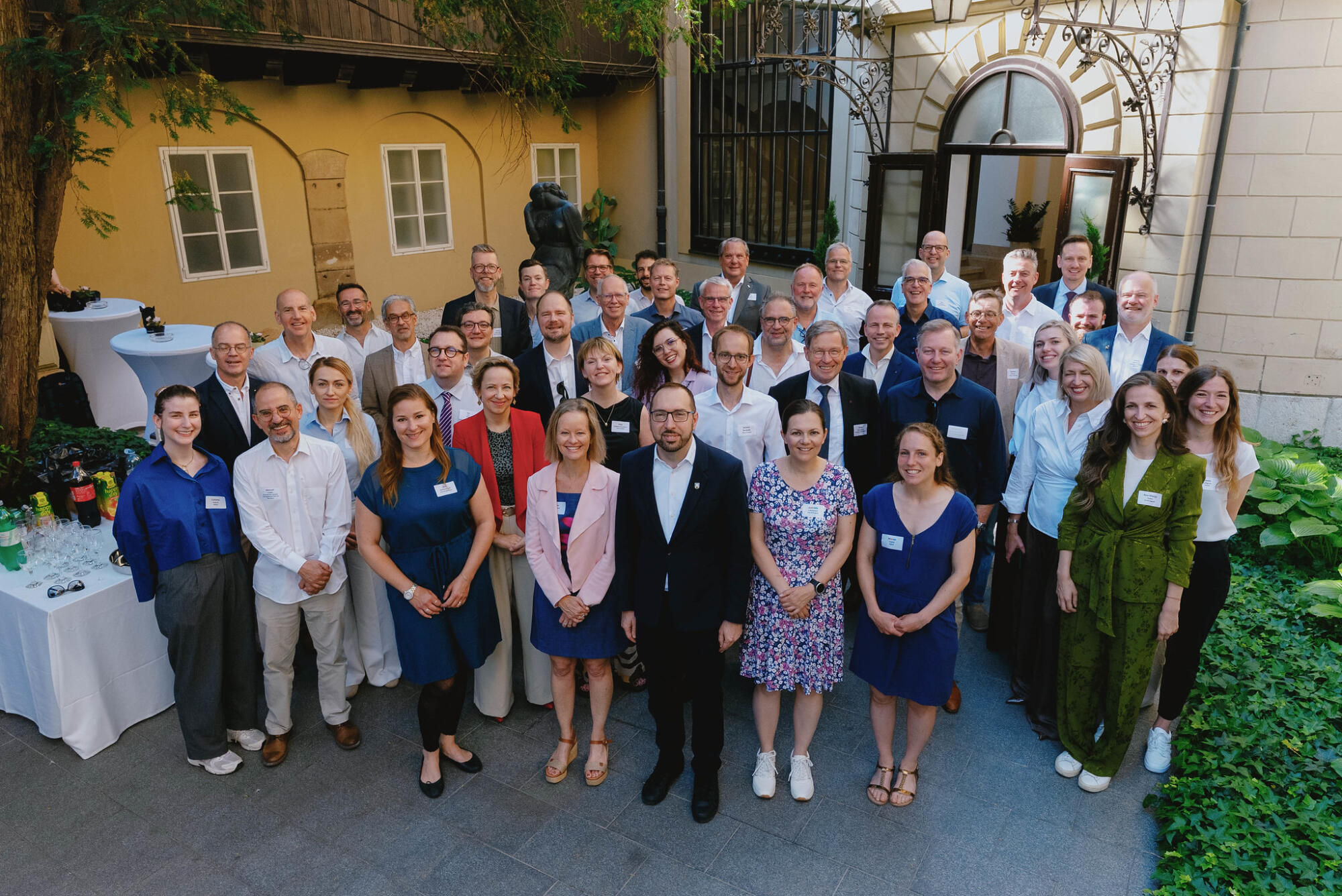
On 27 May 2026, political leaders from across the POLIS membership gathered in Zagreb for the POLIS Political Group meeting, hosted by the City of Zagreb.
Taking place the day after the POLIS Leadership Summit in Zagreb, the Political Group meeting offered a complementary setting for discussion, moving from the broader exchange between public authorities, industry representatives, and European stakeholders at the Summit to a smaller, closed-door dialogue among POLIS members.
Held in the historic Dverce Palace, elected representatives were able to engage in open and candid discussions on shared challenges, exchange experiences from their own cities and regions, and reflect on the political leadership needed to advance sustainable mobility. The conversations focused on local mobility transitions, key developments in European transport policy, and the role of cities and regions in delivering competitiveness, cohesion, and climate objectives.

Zagreb Mayor Tomislav Tomašević welcomes attendees at the POLIS Political Group meeting — Credit: Hrvoje Baudoin
Opening the meeting, Tomislav Tomašević, Mayor, City of Zagreb, welcomed participants once again to Zagreb.
"We are very happy and feel privileged to host the Political Group meeting of the POLIS network here in Zagreb," said Mayor Tomašević. "It is an honour for a city that joined the network only two years ago. It is also an important opportunity to show that the work we are doing on sustainable urban mobility reflects a broader movement taking place in cities across Europe. Sharing these experiences helps demonstrate that these changes are not unique to Zagreb, but part of a common effort to create more sustainable and liveable cities.”
Advancing sustainable mobility in Zagreb
The first session focused on Zagreb's ongoing mobility transformation, presented by Andro Pavuna, Head of Transport, City of Zagreb.
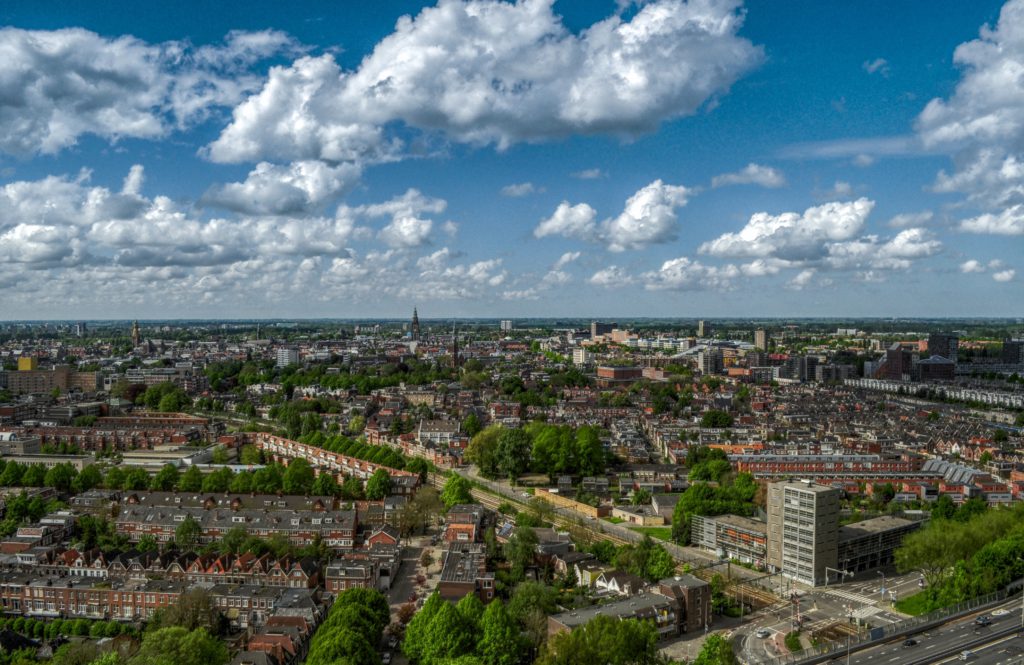
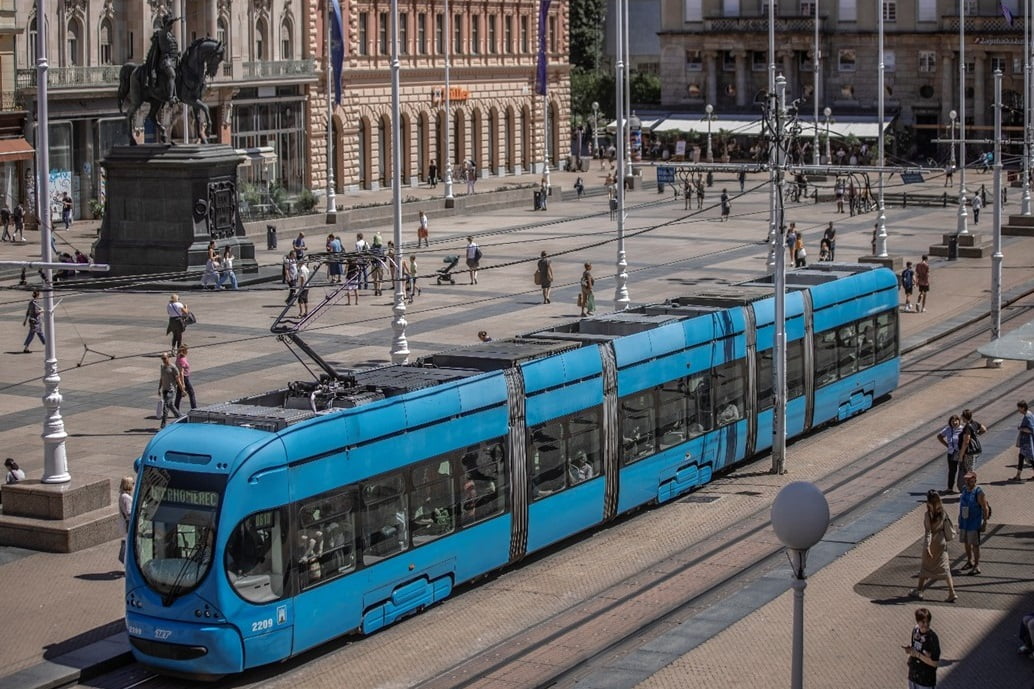
Participants heard how the Croatian capital is working to rebalance public space, expand sustainable transport options, and improve the quality of life for residents. Key developments include investments in tram network modernisation and expansion, several of which are expected to be completed in the coming months, as well as efforts to create more space for walking and cycling.
"There will always be a need for cars in our cities. What we need to do is remove those trips that do not actually require a car", said Pavuna.

Andro Pavuna (City of Zagreb) presenting at the POLIS Political Group meeting — Credit: Hrvoje Baudoin
The role of parking management in shaping urban mobility was highlighted, with Zagreb sharing examples of how space currently dedicated to parking can be repurposed to support cycling infrastructure, greener streets, and more attractive public spaces. Indeed, it was emphasised that mobility planning must consider not only the movement of vehicles but also how urban space is allocated. Cities and regions increasingly face the challenge of balancing competing demands while ensuring that sustainable alternatives remain convenient and attractive for residents.
Find out more about Zagreb’s sustainable mobility journey in the inaugural episode of the POLIS podcast, available here.
In the discussion, participants exchanged experiences on cycling safety, public transport prioritisation, and the political challenges associated with reallocating street space. Representatives from cities and regions highlighted the importance of improving data collection, strengthening multimodal integration, and maintaining public support throughout mobility transitions.
A recurring theme was the need to prioritise the efficient movement of people rather than vehicles. Participants acknowledged that measures such as tram prioritisation and public transport expansion can initially generate resistance, but stressed that long-term benefits for accessibility, efficiency, and quality of life often outweigh short-term disruption.
Key challenges and opportunities in European mobility policy
The meeting also provided an opportunity to review major developments in European mobility policy and their implications for local and regional authorities. The update covered the implementation of the revised TEN-T Regulation, notably new requirements related to Urban Mobility Indicators (UMIs) and Sustainable Urban Mobility Plans (SUMPs), the automotive package and deployment of charging infrastructure, the future of Cooperative, Connected and Automated Mobility (CCAM), and discussions surrounding the next Multiannual Financial Framework (MFF).
Looking at CCAM, members were encouraged to support the POLIS-Eurocities Joint Charter on Automated Mobility in European Cities and Regions, which was officially launched at the Leadership Summit. The Charter sets out a shared vision and guiding principles for the deployment of automated mobility in European cities and regions, emphasising safety, sustainability, inclusiveness and public value.
Find out more about the Charter here.
Overall, the discussion highlighted the importance of ensuring that European initiatives remain practical and manageable for cities and regions while delivering meaningful improvements to urban mobility systems. Local and regional authorities must be recognised as key partners in the implementation of EU mobility policies, given their central role in planning, operating, and investing in transport networks.

Ivo Cré (POLIS) presenting at the POLIS Political Group meeting — Credit: Hrvoje Baudoin
Combining competitiveness, cohesion, and climate objectives
A central focus of the meeting was a strategic discussion on how cities and regions can contribute to a mobility system that is competitive, sustainable, and socially inclusive.
Building on discussions held during the Baden-Württemberg-POLIS Policy Event on sustainable mobility in cities and regions for a competitive Europe and ongoing work on a POLIS competitiveness position paper, Political Group members explored how local and regional authorities can help strengthen Europe's mobility ecosystem while firmly maintaining commitments to climate action and territorial cohesion.
The unique role of cities and regions as infrastructure managers, transport service providers, and procurers was highlighted, and how, through these responsibilities, local and regional governments contribute to Europe’s competitiveness, play a crucial role in creating markets for innovative mobility solutions and therefore should be heard in creating meaningful deployment conditions.
The discussion addressed a range of challenges, including procurement practices, supply chain resilience and the ‘Buy European’ principle – hampered by the availability of European mobility technologies. Members exchanged views on how Europe can strengthen its competitiveness while ensuring that sustainable mobility solutions remain affordable and accessible. Indeed, several participants raised that competitiveness should not be viewed in isolation from broader societal objectives. Instead, they argued that Europe's future success will depend on its ability to combine economic strength with climate ambition and social inclusion.
Participants also stressed the importance of maintaining European funding and innovation instruments that enable cities and regions to continue investing in sustainable mobility solutions. Collaboration between local authorities, industry, and European institutions was identified as a key factor in supporting both competitiveness and the transition to climate-neutral transport systems.
"We need to consider what kind of industrial sector we want to build in Europe, and how the supply chain should be structured. European solutions are preferred when they offer higher quality, but this requires a shift toward more, better, and more accessible European services and assets that can be procured. Cities do not have unlimited resources," said Eugenio Patanè, Deputy Mayor, City of Rome.
Moreover, the envisaged centralisation of funds on the Member State level in the next MFF is a source of concern, undermining EU added value and jeopardising the direct links between the European and local level.

Philip Broeksma (City of Groningen) — Credit: Hrvoje Baudoin
Looking ahead
The meeting concluded with a farewell to Philip Broeksma, Deputy Mayor from the City of Groningen, who was thanked for his longstanding contribution to the Political Group and the wider POLIS network as he steps down from his deputy mayor role. Reflecting on the broader purpose of mobility policy, Broeksma highlighted the value of POLIS and reminded participants that mobility is ultimately about people.
"This is not simply about mobility, space and infrastructure, but about how people move through their lives," said Broeksma.
Closing the meeting, the City of Zagreb thanked participants for their active engagement and reaffirmed the city's commitment to continued cooperation within POLIS.
As cities and regions across Europe navigate increasingly complex mobility challenges, the Political Group meeting in Zagreb highlighted once again the importance of political leadership and collaboration in delivering transport systems that support competitiveness, cohesion, and climate goals alike.
______
MORE
- Related Events
- Related Members
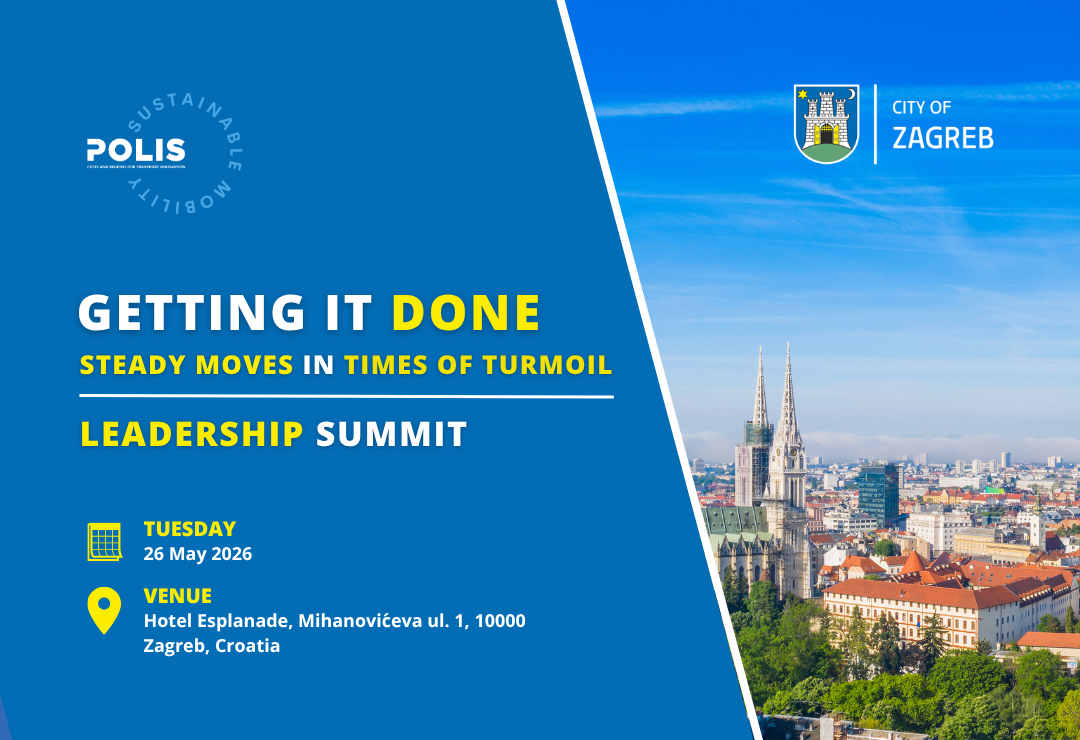
POLIS Leadership Summit: Zagreb