
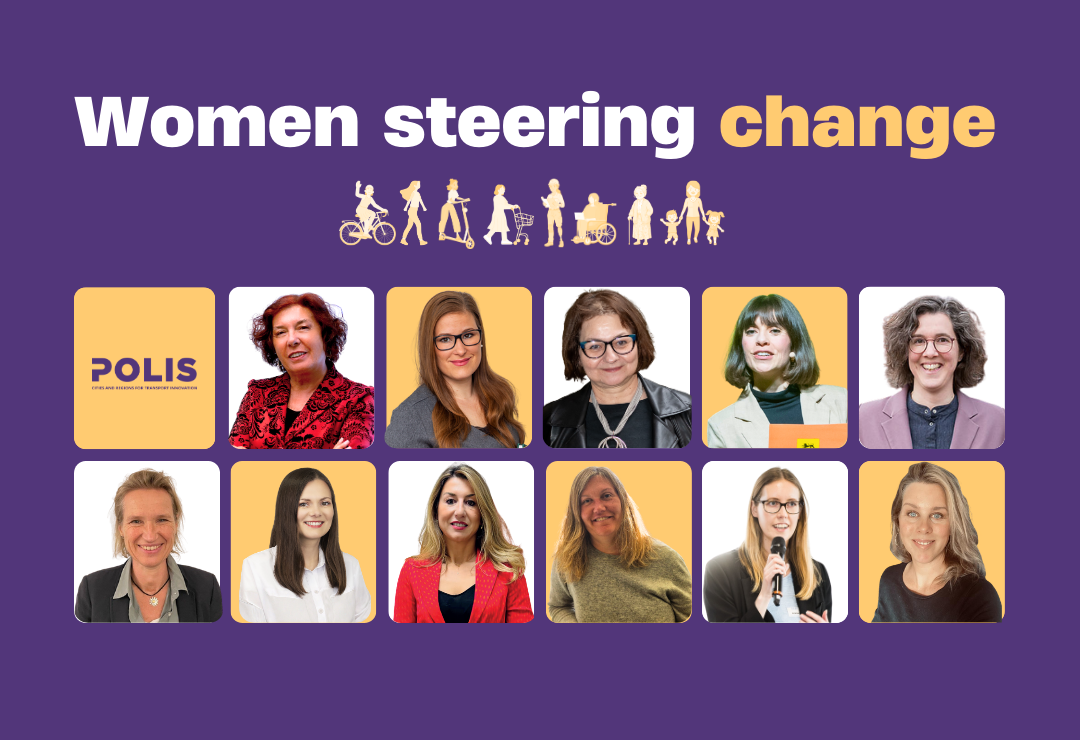
Women steering change: Introducing the women shaping a more inclusive mobility future
To celebrate Women’s History Month 2026, we share the insights of women across the POLIS membership who are fast-tracking the sustainable mobility transition, exploring how the transport sector has evolved and what still remains to be done to make it truly inclusive.
In 2023, we published an article dedicated to the women across the POLIS membership who are helping drive the transition toward more sustainable transport systems. Three years on, the need for inclusive mobility remains more urgent than ever. Recognition alone is not enough: dismantling gender inequalities requires concrete policies, sustained investment, and accountability.
This year's International Women's Day themes, 'Rights. Justice. Action. for ALL Women and Girls' and #GiveToGain, offer a lens through which to explore these issues. The first, defined by the UN, highlights persistent gaps in equal rights and calls for the dismantling of systemic barriers that continue to disadvantage women. #GiveToGain, as part of a global movement celebrating women’s social, economic, cultural, and political achievements, underscores the importance of collaboration, knowledge-sharing, and mutual support across sectors.
To understand how these themes play out in practice within the transport landscape, we turned to the women leading the sustainable mobility transition in POLIS to hear their perspectives firsthand. They emphasised the need for a better understanding of how women move through cities, from collecting gender-disaggregated data to recognising women's complex, multimodal travel patterns. These are often shaped by caregiving responsibilities, off-peak travel, and daily trip-chaining, which can clash with transport networks developed to fit the needs of commuters. Despite women being the majority of public transport users, transport systems that do not match their needs make them more susceptible to transport poverty. Safety, accessibility, and proximity also continue to be central: well-lit streets, reliable public transport, and barrier-free infrastructure are essential elements when discussing gender equality in mobility.
However, infrastructure and technology alone are not enough to achieve inclusive mobility. Collaboration across institutions, cities, and sectors is essential to ensure that politics reflect lived realities. Equally, stronger participation from women in planning and leadership roles sets an important example. This is precisely why we are proud to showcase these women as part of the POLIS membership. In their profiles below, they reveal more on how the mobility sector can better meet women’s needs, how collaboration fosters inclusive transport, and what leadership in gender-inclusive mobility looks like today.
Meet all of them below!
Hover at the bottom of the media slider to click through each profile! For full-screen mode, click the two-arrow icon in the bottom right corner.
- Related Members
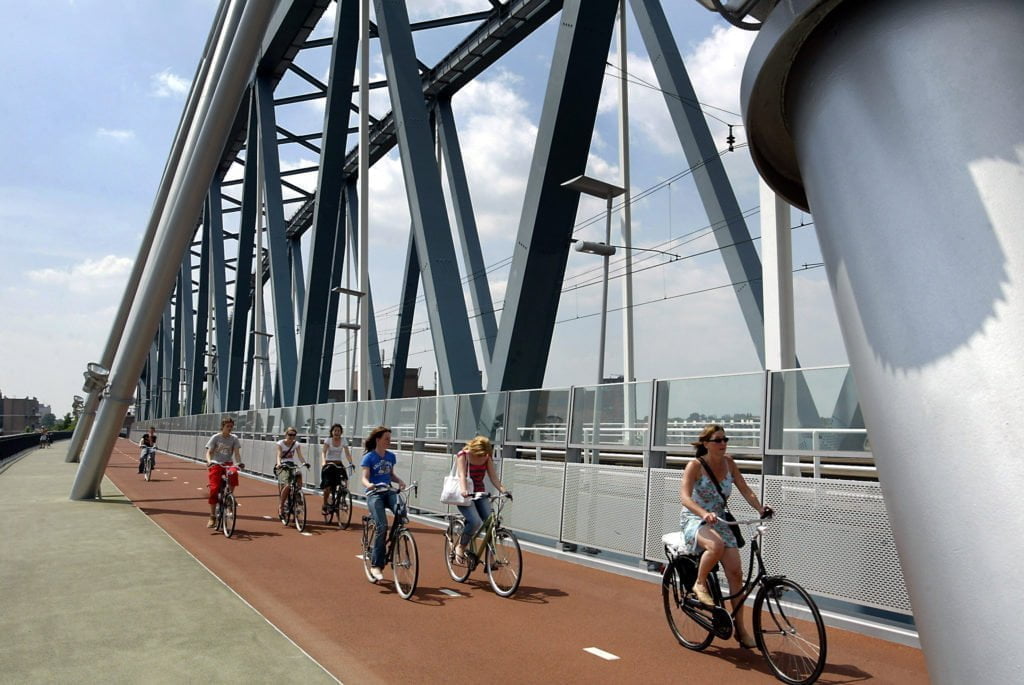
Arnhem Nijmegen

Baden-Württemberg
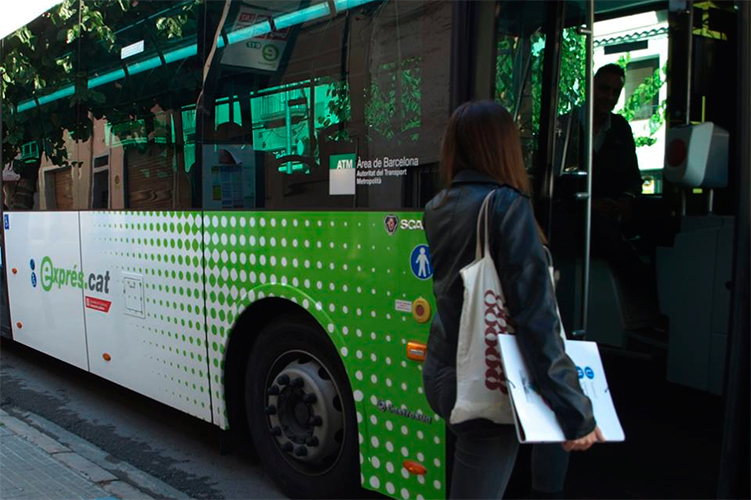



North Rhine-Westphalia
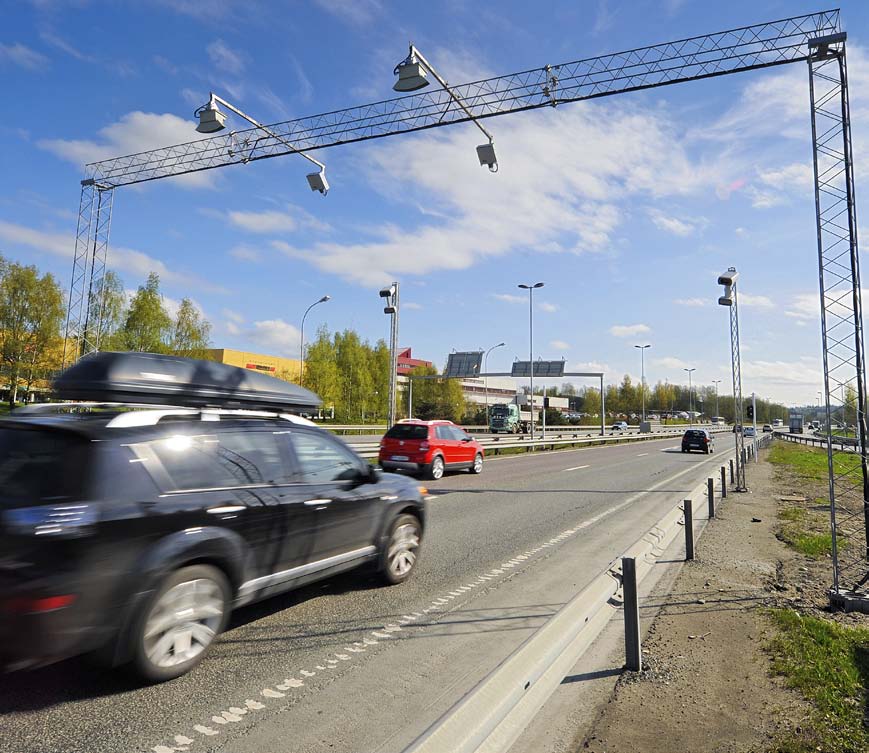
Norwegian Public Roads Administration (NPRA)