POLIS Political Group meets Commissioner Tzitzikostas and MEPs to advance cities’ and regions’ mobility priorities
On 11 December 2025, a high-level delegation of European local and regional leaders from the POLIS membership convened in Brussels to engage with European Commissioner for Transport and Tourism, Apostolos Tzitzikostas, and Members of the European Parliament (MEPs) on the future of mobility for European cities and regions.
The meetings came at a pivotal moment, as negotiations advance on the EU’s next Multiannual Financial Framework (MFF 2028–2034) and key instruments such as the Connecting Europe Facility (CEF-3) and the European Competitiveness Fund (ECF). With these programmes shaping Europe’s transition toward sustainable, resilient and people-centred transport systems, POLIS members highlighted the indispensable role of local and regional authorities in delivering the EU’s mobility ambitions, both in terms of climate and competitiveness.
The delegation, representing nine European cities and regions, stressed that major EU objectives, from clean transport roll-out and Sustainable Urban Mobility Plans to intermodal hubs and digitalisation, are implemented at the local level. To succeed, cities and regions need predictable investment frameworks, clear and direct access to funding, and governance frameworks that recognise their competencies and operational responsibilities.
Funding frameworks must reflect local and regional realities
A central topic of discussion was the proposed introduction of National and Regional Partnership Plans (NRPPs) under the next MFF. While the new model aims to streamline EU funding, POLIS members warned that it risks centralising decision-making and limiting direct access to mobility funds for cities and regions. They noted that without guaranteed access pathways and earmarking, it will be difficult to meet obligations under the revised TEN-T Regulation, particularly regarding SUMPs, intermodal hubs, digitalisation requirements and sustainable infrastructure deployment.

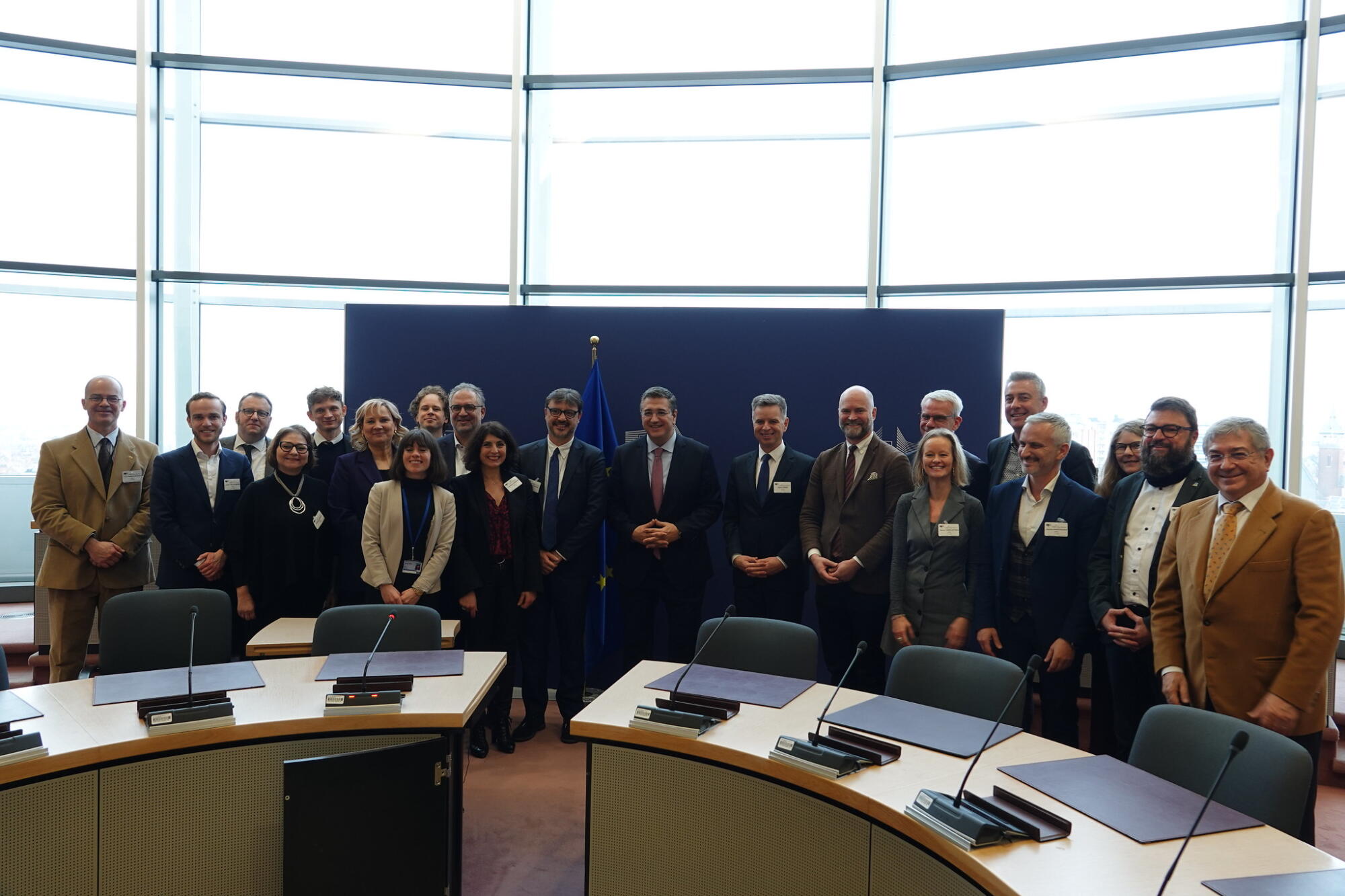
POLIS delegation during the meeting with Commissioner Tzitzikostas
Delegates also welcomed the ambition of the proposed third phase of the Connecting Europe Facility (CEF-3), but expressed remaining concerns: while the Facility’s proposed budget has doubled, the provisions for Urban Nodes are absent. They emphasised the need for the European Competitiveness Fund to better reflect territorial realities: cities and regions can integrate local priorities with supporting clean, resilient transport investment. The ECF should recognise the innovation capacity of cities and regions.
Commissioner Tzitzikostas acknowledged these concerns and reaffirmed the essential contribution of cities and regions to Europe’s mobility, climate, and competitiveness goals. He expressed his readiness to act as an ally of local and regional authorities and stressed that Europe’s objectives can only be met if urban nodes are equipped with appropriate tools and resources.
POLIS members share challenges and solutions

From left to right: Françoise Guaspare, Representative to EU, Île-de-France Mobilités / Martin Kemp, Member of the European Parliament, Luxembourg / Eugenio Patanè, Deputy Mayor, Metropolitan City of Roma Capitale / Marcus Göpfert, Representative to EU, Stuttgart Region / Marko Stančec, Co-Coordinator of the Urban Nodes Task Force
During the meeting, POLIS member cities and regions presented concrete examples illustrating how EU mobility policy plays out on the ground.
Koen Kennis, Vice-Mayor for Mobility, City of Antwerp, reflected on the implementation of the TEN-T Regulation in a city that combines both a major port and an airport, explaining that improving connectivity for both the city and the port requires coordinated investment across multiple governance levels and careful planning to align urban mobility with regional and national infrastructure strategies.
Tuija Telén, Regional Mayor, Helsinki-Uusimaa Region, described the region as a strategic urban node, essential for economic competitiveness and military mobility in the current geopolitical context. The intervention highlighted how local infrastructure and planning decisions can have a continental impact, emphasising the need for tailored support and recognition in EU funding programmes.

From left to right: Justin van Schepen, Advisor, Province of Noord-Holland / Tim Asperges, Advisor, City of Leuven, Belgium / Karen Vancluysen, Secretary General, POLIS, Belgium / Jeannette Baljeu, Member of the European Parliament, Netherlands / Thomas Van Oppens, Deputy Mayor, City of Leuven
Jeroen Olthof, Regional Minister for Mobility, Province of Noord-Holland, highlighted the importance of improving regional connectivity across both major urban nodes and the province’s more rural areas. He stressed that SUMPs and TEN-T obligations must better reflect regional mobility needs, particularly to address mobility poverty and ensure accessible transport beyond large cities. Olthof also underlined the need for EU instruments such as the Social Climate Fund to be accessible to sub-national authorities, and called for coordinated EU action on urban air mobility, noting the rapid development of drone technologies and the need for regulatory and operational preparedness.
Lars Strömgren, Vice-Mayor, City of Stockholm, focused on the city’s engagement with the European Cycling Declaration and the broader challenge of transport system fragmentation, emphasising that cycling infrastructure is not only a daily mobility option but also a driver of economic activity, tourism, and regional connectivity, particularly in rural and peri-urban areas connected to cycling routes.

From left to right: Erwin von Baumgarten, Advisor, City of Stockholm / Eugenia Kolb, Representative to EU, Ministry of Transport Baden-Württemberg / Lars Strömgren, Vice Mayor, City of Stockholm / Marcos Ros Sempere, Member of the European Parliament, Spain / Angel Lopez Rodrigues, Vice Mayor Representative, City of Barcelona / Ivo Cré, Director of Policy & Projects, POLIS
Ioannis Anastasakis, Vice-Governor for Climate Change and Sustainable Mobility, Region of Crete, welcomed the Commissioner's upcoming Tourism strategy, highlighting the importance of the integration of tourism and sustainable mobility policies. He explained how improved connectivity and transport planning support seasonal economies while reducing environmental impact. The discussion underscored the importance of EU support in facilitating holistic solutions that combine mobility, tourism, and climate adaptation.
Eugenio Patanè, Deputy Mayor for Mobility, City of Rome, and chair of the POLIS Capitals Working Group, highlighted the unique challenges faced by capital cities, from organising major events to managing security and balancing high-density urban mobility.
Dejan Crnek, Deputy Mayor, City of Ljubljana and POLIS President, conveyed his appreciation to the Commissioner and extended an invitation to future POLIS meetings. He highlighted Ljubljana’s achievements in people-centred policies, showing how transport improvements have enhanced public spaces and made the city more livable. Crnek emphasised the importance of European support and noted that networks like POLIS enable cities and regions to exchange experiences, coordinate, and innovate, amplifying their voice in EU policy-making and helping replicate successful sustainable mobility solutions across Europe.
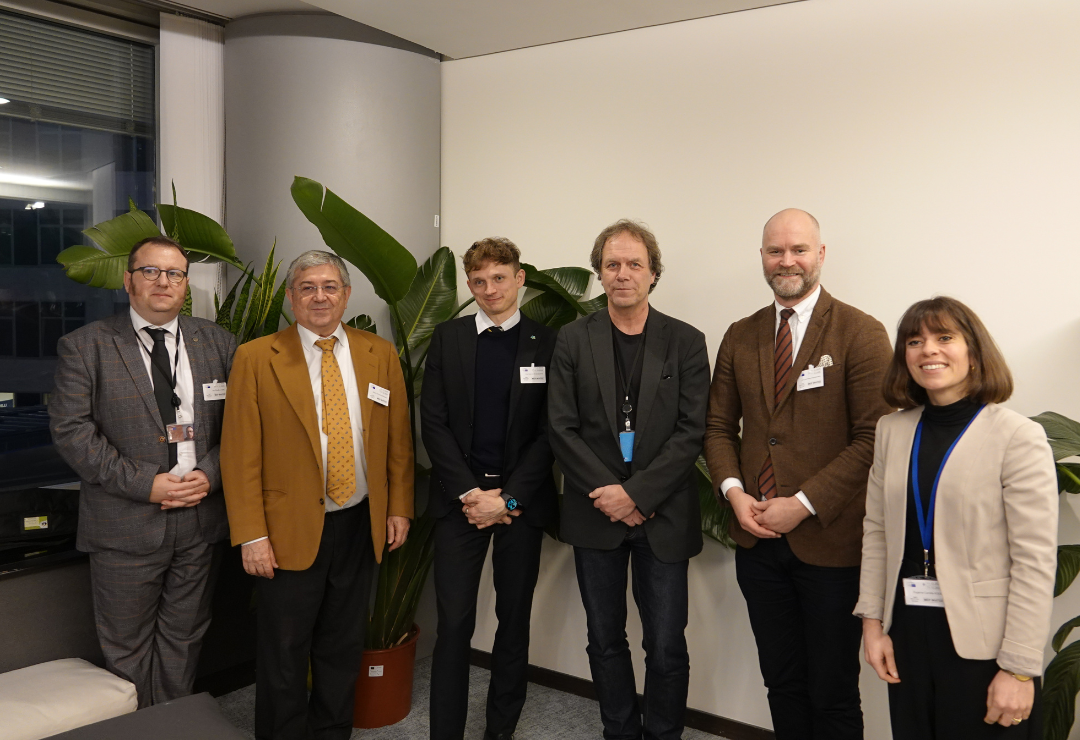
From left to right: Ivo Cré, Director of Policy & Projects, POLIS / Angel Lopez Rodrigues, Vice Mayor Representative, City of Barcelona / Erwin von Baumgarten, Advisor, City of Stockholm / Pär Holmgren, Member of the European Parliament, Sweden / Lars Strömgren, Vice Mayor, City of Stockholm / Eugenia Kolb, Representative to EU, Ministry of Transport Baden-Württemberg
These interventions demonstrated that cities and regions are key partners and problem-solvers in achieving EU mobility, climate, and competitiveness objectives.
MEP breakout discussions: Reviewing local and regional priorities
In subsequent breakout meetings, the POLIS delegation met with Members of the European Parliament Elena Kountoura (Greece), Martine Kemp (Luxembourg), Marcos Ros Sempere (Spain), Jeannette Baljeu (Netherlands), and Pär Holmgren (Sweden) to discuss local and regional priorities. Across discussions, POLIS members reiterated that the revised TEN-T Regulation sets clear obligations for urban nodes, covering SUMPs, intermodal hubs, data monitoring, decarbonisation and road safety—yet the proposed MFF for 2028–2034 does not include a defined funding strand dedicated to urban mobility and urban nodes. POLIS political leaders also stressed the need for stable and predictable European policies, where previously agreed targets, such as carbon emission reductions, must be maintained to give cities and regions the certainty required for long-term planning and sustainable mobility investments.

From left to right: Simona Berden, Advisor, City of Ljubljana / Dejan Crnek, POLIS President, and Deputy Mayor, City of Ljubljana / Elena Kountoura, Member of the European Parliament, Greece / Ioannis Anastasakis, Vice Governor, Region of Crete / Marjolein de Jong, Advisor, City of Antwerp
MEPs broadly acknowledged that EU funding instruments must be aligned with the updated legal framework and recognised the value of the evidence provided by cities and regions. Several noted that competitiveness, sustainability, and resilience will depend on empowering local authorities, and welcomed POLIS’ contribution to the ongoing negotiations.
Looking ahead
'These were very important meetings,' said Karen Vancluysen, Secretary General of POLIS. 'We are grateful for the Commissioner’s readiness to work with us, and for the MEPs’ attentive consideration of the realities on the ground. At a time when Europe’s mobility, climate and cohesion objectives depend more than ever on local action, it is encouraging to see institutions acknowledging the indispensable role of cities and regions—and positioning themselves as allies in helping to secure the funding and governance structures we need.'
As negotiations on the MFF and CEF continue, POLIS and its political leaders will work closely with EU institutions to ensure that cities and regions are empowered to deliver the sustainable, connected and resilient mobility systems Europe’s citizens deserve.
Pictures from the event can be found here.
- Related Members

Baden-Württemberg


Helsinki-Uusimaa Region
Ile-de-France Mobilités
Noord-Holland Province

Region of Crete