Local Alliance urges European Commission to put cities and regions at the heart of Europe's Climate Resilience Framework
The Local Alliance has sent a joint letter to the European Commission's President, Vice-Presidents, and Commissioner Wopke Hoekstra, calling for a stronger role for cities and regions in shaping and implementing Europe's resilience agenda—ahead of the publication of the European Climate Resilience Framework.
The letter comes at a pivotal moment for the European Union as climate impacts are no longer distant risks but daily realities affecting communities across the continent. From prolonged droughts in Southern Europe to increasingly frequent floods in Central Europe and record-breaking heatwaves across the continent, local and regional authorities are facing mounting pressure to prepare for, respond to, and recover from climate-related shocks.
Currently, up to 90% of climate change adaptation and resilience measures are undertaken at the local and regional level. Yet the Local Alliance warns that local actors often lack the governance frameworks, financial resources, and institutional support needed to fulfil these responsibilities effectively. The coalition argues that the upcoming European Climate Resilience Framework presents a unique opportunity to close this gap and create a genuinely multilevel approach to resilience.
More heat, more risk, more problems
Over the past decade, climate-related events have become increasingly severe and costly across Europe. Extreme heat is increasingly straining public health systems and urban infrastructure, while more intense rainfall events are exposing weaknesses in drainage systems, transport infrastructure, and housing. Meanwhile, prolonged droughts are threatening water security, agriculture, biodiversity, and economic activity in many regions.
The growing frequency of these events highlights a fundamental reality: resilience is no longer simply an environmental issue. It is increasingly linked to economic competitiveness, social cohesion, public health, infrastructure planning, energy security, and civil protection.
For local and regional governments, the consequences are particularly visible. They are often the first responders when it comes to protecting residents from extreme heat, managing flood risks, restoring ecosystems, and maintaining essential services. And as climate risks intensify, their role becomes even more critical.
Despite carrying a growing share of responsibility, local authorities frequently operate with limited staff, fragmented information, uncertain funding, and insufficient coordination with national and European levels. This creates a mismatch between the expectations placed on local governments and the resources available to them. According to the Local Alliance, this mismatch risks undermining Europe's broader resilience ambitions.
Local governments are already doing the heavy lifting
Across Europe, cities and regions have not waited for new legislation before taking action.
Many local authorities have developed adaptation strategies, invested in flood prevention infrastructure, introduced urban greening projects, expanded cooling measures to combat urban heat, strengthened emergency preparedness plans, and incorporated climate risks into spatial planning processes.
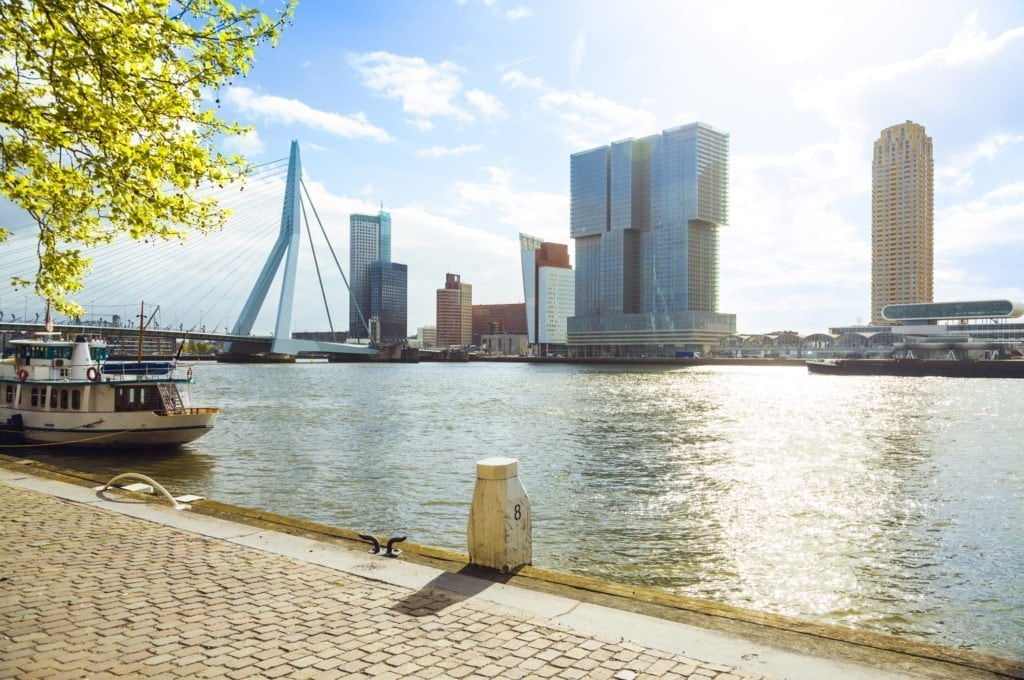
From Rotterdam's water squares and Copenhagen's cloudburst management system to Barcelona's climate shelters and Amsterdam's blue-green roofs, local governments have become laboratories for resilience innovation. Their proximity to citizens often enables them to identify vulnerabilities and respond more quickly than higher levels of government.
Beyond local projects, cities and regions are increasingly collaborating through European networks to influence policy, as demonstrated by initiatives such as the Joint Charter on Automated Mobility launched by POLIS and Eurocities, and the Climate City Contracts developed under the EU Mission for Climate-Neutral and Smart Cities.
However, while many successful initiatives exist, progress remains uneven across Europe. Large metropolitan areas are often better resourced and better equipped to access European funding and technical support, whereas smaller towns and rural regions frequently face greater challenges.
The Local Alliance argues that the new Climate Resilience Framework must help close these gaps by ensuring that all local and regional authorities have access to the tools, information, expertise, and funding needed to prepare for future climate risks.
From consultation to co-decision
One of the coalition's central messages is that local and regional governments must be recognised as strategic partners in resilience governance rather than merely policy implementers.
Too often, resilience strategies are developed at national or European level and then translated into local action without sufficient involvement from the authorities responsible for implementation. The result can be fragmented responsibilities, overlapping mandates, and difficulties translating political commitments into practical action on the ground.
The Local Alliance argues that local governments must be recognised as strategic partners in the new Climate Resilience Framework. It calls for a model of governance that gives cities and regions a meaningful role in identifying risks, sharing responsibilities, and shaping the policies and investments that affect their territories. Such an approach would ensure that local expertise informs risk assessments, planning processes and implementation strategies from the outset, while providing greater clarity on climate risk ownership across levels of government.
The signatories also stress that responsibilities must be matched with the appropriate means to act. The letter notes that decision-making powers and resources should match the responsibilities assigned to local and regional authorities, supported by sustained technical assistance, capacity-building and adequate funding. In other words, authorities cannot be expected to manage climate risks effectively without the financial, technical, and administrative capacity needed to do so.
What the Local Alliance is asking for
In its letter, the coalition calls on the European Commission to ensure that the Climate Resilience Framework:
- Recognises local and regional governments as key partners in resilience governance and implementation;
- Establishes permanent multilevel governance mechanisms involving European, national, regional, and local authorities;
- Clarifies roles and responsibilities for climate risk management across all levels of government;
- Provides robust implementation support, including technical assistance, capacity-building programmes, training opportunities, and access to expertise;
- Aligns future European funding and investment frameworks with local and regional adaptation strategies and resilience priorities.
As Europe faces increasingly severe climate impacts, the Local Alliance is sending a clear message to policymakers in Brussels: resilience cannot be built from the top down alone.
Cities and regions are already on the front line of climate adaptation. They are protecting communities, maintaining essential services, and implementing solutions on the ground every day. For the coalition, the success of Europe's Climate Resilience Framework will ultimately depend on whether these authorities are empowered with the resources, support, and political recognition needed to fulfil this role.
- Related Members