European cities reframe tourism and transport policy at the STM Forum in Breda
On 9 June 2026, participants at the Sustainable Tourism Mobility Forum in Breda examined a question increasingly facing European cities: how can destinations accommodate growing visitor numbers without overwhelming local transport systems and public space?
The session, organised by POLIS' Access, Capitals, and Small and Medium-sized Cities (SMCs) Working Groups and the EU-funded MONA project, brought together city officials, transport operators, tourism bodies, and policymakers. While tourism and mobility are often addressed separately, speakers repeatedly returned to the same conclusion: the two are deeply interconnected, yet governance structures rarely reflect that reality.
The European Tourism Strategy: Closing the mobility gap
The European Commission is expected to publish its new European Tourism Strategy in autumn 2026, building on the post-pandemic Tourism Transition Pathway. Participants argued that the strategy arrives at a crucial moment. Tourism and mobility are both major policy areas, but they are often planned independently. As representatives of the Expert Group on Urban Mobility (EGUM) noted, cities frequently face the consequences of tourism growth through congestion, pressure on public transport, and competition for public space, while tourism policies are developed elsewhere.
This disconnect produces different priorities at different levels of government: national tourism authorities typically focus on visitor growth and competitiveness, while cities must manage overcrowding, infrastructure capacity, and residents' concerns. The result is an uneven distribution of impacts, with some destinations struggling with excessive tourism pressure, while others seek greater visibility and visitor numbers to support local development.

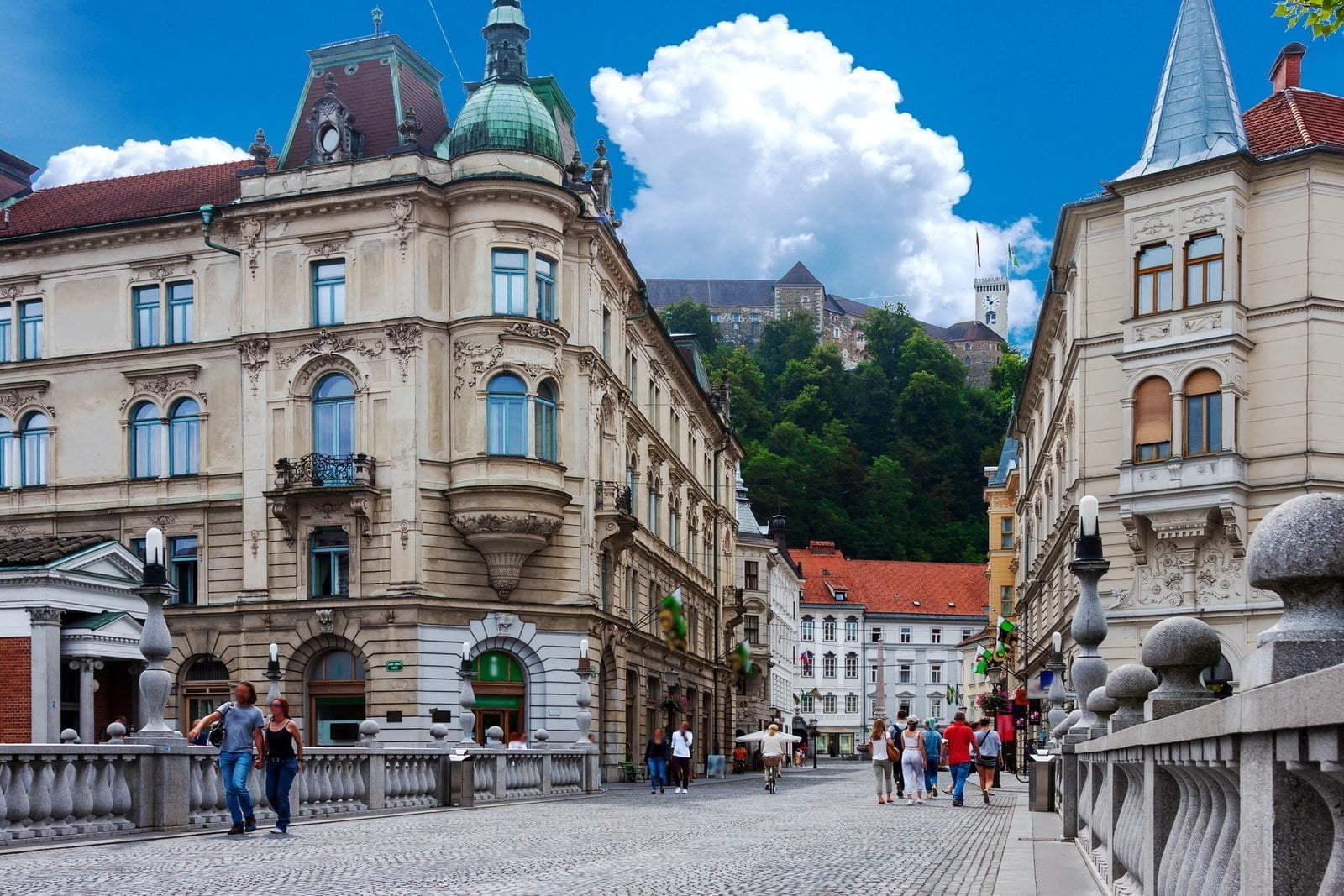
Presernov trg square in Ljubljana — Credit: Mazur Travel, Shutterstock
Rather than treating tourism as a challenge to be managed, participants argued that Europe should use tourism demand to accelerate investment in sustainable mobility, making it easier for visitors to understand and use local transport systems while reducing dependence on private cars.
Managing success without losing identity
For Ljubljana, POLIS' current President, balancing tourism growth with quality of life has become a central policy challenge. The Slovenian capital welcomes around 1.3 million visitors annually while maintaining one of Europe's most ambitious pedestrianisation programmes. Since introducing a largely car-free city centre in 2007, Ljubljana has expanded active mobility and environmental measures, earning the European Green Capital award in 2016 and hosting Velo-city in 2022.
City representatives emphasised the role of governance rather than infrastructure alone: close cooperation between the municipal administration and the local tourism board allows mobility measures to be communicated as part of the city's visitor experience rather than as restrictions imposed on tourists.
The city has also invested in improving residents' relationship with tourism. During its annual 'Week of Tourism', inhabitants receive access to tourism services and attractions normally marketed to visitors, including public transport and museum offers. Ljubljana also publicly highlights how tourism revenues contribute to urban improvements, helping demonstrate the economic value generated by the sector.
SMCs, planning for peaks

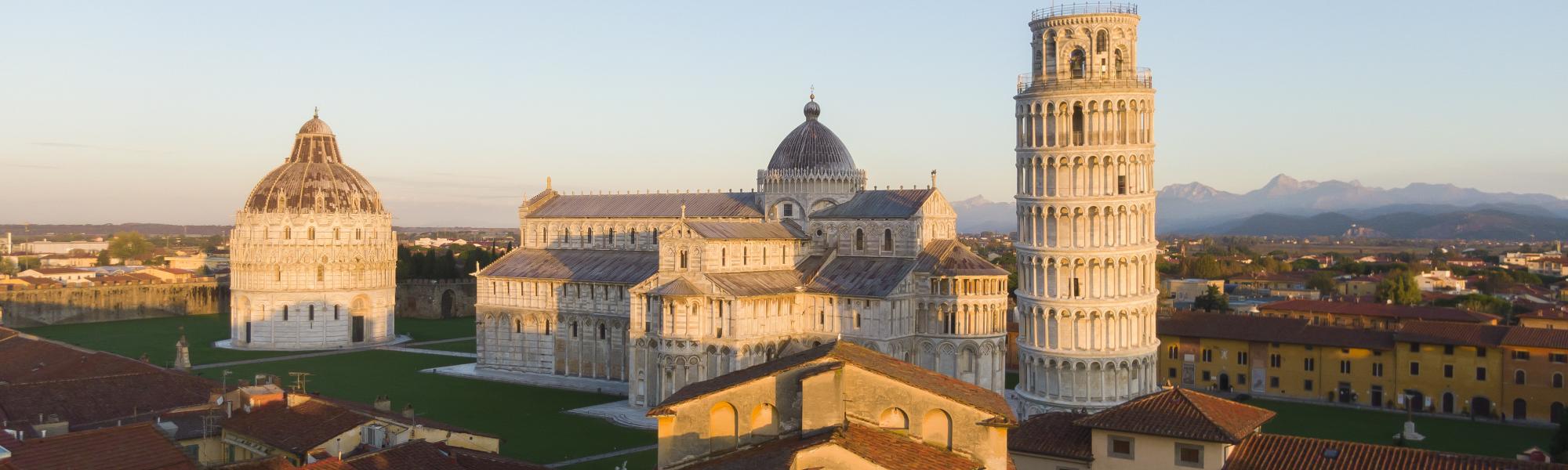
Pisa Centrale train station — Credit: Kiev.Victor, Shutterstock
Tourism creates different challenges for SMCs. Unlike large metropolitan areas with extensive transport networks, many small and medium-sized cities must accommodate visitor numbers that can exceed their resident population during peak periods or major events!
Pisa highlighted the difficulties of managing concentrated tourist flows in a compact urban environment: in the Italian city, seasonal demand spikes can place significant pressure on transport capacity and public space, requiring careful coordination between mobility planning and tourism management.
Participants stressed that transport planning for tourism cannot be limited to individual projects or infrastructure investments. Instead, tourism demand needs to be incorporated directly into broader mobility strategies, allowing cities to anticipate congestion, allocate resources more effectively, and use tourism-related revenues to support the services required to accommodate visitors.
Tourist events as mobility stress tests
Large festivals and cultural events often expose the strengths and weaknesses of local mobility systems more clearly than everyday operations, including support for the modal shift from car to public transport, access equity, and safety.
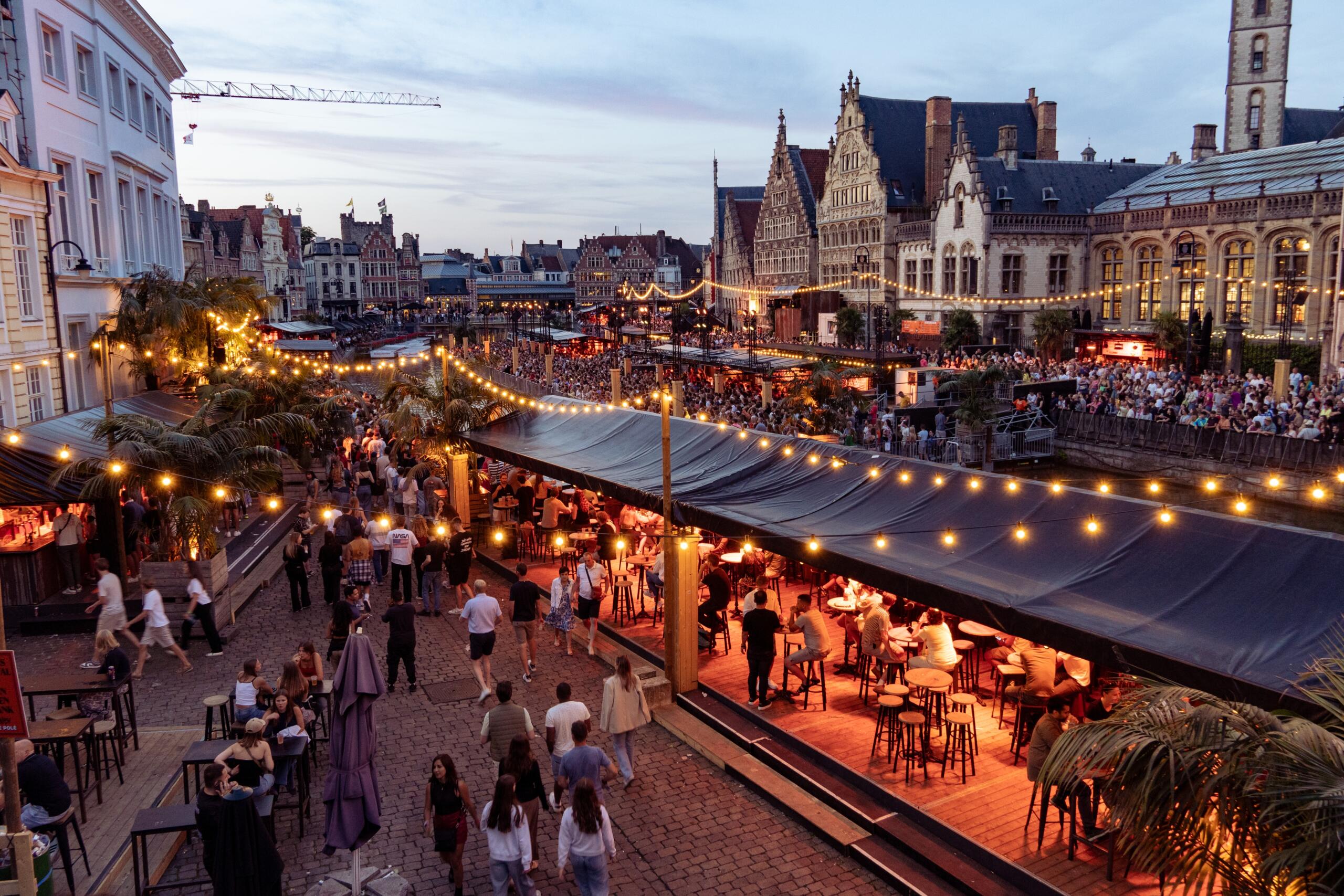
Gentfeest 2024 — Credit: Sujin Krishnan, Shutterstock
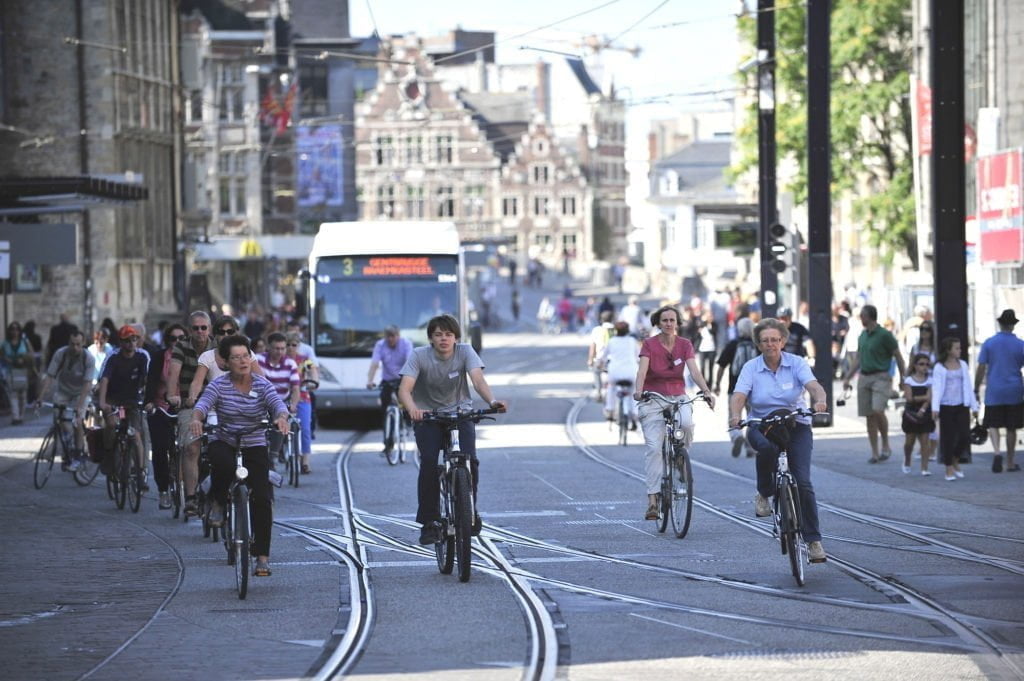
Ghent's annual festivities, the Gentse Feesten, provide one example. During the ten days of celebration, the city applies a clear hierarchy of users, prioritising pedestrians and cyclists over private vehicles. Temporary traffic-free zones are introduced, selected roads are closed, and access controls are coordinated with police services. Additional bicycle parking and bike-sharing capacity are deployed to accommodate demand.
The Province of South Holland presented a different approach through the EU-funded SYNCHROMODE project: using predictive traffic tools and real-time data, authorities can anticipate congestion, redirect vehicles, provide alternative routing information, and notify drivers when parking facilities reach capacity.
Both examples pointed to the same requirement: access to reliable, shareable mobility data. Participants identified data exchange, interoperability, and standardisation as essential prerequisites for managing tourist-related travel efficiently, particularly during large-scale events.
Next steps
A recurring theme throughout the session was that tourism and mobility can no longer be treated as separate policy domains. Decisions about visitor attraction, event planning, public transport, street design, and traffic management increasingly influence one another.
The forthcoming European Tourism Strategy provides an opportunity to address this disconnect. For cities, the challenge is not simply attracting visitors, but ensuring that transport systems, public space, and local communities can absorb tourism demand in a sustainable way.
- Related Events
- Related Projects
- Related Members
European Sustainable Tourism Mobility Forum 2026


Breda University of Applied Sciences