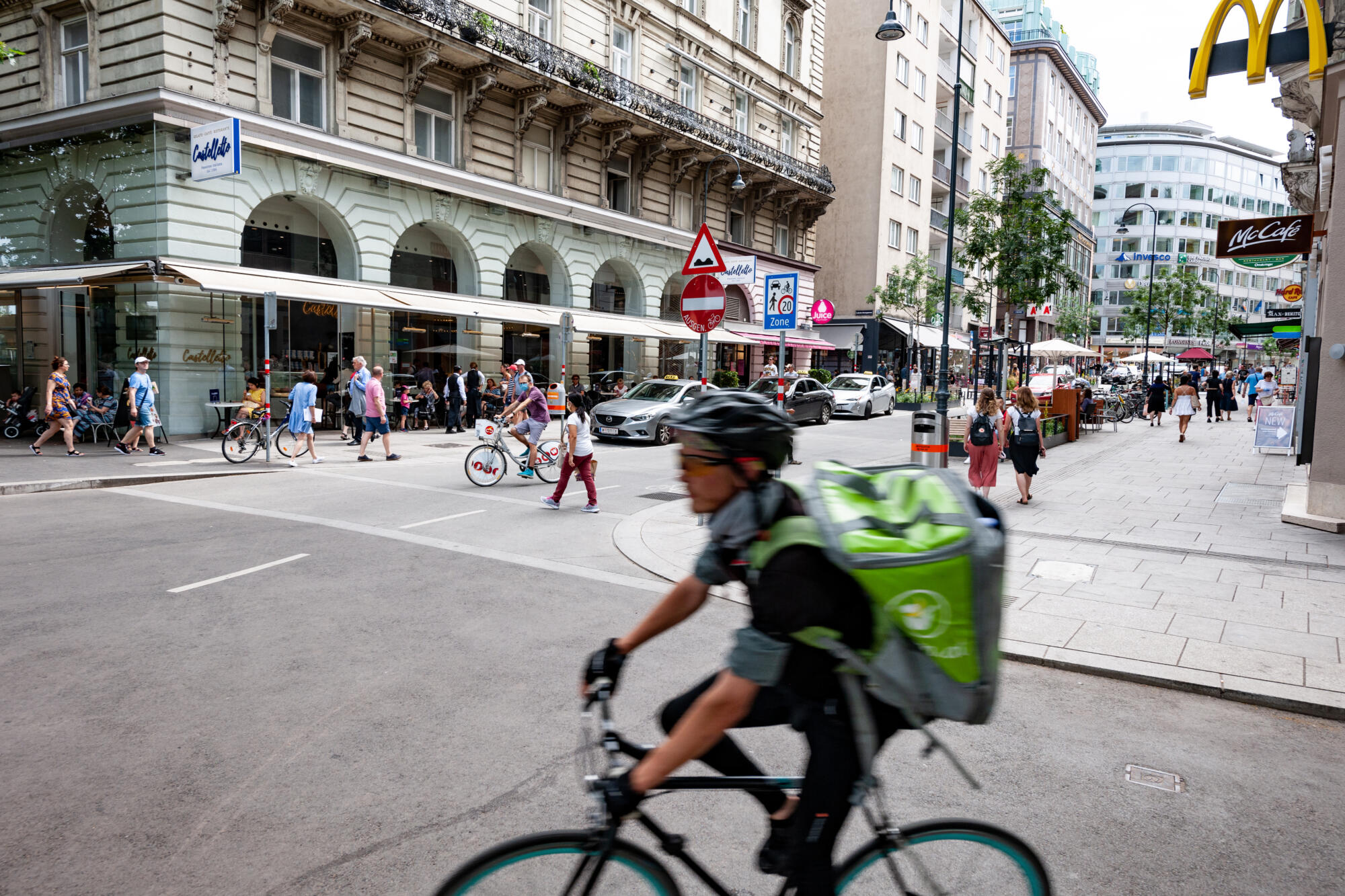
Brussels study highlights gender inequalities and opportunities in urban mobility and planning
In March 2026, perspective.brussels published Vers une ville inclusive – Diagnostic des inégalités de genre en Région bruxelloise, a comprehensive study examining how gender intersects with urban planning, mobility, and public policies in the Brussels-Capital Region.
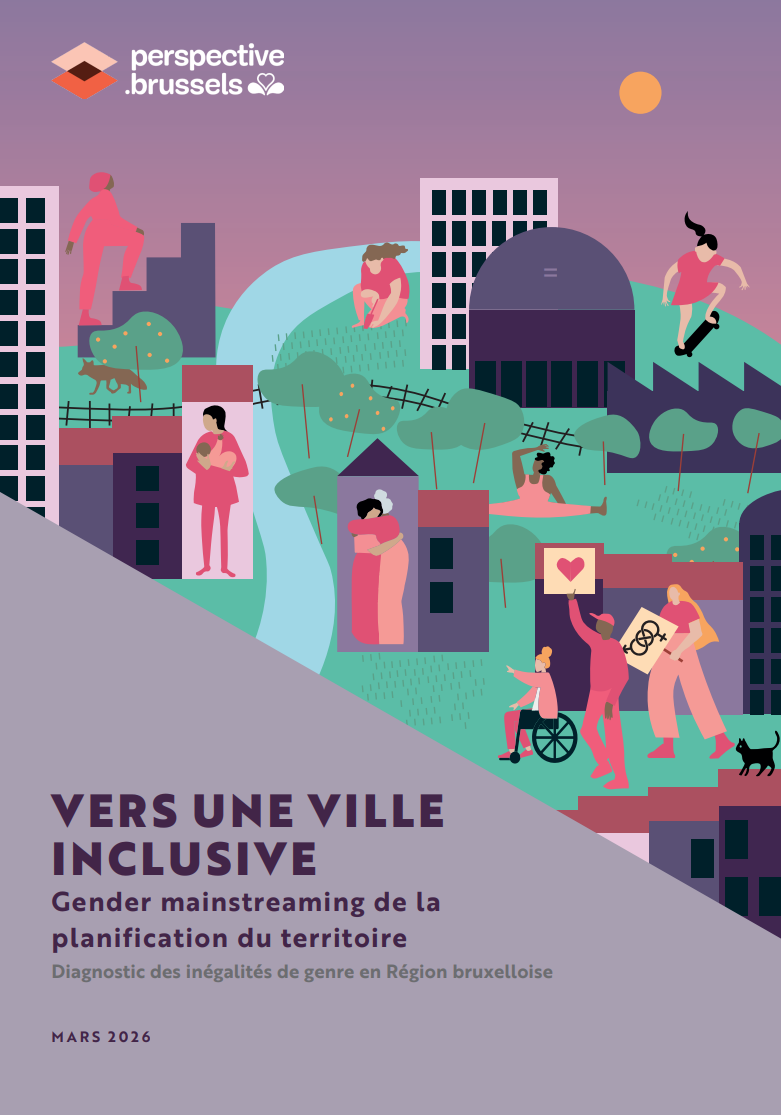
The diagnostic — Credits: perspective.brussels
The report, co-authored by Karbon' architecture et urbanisme, the Atelier Genre(s) et Sexualité(s) at the Université Libre de Bruxelles, Victor Lacôte (LGBTQIA+ expert), and Eva Kail (gender planning expert for the City of Vienna), highlights inequalities across mobility, housing, public services, and governance, while also identifying opportunities to integrate gender perspectives into territorial planning.
Gender mainstreaming in Brussels policy
Gender mainstreaming, defined as the integration of gender perspectives into all stages of policymaking, from design to evaluation, has been part of international policy debates for decades. The concept gained global prominence following the 1995 Beijing Declaration and Platform for Action, which established a global framework for advancing gender equality.
In Brussels, gender mainstreaming is, by all means, a legal requirement. In 2012, the Brussels-Capital Region adopted an ordinance requiring the integration of gender perspectives into regional policies, budgets, and programs. Public authorities must produce gender-disaggregated data, implement gender budgeting practices, and evaluate the gendered impacts of policies.
Despite this strong legal framework, the diagnostic shows that gender considerations remain unevenly integrated into planning processes. Many initiatives addressing gender equality in urban planning remain isolated projects rather than components of a coherent strategic approach.
 Gendered mobility patterns in Brussels
 Gendered mobility patterns in Brussels
Mobility represents one of the clearest areas where gender inequalities appear in everyday urban life. The diagnostic provides detailed statistical evidence showing that men and women experience mobility systems differently.
Access to private cars remains strongly gendered. In Brussels, 85.2% of men hold a driving licence, compared with 67.6% of women. Similarly, 44% of women report never using a car, compared with 30% of men. When analysing daily trips, 23% of male trips are made by private car, compared with 16% for women.
The structure of the Belgian labour market reinforces this imbalance through the widespread use of company cars as employment benefits. Approximately 75% of company cars are used by men, while only 25% are allocated to women.
As a result, women rely more heavily on public transport. According to analyses conducted by equal.brussels together with the public transport operator STIB-MIVB, 63% of female passengers report having no alternative to public transport, compared with 53% of men. This higher dependency makes women particularly sensitive to the accessibility, reliability, and safety of public transport systems.
Everyday mobility beyond commuting
Many transport systems are still designed around traditional commuting patterns between residential areas and employment centres during peak hours. However, this model does not reflect the everyday mobility patterns of many residents.
Women are more likely to perform what researchers call ‘trip chaining’. A single journey may involve dropping children at school, commuting to work, shopping for groceries, and attending medical appointments. These journeys tend to be longer, more fragmented, and less direct than conventional commuting routes.
In Brussels, these differences also appear in travel schedules. Women’s mobility tends to peak around school hours, particularly around 08:00 and 16:00, while men’s trips are more concentrated around traditional commuting times, typically around 07:00 and 17:00. Transport networks optimised for commuter flows often fail to accommodate these diverse mobility patterns.
Accessibility, safety, and everyday constraints
The diagnostic also introduces the concept of the ‘expanded body’. This refers to the fact that many people move through cities while carrying objects or accompanying others, such as children, groceries, luggage, or mobility aids.
Women are statistically more likely to travel with children or perform caregiving activities, which increases the physical constraints of mobility. According to internal analyses by STIB, 7% of female passengers report accessibility difficulties, compared with 4% of men.
Infrastructure that does not account for these realities, including narrow sidewalks, inaccessible metro stations, or poorly designed interchanges, can limit mobility for many residents.
Safety concerns also influence mobility behaviour. Women report higher levels of perceived insecurity in public spaces, particularly early in the morning or late in the evening. Poorly lit stations, isolated stops at the end of tram or bus lines, and underused pedestrian routes can intensify these concerns. Even when crime rates are relatively low, the fear of harassment can shape mobility choices and limit freedom of movement.
Towards more inclusive cities
 The Brussels diagnostic ultimately proposes a broader vision of inclusive urban development. It describes a city that is just, plural, claimed, enabling, and fulfilling, where all residents have equitable access to services, opportunities, and public space.
Achieving this vision requires structural changes in planning practices. Gender-sensitive planning must address not only mobility systems but also housing policies, public space design, governance structures, and local services.
International experiences demonstrate that integrating gender perspectives into planning can produce safer and more accessible urban environments. Cities such as POLIS members Vienna and Barcelona have introduced measures ranging from redesigned parks and wider sidewalks to inclusive playgrounds, improved lighting, and gender-sensitive housing design.
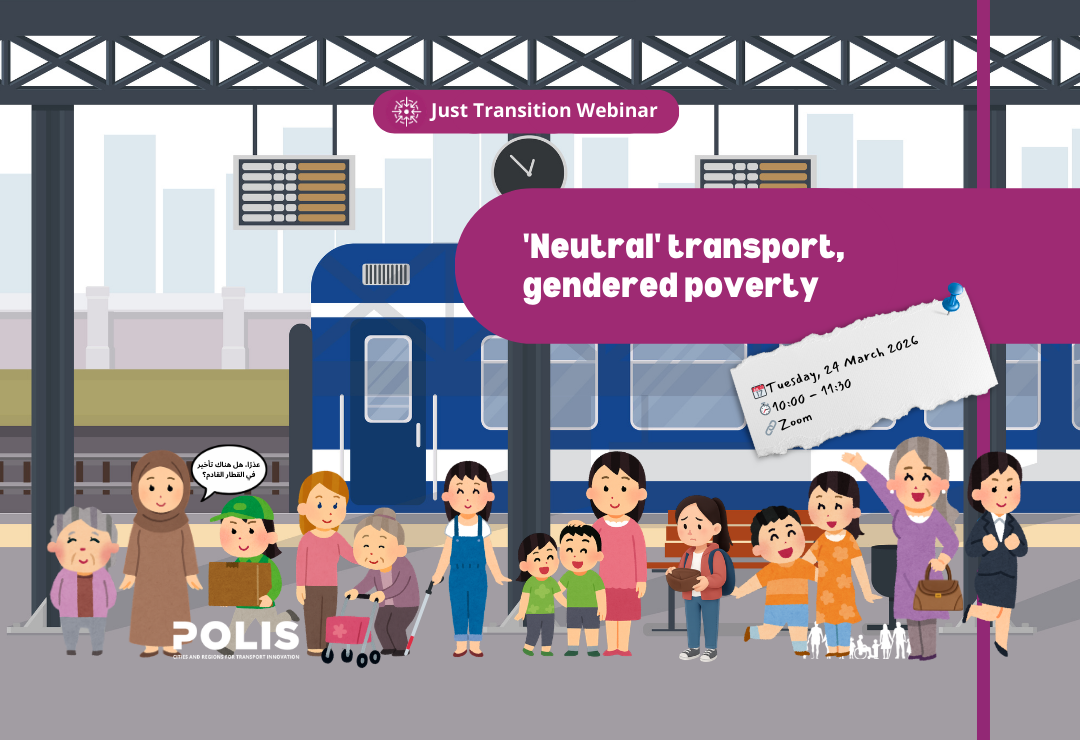
To delve deeper into the issues of city 'neutrality' (or lack thereof), the Just Transition Taskforce will host a webinar on 24 March 2026 (10:00–11:30) titled ‘Neutral’ transport, gendered poverty. The session will explore how gender mainstreaming can strengthen universal approaches, deliver mobility justice, and ensure that climate action leaves no one behind, featuring insights from Lotte Reijnders (Ipsos I&O), Annette Krüger (BIKEYGEES/YallaFahr), Carolyn Quainton (Understood), and Maria Isabel Duran (Roma Servizi per la Mobilità).
- Related Events
- Related Members
Just Transition Webinar: ‘Neutral’ transport, gendered poverty