Navigating the SUMP guidelines 3.0: Implications for UVARs
Alongside the new Sustainable Urban Mobility Planning (SUMP) Guidelines 3.0, the EU Urban Mobility Observatory has released a series of revised reference materials to help local authorities address specific mobility challenges and opportunities. Find out more below on what this means for Urban Vehicle Access Regulations (UVARs).
UVARs are measures that regulate motor vehicle access to urban areas and infrastructure. They are commonly used to address congestion, air pollution, climate objectives, road safety, and urban liveability.
The SUMP guidelines 3.0 mark a change in approach to sustainable urban mobility planning, recognising SUMPs as a core requirement of European transport policy. This has profound implications for the implementation of UVAR policies and measures, which are now explicitly embedded within the SUMP framework. For practitioners, this means that UVARs can no longer be treated as isolated regulatory measures, but they must be designed in coordination with wider urban-node objectives.
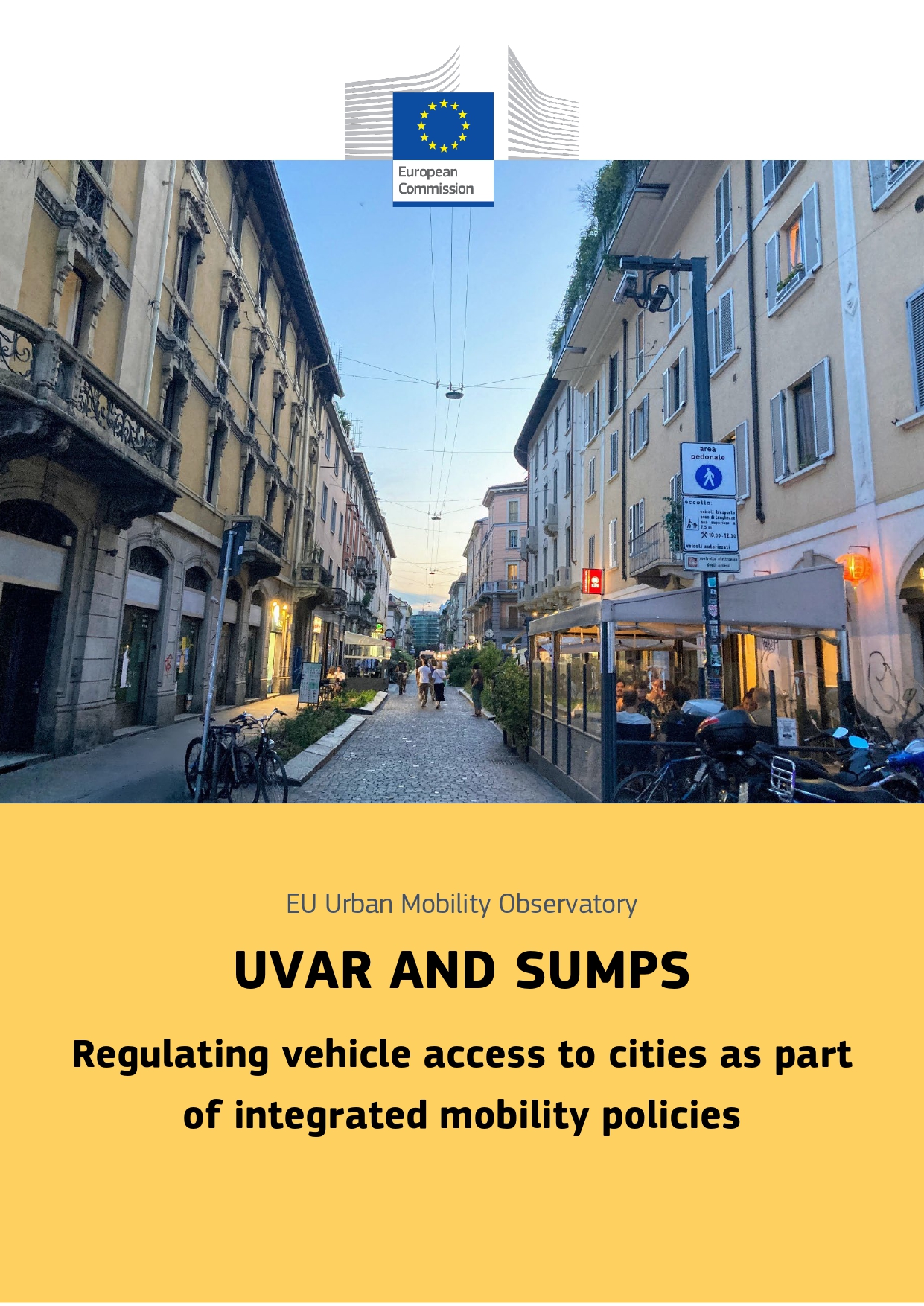 To support cities and functional urban areas in navigating the changing landscape, the EU Urban Mobility Observatory published in January 2026 a topic guide on UVARs and SUMPs. The document serves as a guide on UVARs within the framework of SUMPs, exploring how they can support cities in achieving their climate goals and improving the quality of life for residents.
Together with the other thematic SUMP documents, such as the guide on cycling, contributes to a growing European knowledge base to support cities in developing and implementing sustainable urban mobility strategies.
Key updates
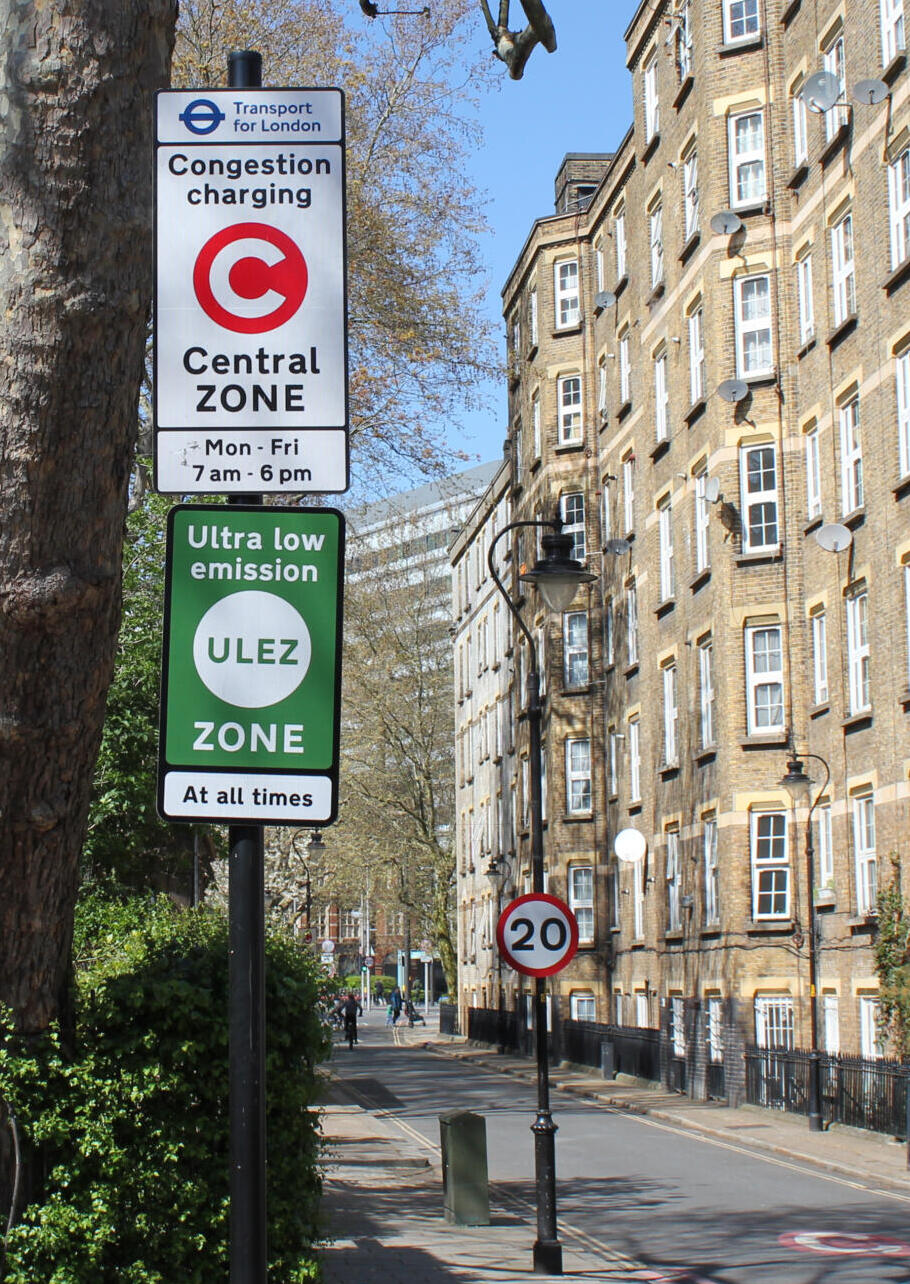
London's Ultra Low Emission Zone (ULEZ) was paired with a target scrappage scheme and reinvestments into public transport and active travel infrastructure to avoid creating unfair burdens — Credit: Lorna Roberts
The revised guide aims to offer practical guidance for planners. It takes into consideration the policy developments that occurred in the meantime, including the 2024 recommendations of the Expert Group on Urban Mobility (EGUM), the reinforced SUMP framework introduced by the 2023 National SUMP Support Programme (NSSP) Recommendation, and the revised TEN-T Regulation.
The common thread behind this policy evolution is that vehicle access regulation should be more coherent, predictable, and inclusive. This also implies aligning and contributing to the EU objectives on decarbonisation, digitalisation, competitiveness, and social fairness.
The update is driven by the work of the EGUM UVAR subgroup, which, in its 2024 recommendations, called for updated guidance aligned with the revised TEN-T Regulation. While the TEN-T Regulation does not require cities to implement UVARs, it reinforces the need for integrated mobility planning across functional urban areas rather than administrative boundaries. For the 431 urban nodes on the TEN-T network, this means considering access regulation as part of wider sustainable mobility strategies.
Embedding UVARs in a wider perspective
The document's main message is that UVARs should no longer be treated as standalone regulatory tools. Instead, they must be embedded within a wider SUMP and implemented as part of a balanced package of measures.
Cities are increasingly using these measures to improve air quality, protect historic centres, reduce congestion, and enhance liveability, since they are powerful 'push' measures, discouraging car use. However, since they have side effects in terms of equity and accessibility, their effectiveness depends on—and needs to be integrated with—'pull' measures, namely improvements in public transport, active mobility, and urban freight solutions.
For a high-impact and often unpopular measure such as a UVAR, it is beneficial to implement it within the framework of an integrated medium-term plan, such as a SUMP. This approach supports the overall acceptance and ownership of the UVAR scheme.
Guiding principles for cities
The guide aligns UVAR planning with the eight SUMP principles set out in Recommendation 2023/550, providing a consistent foundation to integrate UVARs and SUMPs effectively.
The guide outlines how each principle applies specifically to UVARs:
- UVARs must have specific, transparent, and measurable objectives;
- They must fit within a long-term vision and have a clear and realistic implementation plan;
- Have a proportionate, evidence-based assessment of current conditions and future performance;
- Integrate UVARs in a multimodal mobility strategy to restrict vehicle use and strengthen the most sustainable options;
- Consider passenger mobility, urban freight transport, and logistics in a combined strategy;
- Include a participatory approach and continuous stakeholder engagement;
- Embed monitoring, review, reporting, and progress tracking from the start;
- Make use of European guidance and support mechanisms.
What should cities do next?
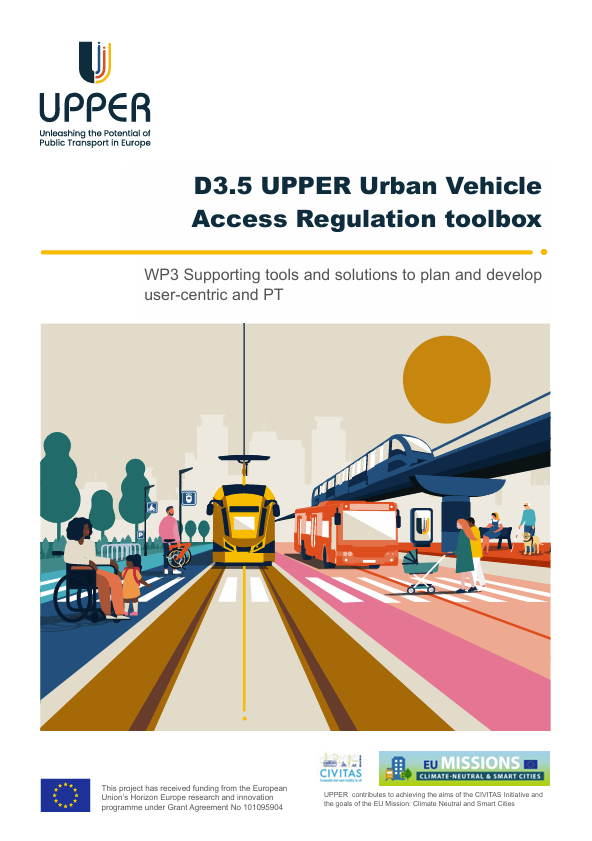
The UPPER project has published a toolbox to help cities link vehicle-access restrictions to positive measures.
The guide outlines several steps to integrate UVARs in SUMPs:
- Preparation and analysis. The first step of the SUMP cycle is to assess UVAR measures by analysing the current transport system. This involves determining how UVAR can complement other measures, examining the structural underlying issues, and ensuring viable alternatives exist to avoid unfair burdens on certain groups. It is also essential to consider the national technological and legal frameworks, as UVAR implementation varies across Member States.
- Strategy and development. In this phase, planners should evaluate if UVAR is the best measure to address the identified challenges. Stakeholder involvement and citizen engagement are crucial for balancing and integrating the measures while ensuring public understanding and acceptance. This means focusing on clear communication to connect the vision with access regulation, allowing residents and companies to anticipate future standards and adapt their vehicle choices or travel behaviour.
- Measure planning. The planning phase of the UVAR involves defining the measure's characteristics and complementary actions tailored to the city's needs and mobility goals. Complementary measures act as a 'pull' and encourage alternative modes of transport, focusing on cost-efficiency and fairness to enhance public acceptance. In addition, ensuring compliance is a key aspect that relies on both enforcement measures and the clarity of UVAR rules.
- Implementing and monitoring. During rollout, a trial period can help test systems and procedures. Feasibility should be assessed in the planning phase, focusing on timescales and political support. Monitoring should begin in the first phase, tracking environmental, economic, and social impacts as well as public perceptions, ensuring data collection and transparency. After achieving objectives, authorities should review the measures for potential adaptation or strengthening to align with evolving mobility goals.
Looking ahead
The guide recognises the pivotal shift in European urban mobility policy, emphasising that UVARs should be integrated into SUMPs and broader mobility planning rather than treated as standalone tools. This is now reflected in the updated SUMP guidelines, highlighting the interdependent relationship between them.
This essential document serves as a valuable resource for cities, facilitating the creation of transparent and user-friendly UVARs that are consistent across administrative boundaries, ultimately fostering cleaner, safer, and more accessible urban mobility experiences.

- Related Projects