The new SUMP guidelines 3.0 have been published
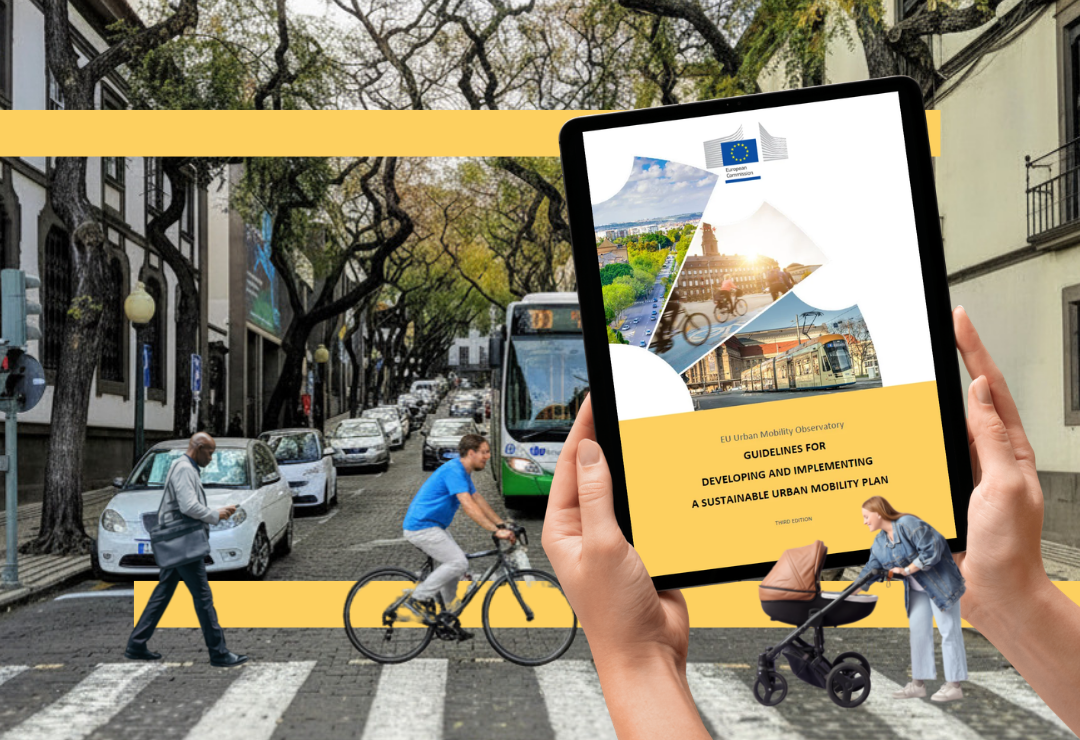
The publication of the third edition of the Guidelines for developing and implementing a Sustainable Urban Mobility Plan marks a significant milestone in European urban mobility policy.
More than 12 years after the first SUMP guidelines, the European Commission has once again updated its flagship methodology to reflect a rapidly changing policy environment, evolving societal expectations, and the accumulated experience of cities implementing Sustainable Urban Mobility Plans across Europe.
DOWNLOAD THE SUMP 3.0 GUIDELINE
From plan-making to delivery
Sustainable urban mobility planning has moved from a voluntary framework to a core requirement of European transport policy. Under the revised Trans-European Transport Network (TEN-T) Regulation, 431 urban nodes will be required to adopt a Sustainable Urban Mobility Plan by the end of 2027. At the same time, cities are expected to contribute to climate neutrality, address social inequalities, manage complex logistics systems, and respond to technological change.
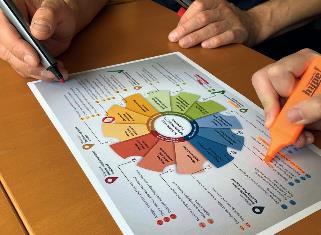
SUMP cycle —Credit: Rupprecht Consult
The familiar structure of four phases, twelve steps, and thirty-two activities remains in place, but the emphasis has clearly shifted, with the third edition prioritising delivery over design, placing greater weight on governance, implementation, monitoring, and institutional capacity. It reflects a decade of practical learning in which the central barrier to progress has often been not planning quality, but execution.
Leadership, governance, and scale
A key message of the updated guidelines is that effective mobility transformation depends on leadership and governance capacity: basically, technical planning alone is insufficient without institutional structures capable of sustaining long-term change.
At the same time, planning scales have become more complex. Cities increasingly function as part of broader Functional Urban Areas (FUAs), while transport systems extend far beyond administrative boundaries. The guidelines reinforce the importance of metropolitan-scale coordination and integrated governance approaches, recognising that fragmented decision-making is one of the main constraints on the coherence of mobility policy.
The Expert Corner and SUMP reference materials
A defining feature of the third edition is the expanded role of the Expert Corner and its associated SUMP reference materials. These resources represent a shift from a static methodological handbook towards a continuously evolving knowledge ecosystem.
The reference materials provide detailed, topic-specific guidance across key dimensions of sustainable mobility planning. They are structured thematically and reflect both established practice and emerging policy priorities. Their purpose is not to repeat the core SUMP methodology but to deepen it by offering operational detail, applied methods, and implementation-oriented insights.
Several key thematic areas structure this body of knowledge:
Geographical scope
Geographical scope forms a foundational layer. Materials on neighbourhood-scale planning (2021) emphasise that mobility is experienced locally, where walking, cycling, and access to services are shaped by immediate urban form. This is complemented by guidance on smaller cities and towns (2021), which highlights structural challenges such as limited administrative capacity and stronger car dependence, while also recognising their inherent advantages, including shorter distances and stronger community structures.Annex - SUMP Guidelines 3.0 - 2026 SUMP Guidelines 3.0 - 2026

Different planning contexts at different spatial levels — Credit: Rupprecht Consult
A growing body of work addresses Functional Urban Areas and metropolitan governance (2019). These materials respond to the reality that commuting flows, logistics systems, and housing markets extend across municipal boundaries. Another key area concerns rural-urban linkages (2025). Newer materials highlight the importance of integrating rural mobility considerations into SUMP design, reflecting EU policy directions that emphasise functional interdependence between urban centres and surrounding territories.
Policy objectives
Reference materials increasingly treat mobility as a multidimensional policy field rather than a transport optimisation problem. Health integration (2019) is a core example, positioning mobility as a determinant of public health outcomes rather than a separate policy area. Similarly, resilience-focused materials (2021) address how mobility systems must adapt to shocks such as pandemics, climate impacts, and economic disruption, embedding uncertainty into planning frameworks.
Decarbonisation guidance (2024) reflects the scale of the climate challenge, focusing on systemic shifts in behaviour, infrastructure, and governance required to reduce transport emissions. Closely linked is work on equity and inclusion (2020), which addresses how mobility systems can reproduce or reduce social inequalities. These materials highlight accessibility, gender equity, and the needs of vulnerable groups as central planning concerns rather than peripheral considerations.
Mobility modes
A central layer of the reference materials focuses on mobility modes and the instruments that support their implementation. This includes detailed guidance on walking, cycling, public transport, logistics, parking, and shared mobility, with a clear shift from high-level principles towards operational planning and design. Each mode is increasingly treated as part of an integrated system, where measures must be embedded within wider SUMP strategies rather than developed in isolation.
 Walking (2023) and cycling receive particular attention through dedicated, comprehensive guidance that reflects their role as core structural elements of sustainable mobility. Cycling (2026), in particular, is no longer framed solely as a promotional policy area but as a system-wide intervention area that depends on coordinated action across land use planning, road safety, infrastructure design, and demand management. At the same time, established domains such as public transport (2022), urban logistics 2019), parking policy (2022), and shared mobility (2019) are developed in greater implementation detail, reflecting accumulated practice across European cities. Emerging topics, including micromobility (2021), urban air mobility (2021), and mobility-as-a-service, further extend the framework to reflect ongoing technological and behavioural shifts.
Mobility enablers
Alongside mobility modes, there is a stronger emphasis on enabling and regulatory instruments that shape how these systems function in practice.
Urban Vehicle Access Regulations (UVARs) (2026) are now explicitly embedded within the SUMP framework, reflecting their growing importance in managing access, reducing emissions, and structuring demand within urban areas. This is complemented by more extensive guidance on procurement (2023), Intelligent Transport Systems (ITS) (2019), electrification (2019), and financing (2019), all of which are presented as essential levers for translating strategy into delivery.
Procurement and financing are particularly significant in this regard, as they determine whether long-term mobility objectives can be operationalised through stable investment and appropriate contracting models.
Monitoring, adaptation, and continuous planning
A major evolution reflected in the reference materials is the treatment of mobility planning as an ongoing cycle rather than a fixed document. Monitoring and evaluation frameworks are increasingly central, enabling cities to assess outcomes, adjust interventions, and refine strategies over time.
This shift is supported by guidance on data use, evidence-based policymaking, and adaptive planning approaches. Together, these materials position SUMP as a living framework that evolves in response to changing conditions rather than a static planning instrument.
A maturing planning system
Taken together, the third edition of the SUMP guidelines and its expanding Expert Corner resources, including recent updates on cycling and UVAR, reflect a maturing policy framework. The core methodology remains recognisable, but its scope has broadened significantly.
This article has focused on providing a general overview of the main changes introduced in the third edition. Read our dedicated deep dives on the new SUMP reference documents below:
- Related Projects