Ghent reclaims its streets with tourist bus ban
Seven hundred years ago, Ghent was built for people on foot. In 2029, it will finally be treated that way again.
Generally considered one of the most visited Belgian cities alongside Brussels and Bruges, Ghent has recently had to take new measures to support tourism and resident satisfaction. Much of the city was built over 700 years ago, and its original planners never anticipated how popular a tourist destination it would become.
Ghent draws a substantial and growing visitor base. In 2025, the city recorded 7.5 million day visitors, alongside 1.6 million overnight visitors in 2024. The tourism industry brings in hundreds of millions of euros annually in revenue but is not entirely positive. In recent years, the share of Ghent residents who want fewer tourists rose from 40% to 58%, but one of the biggest issues was not the number of people in the historic city centre—it was the number of coaches. At the peak of tourist season, as many as 100 coaches a day were estimated to enter the city, straining an already fragile system.
‘Coaches driving haphazardly through the city centre cause nuisance and put public support for tourism under pressure,’ says Alderman Sofie Bracke, Ghent's Alderwoman for Tourism, so now Ghent is taking a page out of Bruges' book and banning tourist coaches from entering the city centre altogether. Instead, the city has designed a plan to introduce six mandatory pick-up and drop-off locations for tourist coaches around the city ring starting in 2029, bringing order to the current chaos. The city hopes this will be the compromise between residents and the tourist sector that it needs to create a safe, accessible and enjoyable environment for everyone.
The Six Infinity Zones
Thousands of coaches arrive in Ghent every year. The main arrival point is the Station Gent Dampoort (B1) parking area, though many other pick-up and drop-off points are spread around the city centre.
To bring order to this traffic, the city will create six new ‘pleasant and accessible walking routes’ from coach locations into the centre, distributed around the outer ring road, the R40. Averaging around 1.5–2 km from Ghent's historic centre, the evenly spread locations are only a 20–30 minute walk for most tourists.
The 6 locations include:
- Godshuizenlaan (Bijloke site) in the southwest, which takes tourists on a scenic route right along the water to the cultural hub of Bijloke
- Ghent-Dampoort Station on the northeast edge of the ring, offering the most direct path into the historic core from the northeast
- Blaisantvest in the north of the city, along the Verbindingskanaal.
- Charles De Kerchovelaan (Arts Quarter) in the south, ideal for groups visiting the major art museums in the museum district and the central squares.
- Ekkergem area in the west, which would be one of the closest stops to the city.
- Stapelplein, near the old docks in the north, which would be the furthest away.
There are also plans to build a long-term parking area where tourists can park their cars while they explore the city.
Notable exceptions have been made to accommodate certain target groups, such as people with mobility impairments, groups with young children, and hotel guests staying inside the old town. Coaches that need to enter the city for one of these reasons will require special permits but will still be able to deliver door-to-door service.
Why these measures
‘In the past, the more tourists we had the better… Now we are paying attention. We do not want to become Venice, Bruges or Amsterdam.’ – Vram Van Braeckevelt, previous Alderman for tourism
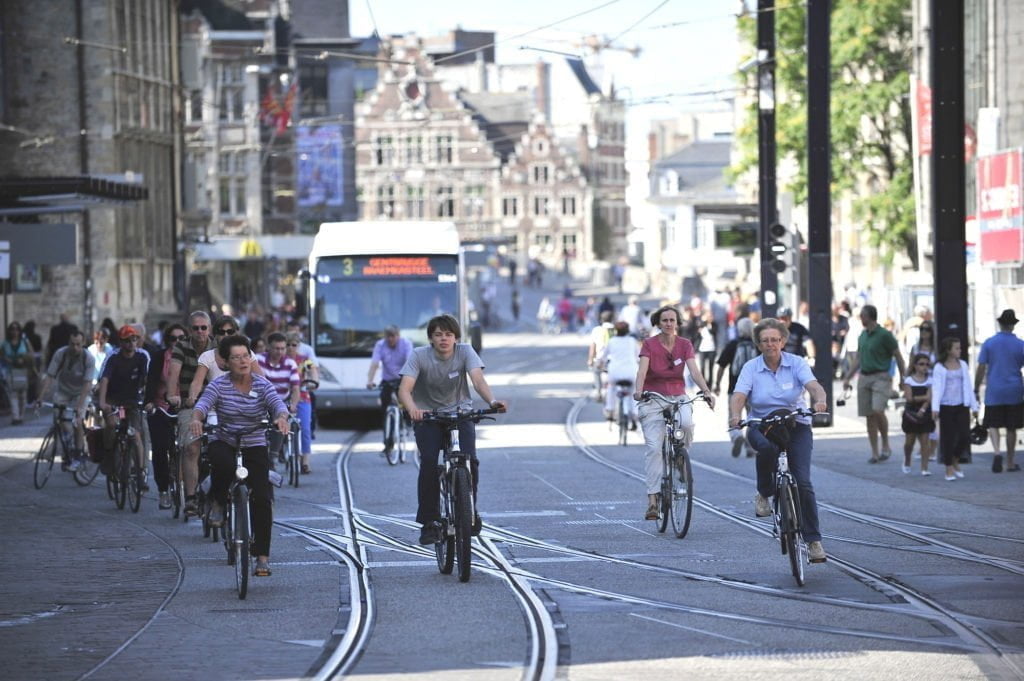
Tourism in Ghent is not treated as its own independent sector but is rather one part of the city’s broader urban strategy. Ghent has transformed its historic centre through a bold 2017 circulation plan, introduced to address the fact that nearly 40% of motorised traffic in the city centre was through traffic. The plan redirected car traffic, prioritised walking, cycling and public transport, and expanded sustainable infrastructure—and it worked: the city reached a cycling modal share of approximately 35%, over a decade before the original goal set for 2030. The circulation plan aligns with the city's Sustainable Urban Mobility Plan (SUMP), adopted in December 2023, which targets a 50% shift to sustainable transport by 2030 through the expansion of multimodal hubs, electrification of public transport, and enhanced cycling infrastructure across the region.
These new measures for coaches come as part of the city's plan to reduce the amount of over- tourism in the city. Since 2019, it has not been possible to permanently rent out an entire home as a holiday home,e and from March 2023, tourist taxes to stay in houses or holiday flats have doubled in comparison to those paid in hotels. Ghent has put these measures in place to halt the crowds and to encourage ‘pyjama tourism’ (ie tourism where people stay two or more nights) instead of ‘selfie tourists’ (ie people who only stay for the day).
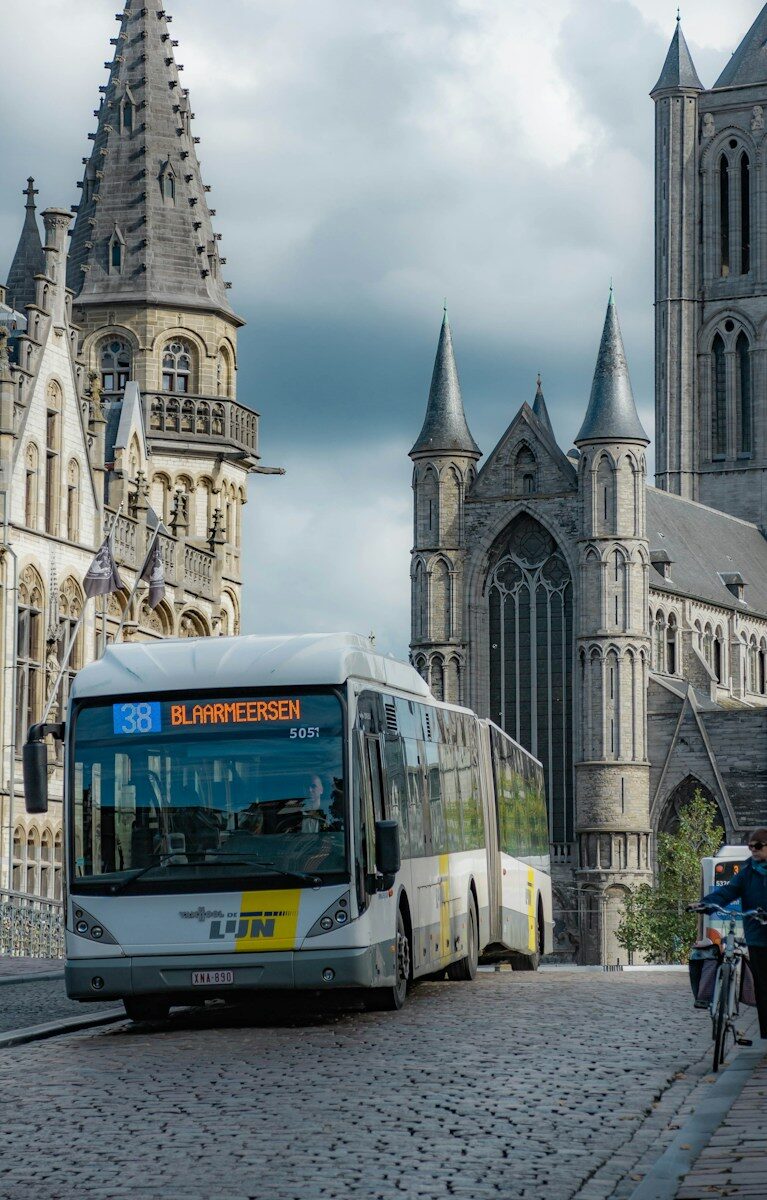
Coaches are often cited as being one of the biggest problems in the city, even more so than the tourists themselves. Coaches and buses driving dangerously and haphazardly through the city centre are creating a dangerous environment for locals and tourists alike, as well as creating serious congestion on roads and severe blockages which hinder the city’s regular tram and bus network, because they often stop to drop off or pick up passengers directly at busy public transit stops.
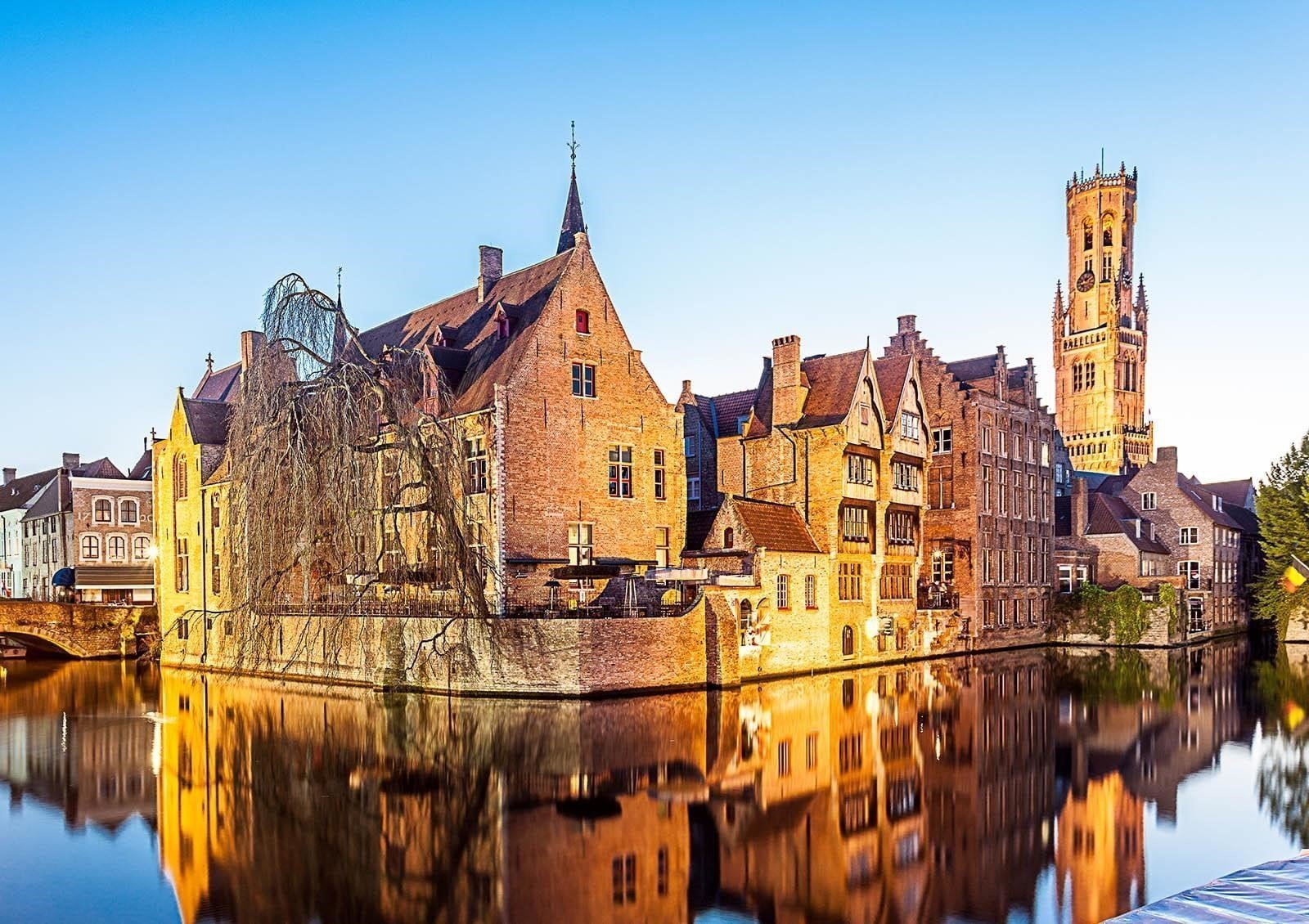
The city seems to be taking after Bruges’ model, which, established in 1992, restricted tourist buses to only parking in the designated Bargeweg Coach Park to manage traffic and reduce overtourism in the historic city centre. The hope is to make the roads safer (less congestion, fewer buses on the roads and less dangerous driving), tackle over-tourism, and improve pedestrian safety.
Roadworks and worries
Overall, the tourism sector—the city's hotels, restaurants, and shops—does not seem to have many major concerns about the proposed plans. Chairman Rudy De Wit of the vzw Ghent Hotels association, who owns two hotels in the city, is cautiously positive, saying, ‘We think it is a good plan if it is rolled out properly.’ While it may not affect overall revenue, he acknowledges that some problems could still arise.
Logistically, getting a coach group of 50 people onto public transport, or having them walk any significant distance to the historic centre, is difficult. Relying on trams and buses to cover the last leg of the journey into the centre could overcrowd public transport and increase dissatisfaction among locals.
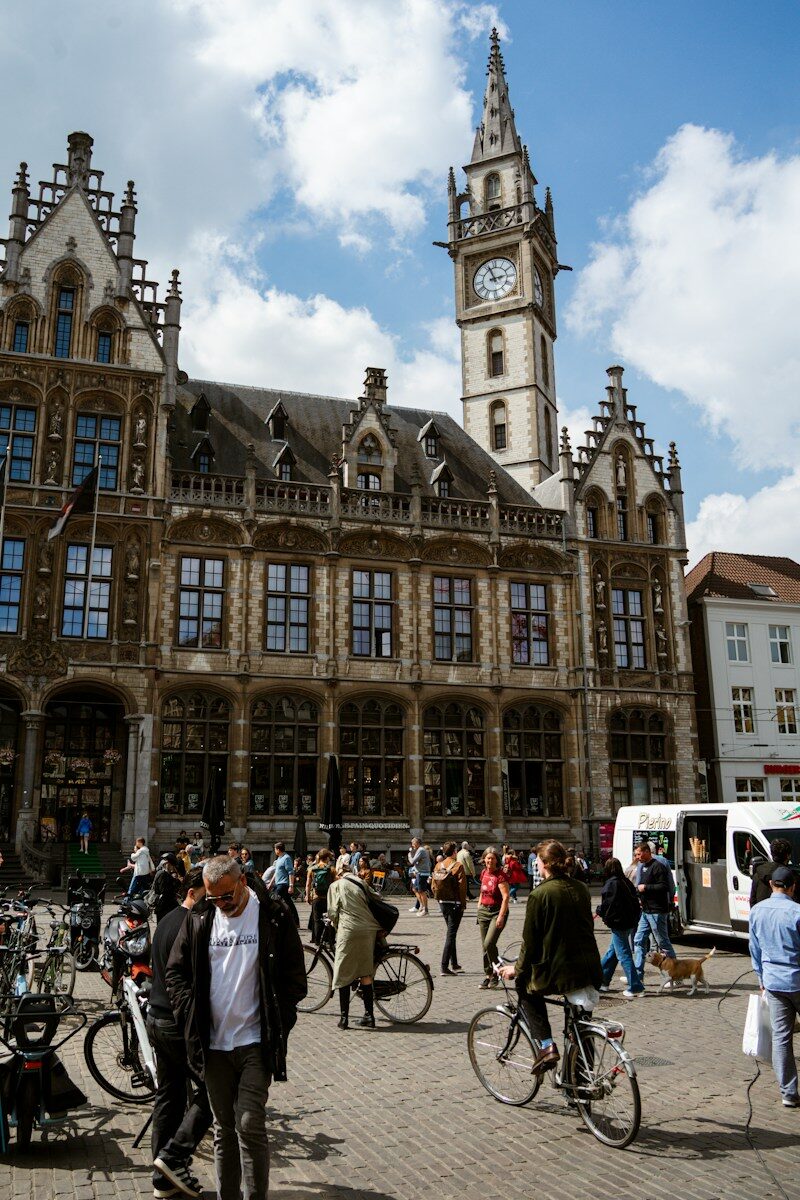
This is not the greatest challenge the initiative faces, however. In 2029—the same year the coach ban is first introduced—the city-wide mobility and infrastructure initiative is set to begin. That project, Gentspoort, aims to add 10 km of new tram lines and two new underground tunnels to reduce traffic congestion. It is currently in the design and approval phase, with major works scheduled to start sometime in 2029. Moving the tourist problem from the centre to the ring, where major construction is underway, could create many new problems. If thousands of day-trippers are dropped at the ring and told to take local trams or buses into the centre, it could overwhelm the already strained transit network, leading to friction between tourists and daily commuters.
Ghent's decision not to simply cap visitors shows the city's ability to diagnose the actual failure. The problem was never the number of tourists; it was coaches idling at busy public areas, blocking the very streets the city had spent years making walkable. The six drop-off points, partly modelled on Bruges' success, will give residents more space to enjoy their own city and visitors a chance to still come, without extortionate tourist taxes. The wider takeaway is to separate tourists from the vehicles that carry them, borrow the logic of a proven model and adapt it to fit the needs of the city. However, because the plans coincide with a major mobility and infrastructure initiative, the real success of this measure will only be clear in 2029.
- Related Members