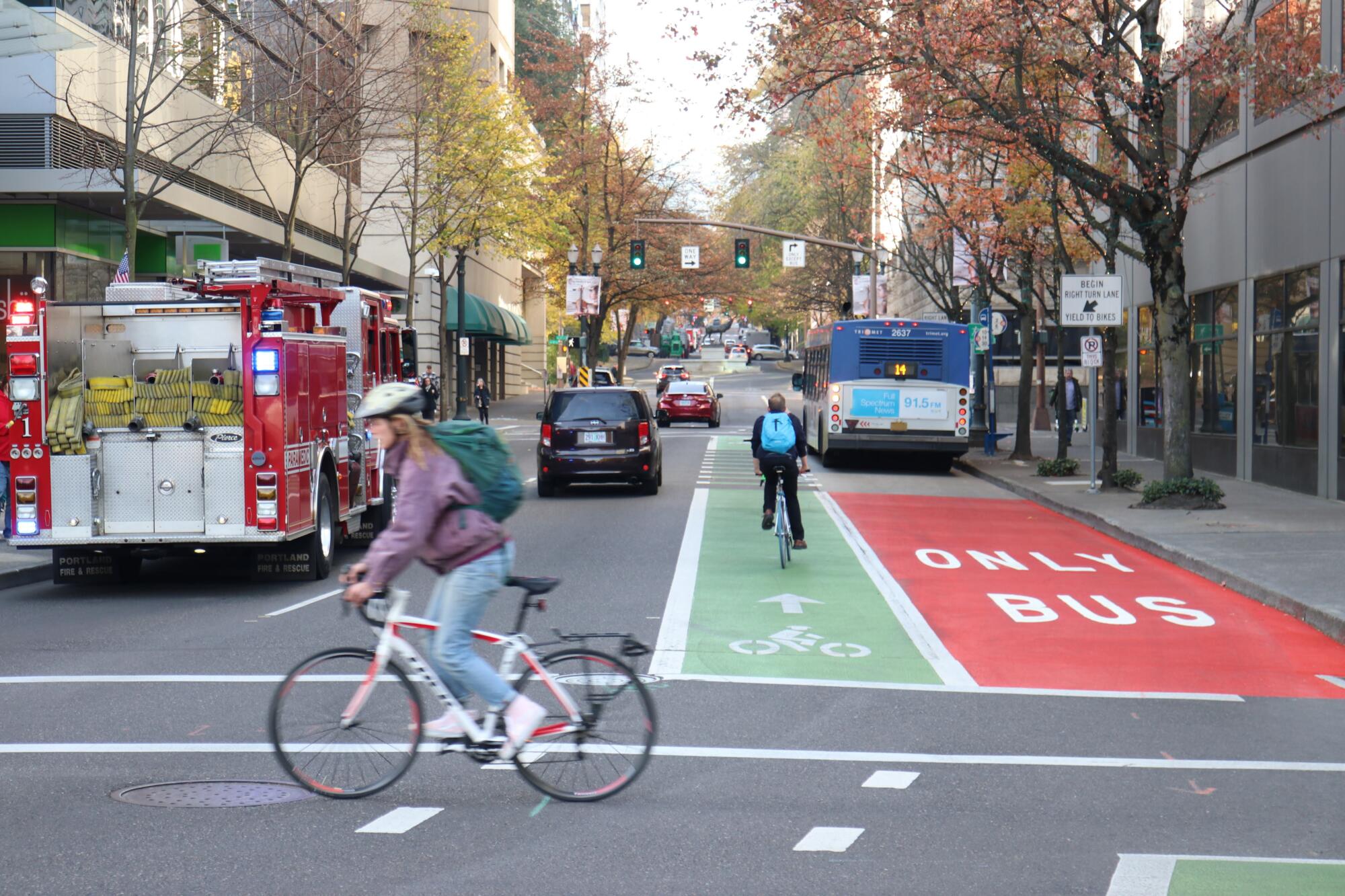
Portland joins POLIS as first North American member city
This month, POLIS welcomes the City of Portland's Bureau of Transportation (PBOT) as the first North American member city joining our growing network.
We are pleased to announce that Portland, Oregon, has officially joined POLIS as the first North American city within our ever-expanding network of cities and regions. Portland has long been recognised as one of the United States' leading cities for sustainable urban mobility: from pioneering cycling infrastructure and neighbourhood greenways to advancing Vision Zero and climate-conscious transport planning, the city has spent decades demonstrating how people-centred mobility can shape healthier, safer and more liveable communities.
Through their POLIS membership, Portland will bring valuable experience while also strengthening collaboration and knowledge exchange between North American and European cities working towards safer, cleaner, and more inclusive transport systems.
About PBOT
The Portland Bureau of Transportation (PBOT) is the transport agency for the City of Portland, responsible for planning, building, managing, and maintaining the city’s transport network. Working in partnership with communities, the bureau delivers infrastructure and services that keep people and goods moving while supporting the city's economic vitality and quality of life.
Sustainability sits at the heart of PBOT's mission. The bureau develops policies, programmes, and infrastructure that support walking, cycling, public transport, and the efficient movement of people and goods, while improving safety for all road users. Portland’s approach is based on the understanding that a successful transport system must provide people with safe, convenient, and accessible choices for how they travel. Through long-term planning and investment, the city continues to develop a multimodal network that supports mobility, equity, and environmental goals.
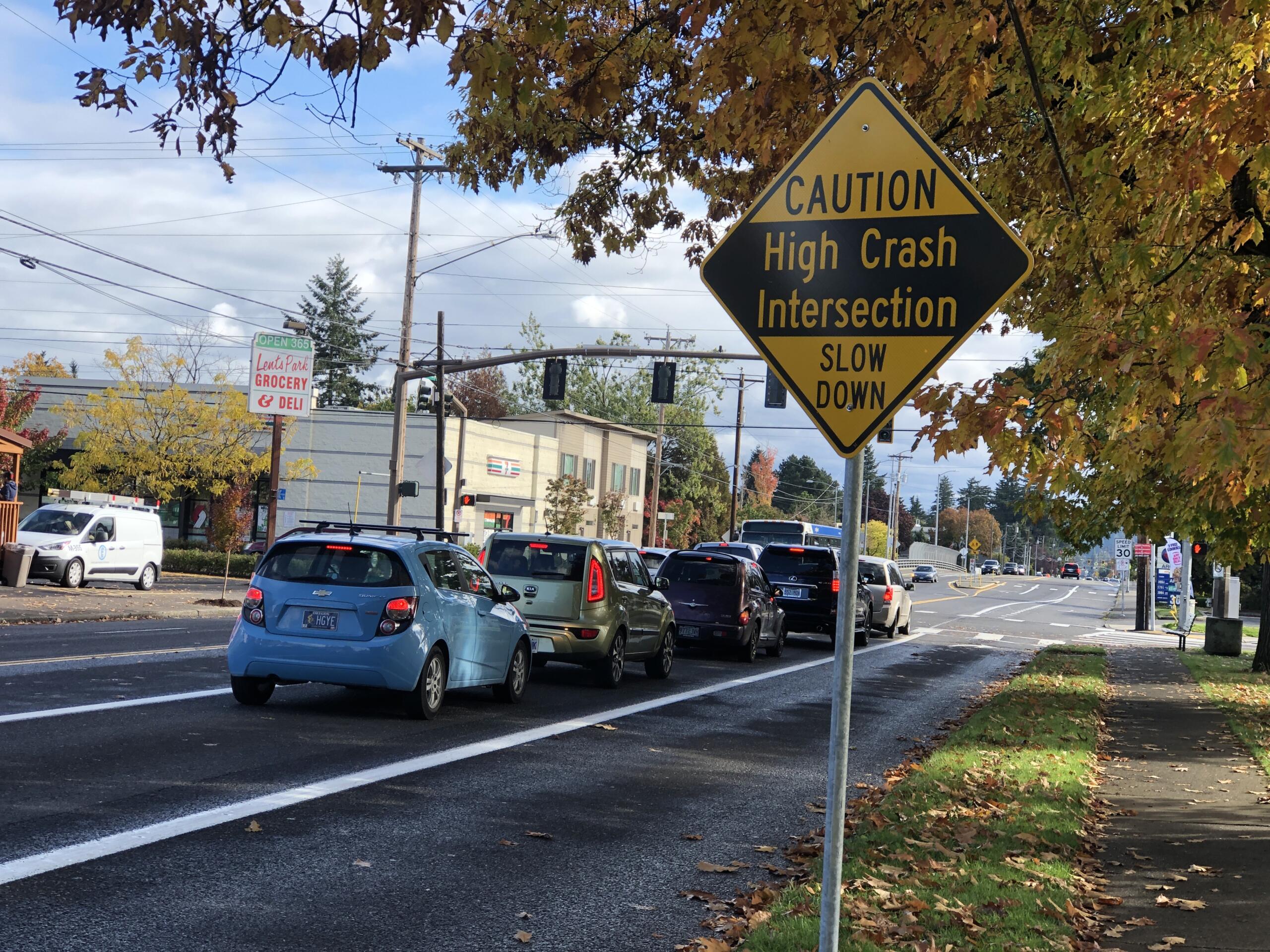
Road safety signage at high crash intersection in Portland, Oregon — Credit: PBOT
Planning for a safer, sustainable, and better connected city
Portland's long-term vision is set out in its Transportation System Plan (TSP), which guides the city's investment and policy over the next two decades. Rather than treating transport as simply the movement of vehicles, the plan considers how streets connect people to jobs, education, services and public spaces, helping neighbourhoods thrive while improving quality of life. The TSP brings together every part of the transport network, from walking and cycling to public transport, freight, and driving, recognising that each mode plays a complementary role in creating a balanced, resilient city. This integrated perspective allows Portland to respond to population growth, changing travel patterns and climate challenges while ensuring transport investments deliver wider social and environmental benefits.
Safety is one of the plan's defining priorities. Through its Vision Zero Action Plan, PBOT is working towards eliminating traffic deaths and serious injuries by identifying the factors that contribute to crashes and implementing targeted improvements. The Vision Zero approach recognises that people make mistakes and that transport systems should be designed to reduce the likelihood and severity of those mistakes. By focusing on safer street design, speed management, and improvements for people walking, cycling, using public transport, and driving, Portland is working to create streets where everyone can travel safely.
Walking and cycling as everyday mobility options
Portland’s commitment to active mobility is reflected in PedPDX, the city’s pedestrian master plan. The strategy establishes a vision for a connected, safe, comfortable, and accessible pedestrian network that enables more people to walk as part of their daily lives. PedPDX focuses on improving pedestrian connections, enhancing crossings, increasing accessibility, and prioritising investments where they can have the greatest impact. By recognising walking as a fundamental part of the transport system, Portland is helping to create a network that supports independence, health, and access for communities across the city.
When it comes to cycling, Portland's leadership has long been recognised internationally. The city is one of only a handful of US cities to receive the League of American Bicyclists' Platinum Bicycle Friendly Community designation, recognising decades of sustained investment in high-quality cycling infrastructure and policies that encourage everyday cycling.
That commitment lives on through Portland's Bicycle Plan for 2030, which aims to make cycling a practical option for people of all ages and abilities. The plan expands protected bike lanes, strengthens neighbourhood greenways, improves connections to public transport, and removes barriers that discourage people from travelling by bike.
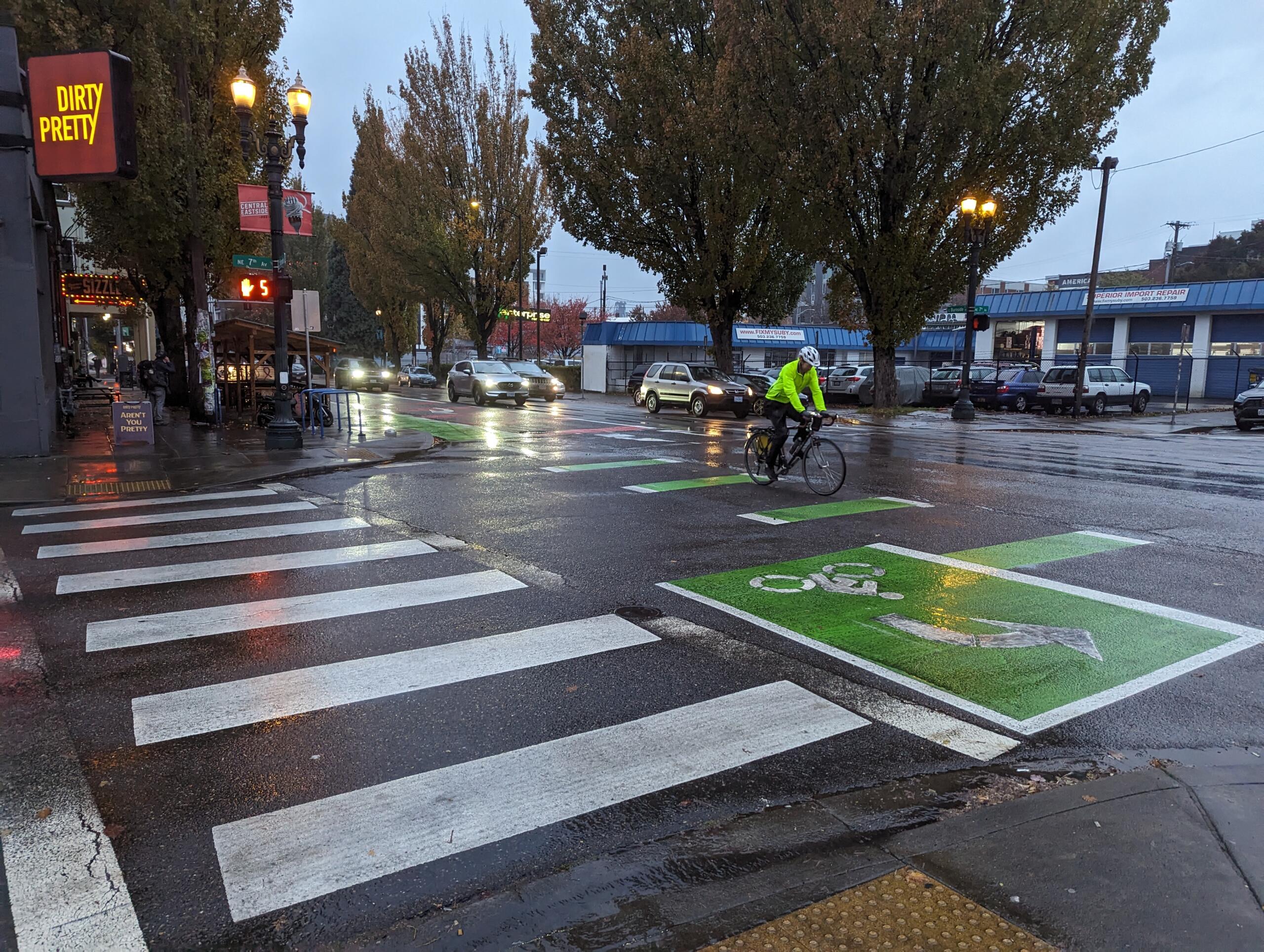
Pedestrian crossing and cycling lane in Portland, Oregon — Credit: PBOT
Supporting the movement of people and goods
While Portland is widely recognised for active mobility, it also understands that thriving cities depend on the efficient movement of goods. Through its 2040 Freight Plan, PBOT is modernising freight infrastructure while ensuring freight movement is compatible with safer, healthier neighbourhoods.
The plan identifies a designated freight network connecting industrial areas, distribution centres, and regional transport corridors, helping prioritise investment where it is needed most. It also addresses emerging challenges such as the growth of e-commerce and last-mile deliveries, while seeking to reduce conflicts between freight vehicles and other road users through safer street design and better network planning.
Portland's willingness to innovate, test new approaches, and place people at the centre of transport policy has earned it an international reputation as one of North America's leading sustainable mobility cities.
Find out more about POLIS Global and how to become a member here.