Enriching the Mobility Menu, the #POLIS25 way
The 2025 Annual POLIS Conference concluded on 27 November in Utrecht with a powerful call for a fairer, more inclusive transition to sustainable mobility.
Over two days, more than 1,000 urban mobility professionals, local and regional leaders, researchers, civil society representatives, and mobility innovators gathered to explore solutions to one of Europe’s most pressing challenges: ensuring that the shift to clean, efficient, and future-proof transport does not leave anyone behind.
The Closing plenary, 'Enriching the Mobility Menu: Tackling Transport Poverty', captured the core message running through the entire conference. Despite unprecedented momentum for sustainable mobility across Europe, too many people still struggle to access basic opportunities because mobility systems are not designed with their needs in mind. The debate demonstrated that tackling mobility poverty now stands at the intersection of social policy, transport planning, climate action and democratic participation—and that cities and regions are increasingly embracing this holistic perspective.
Climate policy, social justice, and the Social Climate Fund

Beatriz Yordi — Credits: MichielTon.com
The closing session opened with remarks by Beatriz Yordi, Director for Carbon Markets and Clean Mobility at DG CLIMA, who emphasised that the EU’s climate goals and its social objectives must advance together:
'Climate policies can be a progressive policy for citizens; meaning access to clean transport, access to clean energy, [and] opening the markets of electricity.'
She warned that transport poverty is rising sharply across Europe while the transport sector continues to lag behind in emission reductions:
'Transport is a sector that is lagging behind in the emission reduction… emissions have been increasing since the 90s.'
This stagnation is not only an environmental concern but also an economic vulnerability. Europe imports between €400 and €500 billion in fossil fuels every year, a dependence that exposes households to global price shocks and drains resources that could otherwise support clean mobility systems. Yordi stressed that the burden of emissions is deeply unequal:
'The richest 20% of Europeans generate 32% of transport and building emissions, while the poorest groups are responsible for only around 9%, yet they suffer the harshest consequences of inadequate mobility options and high energy prices.'
Against this backdrop, she highlighted the transformative potential of the €89 billion Social Climate Fund, designed to support lower-income households, structurally weaker regions, and investments in affordable, clean mobility—from public transport and cycling infrastructure to zero-emission vehicles and improved building efficiency. But money alone, she argued, will not be enough. The fund must be accompanied by structural reforms in taxation, energy markets, and national mobility strategies to ensure long-term fairness and resilience.
Mobility is not a luxury—it is a precondition for participation
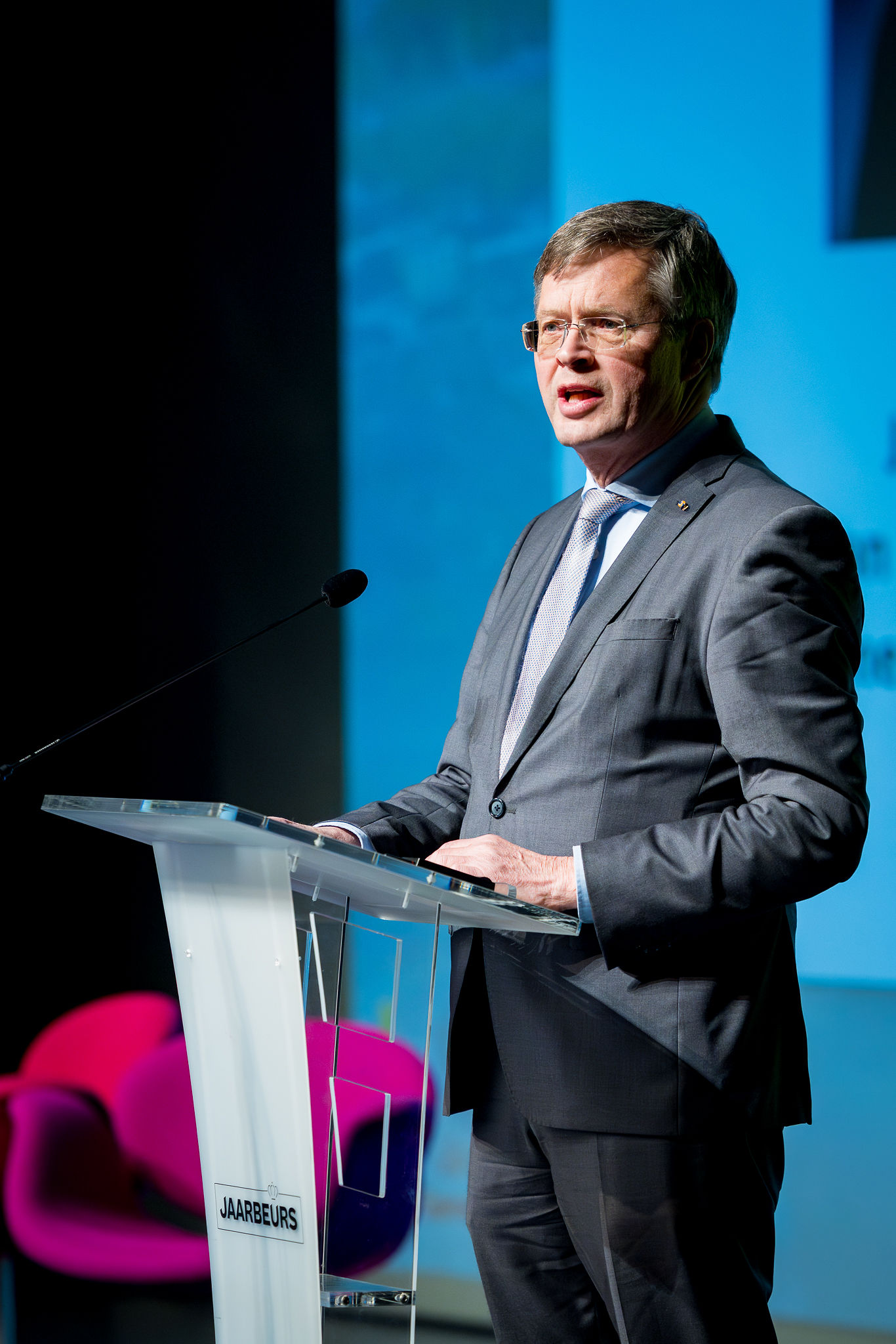
Jan Peter Balkenende — Credits: MichielTon.com
The keynote address was delivered by Professor Jan Peter Balkenende, Chairman of the New Mobility Foundation and former Prime Minister of the Netherlands. His contribution added depth and urgency to the debate. Reflecting on more than two decades of engagement with issues of social equity in mobility, Balkenende stated:
'Mobility poverty is not simply a transport challenge, but a question of fairness, dignity, and democratic access to society.'
He traced the origins of his commitment to the conviction that mobility shapes every aspect of daily life: access to healthcare, education, employment, and social connection.
During his years in government, he saw firsthand how people can be excluded from opportunity because they lack reliable, affordable ways to move; this insight has continued to guide his work with the New Mobility Foundation (NMF), which positions itself deliberately between the public, private and civic sectors. According to Balkenende, this is where inclusive mobility is most effectively shaped:
'At the intersection of policy, innovation, and lived experience, where solutions can be designed with, not for, the people who need them most.'
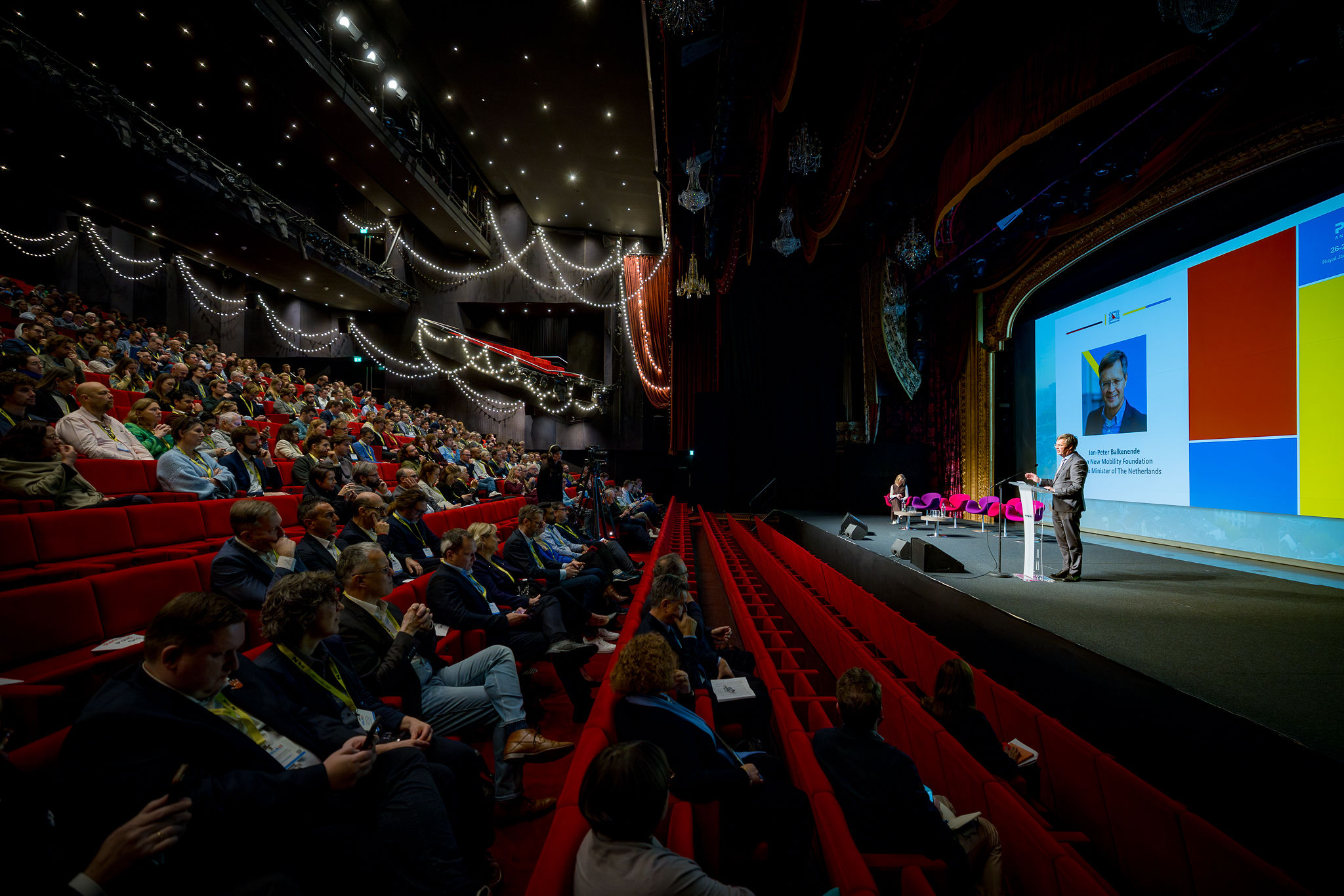
Closing Plenary #POLIS25 — Credits: MichielTon.com
To move forward, he called for an expanded, human-centred 'mobility menu' that combines strong public transport with diverse, community-based mobility options, highlighting examples such as adapted shared mobility for seniors and people with disabilities, volunteer driver schemes, rural mobility hubs, mobility credits and low-threshold digital tools.
Above all, he framed the fight against transport poverty as both a moral obligation and a strategic investment in Europe’s future:
'Tackling transport poverty is both a moral imperative and a social investment.'
Looking ahead, Balkenende emphasised the need for stronger coalitions between public authorities, transport operators, NGOs and communities; better data; and embedding mobility as a basic right in EU and national frameworks.
A debate grounded in lived experience
The panel discussion that followed expanded on these themes. The following leaders from local and regional government, shared mobility, civil society and advocacy underlined the structural nature of mobility poverty and the need for coordinated responses:
- Maxim Romain, President & Co-founder, TIER-Dott
- André van Schie, Regional Minister for Mobility, Province of Utrecht
- Melissa Bruntlett, Equitable Mobility Expert and author of 'Women Changing Cities', Modacity Creative
- Lidija Pavić-Rogošić, Vice-President, Civil Society Organisations Group, European Economic and Social Committee / Director, ODRAZ
- Dejan Crnek, Deputy Mayor, City of Ljubljana

Closing Plenary panel at #POLIS25 — Credits: MichielTon.com

Karen Vancluysen, Maxim Romain, and André van Schie — Credits: MichielTon.com
Romain highlighted the business challenge of serving low-density areas, noting that profitability often depends on external support. He stressed that:
'In suburban cities, the lower density makes operating our services less cost-efficient, so sometimes we need financial help to make it viable.'
Van Schie, looking at the example of the Province of Utrecht, underscored the need for system-level integration, moving beyond single modes of transport:
'Monomodality works only if it is the bike. Otherwise, multimodality is the only path forward.'
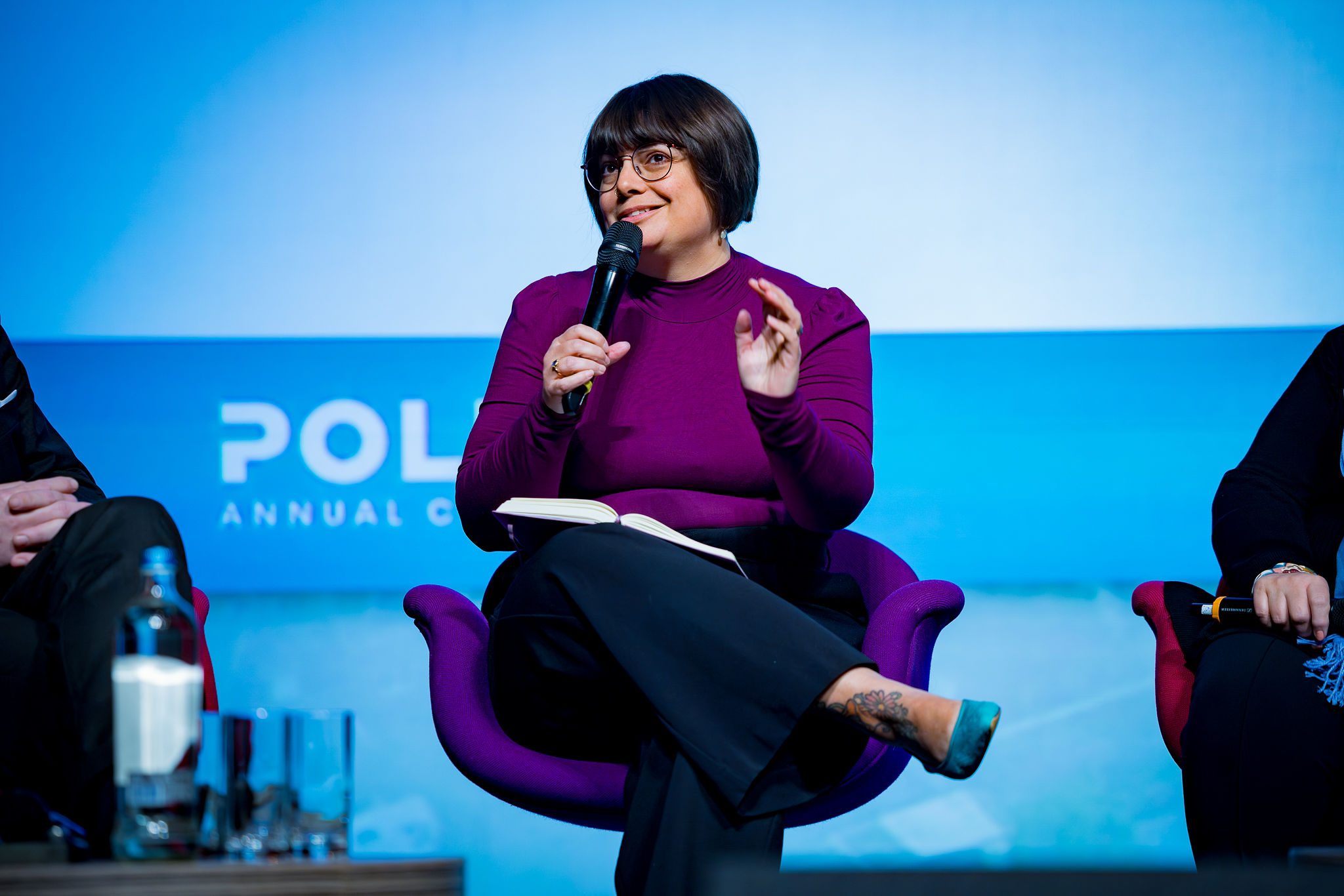
Melissa Bruntlett — Credits: MichielTon.com
Bruntlett brought a leadership perspective, emphasising the qualities that make cities more equitable and responsive:
'A future where cities are more feminine would be fantastic—not because there are more women in leadership, but because leadership qualities such as empathy and care shape more equitable cities.'
Pavić-Rogošić spoke about inclusive planning and community engagement, highlighting the importance of listening to citizens in shaping transport solutions:
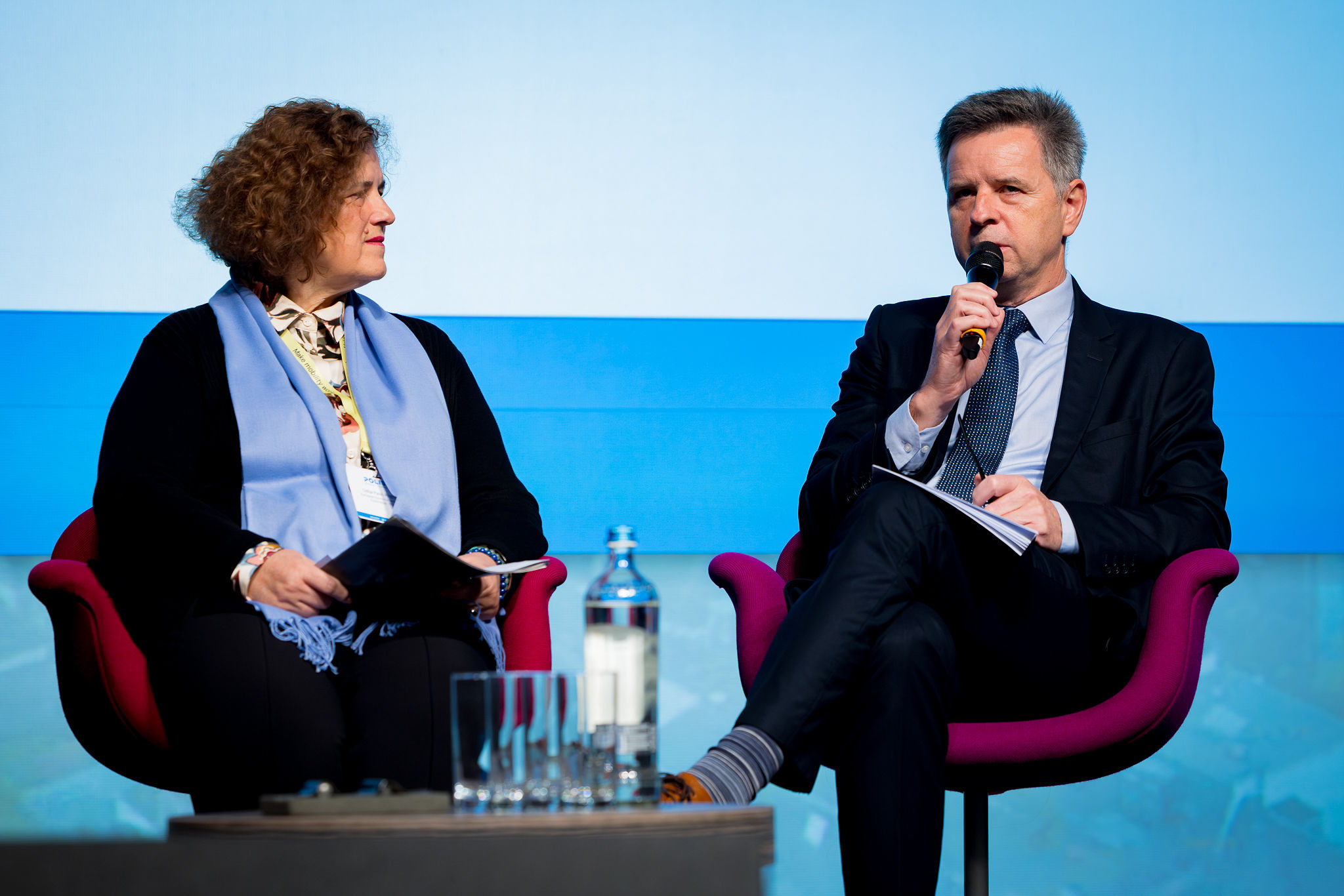
Lidija Pavić-Rogošić and Dejan Crnek — Credits: MichielTon.com
'Urban mobility is not just about infrastructure; it is about understanding people’s needs and making sure every voice is part of the conversation.'
Dejan Crnek illustrated practical solutions from the City of Ljubljana, particularly in electric car-sharing and integrated cycling networks:
'We decided to have only electric car-sharing in Ljubljana. It is affordable, sustainable, and scalable.'
The panel emphasised that public-private partnerships, subsidies, and smart infrastructure investment are key to bridging gaps in accessibility, especially for suburban and lower-income populations.
Celebrating leadership in mobility: The POLIS Award 2025
The plenary then turned to one of the highlights of the conference: the announcement of the 2025 POLIS Award, presented each year to a POLIS member who has demonstrated exceptional leadership in sustainable urban mobility.
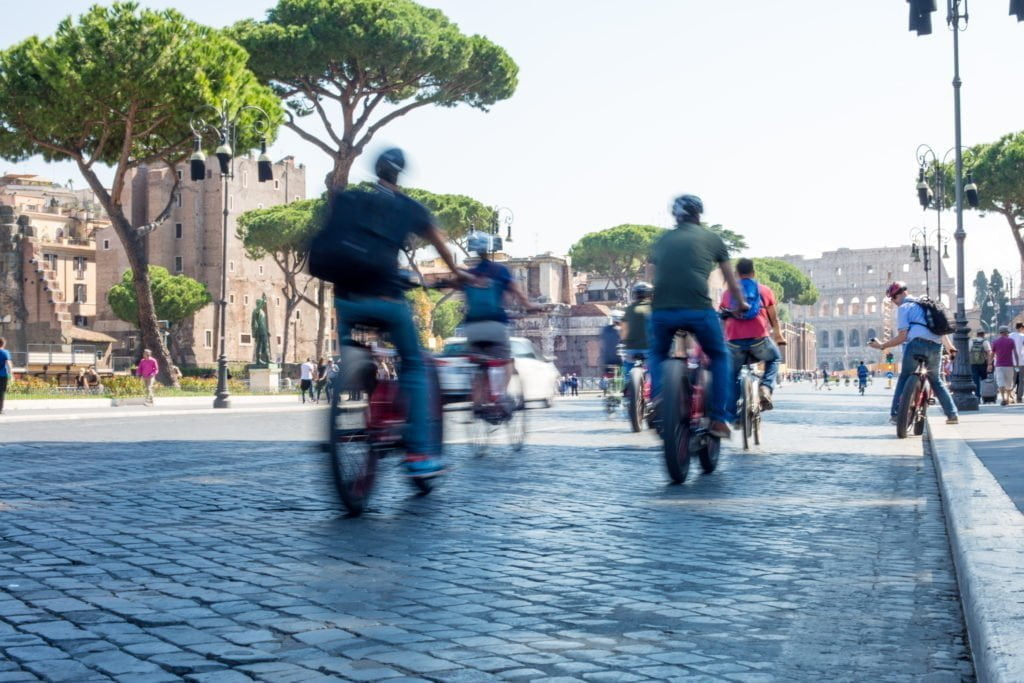
This year's winner is Rome – Roma Capitale and Roma Servizi per la Mobilità, honoured for their ambitious and coordinated progress in multimodal travel, digitalisation, shared mobility integration, modernisation of the public transport system, and a renewed focus on active mobility and the emerging bike economy.
-

- Eugenio Patanè receives the POLIS Award for Roma Capitale and Roma Servizi per la mobilità — Credits: MichielTon.com
-
- The POLIS Award winners of 2025 — Credits: MichielTon.com
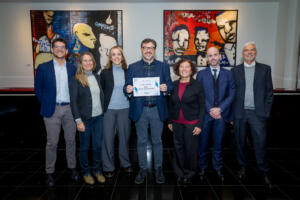
Rome’s commitments, presented during the conference, reflect a mobility strategy deeply rooted in the city's Sustainable Urban Mobility Plan. Investments in metro and tram extensions, a cleaner bus fleet, strengthened environmental zones, and expanded cycling corridors demonstrate a willingness to make bold changes—even when these decisions may not be easily accepted at first. What distinguishes Rome’s approach is its continued dialogue with citizens and stakeholders, navigating the transformation of a large, complex and historic metropolitan area with both confidence and humility.
The city’s longstanding activism within the POLIS network—initiating the Capitals Working Group, contributing consistently to the Political Group, and hosting this year’s Leadership Summit—underlines its broader role as a European mobility leader.
Honouring dedication to the POLIS community
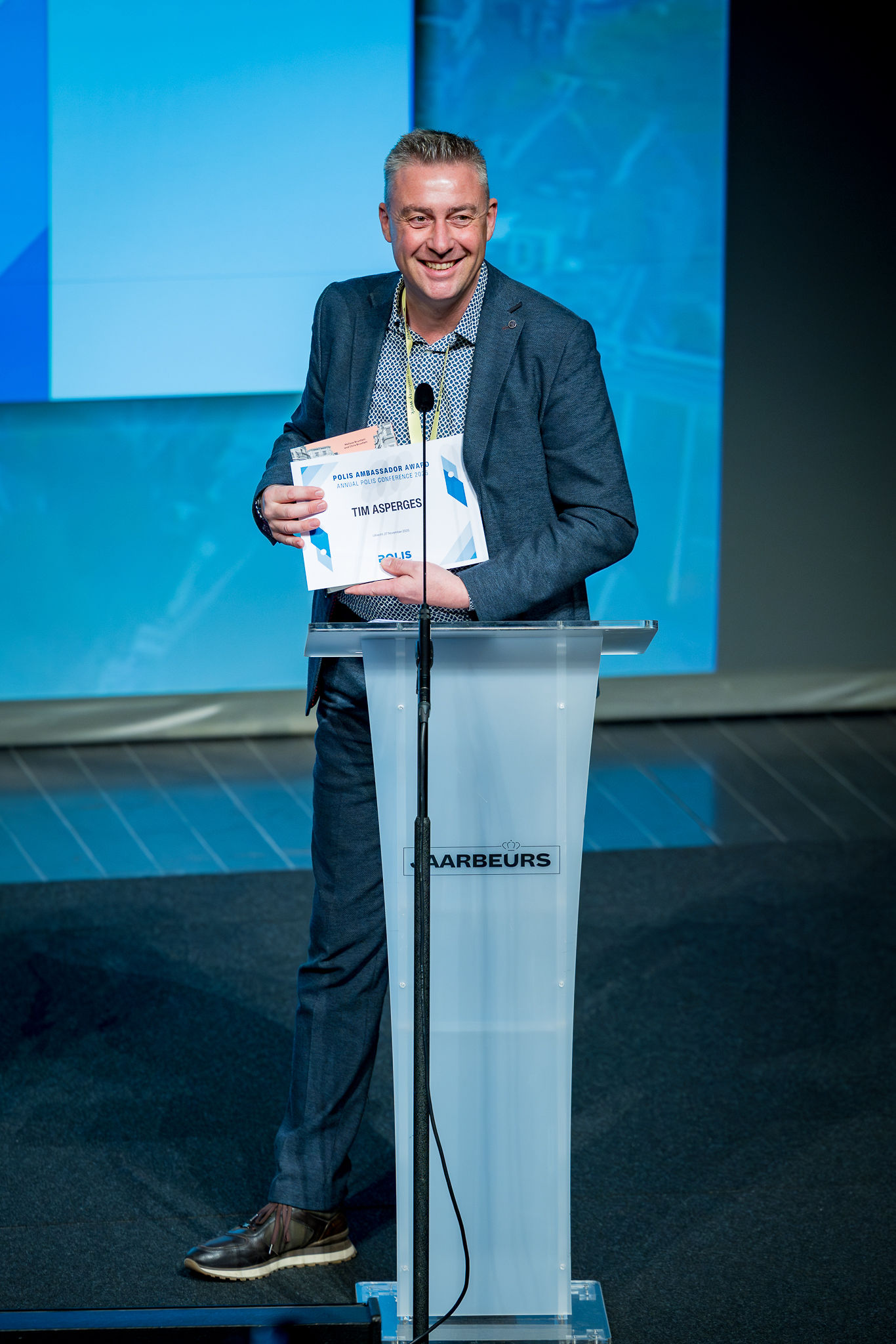
Tim Asperges — Credits: MichielTon.com
The POLIS Ambassador Award, now in its third year, celebrates individuals who tirelessly advocate for the network and for European cooperation in mobility. This year’s recipient, announced during the plenary, is Tim Asperges from the City of Leuven, recognised for his outspoken leadership, his commitment to evidence-based decision-making, and his dedication to raising the visibility of both his city’s achievements and the value of collaboration across Europe.
A moment of gratitude and a handover
POLIS Secretary General Karen Vancluysen closed the session by thanking the entire community for their active participation, as well as acknowledging the work of the POLIS team and, in particular, the events team that delivered the largest Annual POLIS Conference to date.
This year also marked the conclusion of Utrecht’s Presidency of the POLIS network. In a warm handover ceremony, Deputy Mayor Eva Oosters passed the Presidency to the City of Ljubljana, which will guide the network through the next year of cooperation, exchange and ambition.

Eva Oosters and Dejan Crnek — Credits: MichielTon.com
Ljubljana brings a profound commitment to people‑centred urban planning, prioritising walking, cycling, public transport, and the enhancement of public spaces. Its track record includes winning the European Green Capital 2026 award and earning the EU Mission for Climate-Neutral and Smart Cities label, underlining its capacity to lead by example in the green transition.
In its new role, Ljubljana will champion a collaborative and inclusive vision: supporting POLIS as the leading European network for transport innovation, fostering the exchange of best practices across cities and regions, and strengthening the dialogue between local authorities and European institutions. Its presidency will aim to reinforce POLIS’s mission to deliver climate-resilient, socially just, and sustainable mobility across Europe.
Brussels 2026: See you next year!
The conference concluded with the announcement that the 2026 Annual POLIS Conference will take place in Brussels, returning to the city where POLIS is headquartered and where many European mobility conversations begin.

As participants left the Beatrix Theatre, the message of the Closing Plenary resonated widely: building sustainable mobility is not only a technical endeavour—it is a social commitment. The path towards climate neutrality must be a path shared by all. Ensuring that every person can access the opportunities of everyday life is not just good mobility policy; it is the foundation of a just society.

- Related Events
- Related Members
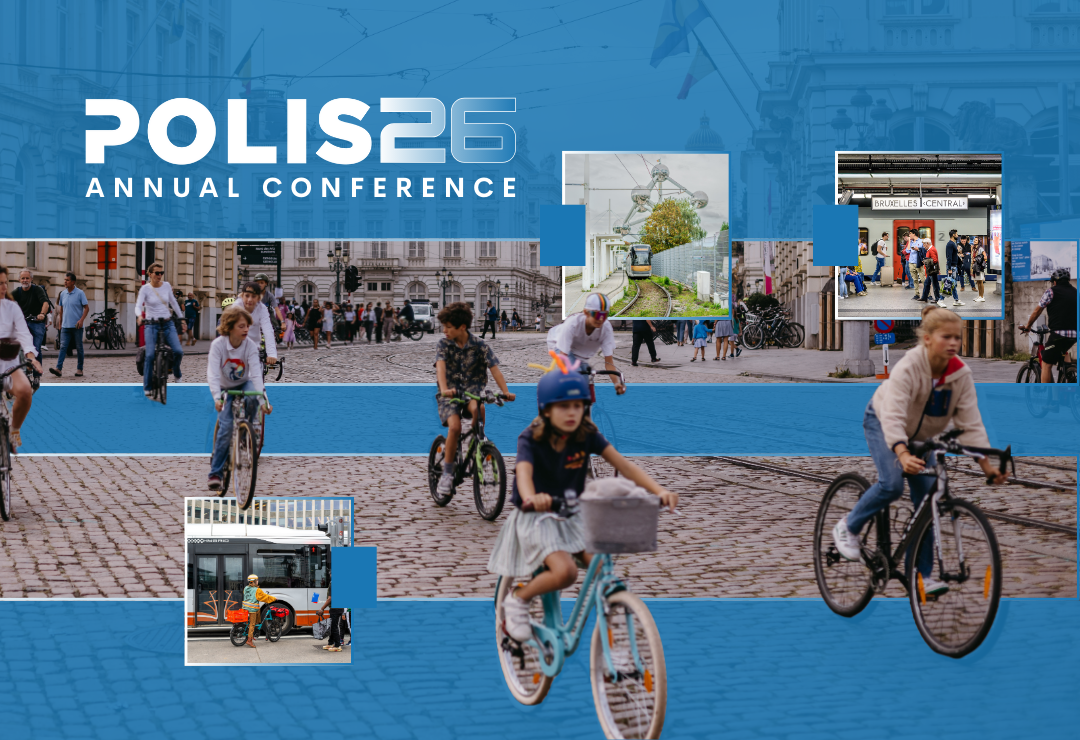
Annual POLIS Conference 2026

Annual POLIS Conference 2025
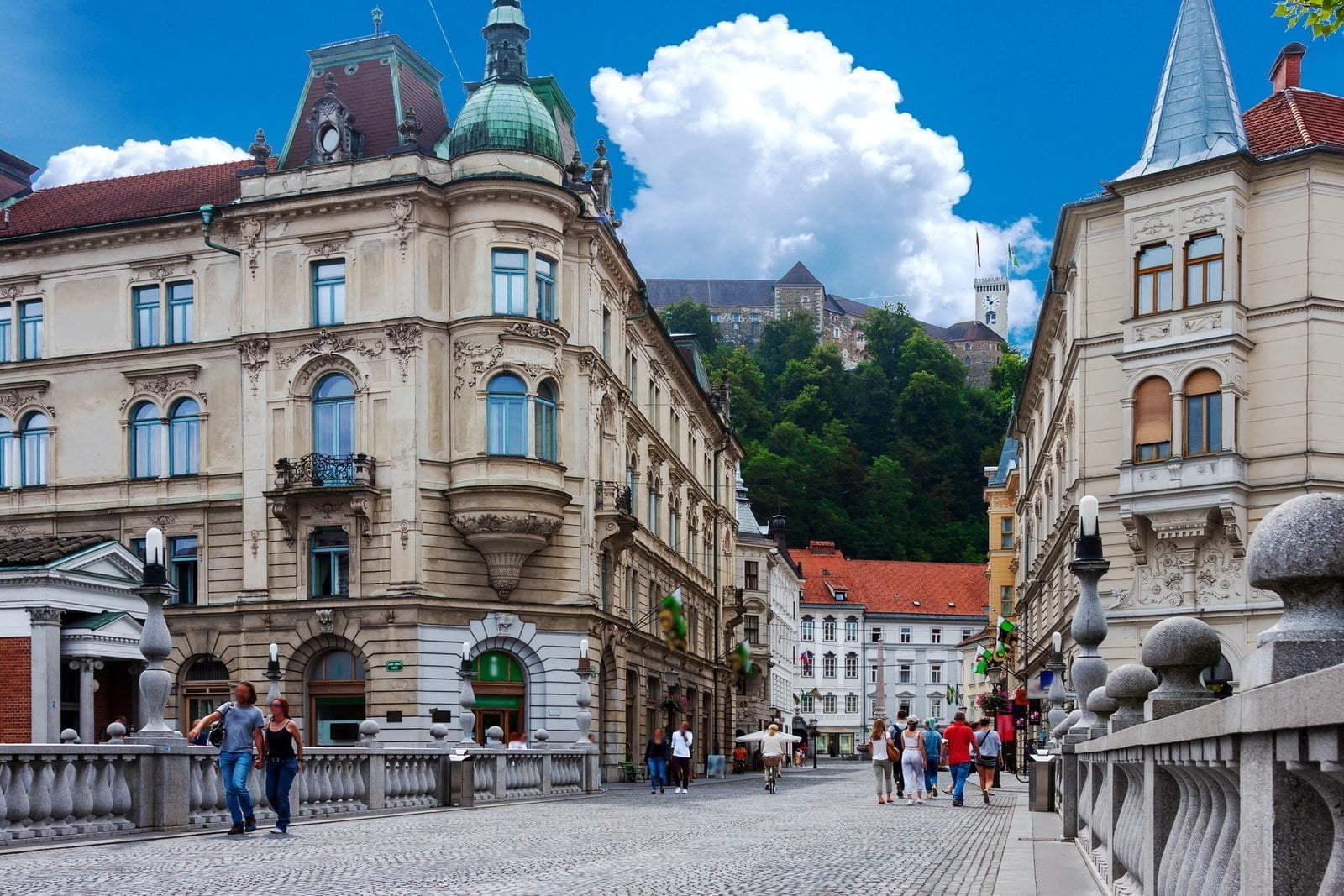
Rome (servizi per la mobilità)