IUAV reimagines mobility resilience within risk management in Europe
Rising climate risks and social inequalities are reshaping how people move through European cities. Research from IUAV University of Venice shows how mobility infrastructure can help cities adapt to environmental pressures.
Urban and coastal territories across Europe are facing increasingly complex risks, from flooding and extreme heat to biodiversity loss and widening socio-spatial inequalities. These challenges are deeply interconnected and directly influence how people move, access services, and experience their cities.
Addressing them requires more than reactive emergency measures. Instead, cities must rethink resilience as a systemic process that links environmental conditions, social dynamics, and mobility infrastructure. This perspective lies at the heart of the work carried out by POLIS member IUAV University of Venice, whose research explores how urban and transport systems can adapt to a changing climate.
Through initiatives such as the MIRACLE project, IUAV demonstrates how to combine mobility planning, ecological design, and territorial governance so as to transform risks into opportunities for more resilient urban environments.
Understanding risk
IUAV University of Venice is unique among European institutions for its focus on the design of living environments and its commitment to integrating social, environmental, and economic systems. Within the university, the Research Unit on Transportation, Territory and Logistics studies mobility not only as the movement of people and goods, but also as a factor shaping spatial organisation, economic activity, and environmental exposure.

Cover of 'Toward A New Geography Of Risk: MIRACLE': the volume bringing together the results of the MIRACLE project.
This approach is further developed in the recent volume 'Towards a New Geography of Risk', which introduces the concept of “grammars of risk". Rather than viewing risk purely as physical exposure to hazards, the framework considers it a systemic condition shaped by governance structures, social behaviours, cultural perceptions, and infrastructure networks.
Thus, urban and mobility planning becomes a tool for managing uncertainty and strengthening cooperation between infrastructure, ecosystems, and communities. Designing cities that can sustain shocks and adapt over time is therefore an essential element of resilience.
Why multi-risk matters
IUAV’s research explores how overlapping risks emerge across different territorial contexts. In Italy, several regions illustrate how environmental pressures, infrastructure systems, and socio-economic dynamics intersect.
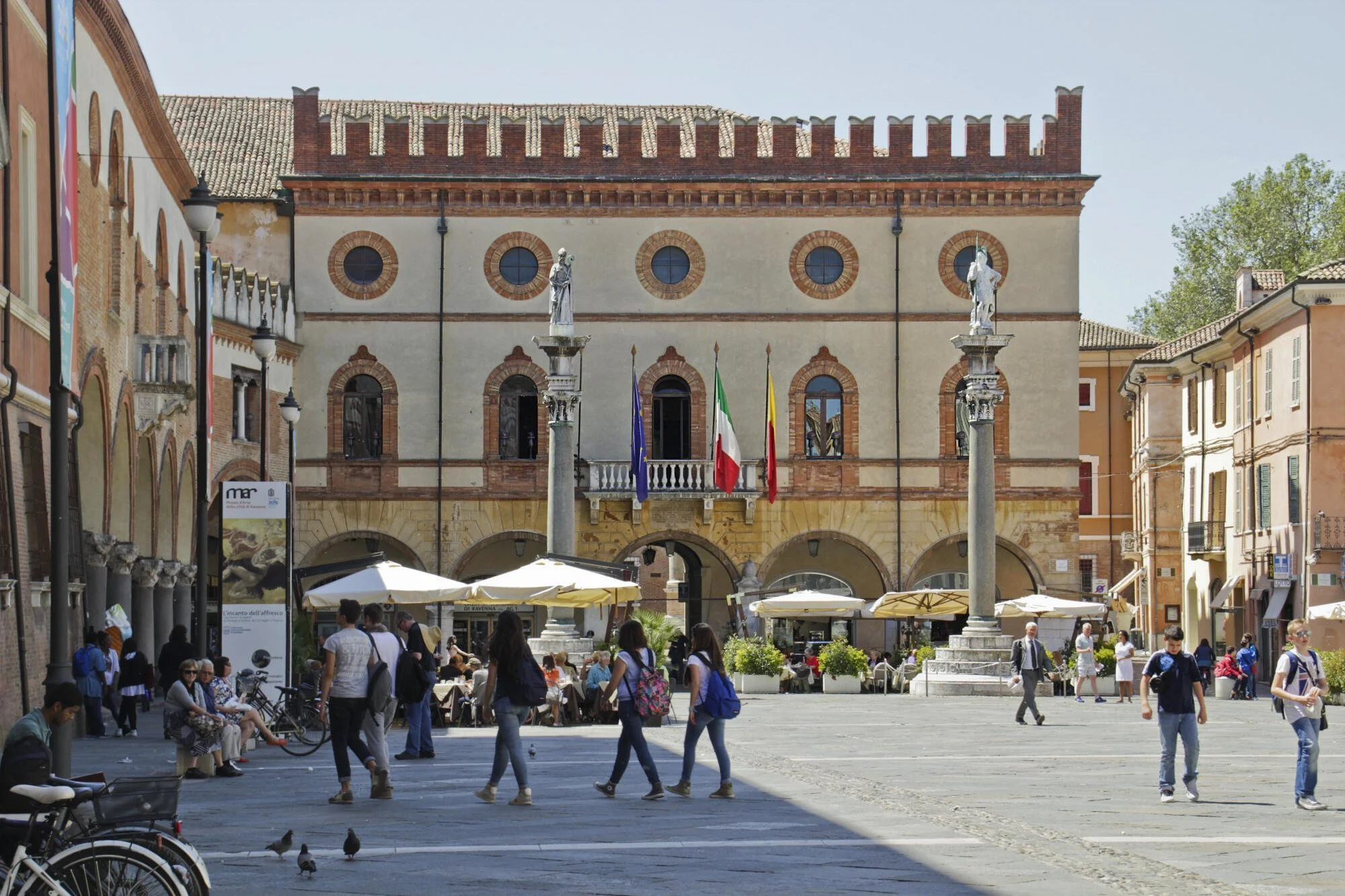
The Veneto urban corridor, including Verona, Vicenza, and Venice, highlights the relationship between dense transport networks, heat exposure, and spatial fragmentation. The Po Delta coastal system, including Ravenna and Rimini, reveals how environmental risks influence local economies and urban development. In the Gulf of Naples area, including Bagnoli, Naples, and Castellammare di Stabia, industrial legacies and fragmented governance structures add further complexity.
These territories show that risk rarely exists in isolation. Instead, it accumulates across infrastructures, landscapes, and institutions, requiring responses that connect urban design, mobility planning, and environmental management.
Lessons for European cities
IUAV’s work highlights several lessons for cities across Europe:
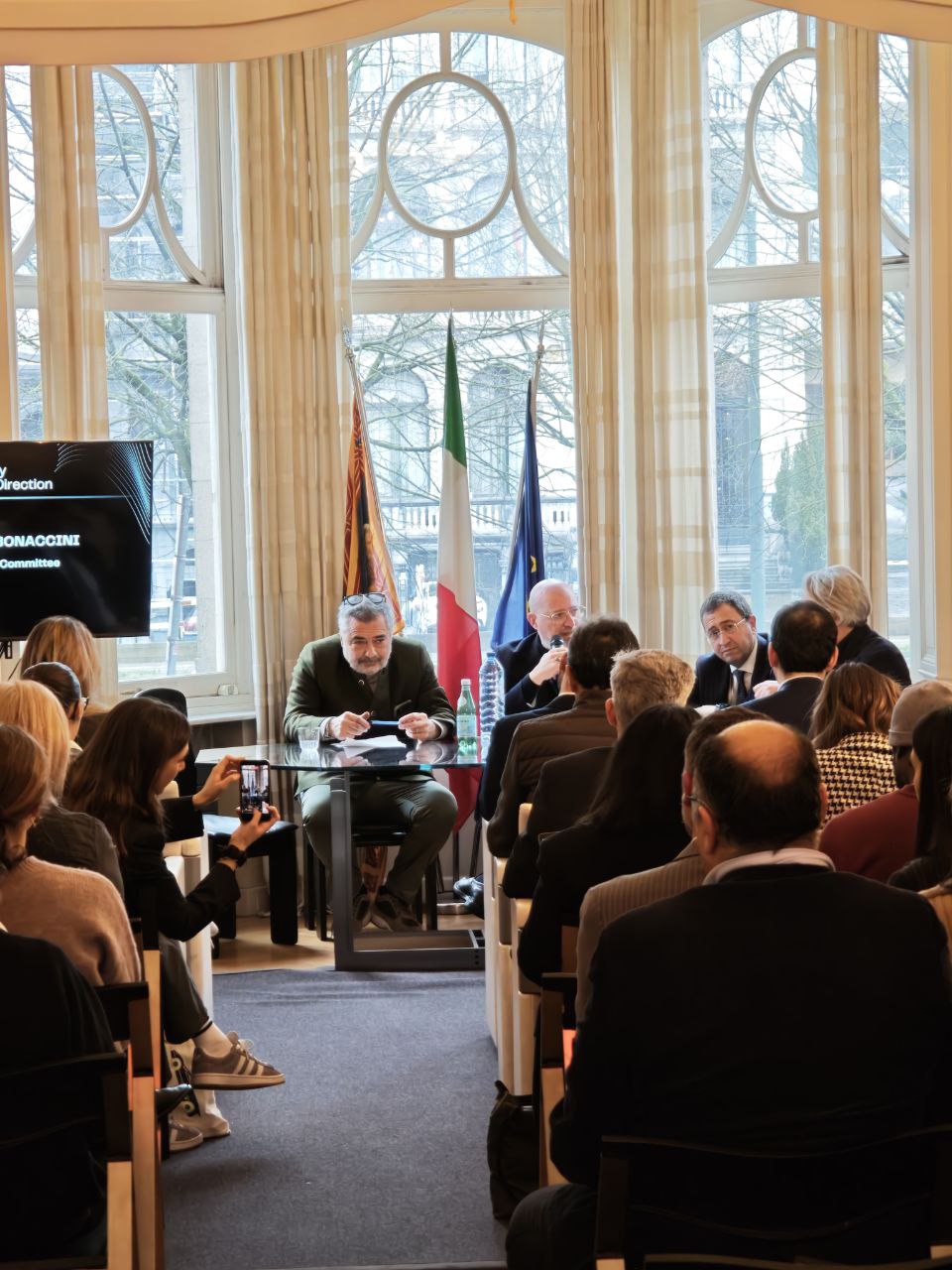
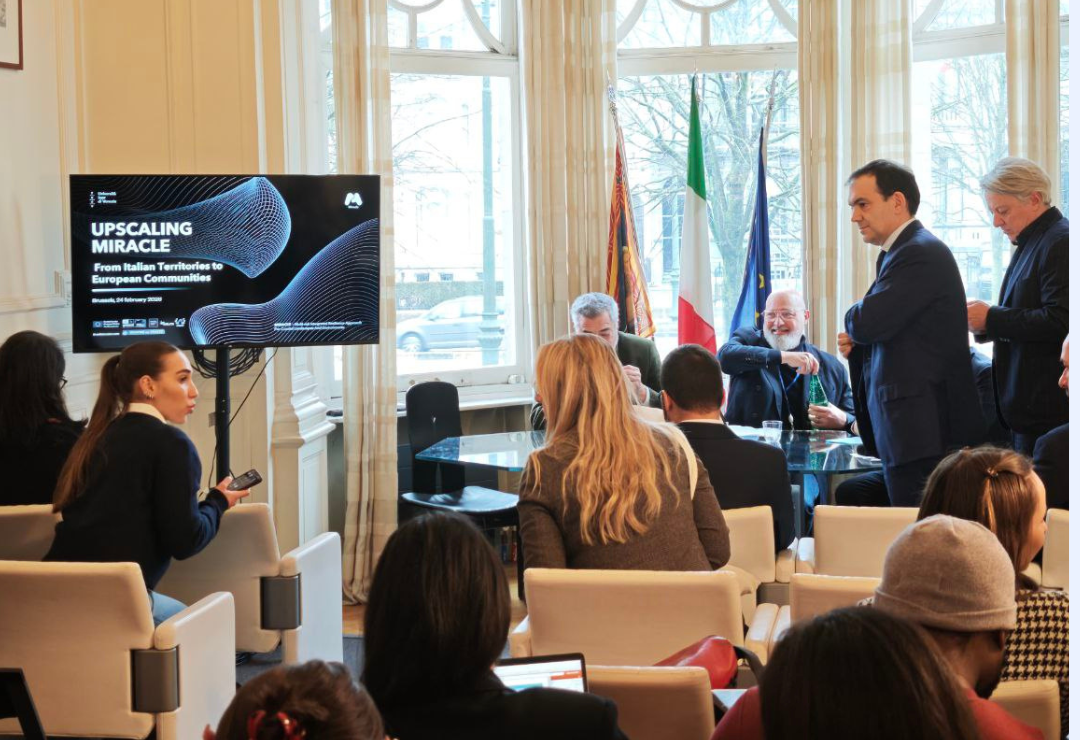
Picture taken during the event organised by the Veneto Region in Brussels to discuss the results of the MIRACLE project
- Risk must be addressed systemically. There is a deep connection among flooding, heat, mobility patterns, and social vulnerability. It is unlikely to be successful by enacting isolated interventions.
- Mobility infrastructure plays a critical role in shaping environmental exposure and spatial equity. Transport corridors can intensify risks—through heat accumulation, pollution, or spatial fragmentation—but they can also become tools for adaptation when integrated with green infrastructure, public space design, and sustainable transport systems.
- Governance and coordination are essential. Effective resilience strategies require collaboration between different levels of government and across policy sectors, from mobility and land use planning to environmental management and economic development.
This challenge is particularly evident in coastal and Mediterranean regions, where climate impacts, tourism pressures, and seasonal population changes place additional strain on infrastructure and governance systems. These territories are among the most exposed in Europe, but they also serve as important testing grounds for innovative resilience strategies.
Ultimately, IUAV’s research shows that resilience is not simply about protecting cities from environmental risks. It is about rethinking the design and governance of urban systems, ensuring that mobility, landscapes, and communities evolve together to face an increasingly uncertain future.
- Related Members