More than 400,000 Île-de-France residents have benefited from bicycle purchase subsidies in just five years
The bicycle purchase subsidy scheme launched by Île-de-France Mobilités has been a huge success, attracting almost half a million applications.
Introduced in 2020, the initiative aims to encourage residents to adopt more sustainable modes of transport by offering economic incentives for the purchase of bicycles. It forms part of the region’s wider strategy to triple the number of bicycles on the road by 2030, ultimately reducing car dependency and improving air quality.
Of the over 400,000 applications - which amount to 150 million euros disbursed over the five years of the program - 74% of them have been for electric bicycles, compared with 12% for cargo bikes and 10% for folding bikes. Subsidies range from 100 to 1,200 euros, depending on the model, with categories also available for bicycles adapted for people with disabilities.
The impact has been significant: 61% of recipients said the subsidy encouraged them to cycle more regularly. Moreover, more than half now use their bikes frequently during both the week and at weekends, while 81% report cycling year-round.
A growing interest in cycling
The measures are part of a broader strategy which combines economic incentives with infrastructure investments, such as secure cycle parking near train stations and long-term rental schemes.
In addition, a new 150 euro annual subsidy per bicycle has been introduced to encourage companies to provide bike fleets for employees, while a 100 euro grant supports young people aged 15 to 25. The goal is to make cycling accessible across all budgets and promote its integration with public transport.
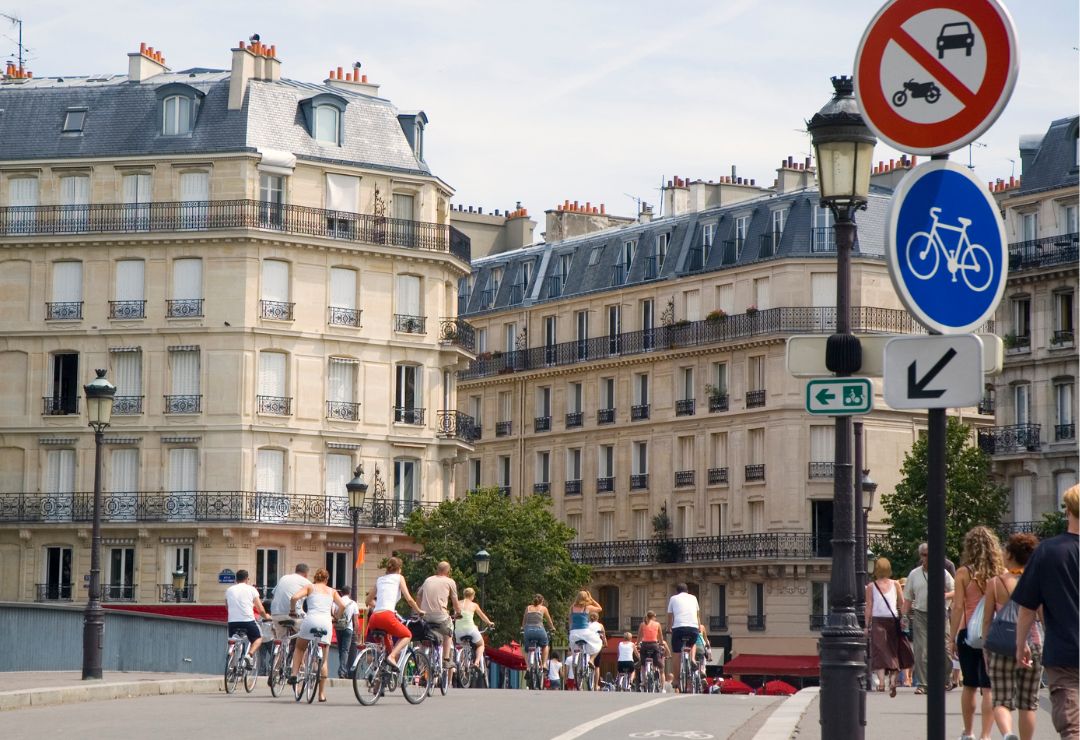
Despite its success, the initiative faces challenges. One of the main criticisms is that the subsidies disproportionately benefit wealthier households who already have the means to purchase electric bicycles, while offering limited support to lower-income residents. A further barrier is the status of cycling infrastructure. While Paris has invested heavily in cycle lanes and bike-sharing schemes, many Île-de-France municipalities still lack adequate facilities, discouraging wider uptake.
Nevertheless, the popularity of the programme by Île-de-France Mobilités reflects a growing interest in active mobility. Increasing awareness of the harmful effects of pollution on both health and the environment is pushing more residents towards cycling as a sustainable alternative.
- Related Members