
GoVolta launches new low-cost Amsterdam–Berlin route
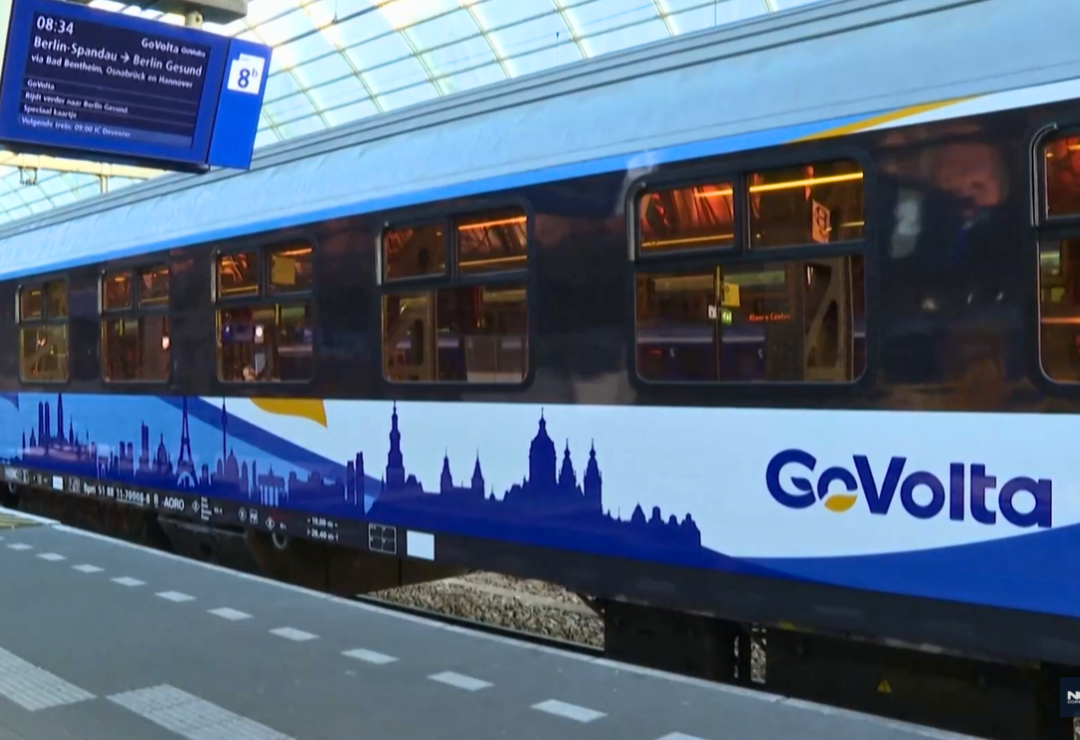
Last week, the Netherlands reached a new milestone for international rail as the first GoVolta train departed from Amsterdam Central Station to Berlin, offering a low-cost option for travellers to move across borders.
The launch of GoVolta’s new Amsterdam–Berlin rail service marks a meaningful step forward in strengthening cross-border connectivity between POLIS members Amsterdam and Berlin. The new Dutch operator is positioning itself in the market with a focus on affordable cross-border rail travel, offering passengers a new low-cost alternative for international journeys. The Amsterdam–Berlin connection adds to existing services and introduces a new layer of competition in a market that has traditionally been dominated by a limited number of operators.
GoVolta will also begin operating a connection between Amsterdam and POLIS member Hamburg, and promises to extend its service with a connection to Paris starting in December 2026. These developments demonstrate how new market entrants can contribute to improving international mobility when supported by the right regulatory and infrastructural framework.
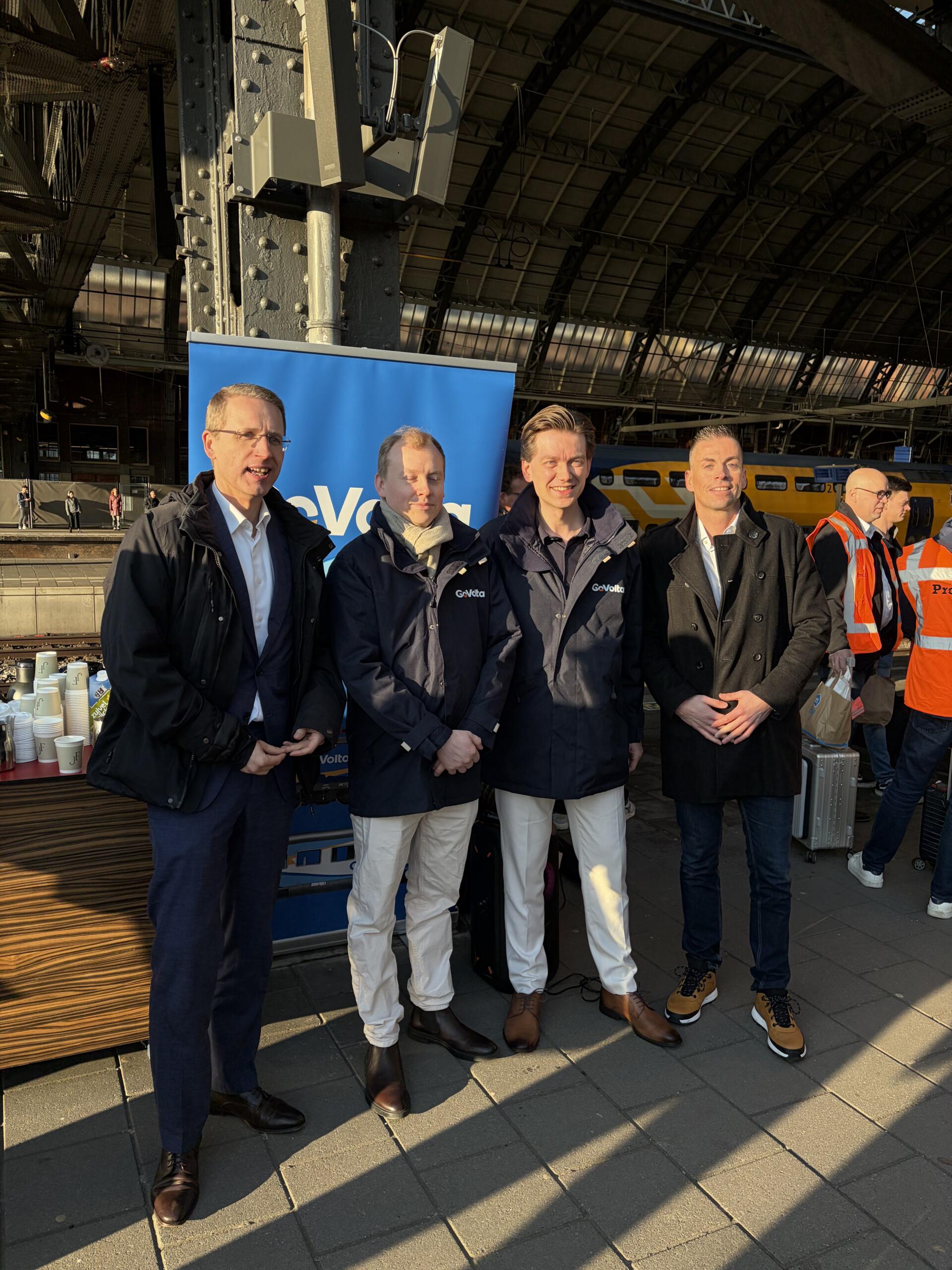
From left to right: lger van Dijk, Regional Director of ProRail, Maarten Bastian and Hessel Winkelman, CEOs of GoVolta, and Harro Homan, Secretary General of Vervoerregio Amsterdam.
The inaugural departure was marked by a short ceremony at Amsterdam Central Station, where Olger van Dijk, Regional Director at ProRail, and Harro Homan, Secretary-General of POLIS member Vervoerregio Amsterdam, the Transport Authority for the Amsterdam Region, jointly addressed attendees. Both emphasised the importance of continued investment in infrastructure to support growth and enable new international operators to enter the network.
Infrastructure and capacity as enablers
The launch of new international services is made possible by continuous investment in infrastructure. In Amsterdam, projects such as the expansion of Amsterdam Zuid station and the extension of the North/South metro line are increasing capacity and improving accessibility across the network.
These investments are essential to accommodate additional international services and to ensure that the growing demand for cross-border rail travel can be met in a sustainable way. They also reinforce the role of metropolitan regions as key nodes in the European transport system.
Looking ahead: towards a more connected Europe
The launch of these new low-cost routes from Amsterdam to cities in Germany and beyond illustrates the potential of cross-border cooperation in delivering tangible improvements in mobility across Europe. As European regulations continue to open the rail market, cities and regions can work together with new and existing operators to shape a more connected and sustainable transport system.
- Related Members