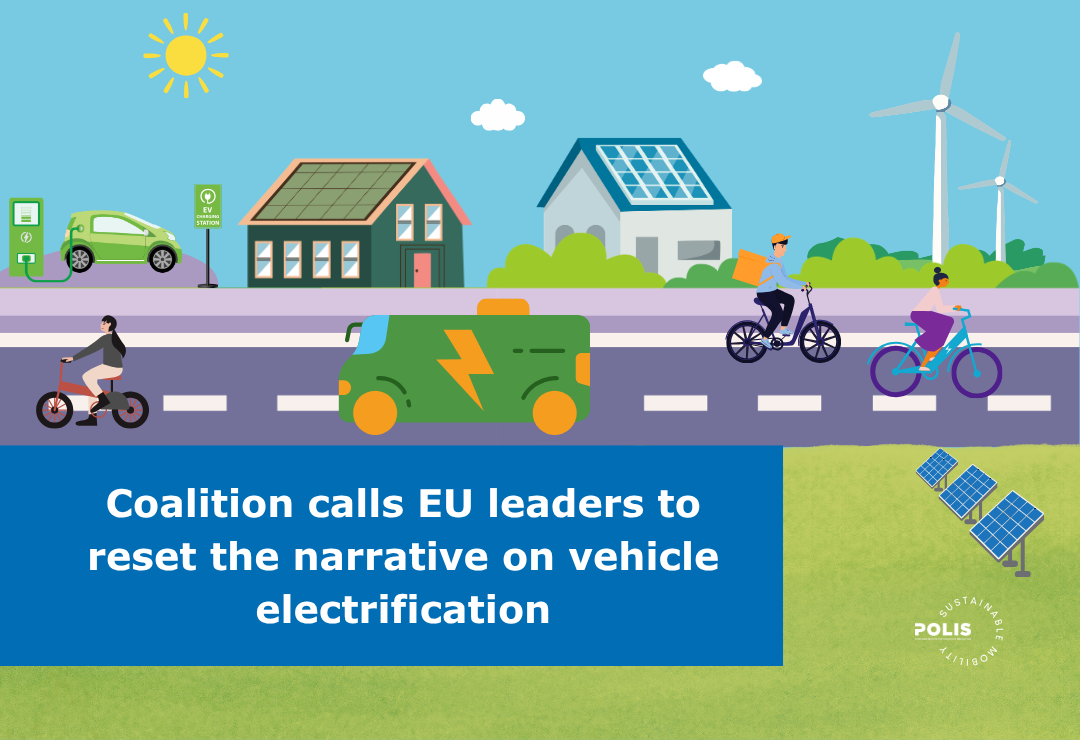
Coalition warns EU leaders to reset the narrative on vehicle electrification
A coalition of non-governmental organisations, think tanks, energy providers, renewable and cleantech industries, and the e-mobility sector has sent a letter to EU leaders expressing concerns over the current discussions on vehicle electrification.
It is known that road transport is the primary driver of the EU's oil dependency, accounting for almost three-quarters of all energy consumption in transport. Cars alone consume around 1 billion barrels of imported oil annually, costing the EU €67 billion.
This structural dependency on imports is further exacerbated by the ongoing US-Israel war on Iran, in what the International Energy Agency (IEA) describes as the 'biggest energy crisis in history'. The geopolitical shocks and volatile fuel prices gravely impact the daily lives of European citizens.
However, the oil crisis is also a reminder that an alternative mobility system, based on sustainability, is possible. Appeals to use this as an opportunity to strengthen cycling and public transport have come from civil society organisations across Europe, and now there is a new call not to back down on electric mobility ambitions.
A coalition of industry groups and civil society—including Transport and Environment, Bellona, BEUC, ChargeUp Europe, ECCO, Electrification Alliance, E-Mobility Europe, Eurelectric, Eurocities, EuropeOn, European Respiratory Society, The Shift Project, and POLIS—has sent a letter to EU leaders asking them to step up on electrification, rather than lowering ambitions.
Electrify the way

Read the letter to EU leaders
Electric vehicles (EVs) are a mature technology. The European sector for EVs is driven by the EU's ambitious climate policies and is making significant progress. According to the European Automobile Manufacturers’ Association (ACEA), in April 2026, one in five new cars registered in the EU was fully electric, an increase of 15% over one year. The growth is even more striking over the long term: since 2019, the share of electric cars in EU sales has grown tenfold.
This trend goes beyond Europe: electric car sales grew by 20% globally in 2025, exceeding 20 million units, meaning that one-quarter of all new cars sold were electric. In the EU, the automotive industry is also rapidly advancing. In fact, in 2025, only 20% of fully electric cars sold in the EU were imported from China, with the majority produced within the EU.
EVs are crucial for Europe's economic resilience, since they do not rely on imported fossil fuels. The IEA estimates that, with oil prices at $100 per barrel, electric vehicle drivers enjoy fuel cost savings that are 35% higher than in 2025. The adoption of fully electric cars in the EU has already reduced oil demand by an estimated 140,000 barrels per day, amounting to a 4.5% decrease in car-related oil usage, which saves around €4.5 billion annually in fossil fuel imports.
In addition, as reported in the Consumer Monitor 2025 published by the European Alternative Fuel Observatory (EAFO), EU citizens are increasingly interested in purchasing EVs, with over 80% having positive or neutral views of electric cars.
This rapid growth is a clear indication that the future of mobility is electric. The combination of regulatory incentives, clear targets for CO2 emissions, and a strong economic case has been a major driving force behind the electrification of the automotive industry.
Wrong signal at the wrong time
The announcement regarding the review of car CO2 standards and the ongoing discussions on the automotive package signal a concerning shift away from electrification in Europe. Proposals to weaken the agreed-upon targets raise serious concerns for the future.
Instead of lowering the targets set in the agreed legislation, political leaders must focus on accelerating electrification. Changing the policies now would have profound consequences on the sector, undermining investor confidence, delaying industrial transformation, jeopardising EU air quality objectives and its zero-pollution vision for 2050, and prolonging Europe’s dependence on imported oil. Lowering ambitions now would also negatively impact European cities and regions, creating uncertainty and compromising private investments already made.
The coalition therefore reiterates that the EU must reset the narrative on electrification. The electric vehicles sector in Europe is maturing, and it must be supported in the interest of Europe's energy security, economic resilience, and industrial leadership. This entails safeguarding the car CO2 targets adopted just three years ago, rapidly implementing national electrification action plans, and supporting measures such as social leasing schemes, charging infrastructure deployment, and the removal of grid bottlenecks.
Read the letter here.