
Happy if Healthy
As the UN Decade of Sustainable Transport begins, Sam William Johnson, World Bank Sustainable Transport Specialist, urges governments to rethink priorities. His upcoming publication makes a bold case: invest at least 10% of the road budget in liveable streets by 2035— transforming cities, improving health, and tackling climate change.
Interview with Sam Johnson, elaborated by Alessia Giorgiutti.
POLIS: Your upcoming publication argues for something both bold and provocative: that governments should invest up to 10% of their road budgets into liveable streets (i.e. streets that enable active mobility), in all 193 UN member states. Why 10%?
 Sam Johnson: The upcoming inaugural United Nations Decade of Sustainable Transport (2026-2035) can serve as a permission slip for governments to act fast. If enabling active mobility is not spotlighted during this decade, it will remain an afterthought and continue receiving only crumbs. Investing 10% of road budgets into liveable streets by 2035 is a clear, memorable target—and big enough to be transformative, yet achievable in practice. We have already seen national governments move even faster: Ireland’s, for instance, increased its national active travel budget from 2% to 20% of the country’s transport capital budget in 2021.
However, what I am advocating is a more gradual, incremental scale-up and mainstreaming trajectory. Put simply, for the UN Decade, each national, regional, and local agency should nominally invest 1% more of their total road budget on liveable streets than the year before. To catalyse this scale-up, national and regional road agencies should each create dedicated ‘Liveable Streets Investment Programmes’. I will present a step-by-step pathway to design and operate such schemes in my presentation during the Annual POLIS Conference 2025’s Opening Plenary, informed by similar schemes already in operation around the world.
POLIS: How can the economic case for active mobility be combined with the ethical and political one—particularly around fairness, children’s rights, and public health?
Johnson: Investing in active mobility is a no-brainer economically: studies show benefit-cost ratios as high as 16:1, largely thanks to health gains. That means every $1 spent can return up to $16 with a mean return of $5.3 for every $1 in benefits—from reduced healthcare costs to higher productivity. But it is also about fairness and wellbeing: every child has a right to a safe route to school, and every community deserves clean air and streets that do not put lives at risk. When kids can walk or bike freely, it is a sign our cities and towns are healthy—children are like the ‘canary in the coal mine’ for urban livability. Cleaner air, fewer road deaths, and more exercise mean not just longer lives, but stronger economies, as a healthier population is more resilient and productive.
POLIS: How do we make sure the 10% target for liveable streets leads to real, high-quality, people-focused infrastructure, and not just symbolic projects?
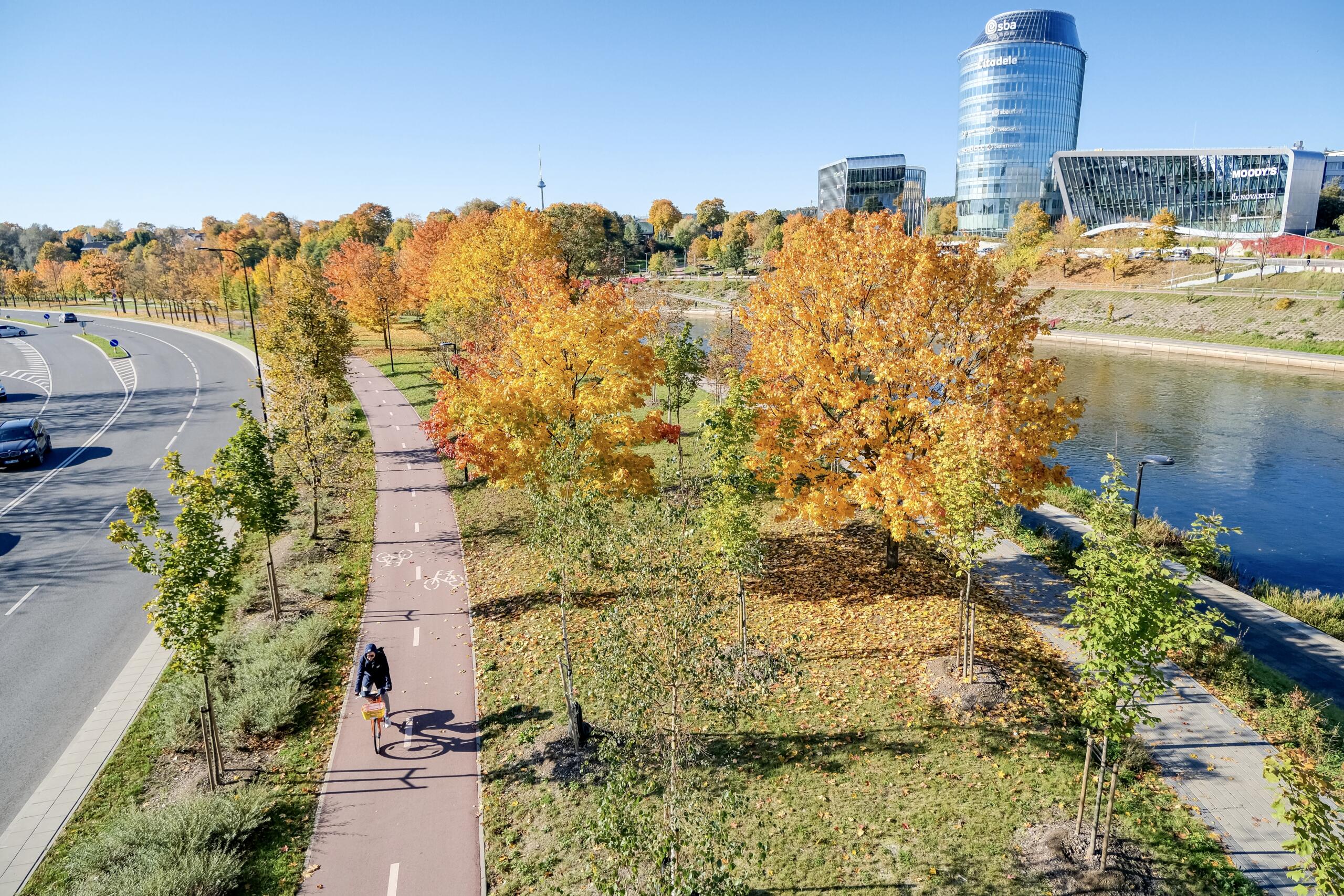
Cycling in Vilnius, Lithuania, Dutch Cycling Embassy
Johnson: The key is accountability with standards. We should not just spend 10% for the sake of it—we must tie funding to clear quality criteria. For example, Active Travel England now reviews walking and cycling projects and only funds them if they meet high design standards. That model—essentially ‘money with strings attached’—ensures that a bike path is not just a line of paint, but truly safe and well-designed. We can also require projects to show measurable outcomes (like increases in walking or cycling, or reduced accidents) to access the budget, creating a built-in incentive against half-hearted, token efforts.
POLIS: Design and engineering standards often lock countries into car-centric infrastructure. How do we change those standards to embrace walking and cycling?
Johnson: It starts with rewriting the street design code. Many countries are now updating their road design manuals to put people on foot and bike at the centre, not the margins. Updating road design manuals to be livable streets by design and prioritise active mobility should be a precondition for receiving grant funding.
POLIS: How do you balance national mandates with the need for community-driven, locally relevant solutions?
Johnson: A national mandate is powerful because it creates urgency across the country, rather than leaving cities and towns to go it alone. But one size does not fit all, so local authorities need flexibility in how they achieve that goal. Think of it like a framework: the nation provides the vision, funding, guidelines, and political expectation, but each city or village designs their approach based on locally determined needs.
POLIS: Can active mobility realistically compete with the entrenched lobbying power of the oil, auto, and construction sectors? How can advocates avoid being dismissed as idealistic?
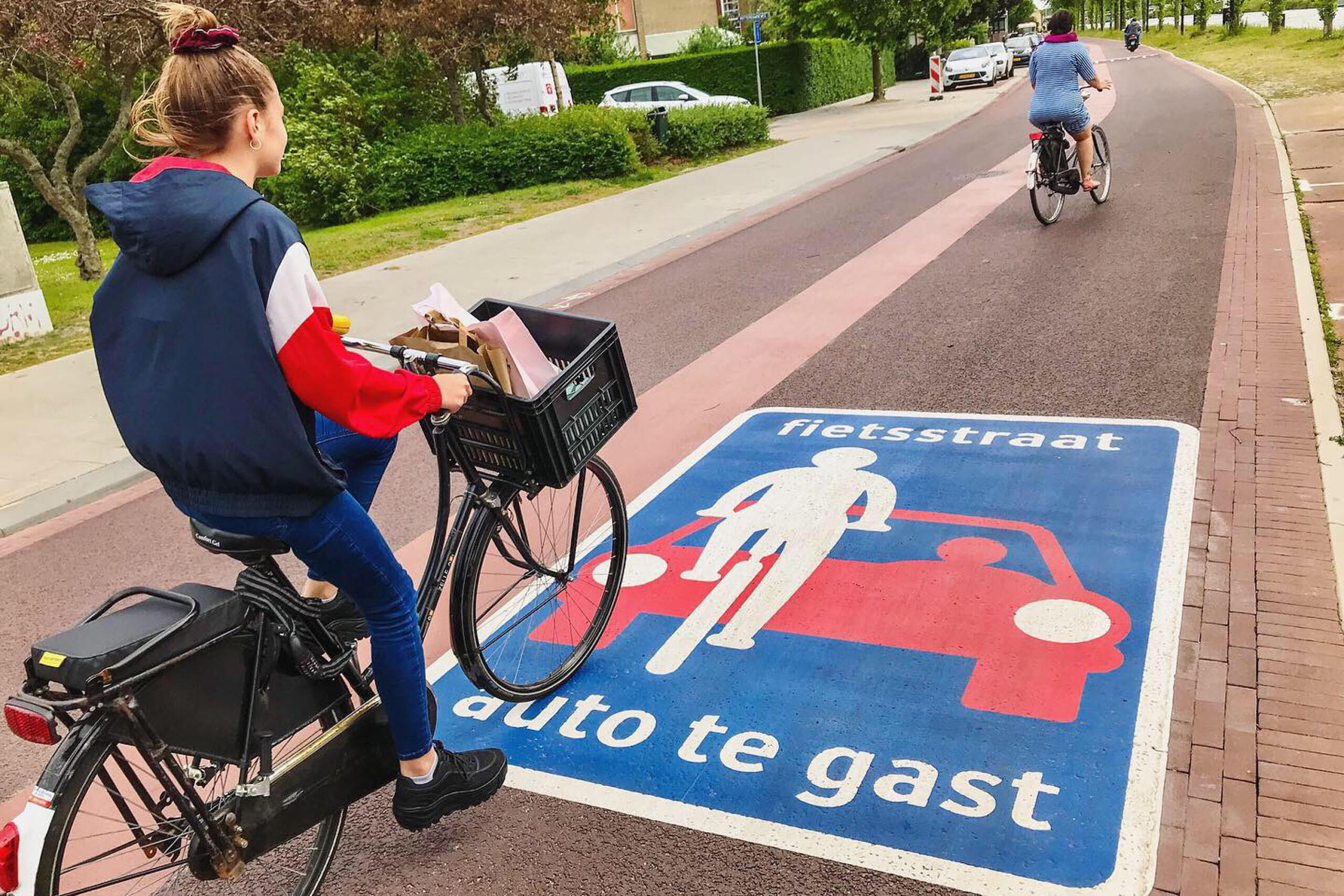
Bicycle boulevard in Delft, The Netherlands, Dutch Cycling Embassy
Johnson: It can compete, and it already is, because the narrative is shifting. The best approach is to show that investing in liveable streets is not a fringe cause: it is a mainstream benefit. For example, investing in bike paths and sidewalks still creates plenty of construction jobs and contracts; it is infrastructure, just of a different kind. We can tell the road-building industry, ‘You will not be out of work—we are just asking you to build different stuff’. Many car companies also see the writing on the wall—some are investing in e-bikes or mobility services, knowing the future is multimodal.
To avoid being labelled idealistic, we arm ourselves with data and success stories. We highlight cities that boosted local businesses with bike paths, or show how cycling reduces congestion for drivers, too. Public opinion often favours safer, cleaner streets—even if a loud minority or legacy lobby disagrees. Framing active mobility as about giving people choices rather than ‘anti-car’ isolates extreme voices. Finally, this is not ideology—it is problem-solving; we have real issues (pollution, road deaths, sedentary lifestyles—you name it), and active mobility is a practical answer.
POLIS: How should rural and peri-urban areas be included in your vision, given their very different realities?
Johnson: All communities, whether in rural, urban or peri-urban areas, want to become more livable places. In less-dense areas, trips tend to be longer, so our approach shifts. For example, we might invest in greenways connecting villages and small towns, allowing people to bike or walk safely between communities. E-bikes and bike-sharing play a big role here, effectively shrinking distances and making cycling viable beyond city limits. We also focus on safe routes to rural schools (so kids do not have to rely solely on cars or experience unsafe walking conditions) and better integration of walking and cycling with, say, local buses or trains. The point is: rural residents deserve mobility choice and safety just as much as city dwellers.
POLIS: What role do private sector initiatives, like bike-sharing, play in complementing public transport to scale active mobility?
Johnson: The private sector can be a fantastic partner in scaling up active mobility investments. Take bike-share schemes—these are often run by private companies or public-private partnerships, and they provide a convenient entry point for people to start cycling without owning a bike. If cities build safe lanes, companies can supply the bikes or e-scooters to navigate them. We have seen this synergy in Asia, Europe, and the U.S., where affordable, dock-less bike rentals grew rapidly once decent infrastructure was in place. Governments should support this with policies (like designated space for bikeshare stations) and co-funding, while letting the private sector innovate.
Employers and developers can also help by offering cycling-to-work benefits, installing showers and bike parking, and designing real estate developments around walkability. Public transport remains the backbone of the system.
Walking, cycling, wheeling, buses, and trains should integrate seamlessly, which means building bike lanes that directly lead to transit hubs, having safe bike parking at stations, and even permitting bicycles on board trains and buses where feasible. When we integrate, say, a 3-km bike ride with a 15-km bus/metro trip, people can leave their car at home even for longer commutes. As we know, active mobility and public transit reinforce each other, reducing congestion and emissions.
POLIS: Beyond emissions, economics, and safety, what does joy, freedom, or happiness mean in your vision of an active mobility future? And how do you make governments take seriously the idea that mobility should deliver joy, not just efficiency?
Johnson: This might be my favourite question. Ultimately, a great city or town sparks joy in everyday life. Mobility is not just about moving people efficiently; it is about quality of life. When I envision streets teeming with walkers and cyclists, I see smiles, interactions, the freedom kids feel riding a bike in the park. There is a reason people speak fondly of strolling down a beautiful boulevard or biking along a riverfront—it makes them happy.
To get governments to take this seriously, we frame it as ‘livability’, a core goal by which cities are increasingly judged. Happiness is not ‘fluffy’—it translates into concrete outcomes like better mental health, stronger social cohesion, and even economic appeal, as people and businesses are drawn to places where life is good.
Click here to read the article in its original format.
About the contributors:
Interviewee: Sam Johnson, Sustainable Transport Specialist, World Bank. Through his work at the World Bank, Johnson advises governments on planning, design, construction, and financing of transport, and advocates for people-centric, equitable, and environmentally friendly urban design. During 2025 and 2026, he is a visiting researcher at the Technical University of Eindhoven.
Interviewer: Alessia Giorgiutti, Communications & Membership Lead & Co-Coordinator Just Transition, POLIS. Giorgiutti coordinates POLIS' corporate communications and magazine and has been involved in several EU-funded projects as a Communications Manager. She currently supports other managers and officers on tasks related to content production and communication for their projects. Her work focuses on making accessible and inclusive content about transport, as well as highlighting the experiences of marginalised users.
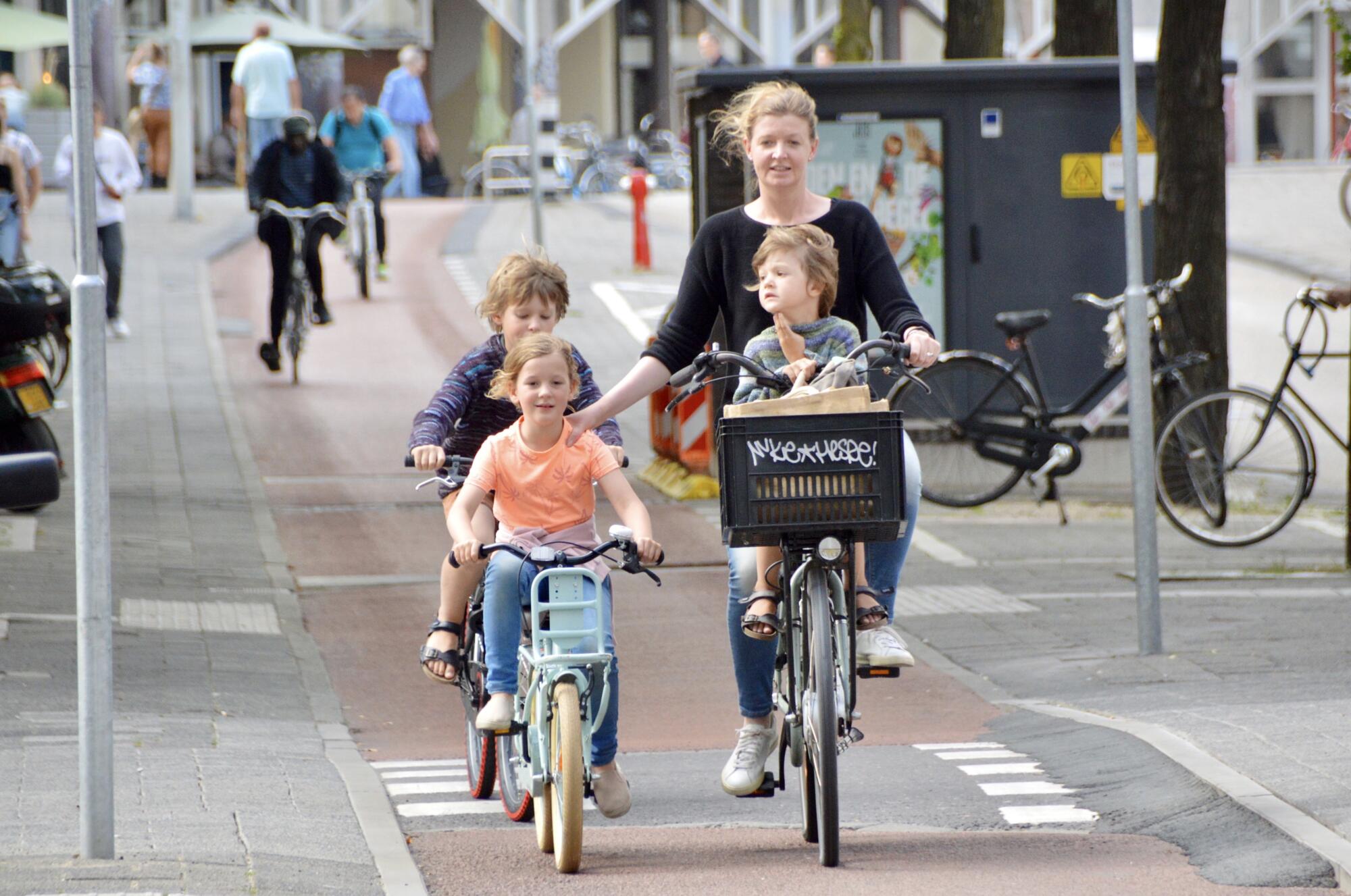 Dutch Cycling Embassy