Connecting the Dots
The updated Trans-European Transport Network (TEN-T) identifies 431 Urban Nodes as key hubs in the system. By 2027, these nodes are expected to implement Sustainable Urban Mobility Plans (SUMPs) and report urban mobility data to the European Commission. One does wonder, how are they preparing to deliver on the ambitious requirements of the revised TEN-T Regulation?
Interview with Gustav Friis, Chelsea Tschoerner-Budde, and Katia Kishchenko, with the contribution of Françoise Guaspare, elaborated by Marko Stančec.
POLIS: In July 2024, the revised TEN-T Regulation entered into force, requiring the European Commission to adopt an Implementing Act that defines indicators on sustainability, safety, and accessibility. What do you see as the biggest challenges in collecting, evaluating, and monitoring data for urban nodes?
 Gustav Friis (Aarhus): One of the key challenges is ensuring that the indicators are locally relevant and meaningful. For us, data collection must serve our strategic purposes—it should help us understand the real impact of our policies and guide better decision-making. This means the data must be clearly linked to our goals and used to track progress and adapt when necessary.
Katia Kishchenko (Antwerp): A major challenge is the fragmented governance across the Functional Urban Area (FUA). Data responsibilities are often dispersed, making it hard to standardise data, ensure completeness, and coordinate reporting. In Antwerp, working across the transport region with many municipalities and stakeholders has revealed differences in administrative capacity, technical infrastructure, and strategic priorities. These differences hinder coherent data practices.
Additionally, technical expertise and resource availability are unevenly distributed, making it more difficult for some municipalities to collect, process, and monitor data. Moreover, it is important that all actors involved see clear benefits from collecting and sharing data.
Chelsea Tschoerner-Budde (Hessen): Tracking progress toward sustainable mobility is central to SUMPs, but collecting and accessing data remains difficult. From our experience, only the largest cities have the capacity to build strong monitoring systems. These cities will need to collaborate more with regional actors, which requires time, new institutional arrangements, and adequate funding. In smaller urban areas, the challenge is even greater—limited budgets and staff make data collection and collaboration harder. Achieving this within the current two-and-a-half-year TEN-T deadline is unlikely without the support from both the European Commission and national governments.
POLIS: By 19 July 2025, the revised TEN-T Regulation requires Member States to designate a national SUMP contact point and establish a national SUMP Support Programme (NSSP) to assist urban nodes in adopting and implementing SUMPs. The European Commission's recommendation on the NSSP outlines a broad scope of what these programmes should include. From your perspective, what are the crucial first steps for an NSSP to successfully meet its objectives—and are any of these steps already being taken in your country?
Friis (Aarhus): We have established a strong and constructive collaboration with our NSSP contact. In Denmark, cities are already well-connected and in continuous dialogue, so the NSSP’s role as a facilitator of inter-city networking is less prominent than it might be in other Member States. From our perspective, one of the crucial first steps for a successful NSSP is to act as a bridge between cities and the European Commission, representing cities’ interests, priorities, and local mobility strategies in dialogues on compliance with the TEN-T Regulation.
Kishchenko (Antwerp): The SCALE-UP project developed a dedicated Framework for Vertical Upscaling to support Urban Nodes in scaling governance geographically and integrating all levels of governance. It defines ‘vertical integration’ as the combination of four key enablers: political support, financial resilience, legal power, and capacity. Applying this framework, the first crucial step is to secure robust political backing. Next, financial resilience is essential. While existing support structures, such as those within the Antwerp Transport Region provide a foundation, most funding remains project-based and fragmented.
Legal authority must also be addressed. Implementing a Functional Urban Area (FUA)-level SUMP requires clearly defined and legally supported roles across municipalities and governance levels. In Belgium, where responsibilities are highly decentralised, strengthening inter-municipal cooperation within FUAs is key to turning SUMP actions into reality.
Finally, capacity building is key. Urban nodes require technical support, training, data tools, and opportunities for peer learning.
The experience in Antwerp underlines how critical structured knowledge exchange and governance guidance are to managing the complexity of integrated mobility planning.
Tschoerner-Budde (Hessen): Although mobility planning has a long history at the local level in Germany, national and regional support structures are still relatively new. Several federal states—including Hesse—have taken the lead by developing targeted support programmes for municipalities and districts. In response to the revised TEN-T Regulation, the national government has begun to promote SUMPs more actively, including funding initial pilot projects.
At this stage, developing new mechanisms for exchange and cooperation within Germany’s federal structure is crucial. With 78 urban nodes—more than any other EU Member State—Germany must go beyond centralised financial and regulatory support to address regional differences through flexible standards and strong communication between municipal, state, and national levels.
In our view, the federal states play a key role in providing training, building networks between urban hubs, and offering high-quality technical support during the development and implementation of SUMPs.
POLIS: Multilevel governance is expected not only at the national-regional-local levels, but even more importantly at the FUA level. To avoid working in silos, do you have any plans to bring together all relevant stakeholders when working on TEN-T obligations—while also ensuring simplicity and efficiency in how urban nodes operate? Who should coordinate each urban node, and who should be involved in your city or FUA?
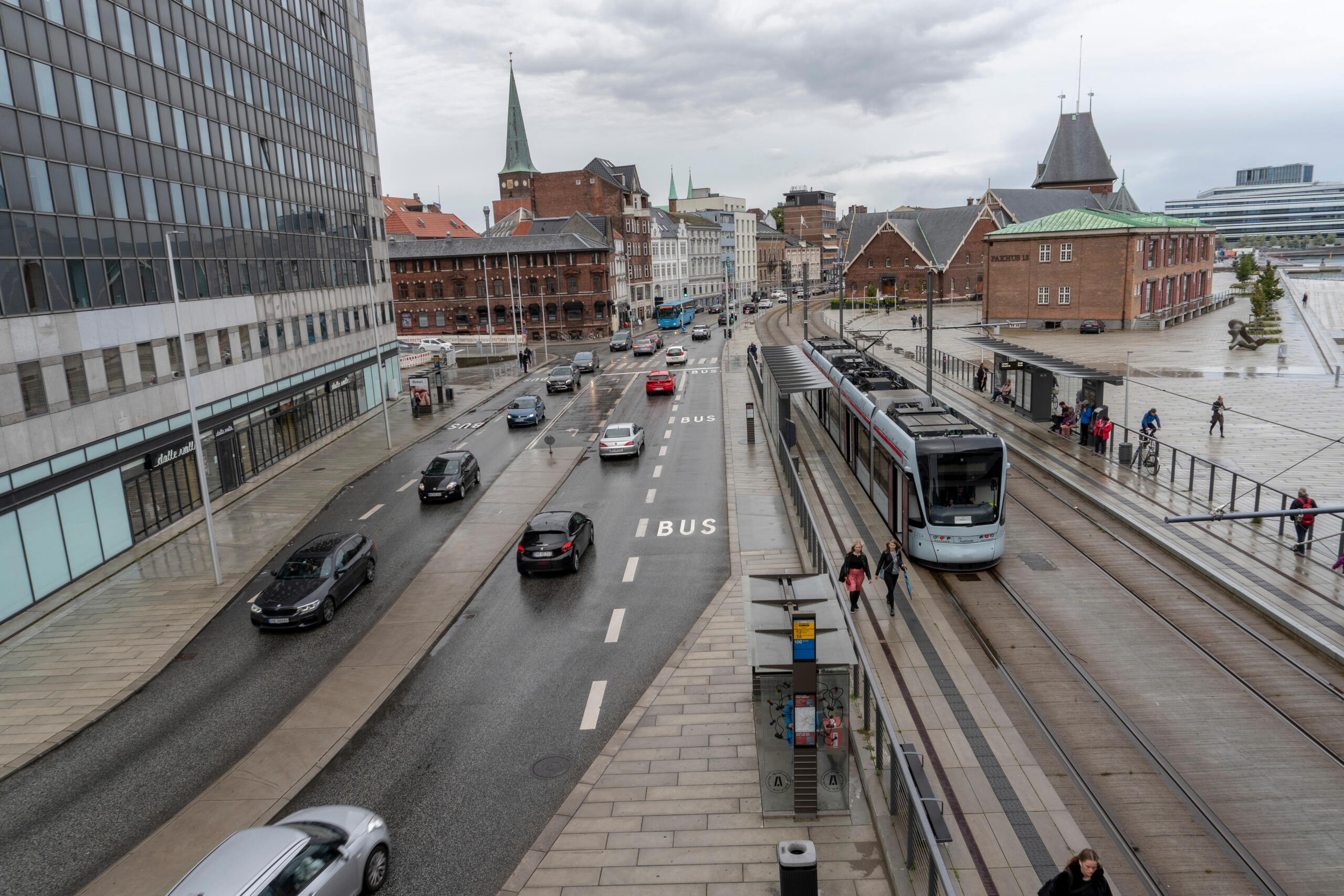
Aarhus Letbane (light rail), Constantin Iosif
Friis (Aarhus): We recognise that effective implementation of TEN-T obligations requires working across administrative boundaries. As the central city within FUA and the surrounding commuting zones, Aarhus plays a key coordinating role. In our Green Mobility Plan, we emphasise the need for strengthened collaboration with both the Central Denmark Region—particularly on cross-municipal public transport—and the regional public transport authority, Midttrafik.
Kishchenko (Antwerp): Antwerp is actively working to strengthen multilevel governance at the FUA level. The Antwerp Transport Region (ATR), which includes the city of Antwerp and 27 surrounding municipalities, already operates through a transport region council that brings together political and technical representatives from all involved municipalities. This council serves as a coordination platform for SUMP development and implementation.
To avoid siloed working, we are reinforcing collaboration among all relevant municipalities, the Flemish Region, public transport operators, infrastructure managers, logistics stakeholders, and civil society organisations. Successful coordination depends on step-by-step integration through working groups and targeted projects. The city of Antwerp plays a leading role in facilitating cooperation, while the Flemish Region provides essential policy alignment, funding, and legal backing.
POLIS: Adequate financial resources are essential to meet the requirements outlined in the TEN-T legislation. Investments are prioritised and sequenced in the SUMP action plan, effectively turning the SUMP into a project pipeline. Where do you foresee the main investments to come from in the future, and which funding sources will be most important for SUMP implementation in your city, region, or country?
Friis (Aarhus): As part of the agreement on Aarhus’ Green Mobility Plan, the City Council has committed to actively seeking funding for the initiatives needed to achieve CO₂-neutrality by 2030. This political commitment is a key driver in turning the SUMP into a concrete pipeline of projects.
Kishchenko (Antwerp): In the Flemish context, the regional government remains the primary funding body for infrastructure, multimodal hubs, and strategic reforms such as the basic accessibility framework. The Antwerp Transport Region already benefits from a degree of financial coordination. At EU level, the Connecting Europe Facility (CEF), Horizon Europe, and EU structural funds are considered crucial enablers—not only for infrastructure development, but also for capacity-building, innovation, and governance support.
Tschoerner-Budde (Hessen): For successful implementation, the EU will need to increase funding for soft measures such as planning and cooperation, and potentially channel funds via Member States directly to local authorities. In Germany, we are facing a broader underfunding crisis at the local level across all sectors. In Hesse, we finance positions in cities and counties to support SUMP development and implementations, but many municipalities are struggling to fill these roles. Partnering with universities is one potential solution, but many of these challenges are structural and extend beyond the transport sector.
POLIS: What role should public-private partnerships play in developing and implementing SUMP measures and multimodal passenger (and freight) hubs?
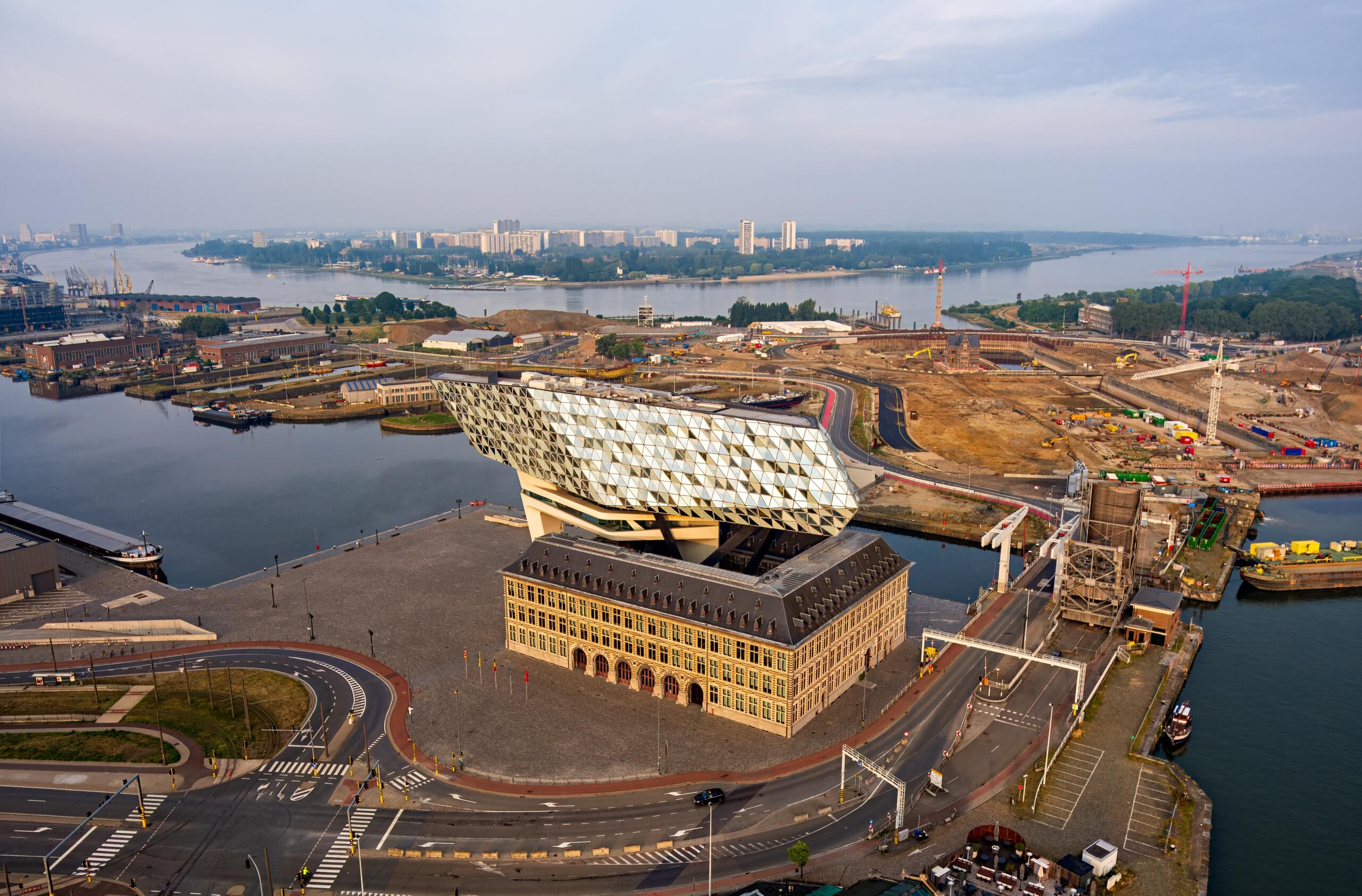
Electrified freight corridor at Port of Antwerp–Bruges, illustrating the city’s sustainable logistics and PPP approach, Collection Maykova
Kishchenko (Antwerp): Public-private partnerships (PPPs) have a vital role to play in delivering SUMP measures—especially in complex urban environments like Antwerp, where the interaction between passenger and freight transport, public infrastructure, and private logistics, retail, and mobility services is significant.
For passenger mobility, Antwerp’s shared mobility ecosystem has already benefited from public-private collaboration, with active involvement from private mobility providers. For freight, PPPs are needed to develop sustainable urban logistics infrastructure.
Private sector actors—particularly those in port-related industries, last-mile logistics, and e-commerce—must be involved in the planning process to ensure the functionality and adoption of freight-related measures. Developing a dedicated Sustainable Urban Logistics Plan (SULP) can greatly support this process. Antwerp’s experience shows that while informal cooperation is a good starting point, moving toward structured agreements is necessary to scale impact effectively.
POLIS: What changes do you see as necessary to strengthen the support and financing of SUMP implementation, monitoring, and evaluation?
Tschoerner-Budde (Hessen): In Germany, we now have a NSSP, and most of our 16 federal states have either developed or are in the process of developing support measures for their local authorities. Urban nodes are updating their plans to better align with SUMP principles, and cities are increasingly collaborating with regional stakeholders.
Institutional change is a slow process, but I believe that the TEN-T Regulation has firmly established SUMP as a key tool for addressing climate change and promoting sustainable mobility.
Île-de-France Mobilités: Coordinated, Connected, Committed
 Developed by Île-de-France Mobilités in collaboration with all key stakeholders, ‘The Mobility Plan for Île-de-France: Shaping Transport for 2020–2030’ sits at the crossroads of regional policies on land use, mobility, and the environment. It must align with broader regional frameworks and is further supported by Local Mobility Plans (PLMs).
Île-de-France enjoys a distinctive mobility governance model, serving as the sole organising authority for the entire region. The plan's objectives are implemented by various entities, and shared among a wide range of players, including national government agencies, the region, departments, Public Inter-municipal Cooperation Establishments (EPCI), and municipalities. As such, the plan's successful implementation relies on close coordination among numerous public and private actors, both within and beyond Île-de-France.
The evaluation of the first Plan de déplacements urbains d'Île-de-France (PDUIF) of 2007 highlighted significant fragmentation in mobility data. This fragmentation was both geographic—with much data collected locally and seldom cross-referenced—and institutional, with different bodies responsible for data on various transport modes. In response, Île-de-France Mobilités established a multimodal, partnership-based Mobility Observatory (Omnil) in 2007 to monitor mobility trends across the region. Comprehensive transport surveys covering all residents and all transport modes are conducted within the framework of Omnil, and a dedicated website was launched to ensure wide dissemination of the information.
Click here to read the article in its original format.
About the contributors:
Interviewees:
Gustav Friis, Project Manager, City of Aarhus. Friis holds a master’s degree in urban planning and management. His career began at the City of Aalborg, where he worked on the CIVITAS ARCHIMEDES project. This was followed by a role as Project Manager at POLIS. Since joining the City of Aarhus in 2014, he has led smart and green mobility initiatives, focusing on transforming travel behaviour to reduce congestion and CO2 emissions.
Katia Kishchenko, Communications Advisor, City of Antwerp. Kishchenko has been part of the Smart Ways to Antwerp team since 2017. Her work focuses on corporate communication to promote behavioural change, strengthening public-private cooperation, and engaging stakeholders. Within the Horizon Europe project SCALE-UP, she is responsible for communication and dissemination activities, supports project coordination, and fosters collaboration with local and international partners.
Chelsea Tschoerner Budde, Policy Officer, Hessian Ministry of Economics, Energy, Transport, Housing and Rural Areas. Tschoerner-Budde has been working in the Ministry of Economics and Transport of the German state of Hesse for seven years, and since 2022, has represented the German Bundesrat in matters related to SUMP at national and European levels. She holds a PhD in transport policy from the University of Freiburg.
Special contributor: Françoise Guaspare, Senior Policy Advisor, Île-de-France Representation to the EU Guaspare works on advancing integrated transport and urban mobility strategies, promoting cooperation among different stakeholders. She co-leads the Urban Nodes subgroup of the European Commission’s Urban Mobility Expert Group and sits on the Management Committees of POLIS, ERTRAC, ERRIN, and CCAM. As rapporteur for the EU Cities Mission Board, she advances innovation and climate-neutral urban transformation.
Interviewer: Marko Stančec, Project & Climate-Neutral Cities Mission Taskforce Coordinator & Urban Nodes Taskforce Co-coordinator, POLIS. Stančec is a SUMP expert involved in several EU projects on SUMPs, transport data analysis and management, and multimodal urban nodes, including REFOCUS, MOVE21, SUMP Turkey, MONA, and eBRT2030. He has extensive experience supporting cities in formulating effective SUMPs, urban space management, and data-driven planning.
 TEN-T schematic map (2024), TENtec