London pedestrianises Oxford Street
Two years after plans for its pedestrianisation sparked hopes and doubts, almost one kilometre of one of Europe's busiest shopping streets has gone traffic-free. The transformation marks a major step in the city's urban regeneration ambitions, but questions around accessibility, public transport, and who gets to enjoy the new public space remain.
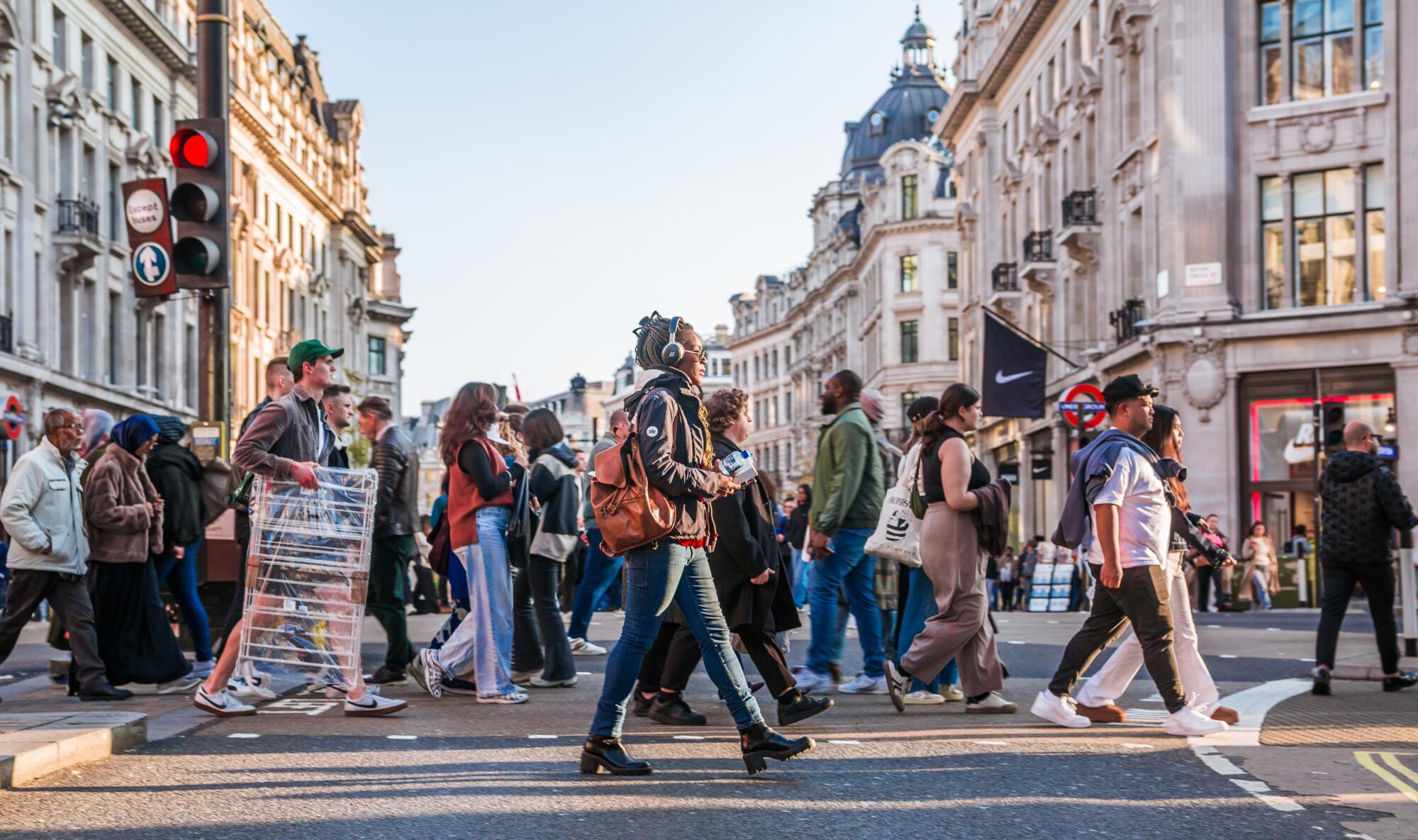
London's iconic Oxford Street has entered a new era: since 26 October 2026, almost one kilometre of the famous shopping thoroughfare, stretching between Orchard Street and Great Portland Street, has been closed to general traffic. The move marks the first major step in a wider plan to transform the UK's most recognisable high street into a greener, more attractive, and people-centred urban destination.
The change brings to life a proposal that POLIS first covered in 2024, when Mayor Sadiq Khan announced his ambitions to pedestrianise Oxford Street. At the time, the plans sparked both enthusiasm for reclaiming public space and concerns about their potential effects on local businesses, traffic flow and, in particular, accessibility for people with reduced mobility. Two years later, the debate has moved from political announcements to implementation, bringing some of those questions into sharper focus.
View this post on Instagram
The crux of the matter
The restrictions go further than banning private cars: buses, taxis, private hire vehicles, bicycles, e-scooters, and pedicabs are also prohibited from the newly traffic-free section, while mobility scooters remain permitted. Freight and servicing vehicles can still access the area through designated routes between midnight and 07:00.
The scale of the intervention is significant. Oxford Street attracts approximately 500,000 visitors every day and is one of the country's most important economic areas, generating around 1% of the UK's economic output. Yet, despite its international profile, the street has faced mounting challenges, from changing retail habits and the growth of online shopping to declining appeal following the COVID-19 pandemic.
From shopping street to public space
The pedestrianisation is intended to do more than improve the shopping experience. Led by the Mayor of London, Sadiq Khan, in collaboration with Transport for London (TfL) and the Oxford Street Development Corporation (OSDC), the regeneration programme aims to reposition the area as a global destination for retail, leisure, culture, and public life.
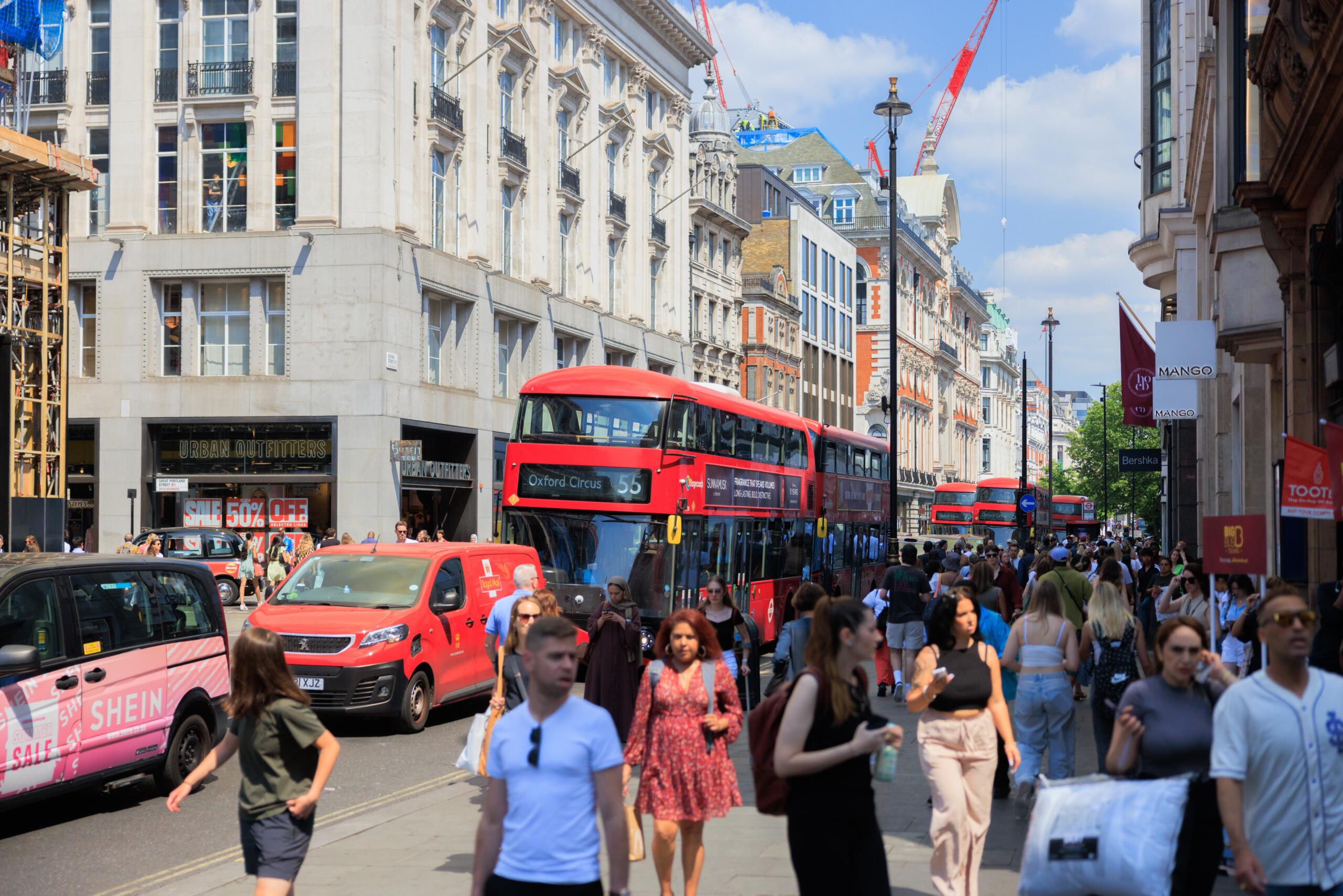
People walking on Oxford Street in July 2024 — Credit: Captured Blinks, Shutterstock
The first phase introduces a transitional layout, with more substantial public-realm improvements planned for 2027. By the end of spring, the street is expected to feature more than 50 new trees, over 100 seats, two public squares, additional resting areas, and improved lighting and signage. Future works will also raise sections of the carriageway to pavement level, creating a more continuous, accessible surface.
The ambitions are considerable, particularly for a street that has historically prioritised the movement of vehicles alongside its enormous pedestrian flows. By reallocating road space, London is seeking to create room not only for walking but also for spending time, meeting, resting, and participating in public life.
The economic rationale is equally prominent, as the project seeks to attract new investment, support local businesses, and encourage visitors to stay longer. It also builds on the improved public transport connectivity provided by the Elizabeth line, which has strengthened access to the West End through step-free connections at Bond Street and Tottenham Court Road.
The traffic-free question
Removing traffic from Oxford Street does not mean removing it from the surrounding area: buses, taxis, and other vehicles have been redirected onto neighbouring streets, while bus stops have been relocated to locations approximately 200 metres from the pedestrianised section, with TfL monitoring the effects on traffic flows and journey times as the new arrangements take effect.
The changes follow two rounds of public consultation: the first, conducted by the Greater London Authority between February and May 2025, received more than 6,000 responses. Of those expressing a view, 66% supported the principle of pedestrianising Oxford Street, while 69% backed the creation of a dedicated development corporation to oversee its regeneration.
A second consultation, held by TfL between November 2025 and January 2026, focused on the practical transport and highway changes. It attracted 2,716 responses and revealed a more nuanced picture. Among 1,863 public and stakeholder responses to the proposed traffic and highway arrangements, 647 mentioned general support, while 472 expressed opposition. Traffic congestion was raised by 439 respondents. Moreover, concerns were particularly pronounced around accessibility, with a total of 308 respondents raising issues relating to reduced access for disabled people, while 304 highlighted the potential impact on older people and those unable to walk longer distances.
The transport implications were also examined through traffic modelling. Most local bus routes were forecast to experience journey-time changes of one minute or less during peak periods. However, routes 98 and 390 were expected to face longer journeys—for route 98, in particular, the projected increase ranged from two to five minutes, depending on direction and time of day.
There is space for everyone
The transition highlights an important distinction: removing vehicles does not automatically make a street accessible.
For many people, more pedestrian space, less traffic danger, reduced crowding, and level surfaces can make navigating a busy shopping street considerably easier. For others, however, the relocation of bus stops, taxi ranks, and Blue Badge parking can create additional barriers. People with mobility impairments, sensory disabilities, or difficulties walking longer distances may have to travel further to reach shops and public transport.
The design, therefore, needs to consider more than (or beyond) the absence of cars: bollards, temporary barriers, street furniture, crossing points, and the positioning of accessible drop-off facilities can all influence how easily different people navigate the space. Meaningful involvement of disabled people and organisations representing different access needs will be essential to getting these details right.
TfL has acknowledged these considerations and committed to incorporating inclusive design principles into the permanent scheme: measures under evaluation include accessible bus stops with better lighting, CCTV, real-time passenger information, improved wayfinding, more seating and resting places, and exploring the feasibility of shop-mobility services.
Importantly, the current arrangement is not the final design: the transitional phase is intended to generate real-time data and feedback from visitors, residents, businesses, accessibility organisations, and other stakeholders, helping shape the permanent public realm.
With this in mind, one can only wait and see.