
Vitoria-Gasteiz doubles down on people-first mobility with €95.8 million plan
For nearly two decades, Vitoria-Gasteiz has been redesigning itself around people rather than cars. Now the Basque capital is going further, unveiling a new Sustainable Mobility and Public Space Plan that will invest €95.8 million to reshape how residents move through the city by 2030.
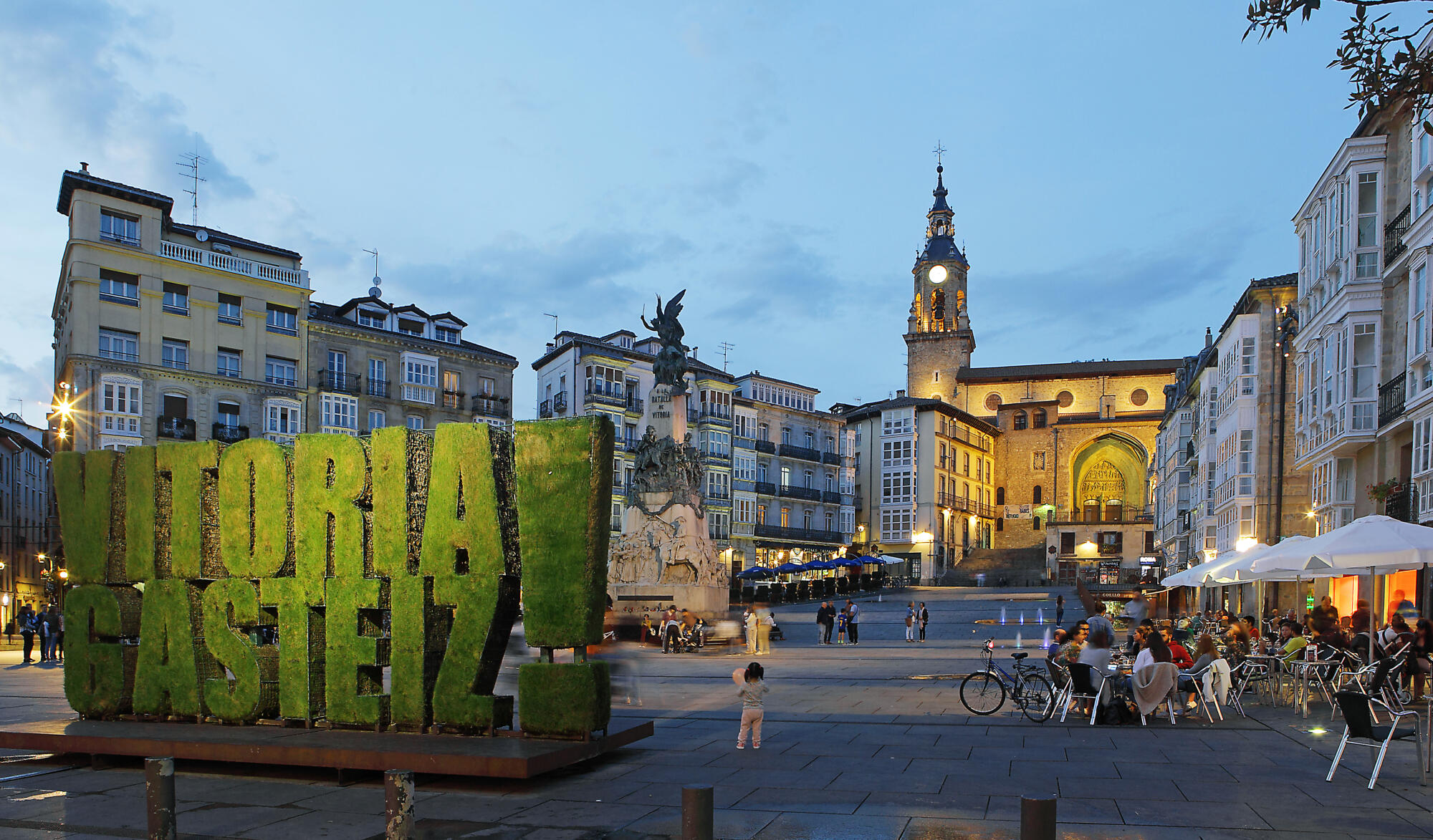
Long regarded as one of Europe's leading examples of sustainable urban planning, Vitoria-Gasteiz has built an international reputation through a combination of mobility reform, public space transformation, and environmental stewardship. Awarded the title of European Green Capital in 2012, the city has spent years reclaiming street space from private vehicles and prioritising walking, cycling, public transport, and green infrastructure, continuing to build its reputation on a people-centred approach to urban design.
On 27 October, Mayor Maider Etxebarria and Councillor Miren Fernández de Landa presented the city's new Sustainable Mobility and Public Space Plan (PMSEP) 2026-2030.The comprehensive strategy contains 77 actions organised across 11 programmes and represents the fourth update of a mobility model that began with the signing of the Citizen Pact for Sustainable Mobility in 2007.
This comes at a pivotal moment for the city. While Vitoria-Gasteiz has made significant progress, municipal studies indicate that active mobility has begun to plateau and private car use has increased for some journeys. The city also faces newer challenges linked to climate change, universal accessibility, and the decarbonisation of transport.
The goal 'is a healthier, more accessible, safer and less car-dependent city', Mayor Maider Etxebarria said during the launch. The plan aims to ensure that walking, cycling and public transport remain the most attractive and efficient ways to travel while continuing to place people at the centre of urban policy.
A proven model, taken further
The new strategy builds on a mobility transformation that has already delivered substantial results. Since the city began its sustainable mobility approach, public transport use has more than doubled—from 12.5 million passengers in 2006 to over 30 million in 2025. Over the same period, the cycling network grew from 55 to more than 130 kilometres, while sustainable modes now account for 68% of all urban journeys, including 51% made on foot.
Mobility has become one of the city's defining policy pillars, and sees the reallocation of road space to nature not merely as a mobility strategy, but as a fundamental tool for improving liveability, climate resilience and public health. The 2026-2030 plan continues this philosophy through a series of measures including improvements to walking and cycling routes, the removal of accessibility barriers, interventions around schools, and the addition of shade and vegetation to help streets adapt to a warming climate. The city's well-known superblock model will also be updated with a more flexible approach tailored to the characteristics of different neighbourhoods.

Bus Eléctrico Inteligente (BEI), Adrián Ruiz de Hierro
11 programmes to reshape the city
The PMSEP's 77 actions are organised into 11 programmes that together address everything from street design and active travel to public transport, logistics, governance and climate action. Rather than focusing on a handful of flagship projects, the city has developed a broad package of measures designed to shape how people move, interact with public space and access services over the coming decade.
The programmes include:
- Public Space Improvement—updating the city's superblock model, improving major streets and creating greener, more climate-resilient public spaces
- Pedestrian Mobility Improvement—making walking routes safer, more accessible, better connected and more comfortable
- Cycling and Micromobility Improvement—expanding and upgrading cycling infrastructure while improving conditions for bicycles and personal mobility vehicles
- Public Transport Optimisation—improving tram and bus services, strengthening intermodality and enhancing network efficiency
- Traffic and Parking Management—calming traffic, reducing vehicle dominance and managing parking more sustainably
- Urban Freight and Logistics - improving the efficiency of goods movement while reducing its environmental impact
- Demand Management—encouraging more sustainable travel behaviour for journeys to schools, workplaces and industrial areas
- Transport Decarbonisation—supporting vehicle electrification, shared mobility and lower-emission transport option
- Innovation and Digitalisation—using data, digital tools and emerging technologies to improve mobility planning and services
- Mobility Governance—strengthening coordination, monitoring, public participation and long-term mobility management
- Awareness and Behaviour Change—promoting sustainable travel habits through communication, education and outreach campaigns.
Together, they are intended to provide what city officials describe as an 'ordered and coherent' approach to continuing Vitoria-Gasteiz's mobility transition.
Fewer car trips, more sustainable journeys
According to the forecasts included in the plan, the proposed measures could remove around 7,500 daily car trips while generating nearly 5,000 additional public transport journeys compared with a scenario in which no new actions are taken.
Of course, public transport plays a central role in achieving this shift. The city intends to undertake a comprehensive study of its network to improve coordination between tram and bus services, analyse new connections, and adapt services to changing travel patterns. The strategy also includes examining additional peripheral parking facilities linked to public transport, and progressively extending regulated parking zones into inner neighbourhoods where they do not yet exist.
The plan also incorporates the Industrial Estates Mobility Plan presented in 2025, aimed at improving sustainable access to the city's major employment and logistics hubs, which attract nearly 40,000 daily commuters.
Innovation remains at the heart of the city's approach
Alongside traditional infrastructure investments, Vitoria-Gasteiz has increasingly positioned itself as a living laboratory for mobility innovation. Through projects supported by EIT Urban Mobility, the city has tested inclusive mobility solutions for older residents, launched intelligent carpooling schemes, piloted on-demand bus services in lower-density areas, and deployed technology to improve pedestrian safety at crossings.
These initiatives reflect a broader ambition to reduce reliance on private cars. As Juan Carlos Escudero, Head of Mobility and Data Science at Vitoria-Gasteiz’s Centre for Environmental Studies noted, the city still dedicates 75% of the public space devoted to private cars—but this creates an opportunity to reclaim land for greener, healthier, and more people-friendly uses.
The new PMSEP represents the latest chapter in that long-term transformation. If implemented as planned, it will reinforce Vitoria-Gasteiz's status as one of Europe's leading examples of how mobility policy can be used not only to move people more efficiently, but to shape a more liveable, inclusive and climate-resilient city.
- Related Members
