South-Holland Province low-income residents can travel fare-free on regional public transport
Low-income residents in 29 South-Holland municipalities can now travel for free on regional public transport, after POLIS member South-Holland Province allocated €10 million for a four-year trial.
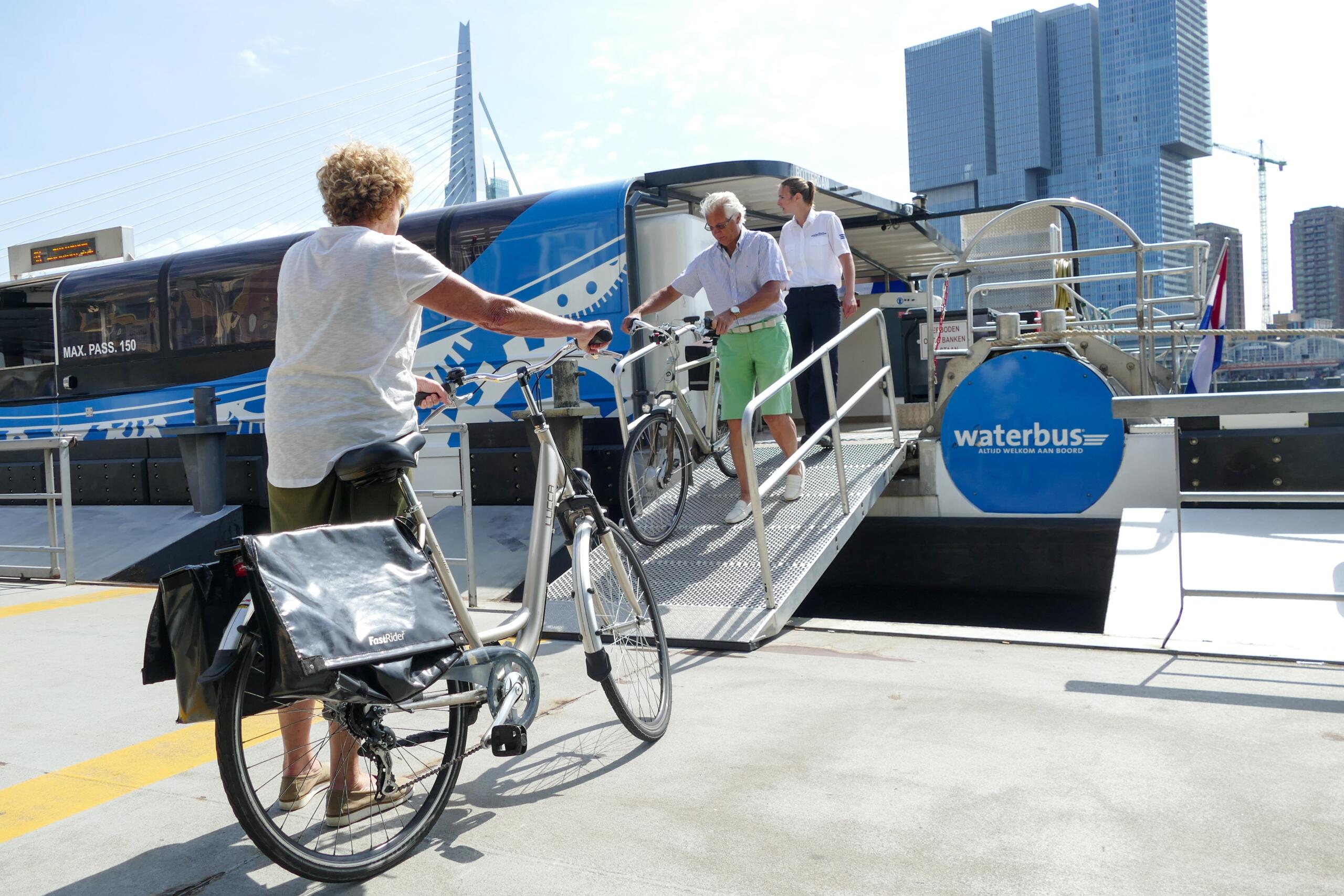
Rotterdam's Waterbus — Credits: Milan Sommer
The South-Holland Province fare-free public transport trial comes with its own rules: free travel is only possible during off-peak hours (after 9:00 am on weekdays, and all day on weekends and public holidays), and does not apply in and around The Hague and Rotterdam areas, because the Metropolitan Region Rotterdam The Hague (MRDH) is not participating in the trial.
The trial also does not apply to NS trains, but it does apply to the NS Gouda–Alphen aan den Rijn R-Net train and the Qbuzz train on the MerwedeLingelijn, as well as on all Transdev and Qbuzz buses operating on behalf of the province of South Holland and the Waterbus connecting Rotterdam to Drechtsteden.
29 municipalities, and (not) counting (on the national government)
Residents willing to participate in the trial can register themselves directly with the municipalities involved, which will then determine and communicate whether they are eligible or not—first estimates approximate this number to around 200,000 residents.
The municipalities of Goeree-Overflakkee, Krimpenerwaard, and Katwijk already started issuing free travel passes at the beginning of January 2026, with several other municipalities following suit in February 2026, including Leiden, Zoeterwoude, Leiderdorp, and Oegstgeest.
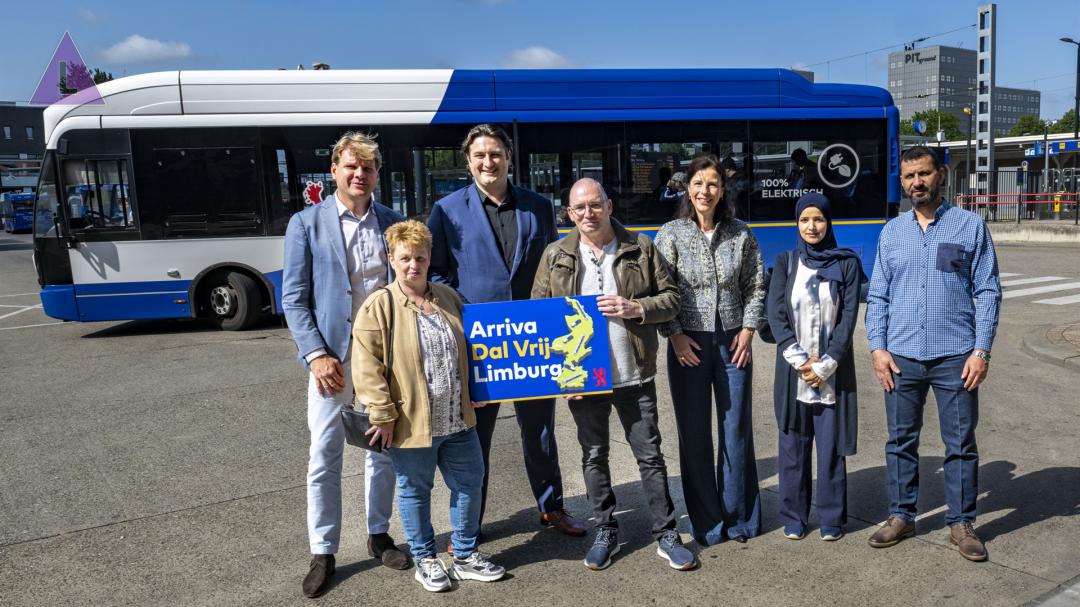
'Dal Vrij Limburg' program — Credits: Provincie Limburg
In June 2025, POLIS member Limburg pioneered the measure by becoming the first province in the Netherlands where low-income residents could use regional public transport free of charge during off-peak hours.
The 'Dal Vrij Limburg' program, initially aimed at residents receiving social assistance benefits from the municipalities of Venlo, Weert, Nederweert, Roermond, Sittard-Geleen, Heerlen, and Maastricht, has expanded beyond these municipalities, as well as its former target group, with other residents with an income at or below 100% of the social minimum considered now eligible for fare-free travelling.
The popularity of the measure at a regional and local level, however, does not translate well on the national stage
Indeed, in November 2025—and after months of discussions and planning, it became clear that the Onderwegpas, a nationwide trial for free or discounted travel for low-income people, would not be included in the Dutch Social Climate Plan for fear of delaying the entire climate measure package and therefore causing the loss of European subsidies.
Fare-free public transport does not exist
Fare-free public transport (FFPT) has been adopted more or less successfully in nearly 100 diverse municipalities worldwide. For those households that are considered 'transport poor'—where 10% of their expenditures are devoted to the movement of their members from A to B, whether because they live remotely, or face transport dependency due to high mobility needs, FFPT may surely offer a viable solution.
Fare-free public transport... does not exist! — Credits: Daniel Tadevosyan
This is also true of less mobile populations, such as mobile elderly people and students, both in rural and urban areas, urban dwellers dependent on public transport and suburban dwellers dependent on cars, women (especially those with care-giving duties), and ethnic minorities.
However, one must keep in mind that free public transport as such does not exist, as transport services and infrastructure have to be funded one way or another. While public transport users may not directly contribute to funding the service by paying their fares, costs must be shifted to other funding sources, primarily government taxation (local, regional, national), with funds reallocated from municipal budgets or generated by new tolls.
To fare-free or not to fare-free, that is the question
On paper (and, by all means, concretely in many cities), FFPT is a wonderful tool to combat transport poverty and boost ridership and social inclusion, but it may not always be the best solution for all public transport users, nor for some of the cities that may want to implement it—for example, free or cheap public transport is not a solution if the offer does not meet the mobility demand, or if it causes a revenue shortfall on an already unstable budget.
So, what should a city do?
The consensus is that, in most cases, it is best to focus on service and quality improvements rather than zero fares. Targeted subsidies for specific groups (which is akin to what the South-Holland Province is currently trialling and Limburg has already adopted) are often more effective at achieving equity goals than universal free fares.

- Related Members