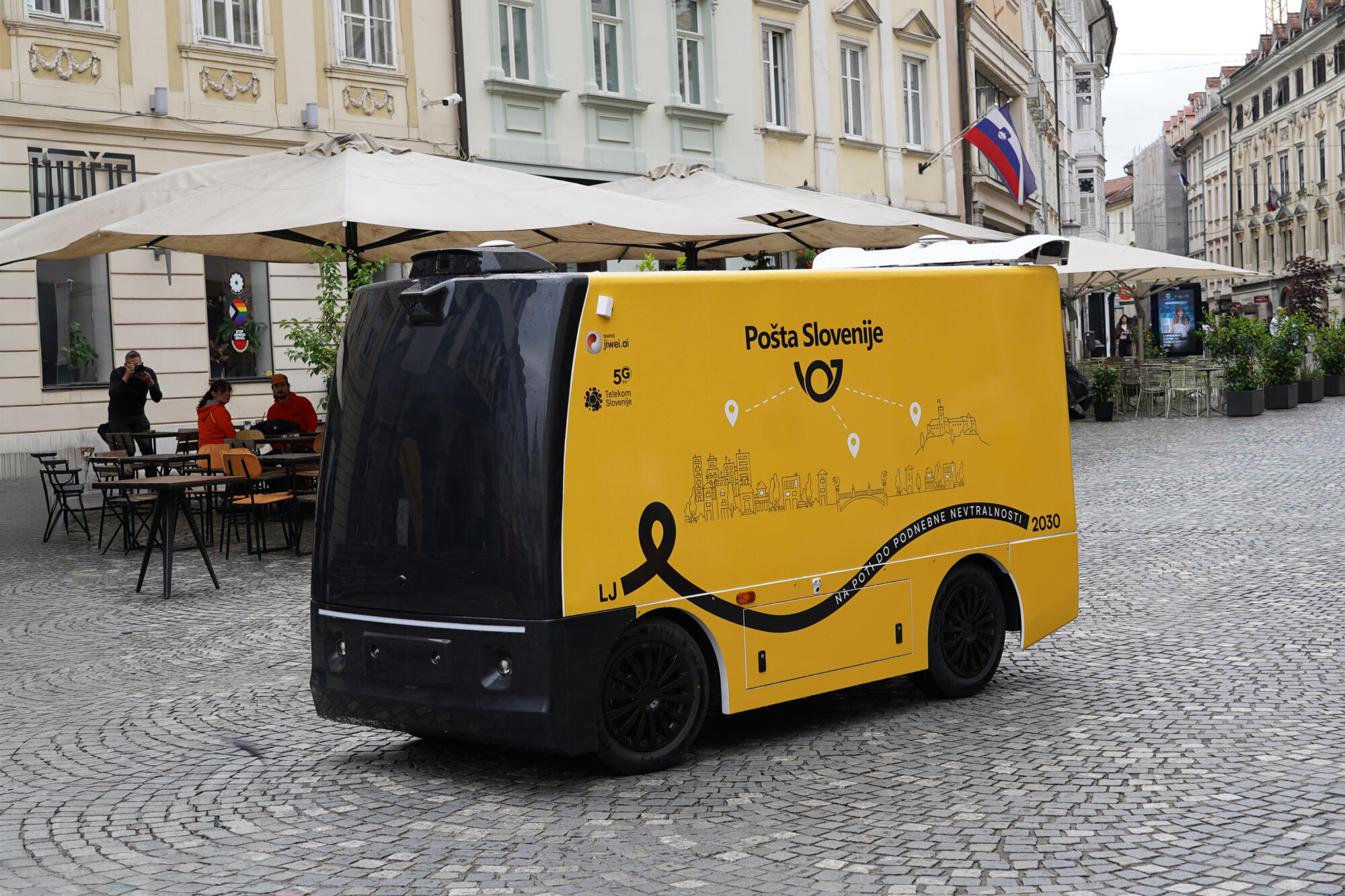
National postal service launches robot delivery trial in Ljubljana
Slovenia's national postal operator, Pošta Slovenije, has begun testing autonomous delivery technology on the streets of Ljubljana, marking a significant step toward the future of urban logistics.
The month-long pilot project, launched by Pošta Slovenije in cooperation with the City of Ljubljana and technology partner AV Living Lab, introduces assisted robotic deliveries to the Slovenian capital's pedestrianised old town.
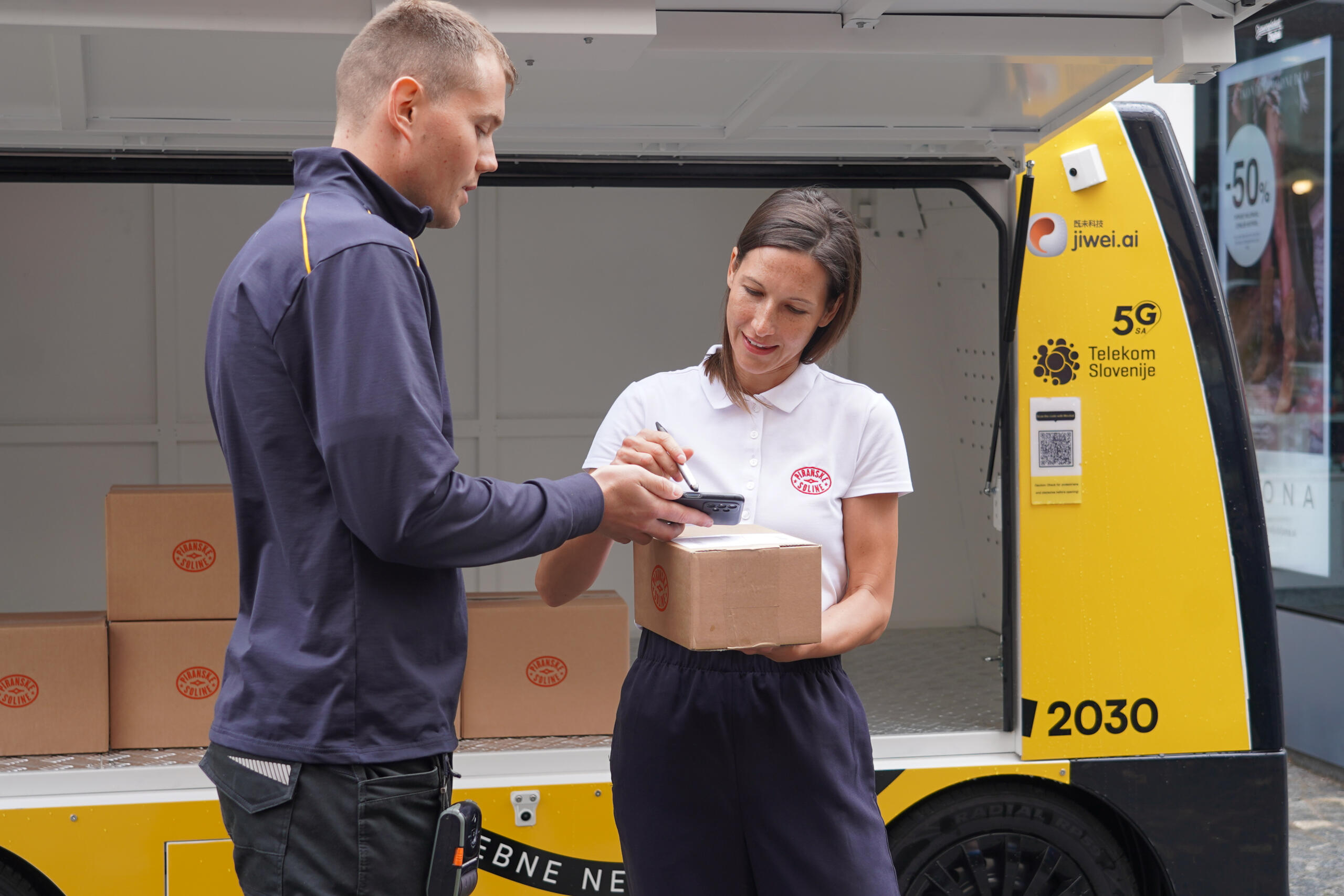
The delivery at Piranske Soline — Credit: Pošta Slovenije
The bright yellow electric delivery vehicle made its first symbolic journey on 3 June, travelling between Ljubljana City Hall and a Piranske Soline, a nearby specialty salt shop in the city's Old Town. While capable of reaching speeds of up to 60 kilometres per hour under ideal conditions, the vehicle is currently operating at a cautious walking pace of approximately three kilometres per hour and remains under constant human supervision.
The initiative comes as cities across Europe search for ways to address rising parcel volumes, labour shortages, traffic congestion, and environmental concerns. According to Pošta Slovenije, changing consumer habits and the rapid growth of e-commerce have placed increasing pressure on traditional delivery systems, particularly in dense urban centres where vehicle access is restricted.

From left to right: Kristijan Perčič and Slavko Ovčina (Pošta Slovenije) — Credit: Pošta Slovenije
'People's habits have changed significantly in recent years, especially with the growth of parcel deliveries', said Kristijan Perčič, Head of Innovation at Pošta Slovenije, during the project's launch, as reported by Bloomberg Adria, 'At the same time, expectations regarding sustainability and efficient urban transport continue to grow'—a similar feeling expressed by Slavko Ovčina, Director of the ICT Solutions Division.
A new approach to last-mile delivery
The vehicle being tested is manufactured by Chinese company Hangzhou Jiwei Technology and is valued at approximately €50,000. It is available in multiple configurations, with the version currently under evaluation featuring a six-cubic-metre cargo compartment that can transport up to one tonne of goods.
View this post on Instagram
Initially, the service will focus on deliveries for restaurants, retailers, and service providers operating in Ljubljana's city centre. If the pilot proves successful, Pošta Slovenije plans to gradually expand robotic deliveries to larger cities across Slovenia.
Daniel Avdagič, director of AV Living Lab, explained that the testing phase is intended not only to assess the vehicle's technical capabilities but also to determine which configuration best suits the operational needs of urban logistics.
The robot can operate autonomously, but it also supports remote control and local manual supervision. During the pilot phase, an accompanying operator remains nearby to ensure safety and compliance with current regulations.
The TRACE research project
The robot delivery trial forms part of the broader TRACE project (Horizon Europe grant agreement No. 101104278), a European Union-funded research initiative focused on integrating and optimising logistics processes through advanced digital technologies.
Running from July 2023 to August 2026, TRACE aims to create a universal logistics platform capable of planning, scheduling, optimisation, and event management while incorporating blockchain technologies to facilitate smart contracts and real-time financial operations. The project's long-term vision is to provide what researchers describe as an 'umbrella intelligence' layer capable of coordinating complex logistics networks more efficiently.
Within the Slovenian pilot, Pošta Slovenije is collaborating with the University of Maribor, AV Living Lab, and BTC City Ljubljana to explore innovative last-mile delivery solutions.
Testing sustainable urban logistics
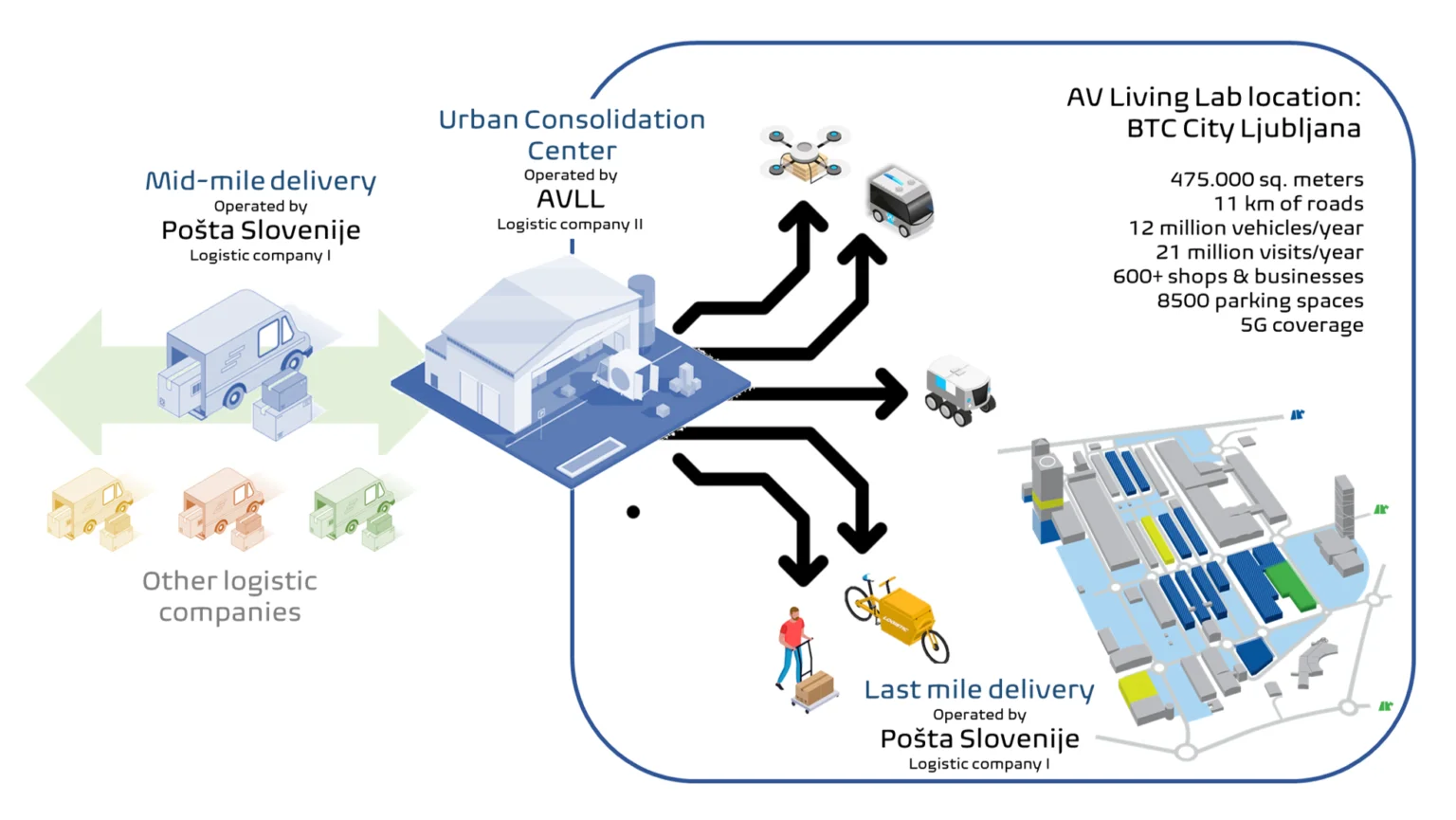
The TRACE Slovenian pilot — Credit: TRACE project
The Slovenian demonstration is being conducted in two phases. During the first phase, researchers use the TRACE platform to simulate different delivery methods based on real parcel data. These simulations evaluate options such as autonomous delivery robots and electric cargo bicycles while considering regulatory requirements and operational performance indicators.
The second phase moves selected solutions into a real-world environment within the AV Living Lab ecosystem. Plans also include establishing an Urban Consolidation Centre, where parcels can be grouped and distributed more efficiently, reducing traffic volumes and improving resource utilisation.
The overarching objectives are ambitious: reducing carbon dioxide emissions, decreasing vehicle kilometres travelled, improving delivery reliability, and creating a scalable model for sustainable urban logistics.
A wider digital makeover
For Pošta Slovenije, the robotic delivery project represents one component of a broader digital and sustainability transformation that has reshaped the company's logistics operations in recent years.
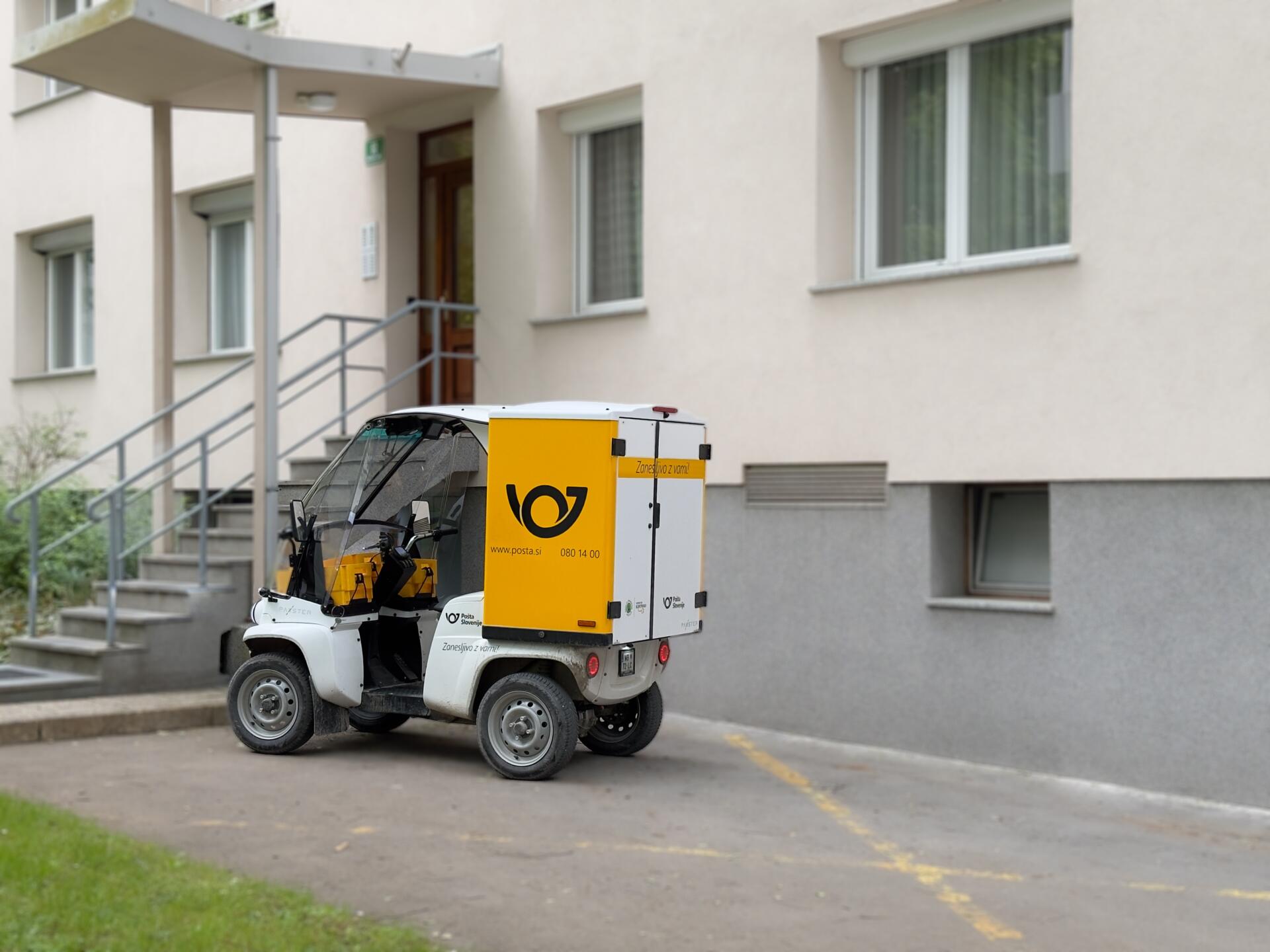
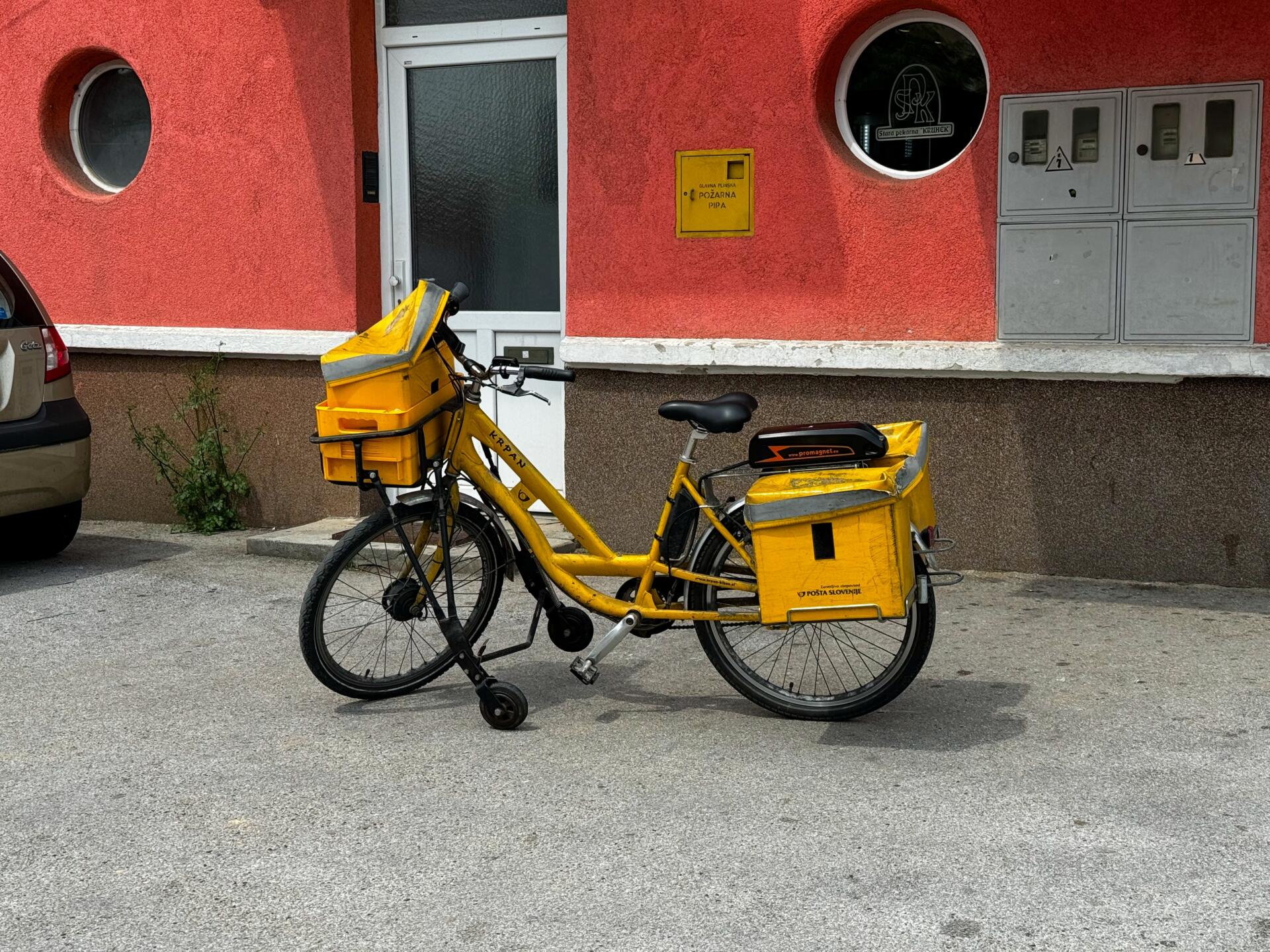
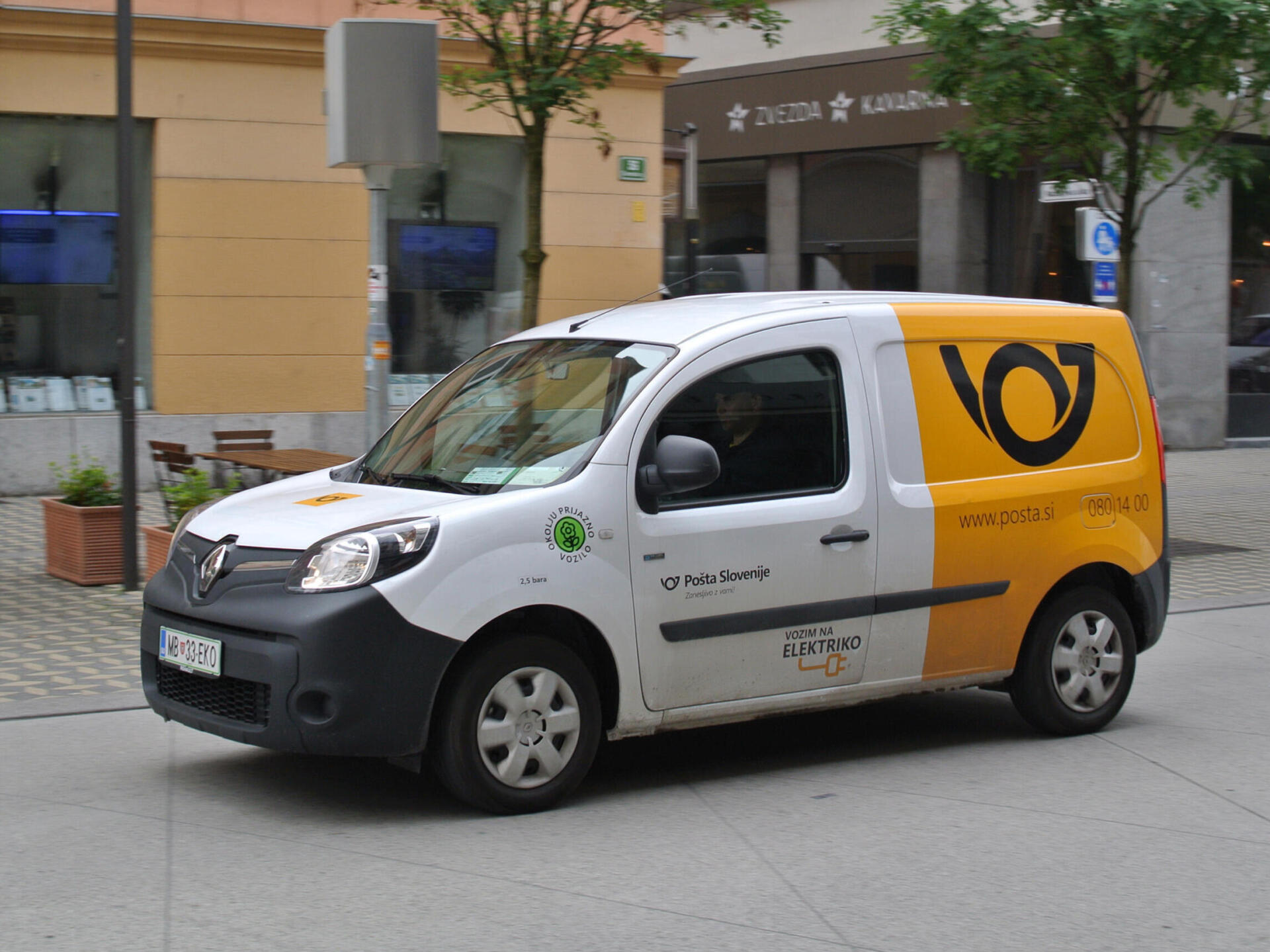
The postal operator has steadily replaced conventional fossil-fuel vehicles with a diverse fleet of electric delivery vans, light electric four-wheelers, e-scooters and more than 110 e-bikes. At the same time, advanced digital platforms and AI-driven route optimisation systems have helped streamline delivery operations, reducing unnecessary journeys, fuel consumption and carbon emissions.
-

- Electric postal delivery vehicle — Credit: Yusia13, Shutterstock.com
-
- Yellow postal bicycle — Credit: Yusia13, Shutterstock.com
-
- Electro Slovenian post office delivery van — Credit: S.Candide, Shutterstock.com
General Manager Marko Cegnar told The Slovenian Times that the postal operator has invested more than €15 million in digitalisation over the past four years and expects to invest more than €10 million in future strategic initiatives.
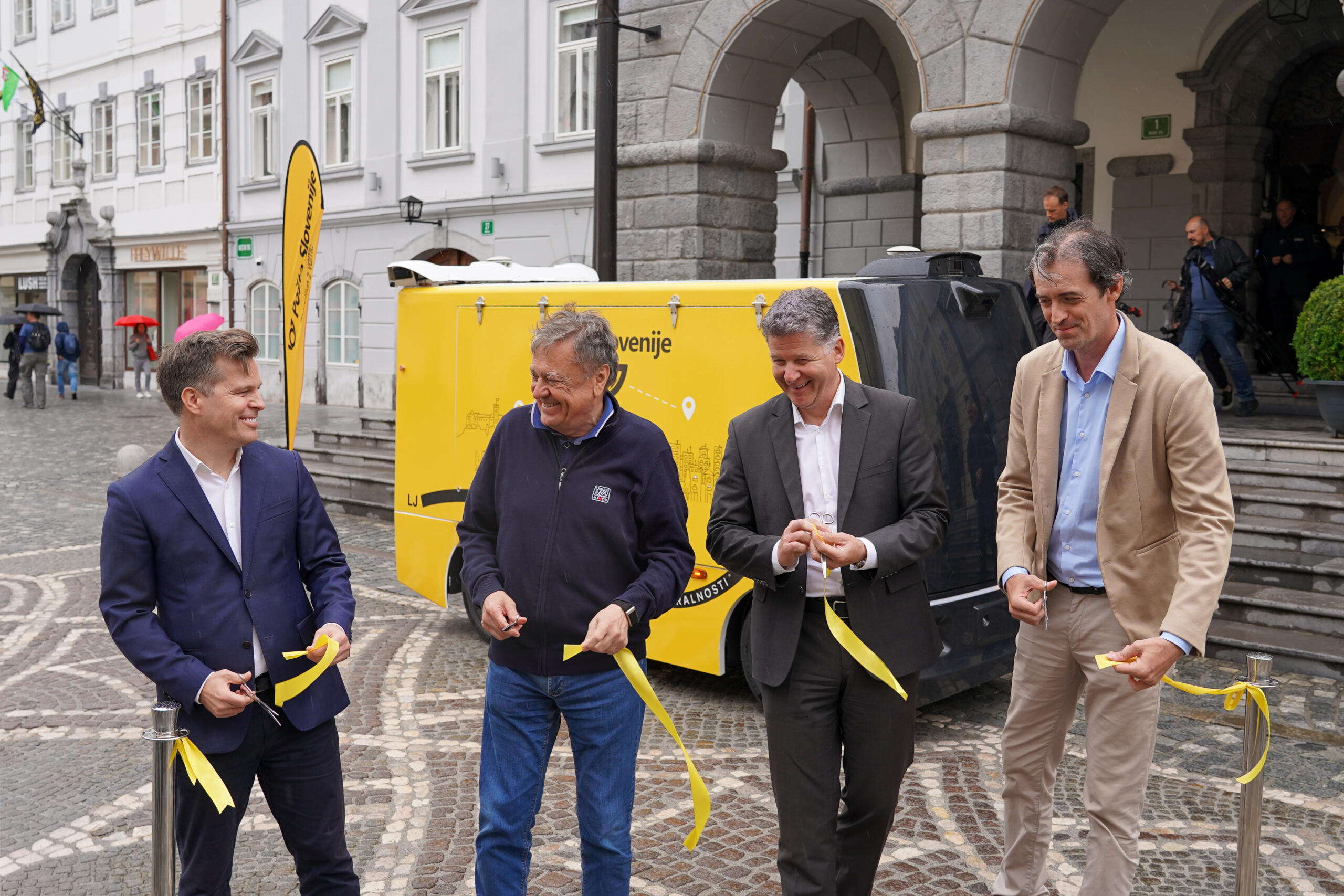
From left to right: Daniel Avdagič (AV Living Lab), Zoran Janković (City of Ljubljana), and Marko Cegnar and Slavko Ovčina (Pošta Slovenije) — Credit: Pošta Slovenije
The company has also expanded its network of parcel lockers and smart collection points, enabling customers to receive parcels without requiring repeated delivery attempts. The introduction of autonomous delivery robots, alongside ongoing experiments with drone-based transport and other emerging technologies, reflects Pošta Slovenije's ambition to combine digital innovation with more sustainable logistics.
City officials also see potential benefits. Ljubljana Mayor Zoran Janković expressed confidence that residents would embrace the new delivery method and suggested the technology could help reduce the number of delivery vehicles entering the historic city centre.