Green Living Areas publishes a new policy brief on mobility hubs in the Mediterranean
The latest policy brief developed within the Green Living Areas Mission explores how mobility hubs can become catalysts for greener mobility across the Mediterranean.
The brief builds on the outcomes of the 2nd Institutional Policy Dialogue, held in Brussels in October 2025, and on the work developed by the GREENMO thematic project and the Belgian city of Antwerp.
As part of the Interreg Euro-MED Green Living Areas Mission, GREENMO supports cities and regions in reducing car dependency, improving accessibility, and creating healthier public spaces through integrated and citizen-centred mobility solutions.
The context
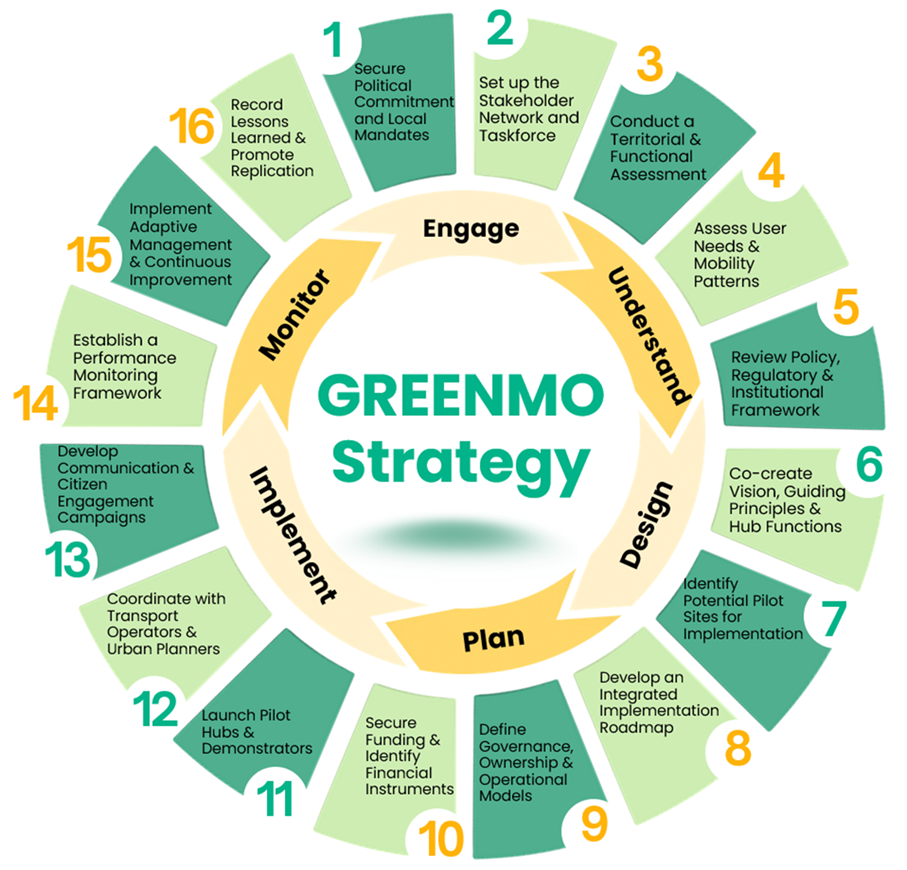
The GREENMO strategy cycle
Unlike models developed in Northern and Central Europe, Mediterranean territories face specific challenges linked to fragmented governance, seasonal tourism, infrastructure gaps and climate conditions. Addressing these differences is essential to ensure that sustainable mobility solutions are both effective and widely adopted. This policy brief addresses these challenges by presenting practical recommendations that can fit the Mediterranean context.
The document draws its recommendations from two main experiences: The GREENMO thematic project and its GREENMO Strategy; and the experience of the city of Antwerp with its 'Smart Links' initiative.
The GREENMO Strategy provides a set of guidelines that are meant to target the Mediterranean regions with their specific needs defined by climate, tourism and governance. Smart links, although adopted in a northern European context, are defined by their adaptability. They are mobility hubs with a range of different transport options, such as train, tram, bus, shared scooters and bikes, making it easier to move from one mode of transport to another.
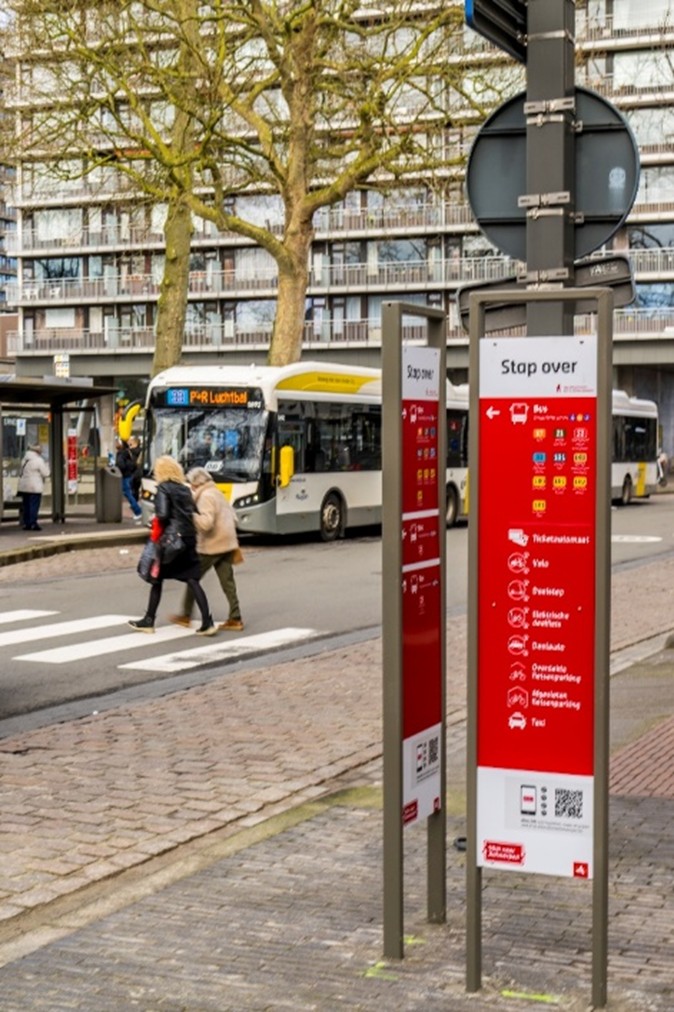
Example of signage in Antwerp
Key recommendations
The key recommendations highlighted by the policy brief are:
- Promoting flexible and climate-adapted infrastructure
- Expanding shared and multimodal mobility services
- Strengthening cooperation between municipalities, transport operators and private stakeholders.
The brief also emphasises the importance of ensuring accessibility, safety and comfort for all users, while actively involving citizens and local communities throughout planning and implementation processes.
By combining practical experiences, policy dialogue outcomes and stakeholder input, the policy brief provides local and regional authorities with concrete guidance to design mobility hubs adapted to Mediterranean realities and citizens’ everyday needs. More broadly, it highlights the potential of mobility hubs to become community-oriented public spaces that contribute to social inclusion, climate resilience and sustainable urban development.
Read the full policy brief here.
- Related Projects
- Related Members