Brussels invests €1.5 Million in 13 cycling infrastructure projects
The Brussels-Capital Region is accelerating its transition toward sustainable mobility, with nearly €1.5 million allocated to 13 new cycling infrastructure projects under the 'Bikes in Brussels Fund', managed by the King Baudouin Foundation.
After seven years of activity and more than 120 supported initiatives, the programme continues to expand its impact across the region. The latest funding round supports projects submitted by schools, municipalities, associations, and public institutions, all aimed at making cycling safer, more accessible, and more practical for everyday use in the Belgian capital.
Focus on safer, more practical cycling infrastructure
The selected projects span multiple Brussels municipalities and address very concrete mobility needs, particularly secure bicycle parking, improved school commuting routes, and better integration of cycling into daily urban travel.
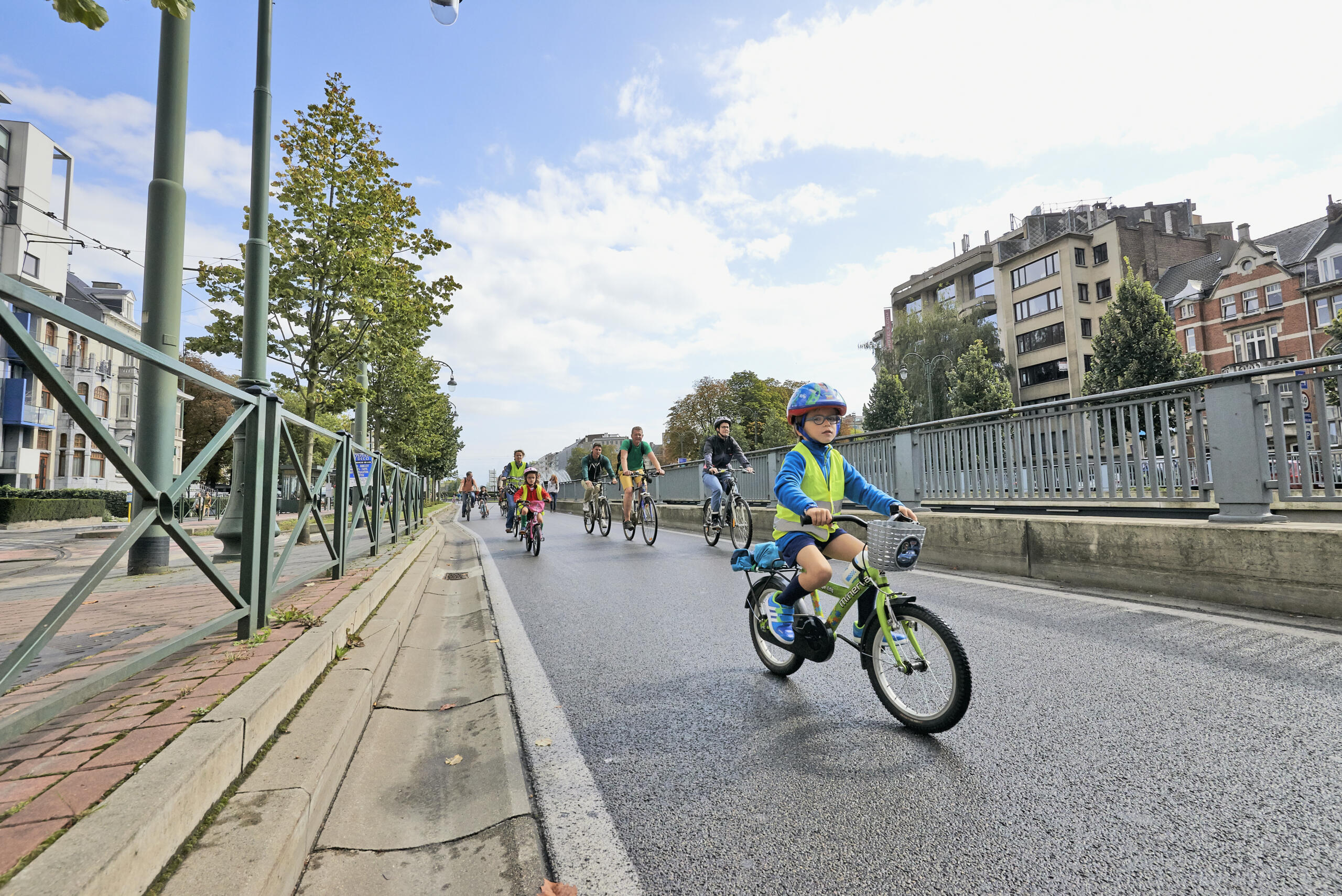
Children cycling in Brussels — Credit: CapturePB, Shutterstock.com
In Auderghem, the Athénée Royal is building a new bicycle parking facility with 80 spaces to encourage students and staff to cycle. In Berchem-Sainte-Agathe, the municipality is installing secure parking infrastructure in areas where demand has outgrown supply. Evere is adding three new bicycle parking sites, including covered facilities near educational and leisure hubs, while Ixelles is developing a secure 40-space bicycle garage at the Institute Saint-André to reduce theft and improve cycling conditions for students.
In Saint-Gilles, where 72% of households do not own a car, the municipality is constructing a major secure bicycle shelter, reflecting the borough’s strong reliance on cycling as a primary mode of transport. At a larger scale, Uccle is expanding bicycle parking capacity at high-traffic sites, including sports and institutional facilities that collectively serve thousands of users each week.
Schaerbeek's strategy
POLIS member Schaerbeek is pursuing a comprehensive strategy that combines public space redesign with targeted neighbourhood improvements, as in the case of Square Lehon. In the Josaphat district, the municipality is creating its first dedicated cycling zone, linking residential areas with schools and providing safer connections to neighbouring districts such as Saint-Josse, Dailly, and Colignon. New bike corridors along the Verwée, Henri Bergé and Josaphat streets will further strengthen the local network and improve everyday cycling accessibility.
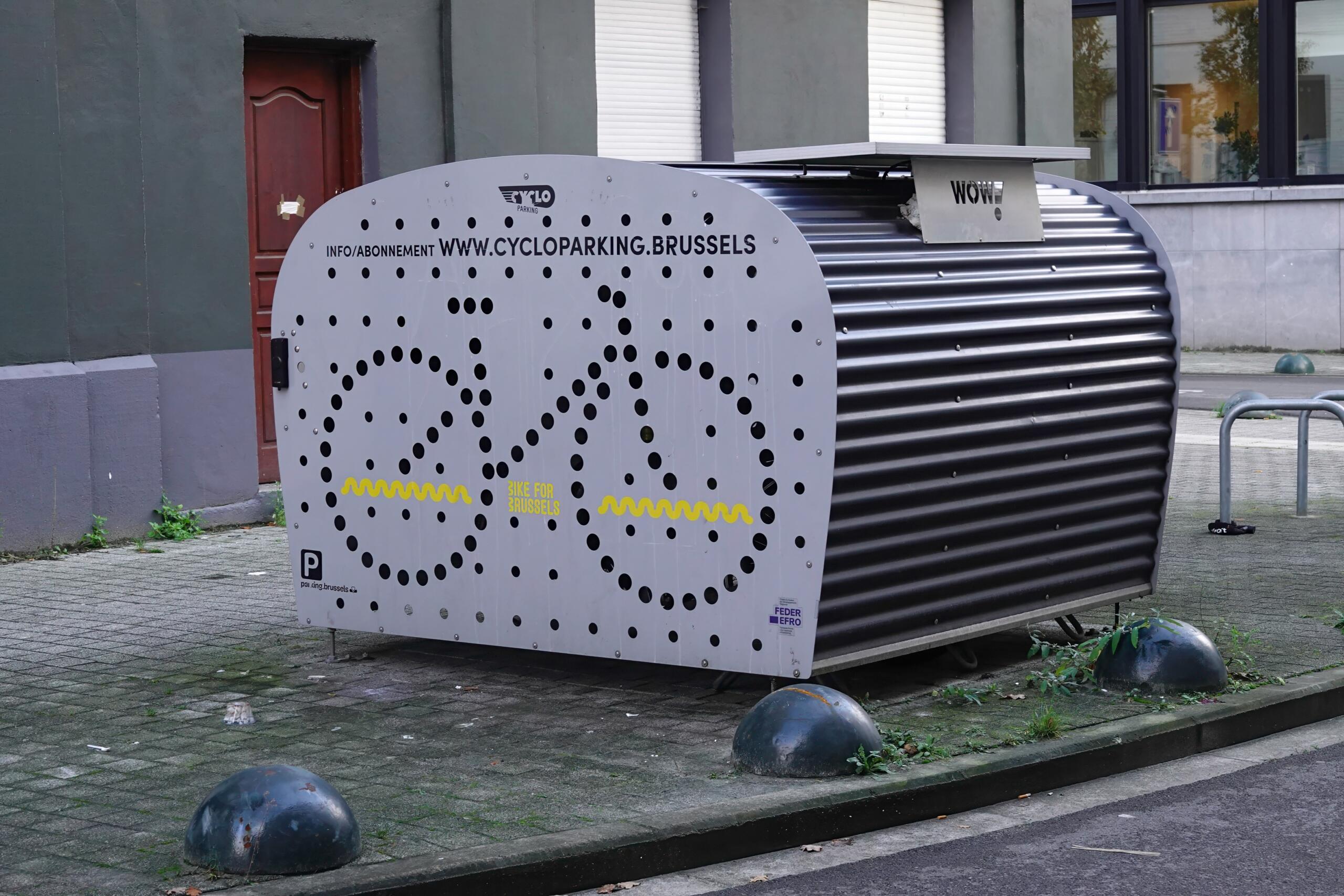
New bike boxes have been installed in Schaerbeek — Credit: HWall, Shutterstock.com
Elsewhere, Schaerbeek is upgrading cycling infrastructure along Avenue Ernest Renan, where new cycle paths, bicycle streets and traffic-calming measures are being introduced following requests from residents and schools. These interventions aim to create safer routes for students and encourage more people to choose cycling for daily journeys.
Alongside these street-level improvements, the municipality is also significantly expanding secure bicycle parking capacity. New bike boxes are being installed across the municipality, while additional parking facilities are being provided at schools, including Vierge Fidèle Ecoschool, GO! Atheneum Emanuel Hiel, and Basisschool De Muziekladder, as well as at the Le Noyer and Jean Jaurès medical centres and the HAMA disability support centre. Together, these projects seek to remove practical barriers to cycling while making the bicycle a more attractive transport option throughout Schaerbeek.
Strengthening connections beyond the city
Beyond local infrastructure, the fund is backing several strategic projects to improve cycling connections between Brussels and the surrounding regions.
Key initiatives include extending the fast-cycling route F2 into the capital, strengthening a cross-regional link with Flanders, and developing a 3.5-kilometre section of the F204 route along the E411 corridor, designed to separate cyclists from heavy motor traffic.
Another major project involves the construction of a nearly 90-metre cycling bridge over the Brussels Ring, connecting Dilbeek and Anderlecht and significantly improving safety for commuters entering the city.
A further strategic link will improve access to Brussels Airport through the F201 cycling corridor, incorporating a dedicated tram-bike viaduct over the Ring road. Together, these investments aim to make cycling a realistic option not only for short urban trips but also for longer commuting distances across the metropolitan area.
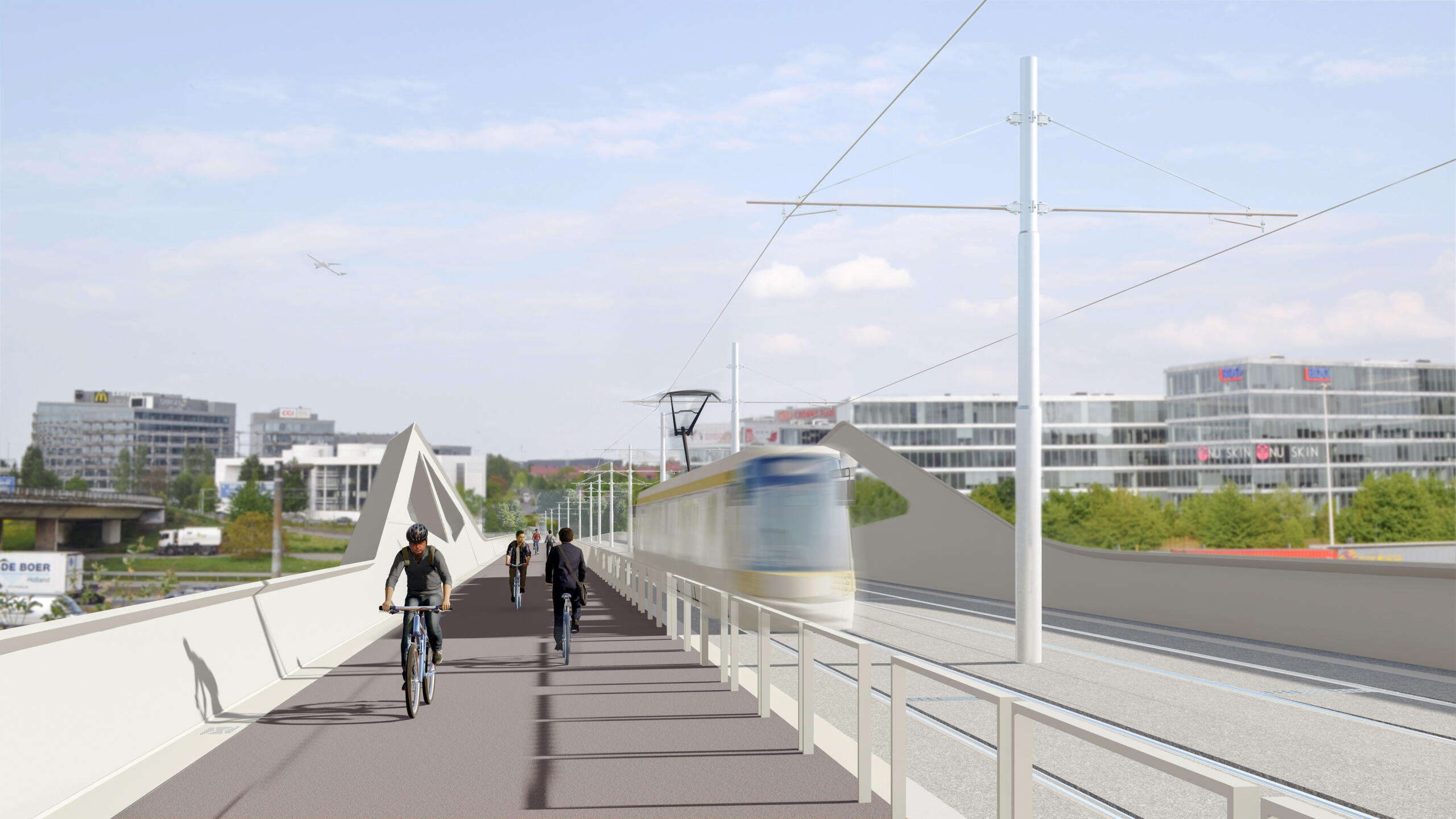
Visualisation of the Luchthaventram (Airport Tram) project in Brussels — Credit: Werken aan de Ring by De Werkvennootschap (designed by Ney & Partners)
Awards to highlight best cycling projects
Alongside new funding, the Bikes in Brussels Fund programme has launched the second edition of the 'Bikes in Brussels Award', which will recognise exemplary cycling infrastructure completed in 2024 or 2025.
Projects can compete in three categories: bicycle parking facilities, cycling routes, and large-scale infrastructure such as bridges and tunnels. Awards range from €25,000 to €250,000, depending on project scope, with submissions that were open until 11 May.
From this year onward, the Fund will focus more strongly on these awards, aiming to highlight best practices and encourage the replication of successful cycling infrastructure models across the region.
As Brussels continues to expand its cycling network, the emphasis is shifting from isolated improvements to a more integrated system, one designed to support daily commuting, reduce car dependency, and reinforce cycling as a central pillar of urban mobility in the capital.
- Related Members