
(Un)Equal Cycling
Many governments are investing in cycling as a sustainable, efficient, and affordable transport mode. Yet, looking at the case of Germany, the impacts of these measures are not equally distributed, but reproduce social inequalities instead of reducing them.
The bicycle is the most convenient sustainable mobility option. It has very low maintenance costs, it does not contribute to air pollution when in use, it is small, and easier to store than a car. Sounds pretty accessible to everyone, no?
Germany has heavily invested in promoting cycling as a sustainable, healthy, and efficient alternative to the private car. The 2023 Cycling Monitor survey confirms that there is both an increasing interest and willingness to cycle more often.
However, studies reveal that the ‘cycling boom’ in German cities is not so impressive. According to the study ‘Mobility in Germany 2023’ conducted by the Federal Minister of Transport on the mobility patterns in Germany, the modal split for cycling increased only from 9 to 11% from 2002 to 2023. This is a very small increase for such a long period of time. Looking at the passenger-kilometre performance, what emerges is that cycling distances have increased by almost half since 2022, thanks also to the uptake of electrically assisted bicycles.
These data show how cycling policies in Germany have not resulted in more people using this mode, but those who already cycle regularly are simply cycling more often and over longer distances. This is because the cycling boom is highly uneven, driven by certain socio-economic groups while disregarding others.
Missing picture
Germany has missed the point of why cycling is not the default option for many people. The idea of ‘just make it, and they will come’ does not work for anyone, or rather, it works only on a specific part of the population. The issue is not that cycling is an unattractive alternative, but rather that certain social groups remain excluded from accessing it altogether.
By analysing cycling groups and levels of education, cycling is much more common for well-educated, medium- and upper-income people living in medium-sized and large cities. This group has, in fact, better access to cycling infrastructure and favours cycling for health and environmental reasons. Meanwhile, for groups with lower education, who tend to live in remote and not well-connected areas, the cycling distances to relevant destinations are often less feasible. In addition, the social meaning given to cycling is much different. The car is considered a symbol of wealth and independence, while cycling is seen with negative connotations.
When looking at income levels, there is also a clear difference. People with low incomes use the bicycle much less than their wealthier counterparts, and almost 40% of people in households at the lowest end of the socioeconomic scale have no access to a functioning bicycle.
This reveals an uncomfortable truth: the investments have not benefited all social groups equally. The well-educated with high income benefit disproportionately from the cycling-related investments, while certain parts of the population are completely overlooked. This exclusion represents not only untapped potential for the contribution to sustainability goals, but also reinforces social inequalities instead of supporting the groups most exposed to mobility poverty.
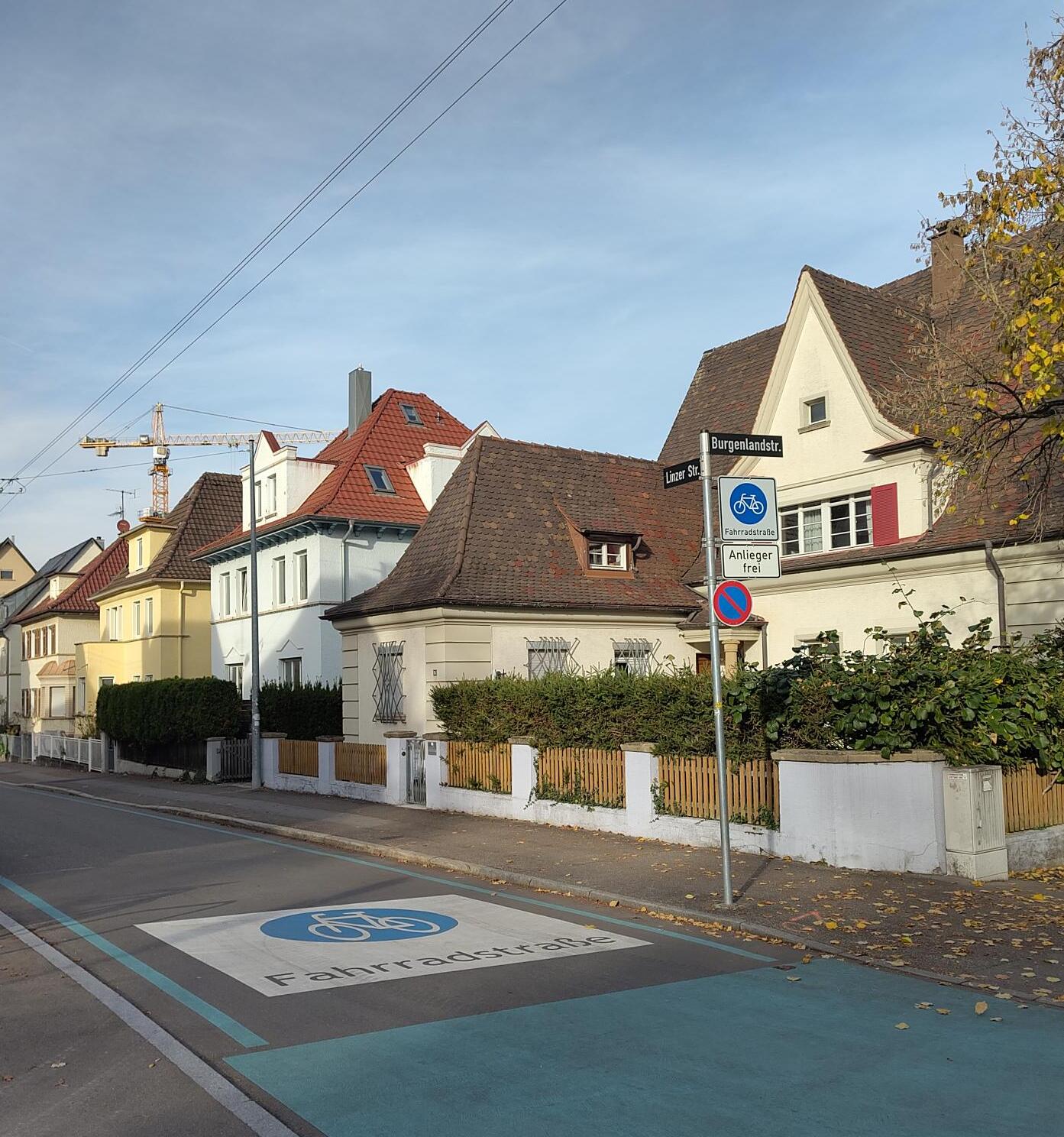
Germany has invested heavily in creating safe cycling infrastructure — Credit: Alessia Giorgiutti
Social gap
At first, it seems counterintuitive: if a bicycle is much cheaper than a car, why is it not a popular option among lower-income groups? Research consistently shows that income poverty and mobility poverty are deeply intertwined, and the underlying issues are various and complex.
The barriers to cycling are economic, cultural, health-related, and personal. Within migrant communities in particular, many people—especially women—never learn to ride a bike. Even those who can cycle may lack access to their own bicycle, a secure place to store it, or the basic repair knowledge to maintain it. Cycling infrastructure is frequently inadequate in suburban and lower-income neighbourhoods, so navigating trafficked roads without proper infrastructure holds back many.
Women face even more difficulties: many of their journeys are for caregiving purposes, such as accompanying children or elder relatives with limited mobility, or running errands. Bringing a kid or just a heavy shopping bag on a bicycle appears inconvenient, and more spacious bicycles such as cargo bikes are expensive and require an adequate parking space.
In addition, low-income workers often face difficult working conditions with very early or irregular working hours that fall outside the public transport schedule, contributing to forced car ownership and exacerbating the risk of mobility poverty. Within households, the car tends to be the preserve of men, leaving women more reliant on public transport.
Uncovering the differences: the Radklusion project
The Radklusion project, carried out by the German Institute for Urban Affairs (Difu) together with SINUS and infas and funded by the Federal Ministry of Transport (BMV), researches the inequality in cycling. Its aim is to investigate how better cycling conditions can reduce mobility poverty and strengthen social participation.
To do so, it first focuses on the existing barriers for socially disadvantaged groups. Then, by using a mix of data analysis, interviews, household surveys, GPS tracking, and collaborative workshops across five partner cities, the final goal is to develop an action matrix containing a comprehensive overview of concrete options.
This matrix maps barriers across different contexts and links them to concrete measures, such as better infrastructure, promoting participation, or offering educational opportunities. The project's goal is to give local authorities the tools to embed social equity into cycling strategies and Sustainable Urban Mobility Plans (SUMPs).
Teaching women how to bike
In the context of increasing cycling equality, migrant and minority women are underrepresented. Migrant women cycle far less than those without a migrant background—only one in three does so regularly, compared to two in three of the broader population. According to a study on migrant women from non-EU countries, only around 40% of them can ride a bike.
YallaFAHR, delivered by the association #BIKEYGEES e.V. and funded by the Federal Ministry of Transport, was founded in 2025 to address this gap. The #BIKEYGEES e.V. association has extensive practical experience in this field. Founded in 2015 by Annette Krüger, it has taught over 2,400 women and girls to cycle and donated more than 680 bicycle sets.
The success of the programme stems from the need for practical, low-threshold cycling courses that are multilingual and accessible. Participation is free, and the courses are designed around the needs of participants.
Volunteers who themselves only learned to cycle as adults serve as peer role models, and all materials, including traffic lessons with photos and graphics, are available in multiple languages, ensuring accessibility for women with limited literacy. Beyond the basics, courses cover bike maintenance, road safety, and traffic rules, complemented by online tutorials.
The objective of the course goes beyond supporting the uptake of the bicycle as a transport mode; it empowers and emancipates women. In fact, for many participants, cycling represents a first step towards greater independence and confidence, especially for those who did not have the chance to learn in their country of birth due to cultural and societal biases.
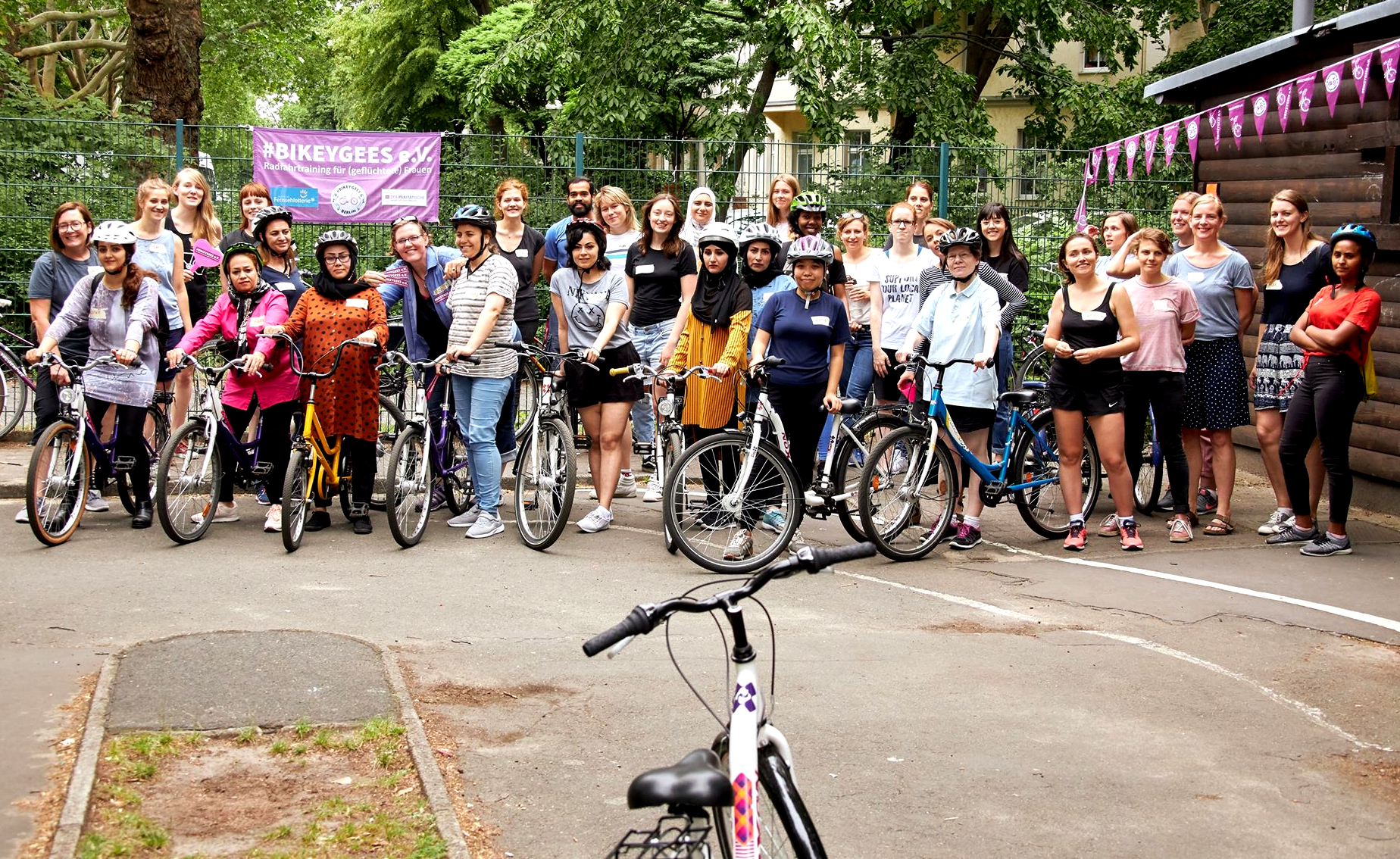
A group of #BIKEYGEES students — Credit: Jan Ehlers/Deutsche Fernsehlotterie
A means for freedom
The bicycle has long been a symbol of freedom. However, the privilege of independence is not available for all groups of people. The studies on the use of the bicycle by socio-economic and gender groups break the narrative that this is the most convenient and accessible transport solution for everyone.
To overcome these underlying challenges and make the bicycle truly a means for independence, a bottom-up approach is needed to fill in the gaps. Initiatives such as the YallaFAHR and Radklusion projects serve exactly this purpose: including and engaging with the groups for which a bicycle is not just a mobility option, but the key to freedom.
Click here to read the article in its original format.
About the authors:
Vittoria Maddalena, Project & Communications Officer, POLIS. Maddalena is involved in several projects, covering a wide range of topics from electric mobility to active travel, as well as supporting POLIS’ communications activities. She holds a BA in Political Sciences from the University of Padova and an MA in European Studies from KU Leuven. She is passionate about decarbonisation, electromobility, and the green transition.
Special contributor: Annette Krüger, Project Manager and Co-Founder, YallaFAHR#BIKEYGEES e.V.Krüger is a lifelong human rights activist, social media creator, and event manager (Berlin Lesbian and Gay City Festival (2011–2024). She co-founded #BIKEYGEES e.V. in 2015. She is firmly convinced that together we can make the world a better place visibly and sustainably, and that everyone can play their part in it.
Special contributor: Martina Hertel, Research Associate, German Institute of Urban Affairs (Difu). Hertel studied Geography and Cartography at the Free University of Berlin and Transport Sciences at the Technical University of Berlin. Since the mid-1990s, she has worked on numerous projects in the field of transport planning, and as of 2011, she has been at Difu, focusing on shared mobility, cycling, and walking, as well as SUMPs and parking management. She is involved in national and international projects.
 Credit: Jan Ehlers/Deutsche Fernsehlotterie