
Striving Together
Competitiveness, cohesion, and climate are usually treated as competing priorities. The soon-to-be published POLIS policy paper ‘The Climate & Cohesion Competitive Transport Cocktail’ argues that they are one agenda, and that local and regional mobility is what holds them together.
‘Competitiveness’ has become Europe’s policy watchword, but what does it actually require, and how do we ensure we get it right? An upcoming POLIS policy paper changes the narrative around familiar EU buzzwords like ‘competitiveness’, but also ‘climate action’ and ‘cohesion’. Rather than competing priorities to be traded off against one another, these objectives are mutually reinforcing, shaped by the same underlying urban and regional dynamics, with mobility acting as the system that connects them.
Back to the root
The word doing the heavy lifting in today’s policy debates deserves a closer look. ’Competitiveness’ comes from the Latin ‘competere’, which originally meant ‘to strive together’. Cooperation came first; the emphasis on rivalry came later.
That older meaning is more than a curiosity. Ask any successful team and the same truth emerges: to compete, a team must first be in shape, and this means every member training together, building a shared ambition, and making the most of the whole group. A team is a system, defined not by a single part, but by how those parts interact with each other.
This lens applies exactly to the European economy and to its transport. For the system to work, every actor must collaborate to ensure it benefits everyone. This also implies that improving any single part of it requires advancing on the others too.
A system, not a sector
This is why climate, cohesion, and competitiveness are too often pursued through separate policy logics—climate treated as a cost, cohesion as compensation, and competitiveness as a race for short-term efficiency. This separation is itself the problem.
The interdependence is measurable. In terms of environmental impact, transport accounts for roughly a quarter of the EU’s greenhouse gas emissions and is one of the hardest sectors to decarbonise—without progress in sustainable mobility, climate targets become far harder to reach. Congestion and inefficient urban mobility cost the European economy an estimated €180 billion every year, more than 1% of EU GDP. And when mobility systems fail, the costs fall unevenly: low-income households, rural communities, younger and older citizens, and those without a car carry the heaviest burden.
Development has never been evenly distributed across space. Historical infrastructure, industrial specialisation, and accessibility patterns create path dependencies that shape how different places absorb change. Around 6% of EU regions face particularly high socio- economic exposure to the low-carbon transition, and these are often territories already facing structural disadvantage. Accelerating the transition without addressing these territorial conditions risks preventing some parts of Europe from taking part in the economic and climate transformation, leaving them behind.
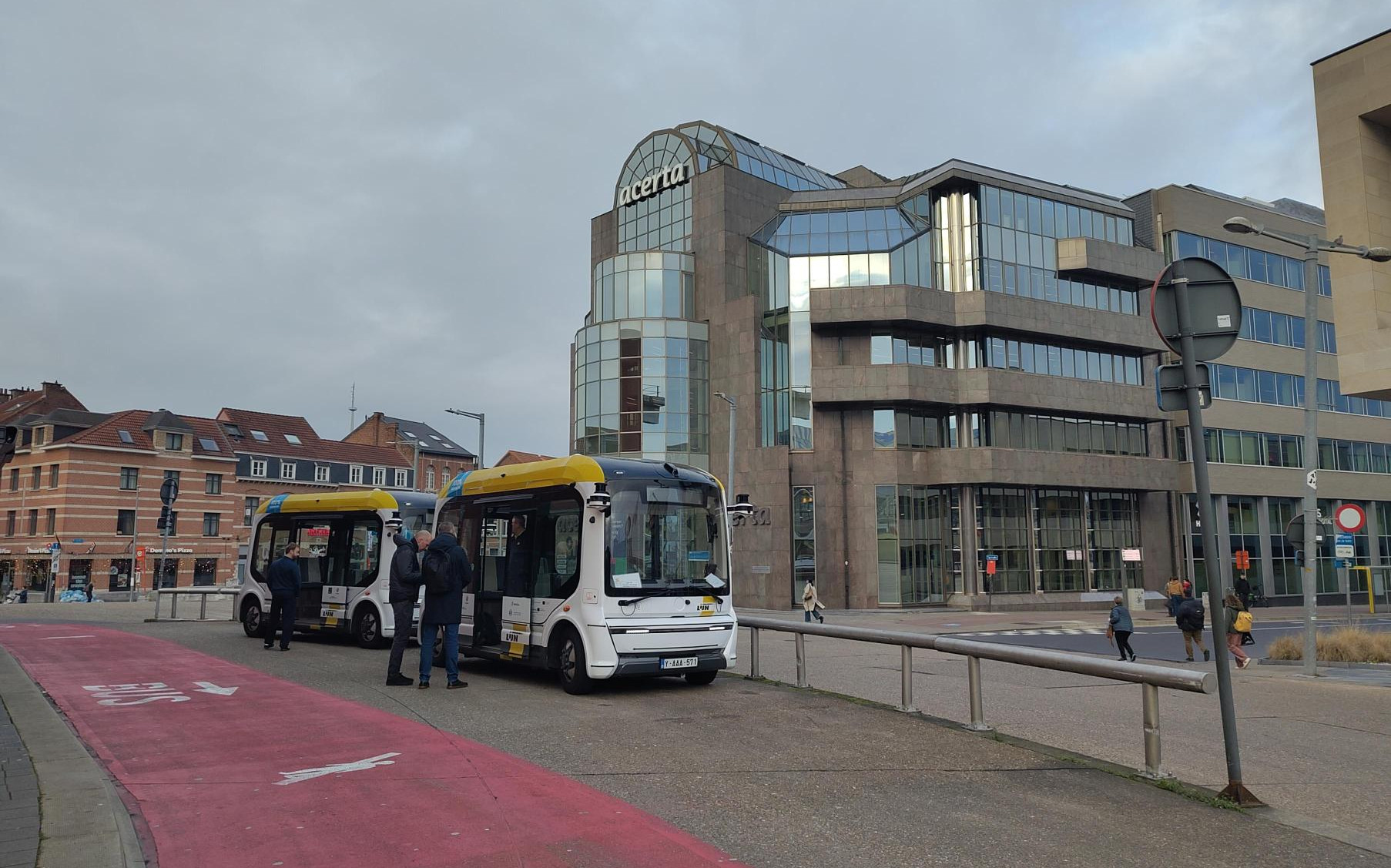
The autonomous public transport shuttles in Leuven, Belgium — Credit: Alessia Giorgiutti, POLIS
From trade-offs to synergies
Europe’s competitiveness will not be determined by how well it chooses between climate ambition, social inclusion, and growth, but by whether it can align them. The evidence points in the same direction. Well-designed climate action can strengthen economic performance, improve energy security, and reduce exposure to external shocks. The success of this, however, depends on where investment goes, who can access it, and whether territories can turn innovation into broad economic participation.
In that sense, cohesion is not only a question of fairness, but also of market capacity. Territories marked by weak accessibility or rising inequality struggle to generate the workforce participation, local demand, and institutional trust that innovation needs in order to scale.
The upside is significant. An analysis by EIT Urban Mobility suggests that urban mobility transitions could generate up to €177 billion in net societal and economic benefits by 2030, with returns exceeding €3 for every euro invested under favourable conditions. But capturing that value depends on connecting the three agendas, not running them in parallel.
A territorial transition
The EU’s climate and digital transition is therefore also a territorial transition. Reframing where this shift happens is therefore the first step to address development gaps. And who brings the three agendas together on the ground? Local and regional authorities. Their strategic role takes three forms.
As builders, cities, and regions create the physical conditions for economic participation. A prime example of this is the Grand Paris Express, a megaproject that aims to add over 200 km of automated metro and 68 new stations in the Île-de-France region. It goes beyond transport: by connecting peripheral territories to jobs, universities and hospitals, it is designed to integrate labour markets and reduce territorial inequality across the wider metropolitan region, ultimately bringing some two million additional residents within reach of high-capacity transit.
As market shapers, they coordinate the actors, institutions, and investments that move a whole market in a new direction. Electric buses are an example of a fossil-free alternative that has been in the market for a long time, but the decision to scale the local bus fleets lies in the hands of public authorities. Madrid's municipal transport operator, EMT, made that decision through a succession of procurement cycles, each one pulling the market further in a single direction. In December 2022, the city retired its last diesel vehicle, becoming the first major European capital, by population and fleet size, to operate an exclusively low- and zero-emission bus network. The transition did not stop there: backed by a €50 million European Investment Bank loan covering 250 electric and 10 hydrogen buses, and by two further tender rounds launched at the end of 2025, EMT is on course for a fully electric fleet by 2030.
As innovation drivers, they act as first deployers, lead customers, and real-world testbeds. In September 2025, Leuven became the first city in Belgium to run autonomous shuttles in live urban traffic. Two WeRide Level 4 vehicles now operate Line 16, a four-kilometre route connecting Leuven Station to Heverlee, open to passengers since January 2026. This shows that innovation only becomes meaningful when it can be translated into accessible and useful services that respond to real public needs. Its wider deployment depends on public authorities being able to frame innovation around collective goals, ensuring that technological development is guided by accessibility, inclusion, and long-term societal value rather than technology alone.
Letting cities do their job
The argument leads to a clear conclusion. The regions that succeed in the next phase of Europe’s transformation will not simply be those that decarbonise, grow, or innovate fastest. They will be those who connect these transitions and translate them into tangible opportunities across their territory.
To do that, cities and regions need to be recognised for what they already are: not passive recipients of transformation, but the platforms through which it becomes possible. That recognition in funding, in competence, in trust, is, in the end, what the paper asks for.
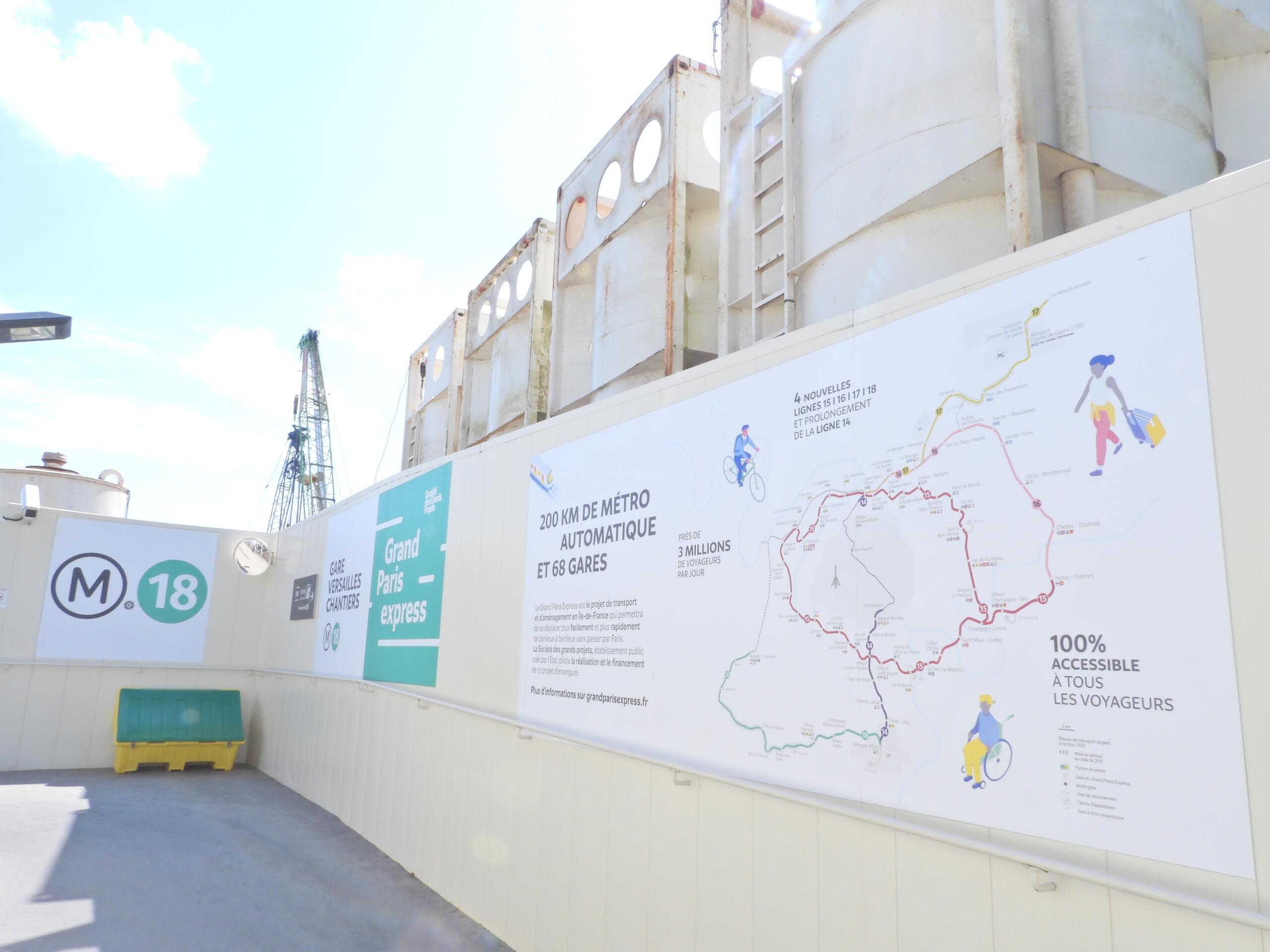
Construction site of Metro line 18, Grand Paris Express, to the Orly Airport - Alphacit Newim — Credit: Reporter, Shutterstock
Click here to read the article in its original format.
About the author:
Jorge Manso García, Policy & Project Manager, POLIS. Manso García focuses on new mobility services, the future of the transport workforce, and urban policy innovation. He contributes to projects like SMAPE, BIO-INTEL-MOB, SUM, and RESKILLING, exploring how public authorities can adapt to technological change while keeping mobility fair, flexible, and people-focused. He also supports POLIS’ advocacy and strategy work on just mobility systems.
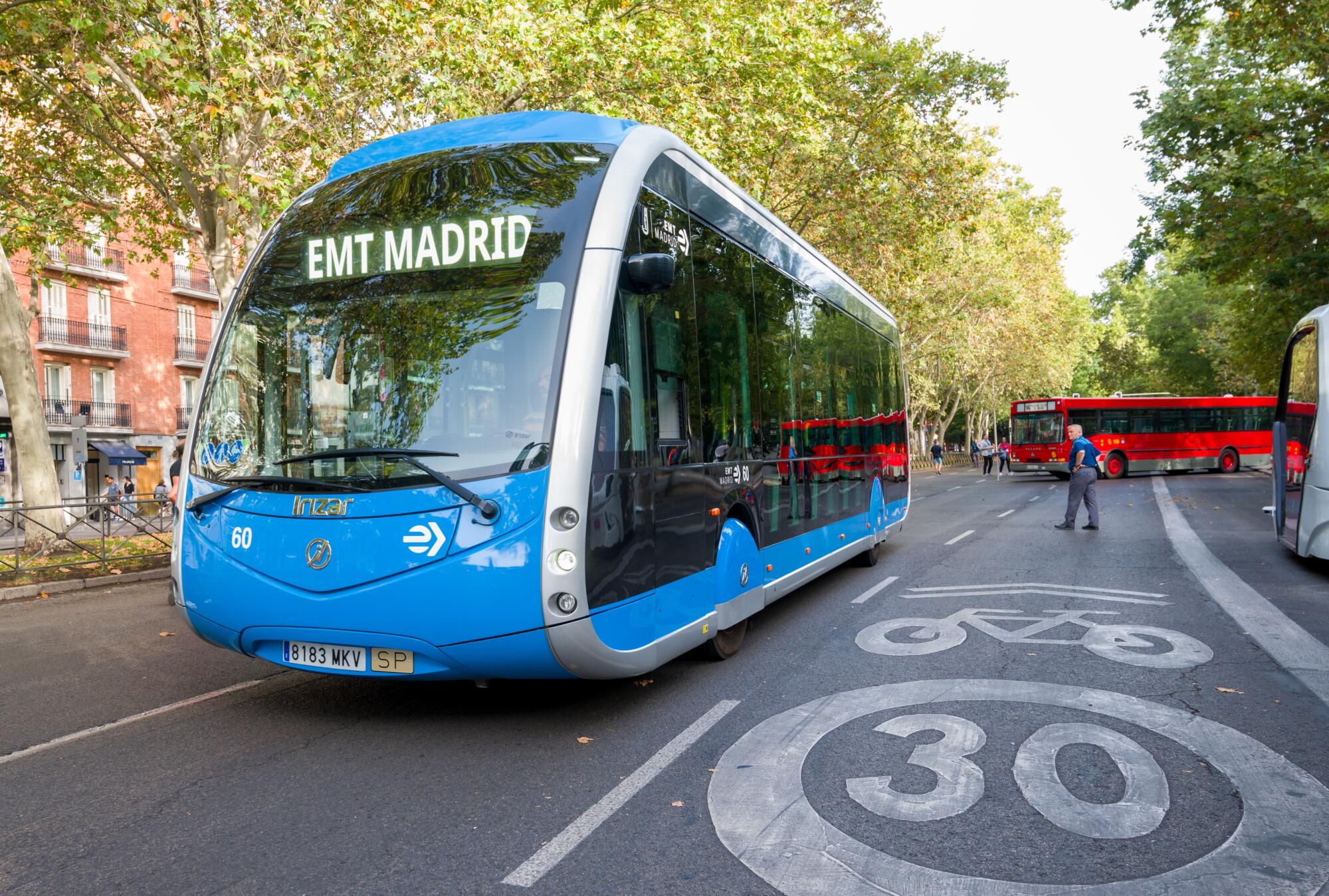 Credit: Pedrojgarcia, Shutterstock