
Serving Better Mobility
Former Dutch Prime Minister Jan Peter Balkenende, now Chairman of the New Mobility Foundation, tackles one of today’s most urgent issues: mobility poverty. He explores how targeted initiatives can open access to healthcare, education, and work, and shares his vision for inclusive, sustainable mobility.
Interview with Jan Peter Balkenende, elaborated by Alessia Giorgiutti.
POLIS: Your commitment to addressing mobility poverty is well-known. What inspired you, and how has your motivation evolved over the years?
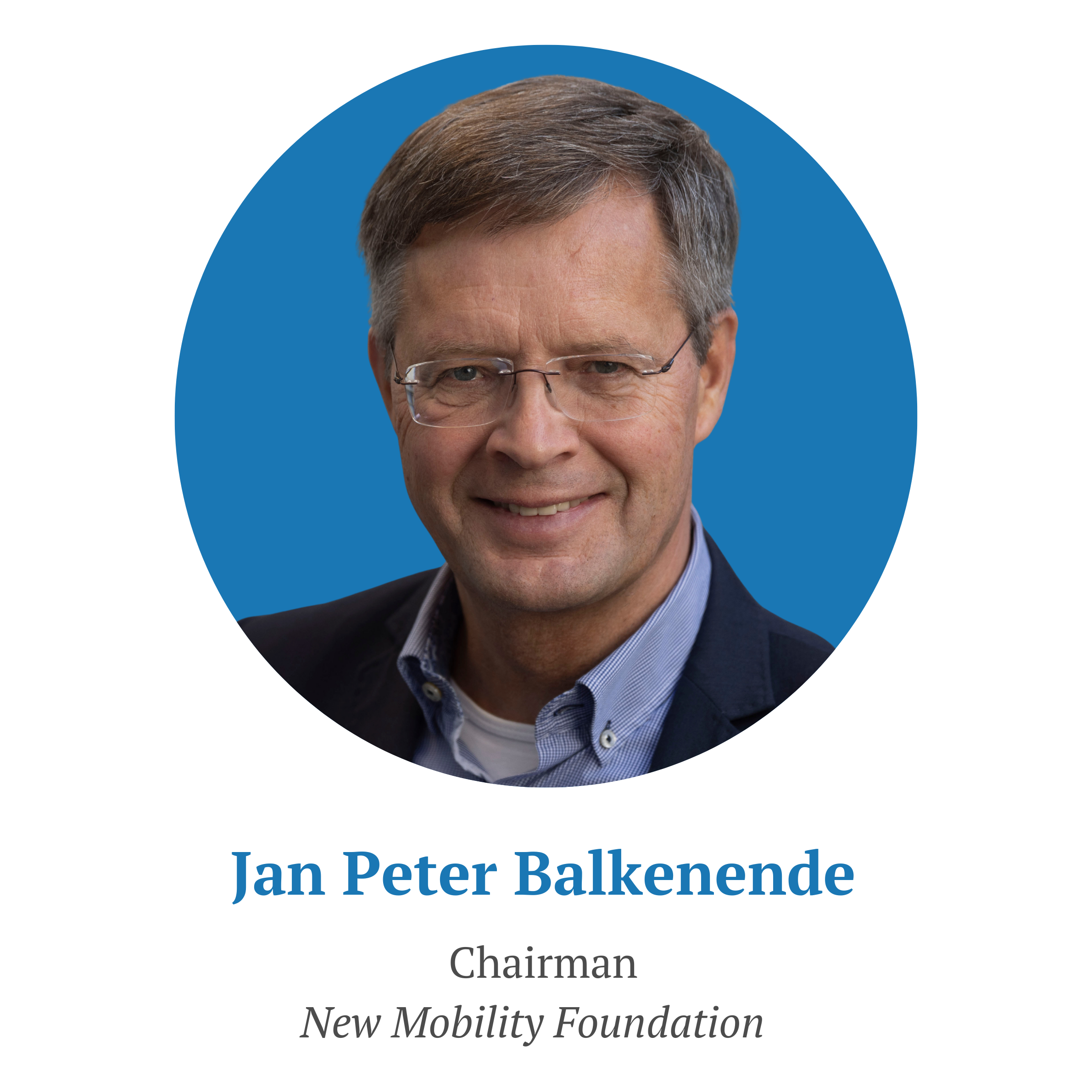 Jan Peter Balkenende: My engagement with mobility poverty stems from the conviction that mobility is not a luxury, but a precondition for participation in society. During my time as Prime Minister of the Netherlands, I saw first-hand how many people are excluded simply because they cannot access essential services. Over the years, this understanding has evolved into a mission to create systems where mobility empowers rather than excludes.
Within the New Mobility Foundation (NMF), we work independently in the dynamic space between government, society, and the private sector. This position allows us to connect policies with practice, combining the public interest of inclusion, the innovative strength of business, and the everyday realities of citizens to develop solutions that ensure sustainable mobility is also accessible and equitable for all.
POLIS: Mobility poverty limits access to healthcare, education, work, and social life. Which of these areas do you see as most urgently affected—and why?
Balkenende: Access to healthcare is often the most urgent. When people cannot reach medical appointments, the consequences are immediate and sometimes life-threatening. But the effects go beyond the individual. A society where people can access healthcare in time is healthier, more productive, and contributes directly to the national economy.
At the same time, mobility barriers rarely exist in isolation. Inability to travel to work, school, or social activities reinforces inequality and may trigger exclusion over time. That is why the New Mobility Foundation takes a holistic approach, ensuring that access in one domain, such as healthcare, strengthens access to others. True inclusion begins when all dimensions of daily life are connected through fair and reliable mobility solutions.
POLIS: Reflecting on your time in government, are there policies or initiatives you now wish had done more to address transport inequities? How have these experiences influenced NMF’s current strategy?
Balkenende: Policies often overemphasise infrastructure and efficiency, leaving people-centred needs under-dressed. Our strategy fills this gap by focusing on inclusion, affordability, and accessibility, learning from communities rather than imposing top-down solutions.
POLIS: Sustainable transport is increasingly prioritised, yet accessibility and affordability remain critical. How do you navigate these sometimes competing goals in developing inclusive mobility solutions?

Tworby poster ‘I get on and off again without stress‘, Tworby
Balkenende: We believe sustainability and inclusion are deeply complementary, not conflicting. A truly sustainable mobility system must also be socially sustainable: environmental progress loses its meaning if it leaves people behind.
Our approach starts from people’s actual mobility needs and connects environmental objectives with social equity through smart policy design, shared mobility, and local collaboration. In this way, green solutions become accessible and affordable—sustainability and inclusion reinforce each other when clean mobility is within everyone’s reach and social participation becomes part of the sustainability agenda. Smart subsidies, mobility credits, and local community initiatives help ensure that sustainability, accessibility, and affordability advance together, forming one inclusive mobility ecosystem rather than separate goals.
POLIS: Could you provide some concrete examples of projects or initiatives that the New Mobility Foundation is currently implementing to address mobility poverty?
Balkenende: Several pilot projects in the Netherlands illustrate this approach. Tworby transforms a standard bicycle into a stable three-wheeler, giving people with reduced mobility the freedom to cycle safely and independently. It combines inclusion, sustainability, and cost efficiency in simple design.
Changefied is a virtual training environment that allows people to experience public transport digitally before travelling. This helps vulnerable groups, such as those with anxiety disorders or cognitive limitations, build confidence and overcome fear of using buses or trains.
The Dutch initiative Heen en Weer (in English, ‘back and forth’) is a relatively young Amsterdam-based start-up that demonstrates the power of local communities. Volunteers provide electric, emission-free rides for people who cannot travel on their own, ensuring that no one is left isolated. Together, these initiatives show the potential of community-driven innovation to create systemic impact, making mobility more inclusive, sustainable, and humane.
POLIS: How can the projects and the initiatives of the NMF inform broader national or European mobility policies?

Changefied offers innovative gamification and serious games solutions, Changefied
Balkenende: Pilot projects provide valuable insights into what works in real-life contexts and bridge the gap between practice and policy. By sharing these lessons through networks such as POLIS, EUROCITIES, and the International Transport Forum, the New Mobility Foundation connects local innovation with European policymaking. Dialogue with the European Commission and contributions to the ITF Summits in Leipzig help translate practical experience into systemic inclusion across national and European mobility networks.
POLIS: Digital and hybrid mobility solutions are advancing rapidly. How can these innovations be designed to ensure they do not inadvertently exclude vulnerable or less digitally literate populations?
Balkenende: Digitalisation offers great potential, but it can also leave people behind if inclusivity is not built in from the start. People with limited digital skills often struggle with app-based systems, which is why accessibility should extend beyond technology alone: clear design, personal assistance, and offline options remain essential. Technology should bring people closer to opportunities, not create new distances between them.
POLIS: Tackling mobility poverty requires alignment between governments, NGOs, and the private sector. From your perspective, what approaches or strategies create the most effective and lasting collaborations?
Balkenende: Lasting collaboration starts with recognising that no single actor can solve mobility poverty alone. Governments provide the frameworks, businesses bring innovation and capacity, and Non-governmental organisations keep the human perspective central. The key is to align these strengths around a shared mission rather than separate agendas—that means co-designing solutions from the start, testing them locally, and learning openly from both successes and failures.
POLIS: Looking back on both your political career and your current work with the New Mobility Foundation, what do you consider the next critical step to ensure mobility becomes a right rather than a privilege, and what legacy would you like to leave in this field?
Balkenende: ‘Leave no one behind’ is the central, transformative promise of the United Nations 2030 Agenda for Sustainable Development. It captures exactly what mobility should stand for. Without access to healthcare, work, education, and social life, people are excluded from full participation in society. Mobility is the enabler that gives access to these opportunities.
The next step is to make this vision part of everyday decision-making. Mobility should no longer be treated as a secondary issue, but as a measure of how fair and inclusive a society truly is. I hope the New Mobility Foundation can help shape and embed this understanding, turning inclusion from ambition into standard practice. When mobility becomes a shared right rather than a personal struggle, we will have created a lasting impact.

Expert interview with Mr Balkenende, International Transport Fortum (ITF)
Click here to read the article in its original format.
About the contributors:
Interviewee: Jan Peter Balkenende, Chairman, New Mobility Foundation. Balkenende, Minister of State and former Prime Minister of the Netherlands, is committed to sustainable and inclusive mobility, leveraging his extensive experience in politics, business, and academia. He promotes policies and collaborations to address mobility challenges and improve accessibility, with a focus on creating a future-proof mobility system.
Interviewer: Alessia Giorgiutti, Communications & Membership Lead & Co-Coordinator Just Transition, POLIS. Giorgiutti coordinates POLIS' corporate communications and magazine and has been involved in several EU-funded projects as a Communications Manager. She currently supports other managers and officers on tasks related to content production and communication for their projects. Her work focuses on making accessible and inclusive content about transport, as well as highlighting the experiences of marginalised users.
 International Transport Fortum (ITF)