
Mobility Haven
Hamburg is advancing one of Europe’s most integrated approaches to sustainable urban mobility. Dr Anjes Tjarks, Hamburg’s Senator for Transport and Mobility Transition, shares how the city is accelerating its mobility transition through public transport uptake, autonomous mobility pilots, and a fully integrated mobility ecosystem.
Interview with Anjes Tjarks, elaborated by Carlotta Inserra.
POLIS: Hamburg is widely recognised for its integrated approach to sustainable mobility, combining strong public transport, digital innovation, and ambitious climate goals. What are currently the key priorities driving Hamburg’s mobility transition?
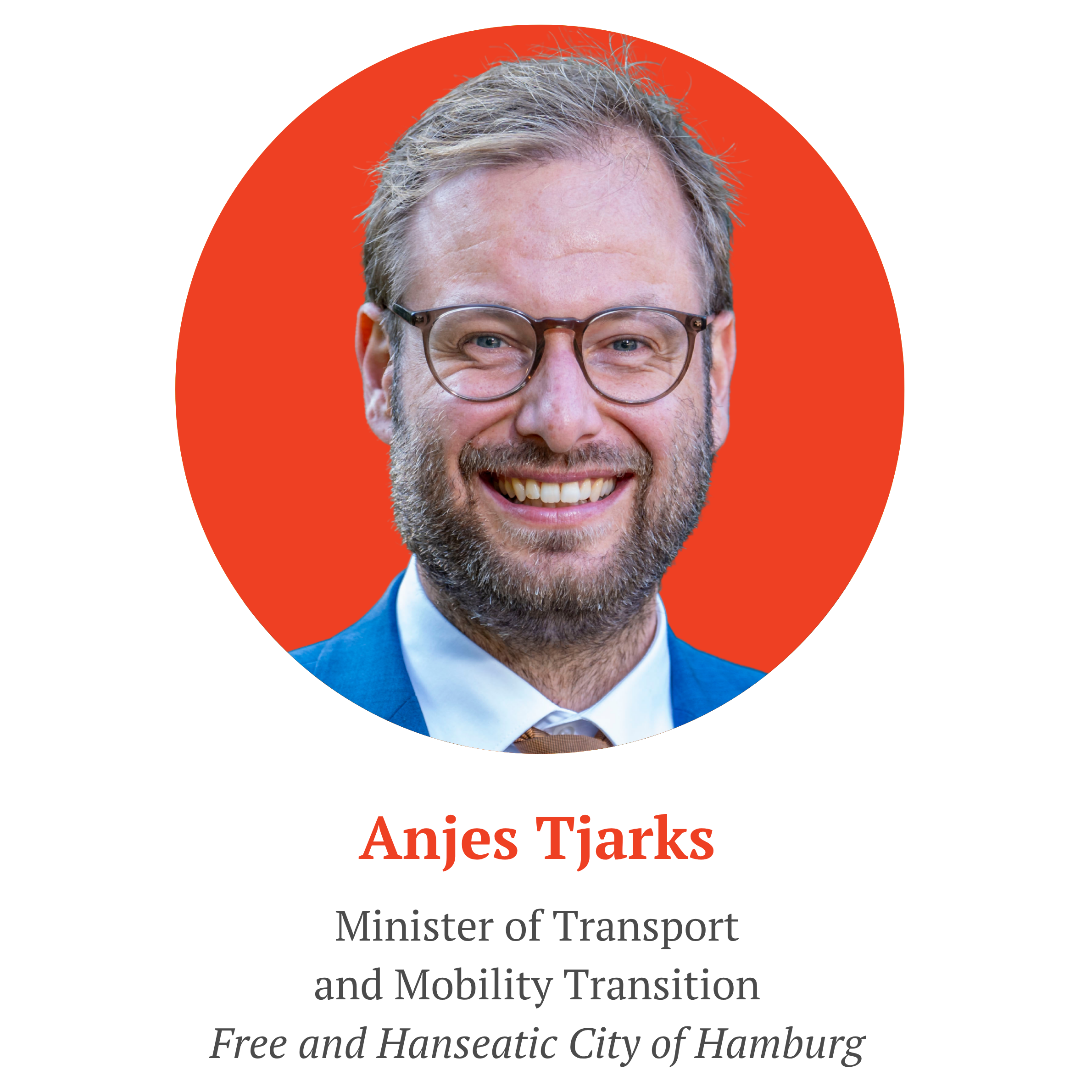 Anjes Tjarks: To reach Hamburg's ambitious climate and mobility transition goals, we identified electrification as one of our top priorities. Already, 37% of our bus fleet is fully electric, with the taxi sector following suit, as nearly 750 taxis currently run on fully electric drivetrains. This means one in four taxis is now emission-free.
The shift is equally visible in private transport. In the first quarter of 2026, 16.4% of all newly registered passenger cars in Hamburg were fully electric, with a further 15.4% being plug-in hybrids. Therefore, nearly one in three new cars is now at least partially electric—a number that would have seemed ambitious just a few years ago. To further boost these efforts, the city is also adding 10,000 new charging stations by 2030 while maintaining free parking for clean vehicles with an E-license plate.
At the same time, electrification alone will not deliver a successful mobility transition. We also need to make public transport, cycling, and walking more attractive, so that sustainable mobility becomes the natural choice for everyday travel.
POLIS: Alongside electrification, Hamburg has also focused strongly on safety and the overall passenger experience. Why has this become such an important part of the mobility transition?
AT: To achieve our mobility and climate goals while keeping Hamburg liveable, people must both be safe and feel safe when using public transport. Although crime numbers in Hamburg have declined, many passengers still report concerns about personal security, particularly at stations and during late-night travel.
Our focus has therefore been to implement a variety of measures that improve both factual security and the feeling of safety. These include increasing the number of security staff, introducing a ‘way-home-phone’ service for people travelling alone, and enabling buses to stop between stations after dark. In addition, we have improved the visibility of security buttons at stations and launched a campaign on getting home safely, including workshops with passengers to better understand their safety and security needs. We are also investing in station improvements, especially in areas where people tend to feel most uncomfortable, by improving lighting, visibility, and orientation throughout the network.
POLIS: The Germany Ticket (Deutschlandticket) is performing extremely well in Hamburg. Why is that and what do you see for its future?
AT: Since its introduction, Hamburg’s transport authority hvv has sold more Germany Tickets per capita than any other state or city in Germany. We believe this success is largely due to its seamless integration into our mobility app, hvv switch, and the flexibility to purchase the ticket at any time of the month, paying only for the remaining days.
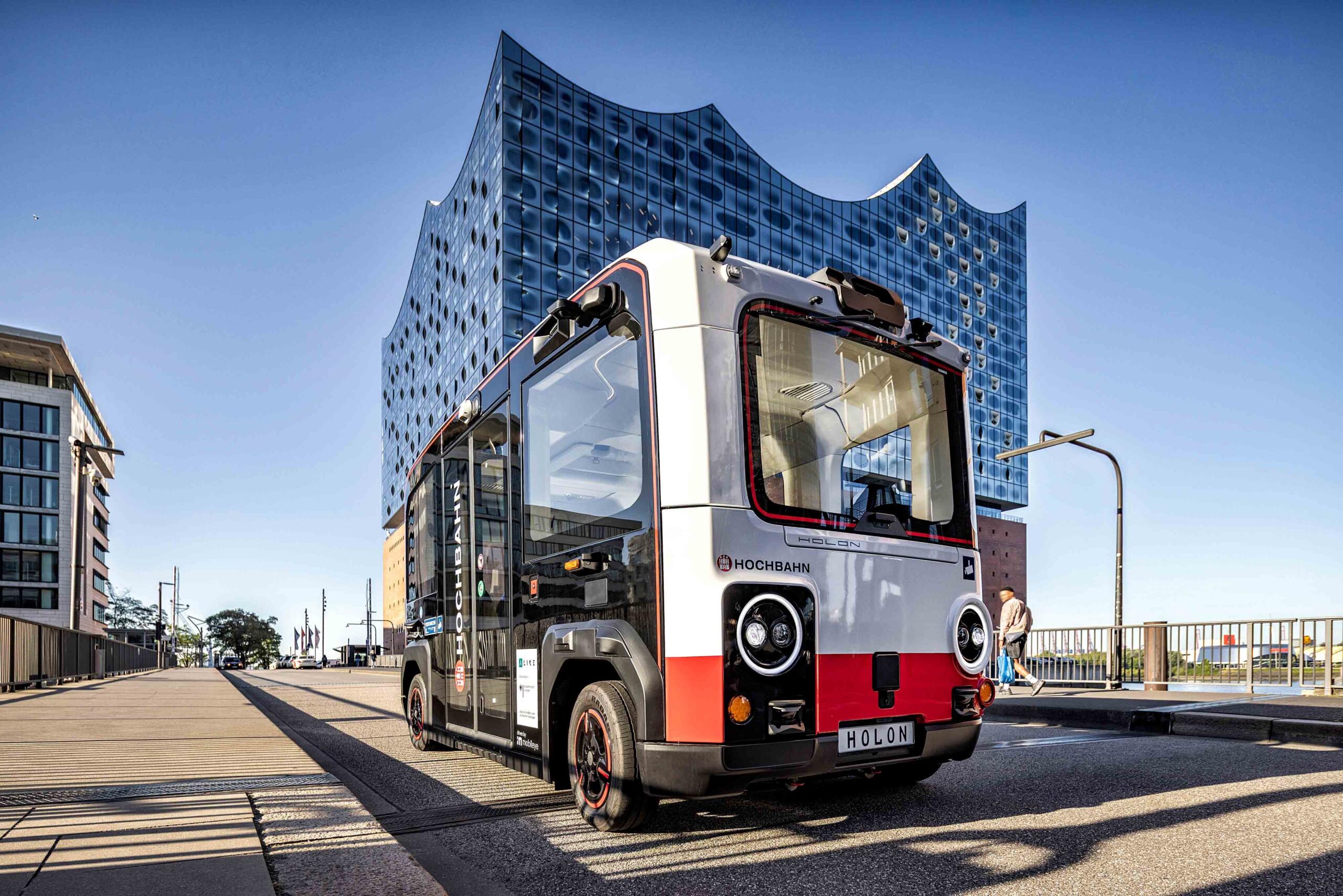
HOLON autonomous vehicle — Credit: Thies Raetzke
POLIS: Hamburg is increasingly positioning itself as one of Europe’s leading testbeds for autonomous driving to strengthen public transport. Which concrete use cases do you see as most realistic in the short to medium term, and what conditions need to be in place to scale them responsibly?
AT: Hamburg is a particularly compelling case, because we are not merely experimenting with autonomous vehicle technology in isolation, but are actively working to integrate it into the existing public transport network. This sets us apart from many other cities pursuing similar ambitions.
Two projects are especially worth highlighting: ALIKE is testing roboshuttles and robomidibuses on actual public transit lines, with at least three roboshuttles and eight robomidibuses planned for operation by 2027.
Full transition into regular service is expected between 2028 and 2029, followed by gradual fleet scaling. AHOI takes a complementary approach, focusing on on-demand mobility through a mixed fleet of autonomous and manually driven vehicles. With up to 48 vehicles, it is set to become one of the largest mixed-fleet on-demand operations in Europe, beginning with a closed pilot user group in 2027 before transitioning to broader operations.
In the short to medium term, these two models—the fixed-route shuttle services and the flexible on-demand rides—are the most realistic applications, particularly in areas where conventional bus lines are inefficient or difficult to operate.
Scaling them responsibly, however, requires more than technical readiness. A regulatory framework that enables the gradual removal of safety drivers is essential, as is the underlying digital infrastructure, including connectivity, data systems, and real-time operations.
Equally important is public trust: our approach of starting with closed pilot groups reflects the understanding of building confidence step by step. Ultimately, we recognise that the technical challenge, while significant, is only one part of the equation.
POLIS: A key question for autonomous driving and on-demand vehicles is how it connects to the existing mobility system. How is Hamburg approaching the integration into its wider transport and urban planning?
AT: Integration is at the core of our approach. A shining example is the collaboration between MOIA, an on-demand ridepooling service, and hvv hop, a flexible minibus service operated by our local public transport provider.
Both are designed to complement our existing network and strengthen intermodality across the city.
Central to this is the hvv switch app, which brings together booking and payment for a wide range of mobility services, including MOIA, as well as buses, trains, and ferries.
By integrating these options into a single platform, it makes multimodal journeys far simpler for residents and visitors alike, while supporting Hamburg’s goals of reducing private car use, lowering emissions, and extending the benefits of new mobility solutions across the city.
POLIS: How is Hamburg approaching community engagement and trust-building to ensure that autonomous vehicles are not only technically viable but also welcomed by residents and seen as adding social value?
AT: We recognise that the successful introduction of autonomous vehicles does not depend solely on technical readiness, but also on public acceptance and trust. To address this, we actively involve residents and stakeholders throughout the development and rollout of new mobility solutions. A key part of this is transparent communication and regular public information campaigns. We organise events, workshops, and test rides with autonomous shuttles), )where residents can experience the technology firsthand, ask questions, and provide feedback. These initiatives help demystify autonomous vehicles and address concerns related to safety, accessibility, and data privacy.
Additionally, we collaborate with local communities, advocacy groups, and research institutions to ensure that the deployment of autonomous vehicles aligns with our broader social and environmental goals. Through projects like AHOI and ALIKE, we actively gather feedback from diverse groups, with the aim of designing services that are inclusive and responsive to the needs of all residents.
Through these efforts, we are building trust and fostering a sense of ownership among citizens, ensuring that autonomous vehicles are seen as a valuable addition to our city's mobility landscape that contributes to social well-being and quality of urban life.
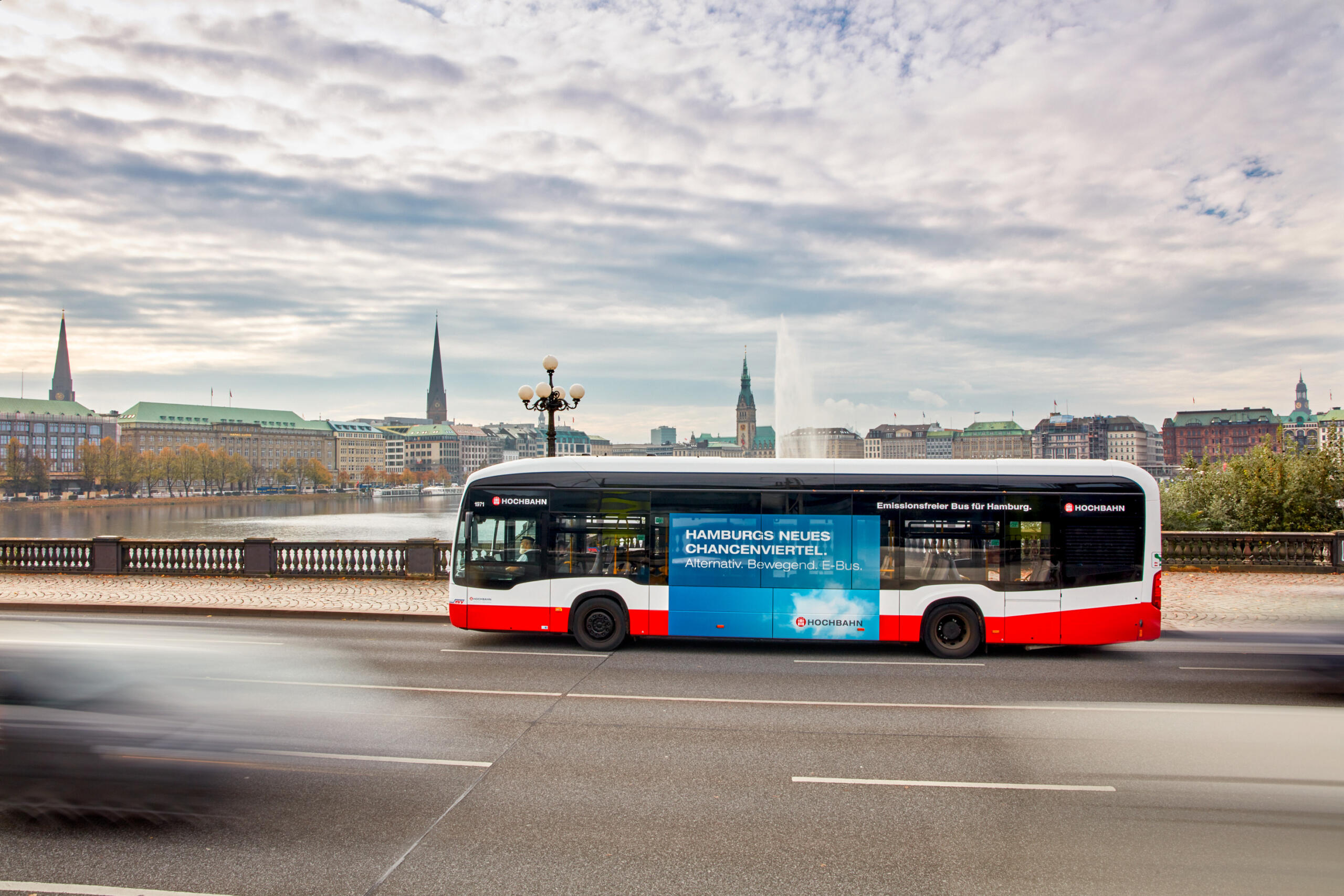
Daimler eCitaro in Hamburg, Germany — Credit: HOCHBAHN
Click here to read the article in its original format.
About the contributors:
Interviewee: Anjes Tjarks, Minister of Transport and Mobility Transition, Free and Hanseatic City of Hamburg. Tjarks is focused on promoting greener, sustainable, and efficient mobility in the city of Hamburg and beyond. He served in the Hamburg Parliament from 2011 to 2020 as spokesperson for economic policy and, from 2015 onwards, chair of the Green parliamentary group. He holds a PhD in Political Science and Cognitive Linguistics and studied Education, English, and Social Sciences.
Interviewer: Carlotta Inserra, Membership & Communications Manager, POLIS. Inserra is the main point of contact for the network’s expanding membership, where she oversees and supports members’ engagement and promotes POLIS’ Working Group activities. She also contributes to the Interreg SMALL project, where she channels her commitment to inclusive and accessible sustainable mobility for all.
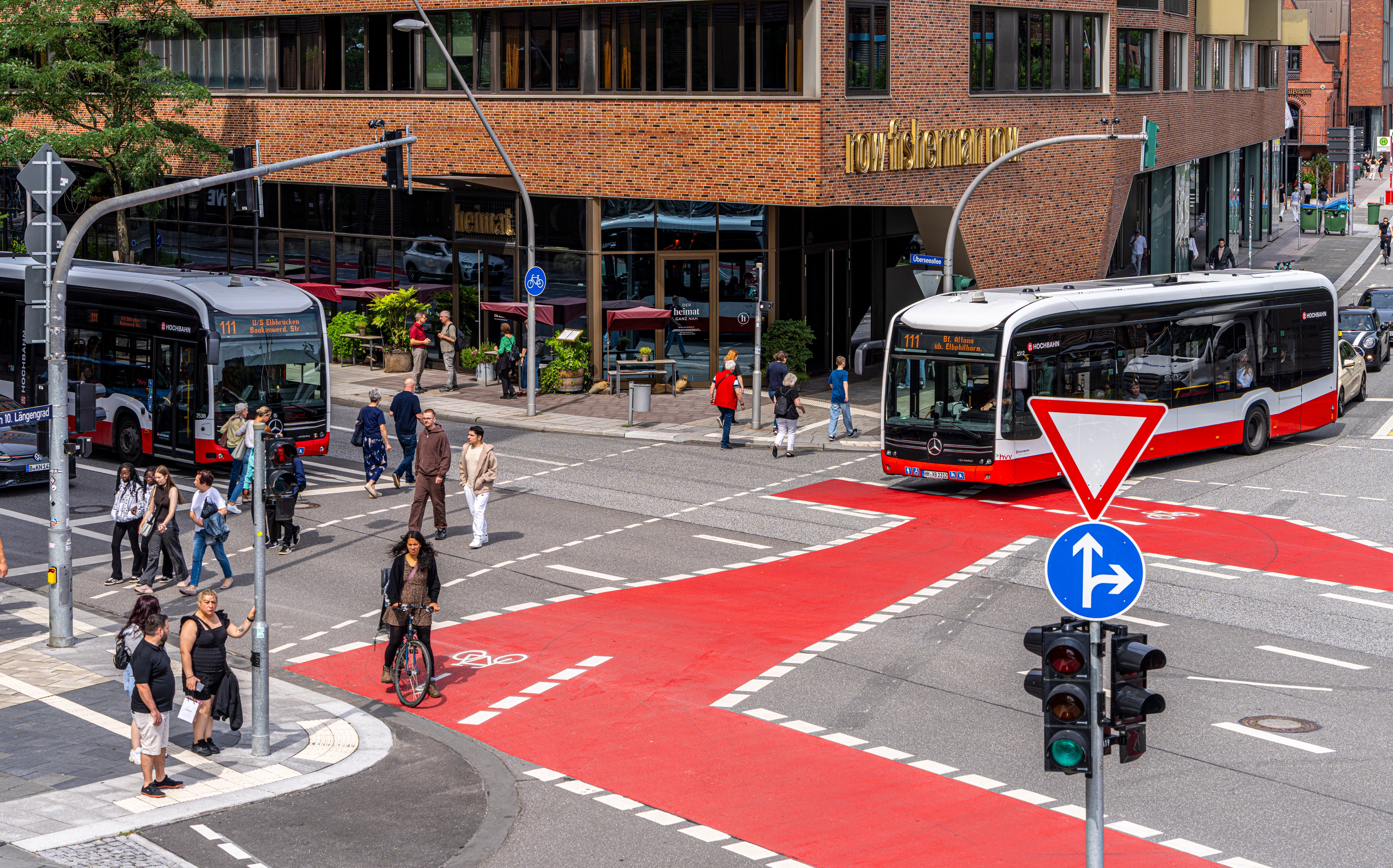 Credit: Werner Spremberg, Shutterstock