
Leadership That Gets It Done
Europe has no shortage of bold mobility ideas. But at the POLIS Leadership Summit in Zagreb, the focus shifted from innovation to implementation, exploring how governance, institutional capacity, and long-term continuity are the real drivers behind sustainable urban mobility.
Innovations such as autonomous vehicles, artificial intelligence, digital twins, and connected infrastructure all promise to reshape how people move through cities and regions. Yet when mobility leaders gathered in Zagreb for the fifth edition of the POLIS Leadership Summit, the conversation centred around a more immediate question: how can local authorities get things done?
This reflects a growing reality across Europe: most cities already know what a more sustainable, efficient, and inclusive mobility system should look like. The challenge is no longer a lack of ideas or technologies, but the ability to implement them consistently and over time.
Hosted by the City of Zagreb, the Summit brought together leaders from across government, industry, research, and civil society to discuss how Europe can build transport systems that remain sustainable an increasingly uncertain world. Overall, the discussions pointed towards an important shift in thinking. The future of mobility will depend less on innovation alone, and more on governance, coordination, and long-term delivery capacity.
In other words, the central question is no longer ‘what should cities do about sustainable mobility?’, but ‘what does it take to actually make it happen’?
Zagreb: A city rebuilding through mobility
Zagreb offered a fitting backdrop for this conversation to take place. Over the past several years, the city has been quietly building the foundations for a different mobility future. It is in the midst of one of the largest public investment cycles in its recent history, balancing post-earthquake reconstruction with long-term investments in modernising ageing infrastructure, improving public services, and advancing its climate ambitions. Rather than treating these as separate priorities, Zagreb has increasingly positioned mobility as the thread holding them together.
One of the most visible examples is the capital’s investment in the largest tram renewal programme in decades, procuring 40 new low-floor trams through a combination of EU and local funding. The first vehicles have already entered service and are gradually replacing ageing rolling stock. The result is not only improved reliability and accessibility, but also a gradual modernisation of the entire system. Alongside this, Zagreb is also investing in 62 new electric buses and preparing new tram infrastructure projects, including extensions along Heinzelova and Sarajevska avenues. These are all part of a broader effort to strengthen the capacity of public transport and reduce reliance on private cars. But Zagreb's ambitions go beyond this: through the expansion of the Bajs public bicycle-sharing system,designed around public transport hubs and key destinations across the city, Zagreb isseekingto strengthen multimodal travel and make sustainable transport a more attractive everyday choice.
These investments also sit within a broader vision for urban development. As part of the EU Mission for 100 Climate-Neutral and Smart Cities, the city has developed a Climate City Contract that brings together planned investments across transport, energy, buildings, and urban development to support its goal of climate neutrality by 2030. Withinthis framework, mobilityisnot simply a transport policy, but a tool for creating a healthier, more resilient, and more liveable city.
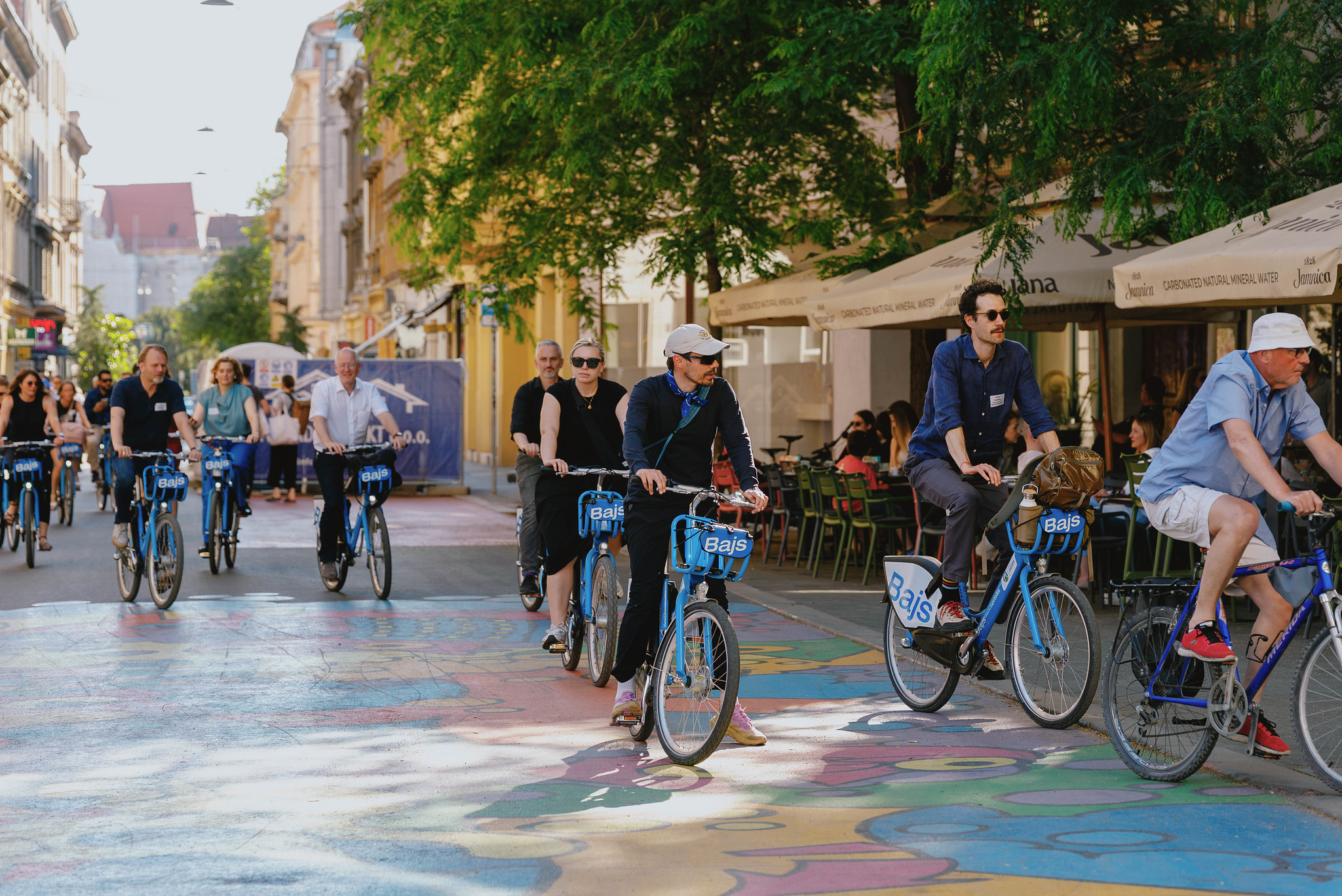
Leadership Summit attendees using Bajs bikes during cycling site visit — Credit: Hrvoje Baudoin
The implementation challenge
The discussions during the Summit highlighted a key reality facing cities across Europe, which is the gap between planning and implementation.Many European cities and regions already know what they want their mobility systems to look like and how to plan for them, but translating these strategies into sustained delivery depends on a set of conditions that are often less visible than infrastructure or technology, but ultimately more decisive.
One is institutional capacity. Delivering mobility transitions requires coordination across multiple departments and governance levels, including transport authorities, urban planners, political leadership, and financial decision-makers. Where responsibilities are fragmented, implementation slows down or becomes limited to isolated pilots.
Another is continuity. Full mobility transformation rarely fits within electoral cycles. Cities must therefore maintain strategic direction over time while navigating political change, budget constraints, and shifting public priorities. Without continuity, even well-designed plans risk losing momentum.
A third challenge is scaling what works. Many cities have no shortage of pilot projects, demonstrations, and experimental initiatives. The difficulty lies in embedding successful approaches into standard practice, either through procurement systems, planning rules, and administrative routines, so that they become the default rather than the exception.
Governing mobility, managing complexity
The inaugural episode of the POLIS podcast featuring Zagreb Mayor Tomislav Tomašević offered a closer look at what this means in a city context, focusing on the realities of governing a modern European capital and its complexities. Rather than describing mobility as a standalone challenge, Tomašević presented it as one element of a much wider transformation for the city.
In practice, every major mobility decision in Zagreb, from tram infrastructure to bus network changes or cycling investments, involves trade-offs. These decisions affect how public space is used and how this is received by residents. This makes mobility one of the most politically sensitive areas of urban governance, but also one of the most visible. Changes are immediate, tangible, and often disruptive in the short term, even when they deliver long-term benefits.
This means that for today's leaders, mobility has become one of the most visible expressions of how well cities manage competing priorities. Success depends not only on delivering infrastructure, but also on coordinating across departments, securing long-term investment, and maintaining public trust throughout often lengthy processes of change.
Looking ahead
There is no single blueprint for Europe’s mobility transition. Cities and regions differ too widely in geography, governance, political context, and local priorities for one model to apply everywhere.
What emerged from the Summit was instead a shared recognition that successful mobility transitions depend on more than infrastructure projects or technological innovation. They require coordinating complex change, sustaining direction over time, and embedding innovation into everyday administrative practice.
At a time when public debate often focuses on what comes next, the Summit served as a reminder that progress is ultimately measured not by ideas alone, but by their implementation. The cities that will lead the mobility transition are not necessarily those with the most ambitious visions, but those with the strongest capacity to deliver them consistently, under real conditions, for their citizens.
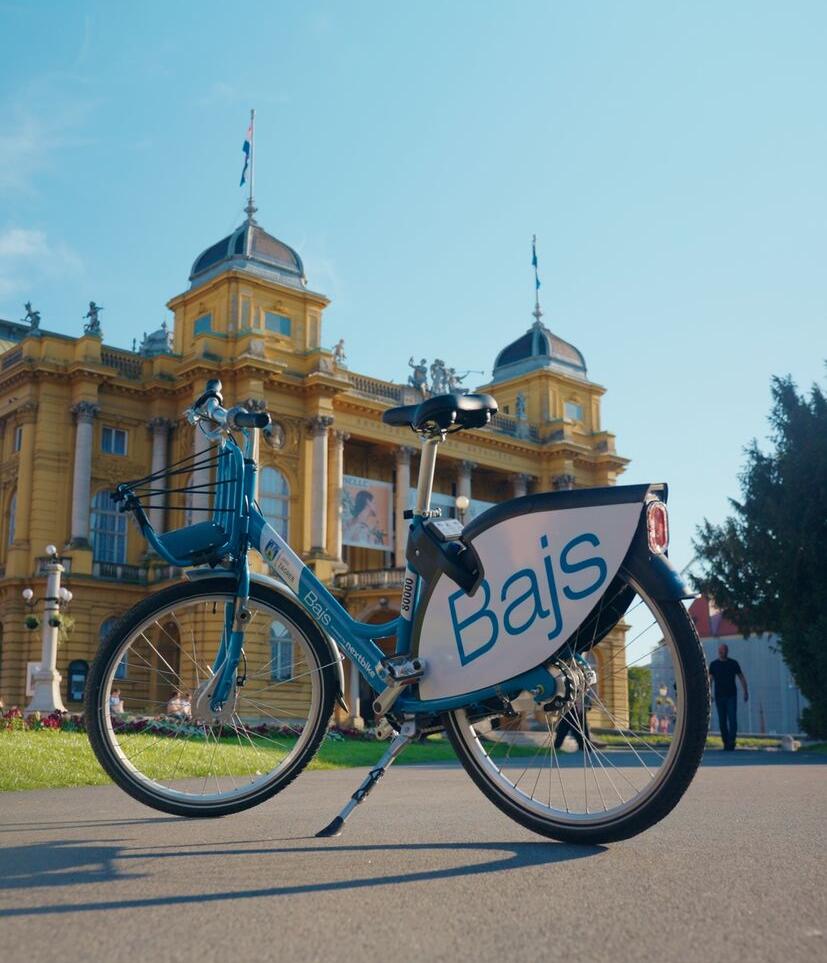
Bajs bike in Zagreb, Croatia — Credit: City of Zagreb
Click here to read the article in its original format.
About the author
Carlotta Inserra, Membership & Communications Manager, POLIS. Inserra is the main point of contact for the network’s expanding membership, where she oversees and supports members’ engagement and promotes POLIS’ Working Group activities. She also contributes to the Interreg SMALL project, where she channels her commitment to inclusive and accessible sustainable mobility for all.
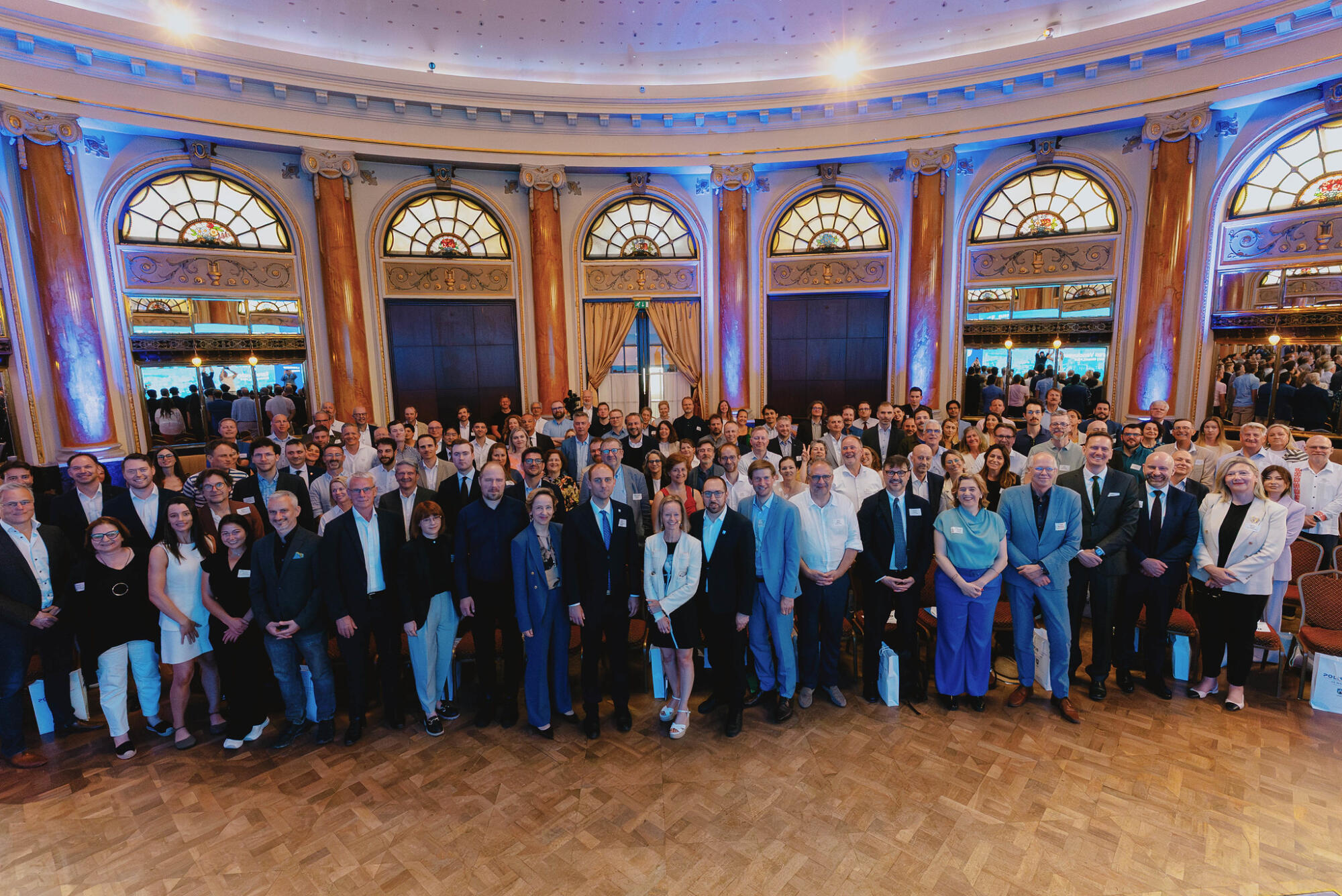 Credit: Hrvoje Baudoin