
Happy—Reluctantly
Hasselt’s historic city centre is being transformed into a space that is accessible, safe, and attractive for everyone. With low-traffic zones, green corridors, and shared streets, the city balances mobility, commerce, and leisure, showing how thoughtful design and inclusive planning can create a vibrant, people-centred urban heart.
Interview with Maarten De Schepper, elaborated by Alessia Giorgiutti.
POLIS: The ‘Accessible City Centre’ project reimagines Hasselt’s historic centre by balancing accessibility, shared space, and aesthetics. How did the city define its objectives, and what trade-offs were considered between mobility, commercial activity, and public space?
 Maarten De Schepper: With the Accessible City Centre project, our ambition was to make Hasselt’s heart accessible for everyone, including people with reduced mobility. Our vision is simple: the right mode of transport in the right place.
We wanted to reconcile ‘low-car traffic’ with ‘accessible for everyone’. Pedestrians and cyclists take a more prominent role in our new mobility plan, but there is still room for motorised vehicles. It is not about banning cars, but about balance—creating a city that remains lively, reachable, and comfortable for all.
Smart technologies support this goal, but so does strong participation. We made sure that everyone affected had a voice in shaping the plan.
POLIS: How were stakeholders—particularly residents, businesses, and people with reduced mobility—involved in shaping the plan?
De Schepper: The whole project was developed during the COVID-19 period, so we had to be creative in how we involved people. We worked with a wide range of stakeholders—people with reduced mobility, seniors, healthcare professionals, shopkeepers, and residents. Because we could not meet in large groups, I did many individual meetings and even organised what we called ‘1.5-metre walks’ in small groups through the city.
We also launched an online participation tool that 1,523 people completed. In total, we received more than 600 suggestions on how to design and lay out the city centre. Three clear themes emerged: better comfort for cyclists and pedestrians, more greenery, and sufficient parking availability.
All that input formed the foundation of our sustainable accessibility plan, which aims to meet both current and future needs.
POLIS: The plan is based on four core principles. Could you explain these in more detail?
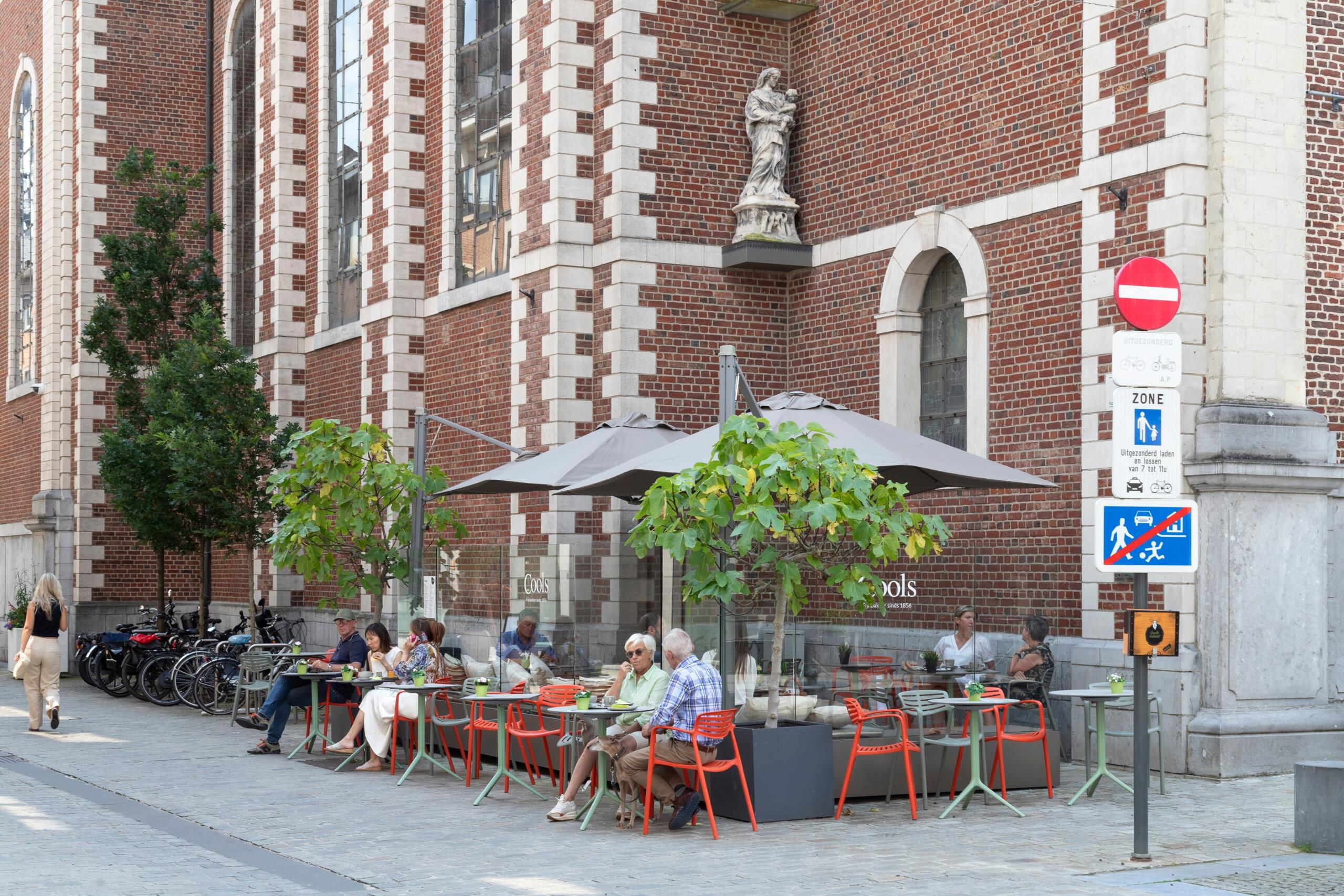
Hasselt’s pedestrian zone, Wolf-photography, Shutterstock
De Schepper: Yes, the plan rests on four main pillars that together define our new approach to accessibility. First, we need better connections between the city centre and the surrounding areas.
Our historic core is surrounded by a ring road, which we have transformed into a green boulevard that allows smooth movement from one side of the city to the other. At the same time, we wanted to break through the barrier the ring creates, so we designed comfortable, pedestrian-friendly openings with trees and greenery—quiet walking routes that lead straight into the city.
Through-traffic across the city centre is now a thing of the past. We have divided the area into four zones—what we call our Four-Leaf Clover principle—so that if you enter the centre by car through one quadrant, you must leave through the same one. You can no longer drive across the centre. This eliminates cut-through traffic and discourages loop driving, freeing up space for cyclists and pedestrians.
The centre itself is a shared space for everyone, and that means mutual respect is essential. Cars are still welcome, but their speed has to match that of cyclists and pedestrians. The same goes for e-scooters: they need to adapt to the most vulnerable road users. To make this work, we have introduced four traffic zones: a pedestrian zone, a low-traffic zone, school streets, and a low-speed zone.
Finally, accessibility should also look good. Mobility improvements give us the opportunity to add greenery and enhance the city’s appearance. By redesigning streets façade to façade, we are creating high-quality, barrier-free environments that are both functional and attractive, and we plan to extend this approach to other streets across the centre.
POLIS: How does the plan specifically address accessibility for people with reduced mobility?
De Schepper: Accessibility was at the core from the beginning. We identified eight strategic access points that ensure all main destinations in the car-free zones are within a five-to-ten-minute walk, based on a walking speed of one metre per second.
We assessed each route leading to and from those points based on walking surface, obstacles, signage, crossing design, parking layout, and street furniture. Every route received both a technical score and feedback from our test group of people with reduced mobility.
We also appointed an accessibility coach who visits residents and entrepreneurs personally to help them deal with accessibility or delivery issues. That one-to-one support makes a big difference.
POLIS: How did the city manage adaptation among residents and drivers, especially during such a major transition?
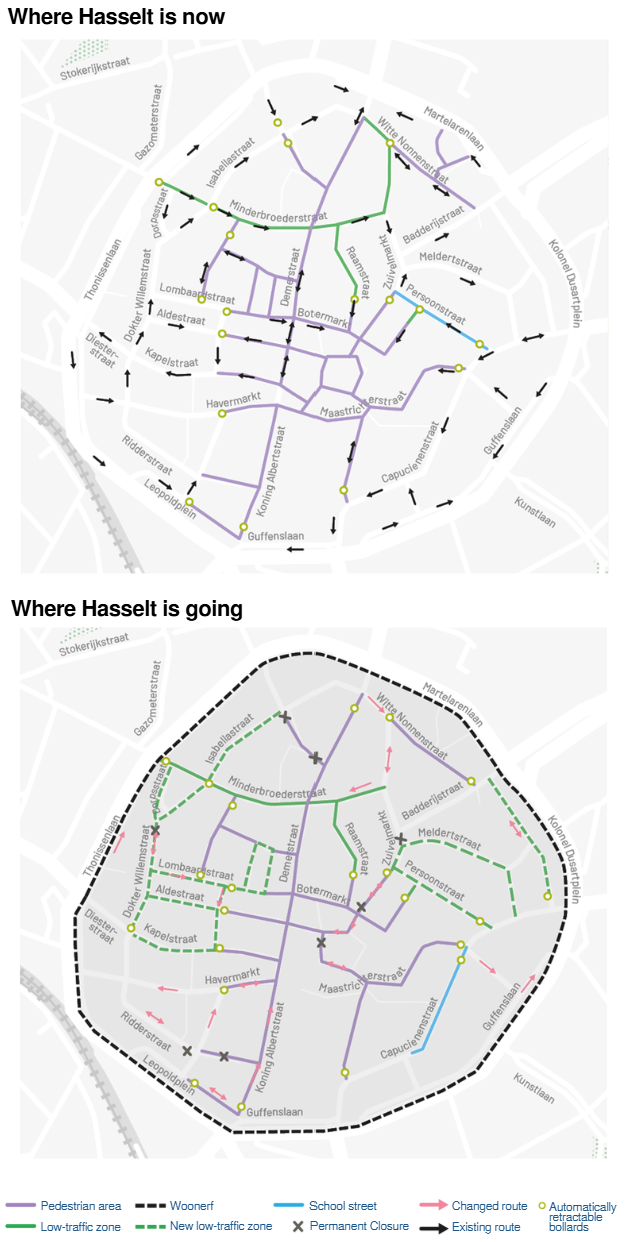
Present and future of Hasselt’s city centre, City of Hasselt
De Schepper: Communication is everything: it is even more important than the content itself. In our case, the communication team was larger than the technical team.
We prepared a general information brochure, a dedicated website, and several short videos to explain the project clearly. We also made targeted brochures for specific audiences—for example, shopkeepers or healthcare providers—so that everyone got the information relevant to them. And the accessibility coach I mentioned earlier also played a huge role in helping people adapt. They visited citizens and entrepreneurs on-site and provided practical assistance with the transition.
POLIS: How does Hasselt ensure these new green and low-traffic spaces remain both safe and pleasant over time?
De Schepper: Safety and comfort are two sides of the same coin. Shared spaces only work when users respect each other. By designing continuous pedestrian routes, limiting speed, and adding greenery, we create an environment that feels calm, safe, and pleasant.
We are also constantly evaluating—getting feedback from residents, businesses, and especially people with reduced mobility—to fine-tune details and improve as we go.
POLIS: Looking back on the implementation process, including challenges during COVID and stakeholder engagement, what key lessons would you share with other cities?
De Schepper: Not everything went perfectly, but overall we implemented most of the measures without major protest. A few lessons stand out for me:
- Bring different interest groups together and let them discuss their priorities.
- Be honest—if you don’t know something or aren’t sure about an impact, say so. It makes you more human and trustworthy.
- Be prepared: anticipate as much as possible, ideally with objective information, but also consider emotions.
- Go step by step, and choose your battles wisely. Make a list of what’s necessary versus what’s nice to have.
And one more thing: as a mobility expert, you make people happy, and sometimes... you do so against their will. That is just the nature of the job.
POLIS: What comes next for Hasselt’s mobility landscape?
De Schepper: We are not there yet, but step by step we are realising our ambitions. The long-term goal is to redesign all streets from façade to façade—creating more space for greenery, outdoor seating, and accessible routes.
Our aim is to give every road user, from drivers to pedestrians, and every group—shopkeepers, suppliers, residents, doctors—a clear and comfortable place in the city. Bit by bit, we are building a more beautiful, more inclusive, and more accessible Hasselt.
Click here to read the article in its original format.
About the contributors:
Interviewee: Maarten De Schepper, Team Coordinator Sustainable Mobility and Modal Shift, City of Hasselt. De Schepper has been working in mobility in Hasselt for nearly 15 years. He currently manages projects for the city’s mobility department, focusing on the city centre, and leads the team dedicated to sustainable mobility and promoting modal shift.
Interviewer: Alessia Giorgiutti, Communications & Membership Lead & Co-Coordinator Just Transition, POLIS. Giorgiutti coordinates POLIS' corporate communications and magazine and has been involved in several EU-funded projects as a Communications Manager. She currently supports other managers and officers on tasks related to content production and communication for their projects. Her work focuses on making accessible and inclusive content about transport, as well as highlighting the experiences of marginalised users.
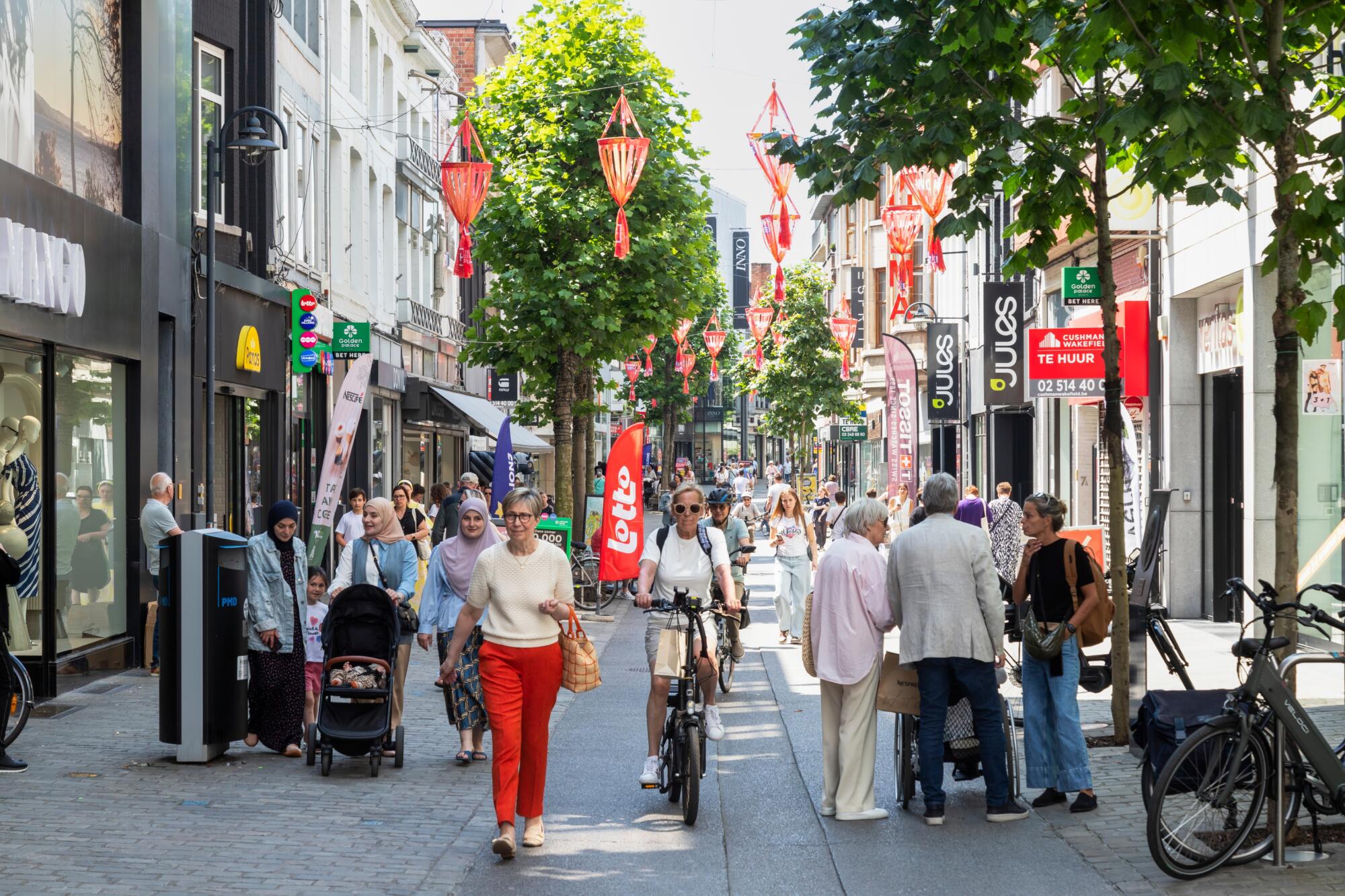 Wolf-photography, Shutterstock