
Current Of Change
Europe aims to become climate-neutral by 2050. For this, electrifying road transport is essential, but requires public authorities to adopt integrated planning strategies, aligning electromobility and charging with their local sustainable mobility, parking, and energy policies. How are cities like Madrid overcoming this challenge?
Interview with María José Aparicio Sanchiz, elaborated by Pedro Gomes.
POLIS: Madrid is committed to becoming climate-neutral by 2030. Your city also has ambitious air quality policies in place, such as the Low Emission Zones (LEZs). Were these the driving factors that stirred your city towards clean and zero-emission mobility? Were there other factors?
 María José Aparicio Sanchiz: In Madrid, the commitment to climate neutrality by 2030 and air quality policies have clearly been major drivers, but they are not the only ones. The city's strategy is framed by the Madrid 360 Environmental Sustainability Strategy and the Sustainable Mobility Plan Madrid 360, which set a clear direction: reducing emissions, implementing LEZs across the municipality, and prioritising public transport and active mobility.
Other factors are also important: a strong public demand for cleaner air, a need to maintain economic competitiveness, the ongoing renewal of logistics and municipal service fleets, and the opportunity to channel European funding into charging infrastructure and transport modernisation. The transition to electric mobility is not only about climate policy, but also about improving urban quality of life, supporting economic transformation, and fostering technological innovation.
POLIS: What strategic actions is your city taking to accelerate the electromobility transition?
MJAS: Madrid is accelerating the transition through a combination of planning, regulation, and infrastructure deployment. First, the Madrid 360 Sustainable Mobility Plan integrates electrification measures with demand management and the prioritisation of public transport.
Second, the expansion of the LEZs progressively restricts the most polluting vehicles and sends a clear signal to the market. Third, the city is electrifying public fleets and urban services, including city buses, municipal fleets, street-cleaning, and waste-collection services, while also expanding shared mobility systems. Fourth, Madrid is deploying public charging points, facilitating private investment, and integrating charging infrastructure into park-and-ride facilities and multimodal hubs, coordinating with the electricity grid to avoid bottlenecks.
In addition, the city is developing the Madrid 360 Mobility Hubs, which bring together charging services, smart parking, and shared mobility solutions to enable zero-emission travel and improve intermodality across the city. Finally, to address urban logistics, Madrid is improving loading and unloading areas and promoting last-mile distribution through the use of light electric vehicles and micrologistics solutions.
POLIS: How hard is it to obtain long-term political commitment for this?
MJAS: Securing it is always challenging because mobility transitions extend beyond electoral cycles. In Madrid, we seek to ensure continuity through strategic instruments such as the Madrid 360 Environmental Sustainability Strategy and the Madrid 360 Sustainable Mobility Plan, developed through public consultation and contributions from political groups, businesses, and civil society.
The key is to build consensus around shared objectives, such as environmental protection, public health, economic competitiveness, and road safety, rather than around political labels. We see electric mobility as one element within a broader mobility ecosystem, where the priority remains reducing reliance on private cars while strengthening public transport, cycling, and walking. Within that framework, the electrification of public fleets is particularly strategic.
Evidence also plays an important role. Today, Madrid records the lowest NO₂ levels in its recent history, which helps sustain political commitment because citizens can see the tangible results of these policies.
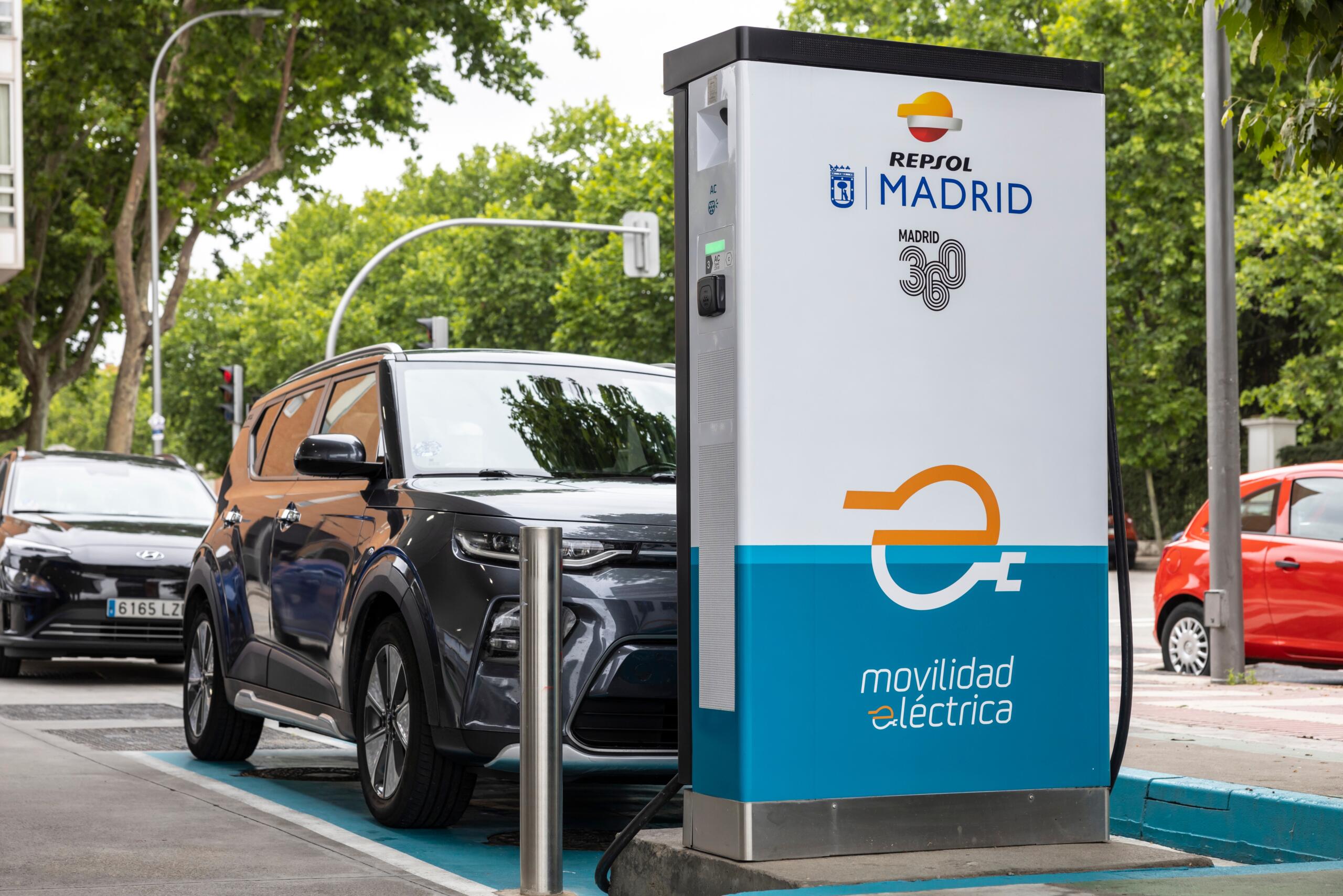
Electric charging station at service station in Madrid, Spain — Credit: Repsol, Shutterstock
POLIS: What policies is Madrid implementing to ensure the mobility transition is socially fair and does not increase inequalities?
MJAS: In Madrid, we are aware that the transition could generate inequalities if it is not managed with careful attention to the needs of the entire population. For this reason, LEZs are accompanied by a gradual implementation process, support for professional fleets, incentives for public transport use, and alternatives such as the bicycle-sharing system, car-sharing services, and park-and-ride facilities connected to the public transport network.
At the local level, we act in three ways:
- Design policies in collaboration with stakeholders and affected sectors to ensure they respond to real needs.
- Ensure that outer districts benefit from high-quality public transport services and adequate charging infrastructure.
- Target financial support to those who need it most, including small businesses, self-employed workers, and vulnerable households.
In addition, Madrid offers grants for low- and zero-emission vehicles and subsidies for installing home and residential charging points, helping households participate without significant financial barriers.
These measures are complemented by free bus lines within the Special Protection Low Emission Zone (ZBEDEP) Centro, providing accessible alternatives to private car use. Finally, the expansion of BiciMAD across all districts further improves access to sustainable mobility options.
POLIS: What progress has Madrid made in improving air quality and advancing sustainable mobility?
MJAS: There are several noteworthy achievements. First, there has been a clear and measurable improvement in air quality. In 2019, Madrid was close to facing European Union sanctions due to repeated exceedances of NO₂ limits. Today, the city has achieved four consecutive years of full compliance with the European Ambient Air Quality (AAQ) Directive and records the lowest NO₂ levels since monitoring began.
This progress results from a combination of measures, including LEZs, fleet renewal, and stronger public transport. Municipal fleets, taxis, and ride-hailing services have played a key role. The EMT Madrid bus fleet has made the city the first European capital to fully eliminate diesel from its public buses, alongside growing adoption of private electric cars, delivery vans, motorcycles, and other light vehicles.
The city has also established a coherent strategic framework through the Madrid 360 Environmental Sustainability Strategy and the Madrid 360 Sustainable Mobility Plan, ensuring consistency across policies. Finally, these changes reflect a broader cultural shift, as citizens increasingly recognise sustainable mobility as essential for public health, competitiveness, and quality of life.
Madrid demonstrates that environmental sustainability can drive economic sustainability, with clean mobility investments supporting urban modernisation and long-term growth.
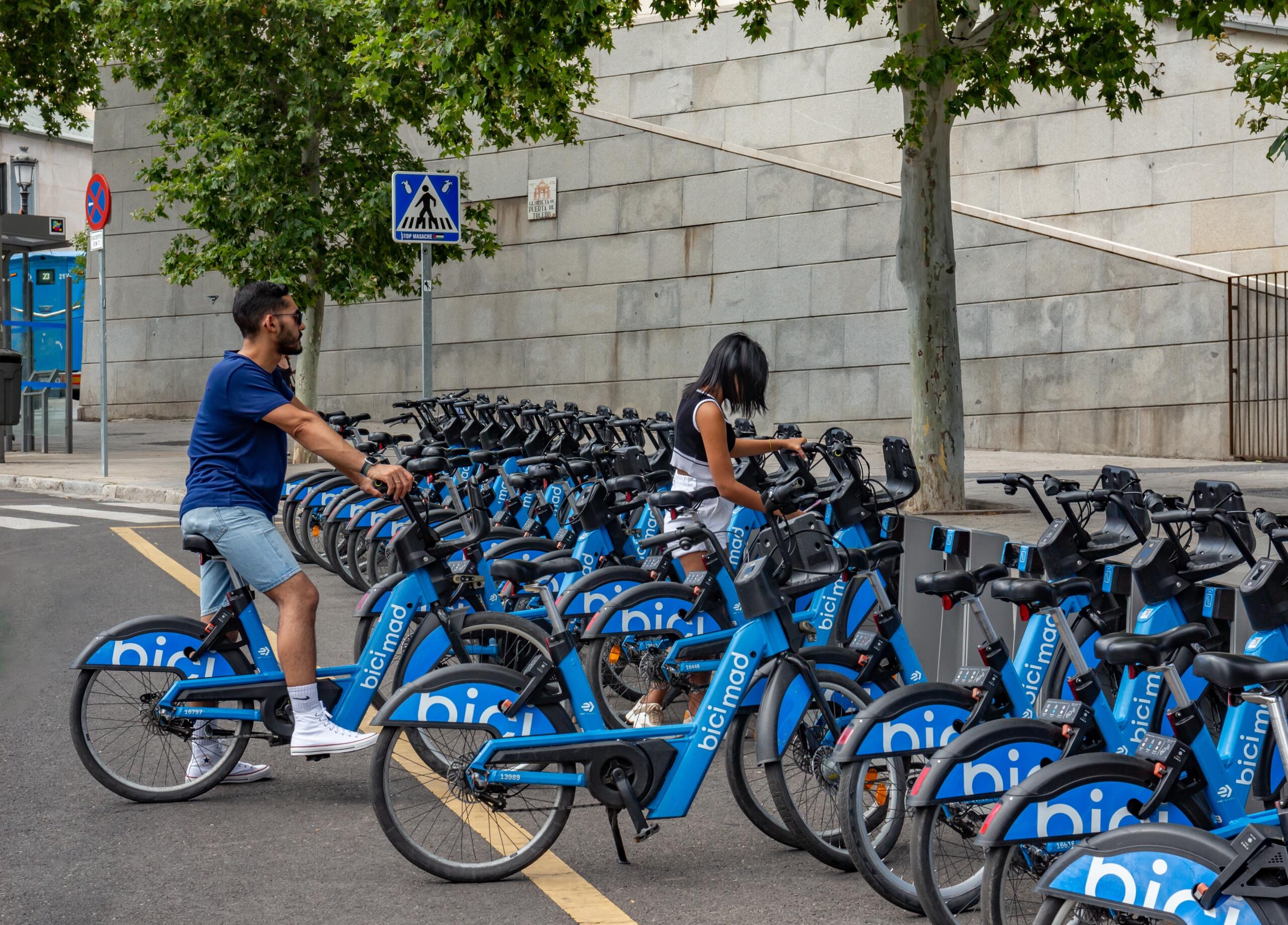
BiciMAD electric rental bikes — Credit: EduardoRM, Shutterstock
Click here to read the article in its original format.
About the contributors:
Interviewee: María José Aparicio Sanchiz, General Mobility Coordinator, Madrid City Council. Aparicio Sanchiz is a Law graduate and holds an MA in Accessibility and Smart City. She held various positions in the Directorate General of Traffic: Head of the Drivers Area, Deputy Director of Road Training, and Deputy Director General of Training and Road Education.
Interviewer: Pedro Gomes, Clean Vehicles &Air Quality Cluster Lead, POLIS. Gomes holds an MSc in Environmental Management Systems and a BSc in Environmental Engineering. He supports POLIS members with policies such as AFIR, EPBD, CO₂ standards, the Clean Vehicles Directive, and the Ambient Air Quality Directive, while managing several EU-funded projects. Previously, he worked at NOVA University and AGENEAL, the Local Energy Management Agency of Almada.
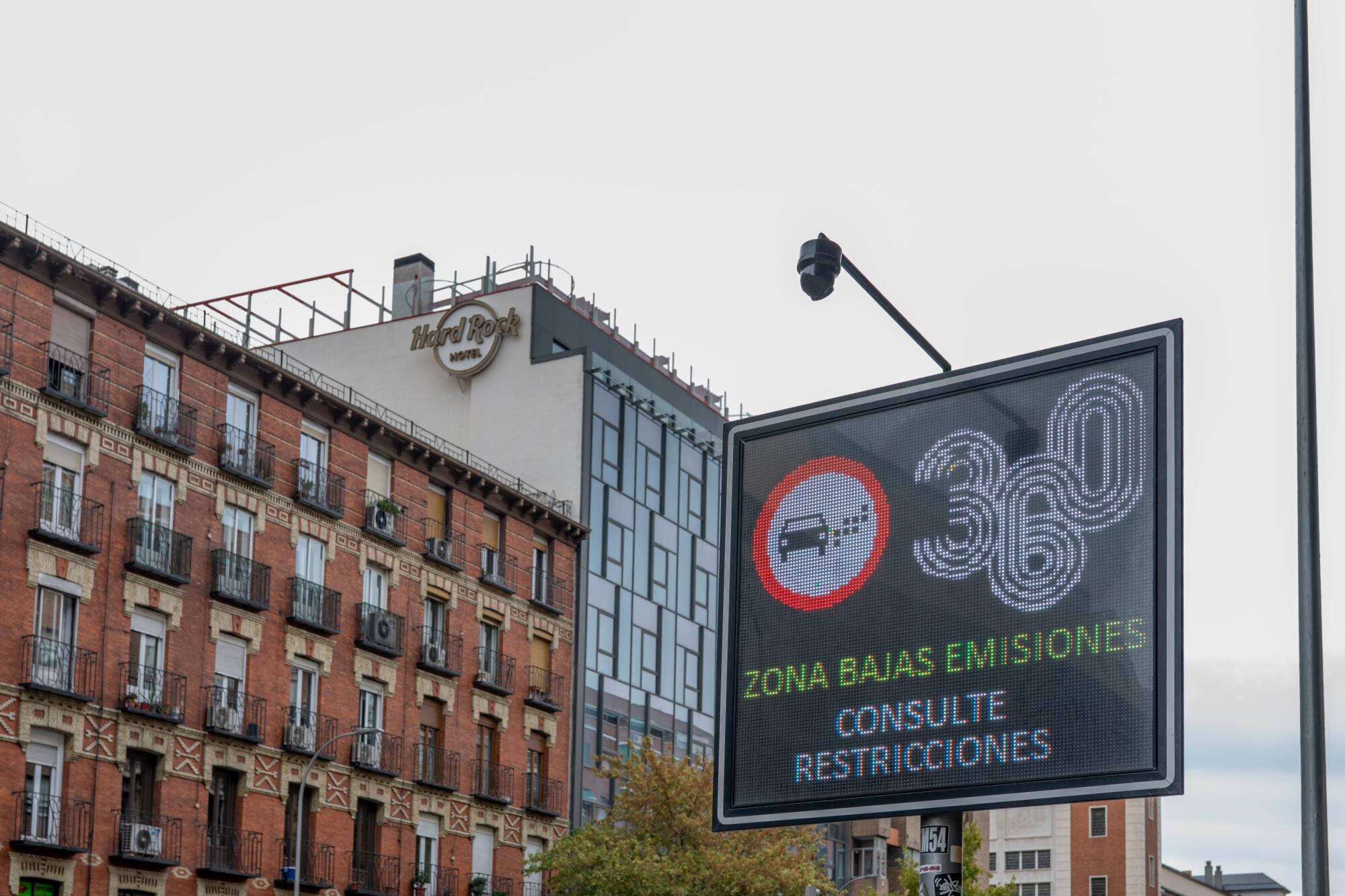 Digital Variable Message Sign indicating Low Emission Zone or Zona de Bajas Emisiones (ZBE) in Madrid, Spain — Credit: Kristof Bellens, Shutterstock