
Back to the (two wheels) Future
In the UK, over a third of those aged 55-64 and almost 50% of 65-74's do not get the recommended amount of exercise they need each week. How can we get elderly people moving? SUSTRANS, The Centre for Better Ageing and Greater Manchester Moving unite to find the solution.
Active travel – making day-to-day journeys by walking or cycling – is critical for all travellers, no matter their age. Supporting older travellers is no easy task, however, help is at hand.
In the UK, the Centre for Ageing Better, a charitable foundation funded by The National Lottery Community Fund and part of the government’s What Works Network, is working with POLIS member Sustrans, the charity making it easier for people to walk and cycle, to understand the role that active travel can play in supporting healthy ageing. Together, the coalition has been looking at the needs of older travellers, and how best cities can support them.
According to the new report, 'Best foot forward', too many people in their 50s and 60s will remain physically inactive unless neighbourhoods are redesigned to encourage walking and cycling. The report, which looked at the barriers people in this age group face to walking and cycling, reveals that action is needed from national and local government, service providers and health.
Data talks

Older Sikh Man riding a bike - Credits: Peter Kindersley for the Centre for Ageing Better
In the UK, the car is the dominant form of transport, especially for older travellers. Of all trips made by people aged 50-69 in England in 2020, 64-66% were in a car (either as the driver or as a passenger). When it comes to walking, the proportion of people who stroll for 20 minutes or more at least three times a week is 67% in the 50-59-year age group and 60% in the 60–69-year age group.
UK cities, like their counterparts across the channel, have been on a mission to replace car trips with active travel. From Glasglow’s Strategic Plan for Cycling, to Newcastle’s cycleway projects, cities and city regions have been pioneering pedal power. Over the last few years, this has been highly successful with cycling up to 60% across the country. However, attention to older active travellers is required if cycling is to be accessible for all citizens. With cycling accounting for just 3% of all trips by people aged 50-59, action is needed fast!
No quick fixes
The ‘Best Foot Forward’ report revealed the specific needs of the older generation must be addressed to encourage cycling. People aged 50-70 years do not all have the same capabilities, opportunities and motivations, and behaviour change interventions aimed at this group cannot be 'one size fits all'.
While there are a range of health conditions that limit mobility, they do not all rule out active travel, therefore messaging on active travel in people aged 50-70 should not exclude people because of limited mobility. Furthermore, race, age, gender, and socio-economic status intersect to influence how people in this age group perceive active travel.
Policy responses – making active travel the first choice
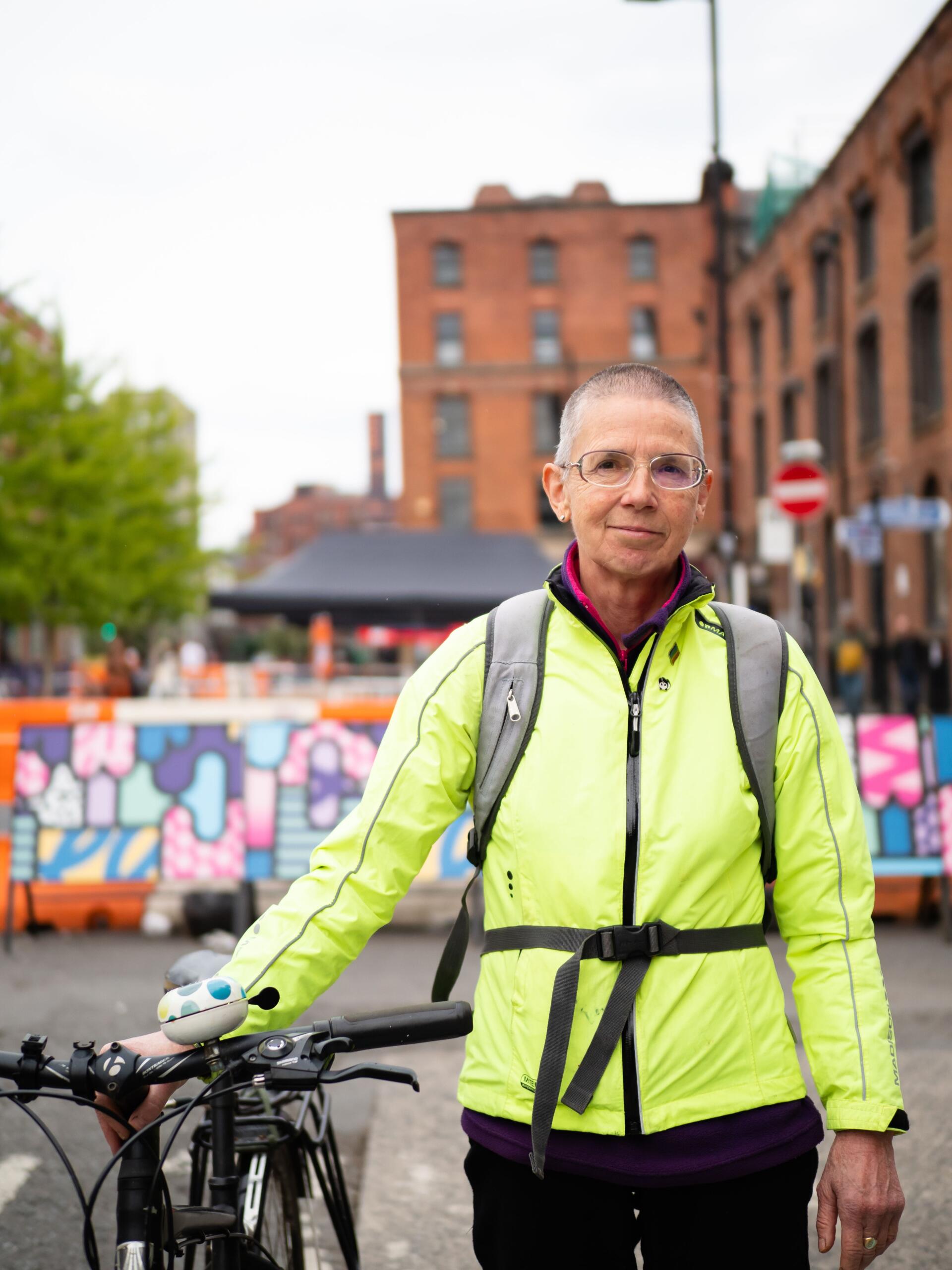
A portrait of Lizzie, a cyclist, during Pride 2021 - Credits: Gemma Taylor for the Centre for Ageing Better
Achieving a future where active travel is the best choice for the older generation requires targeted and granular interventions, and policy makers and service providers should adopt an individualised approach when promoting active travel to this cohort. The report suggested that:
- Policymakers need to capitalise on the interest in walking for leisure amongst this age group to encourage extension to walking for purposeful travel. This may require a better understanding of the dynamic between leisure walking and purposeful travel.
- Proximity to services can be, to a certain extent, a barrier to active travel. That is to say, people sometimes live simply too far away from shops and other services for active travel to be a realistic option, and those shops that people can reach also have to meet their needs and preferences, otherwise people will simply drive further afield to others that they like better. Neighbourhood design is therefore an enabler of active travel.
- Even though cycling and walking are less-intensive forms of exercise than some of those in mid-life may have engaged with when they were younger, they nevertheless bring major health benefits. This means that it may be possible to adapt promotional messages to appeal to groups transitioning from more intensive activity.
- There are greater barriers to cycling than walking with a common perception that cycling requires a greater level of physical fitness. Many older people may not have cycled for a long time or may not own a bike.
- Safe infrastructure is crucial in enabling more people in this age group to cycle. The provision of good quality and adequately segregated and maintained cycle paths is the single biggest enabler of cycling in people in this age group (especially women), as it is in other age groups.
- There is a lack of understanding of the contribution e-bikes and adapted bikes might make to a healthy lifestyle. Indicators suggest that the potential is huge, and there is a need to understand how to realise that potential.
- Changes in lifestyles and active travel habits brought about by lockdown provides policymakers with an opportunity to push at an open door. Policies should recognise this and may be designed to address ‘pandemic-enforced’ changes in habits.
The future is on two wheels!
Spurred by impending climate targets and COVID-19 conditions, cities across Europe are embracing active travel. However, as cycling superhighways and bike sharing hubs spring up, ensuring these work for older users is critical. This demands further research that identifies the needs and complex mobility requirements of older generations.
The future looks bright. According to the National Travel Survey, the average annual number of trips by bike taken by 50-59-year-old men increased from 18 in 2019 to 37 in 2020. While the historical data suggests that there is a lot of work to do to improve uptake of cycling as a mode of active transport, the shift seen in the last year shows progress is possible – the future is on two wheels, especially if the older generations are joining in!
____________________
Best Foot Forward, the Centre for Ageing Better’s report on active travel and better ageing
The study delved into what older cyclists and walkers need and how these requirements can best be accommodated, reviewing published literature on attitudes to active travel and the role of the built environment, and conducting qualitative interviews with a diverse group of people in their 50s and 60s.
For more, read here.
____________________
Sustrans
Sustrans makes smarter travel choices possible, desirable, and inevitable. They are a leading United Kingdom charity enabling people to travel by foot, bike, and public transport for more of the journeys that are made every day. They work with families, communities, policymakers, and partner organisations across the four nations of the UK so that people are able to choose healthier, cleaner and cheaper ways of travelling, with better places and spaces to move through and live in. Sustrans collaborates with Polis member authorities in the UK on practical measures to promote healthy and sustainable travel choice, and with the Polis Brussels team on input to policy.
Check their POLIS profile here.
____________________
Manchester makes a move
POLIS member Manchester is one city taking great strides to expand active travel for older citizens. Councillor Eve Holt, Strategic Director for GM Moving (Greater Manchester’s movement for movement) and GreaterSport (Greater Manchester’s Active Partnership), explained how the city is achieving this.
'Supporting more people to participate in active travel is a core priority for Greater Manchester. We recognise that this is essential to the physical and mental wellbeing of those living in Greater Manchester to reducing the impact we are having on our planet and to creating better places to live, work and play. We want the city region to be a great place to grow up- as well as grow old!'
As levels of physical activity and of active travel drop off rapidly with age, supporting older people to travel in an active way is beneficial for their health and also boosts their independence and their social and economic inclusion.
'Increasing active travel for over 50s in Greater Manchester can make a real contribution to addressing the health inequalities we have seen so starkly exposed and exacerbated by the COVID-19 pandemic. The potential for change is massive.'
What is GM doing?
Recognising the need and opportunity to do more, in June 2020 GM Moving convened an Active Travel and Over 50s Steering Group. The group brought together a number of GM partners including GreaterSport, Transport for Greater Manchester, The Greater Manchester Ageing Hub, The Centre for Ageing Better, and The University of Manchester.
The purpose of the group was to consider opportunities to increase levels of participation in active travel among people in mid and later life, to pull together the existing evidence base, to identify key gaps and barriers and understand what more could be done.
The Steering Group followed three main steps:
- Building on the current strategic architecture in GM, including the new Streets for All Strategy and Interim Active Travel Design Guide and the positive momentum and focus on active travel that emerged during the COVID-19 pandemic.
- Understanding over 50s in all their diversity and intersecting demographic, spatial and socio-economic inequalities and prejudices they experience.
- Taking a ‘whole-system’ approach, drawing on the learning of GM Moving and the GM Ageing Hub, that acknowledges the disparate and multiple nature of factors that influence peoples’ active travel habits, as captured in this GM Moving animation on working in complex systems
____________________
About the authors
Andy Cope was Director of Evidence and Insight at Sustrans.
Aideen Young is Senior Evidence Manager at the Centre for Ageing Better.
Eve Holt was Strategic Director at Greater Manchester Moving.
Research was undertaken by Dr Nick Cavill, Prof Adrian Davis, CFE Research and David Corner.
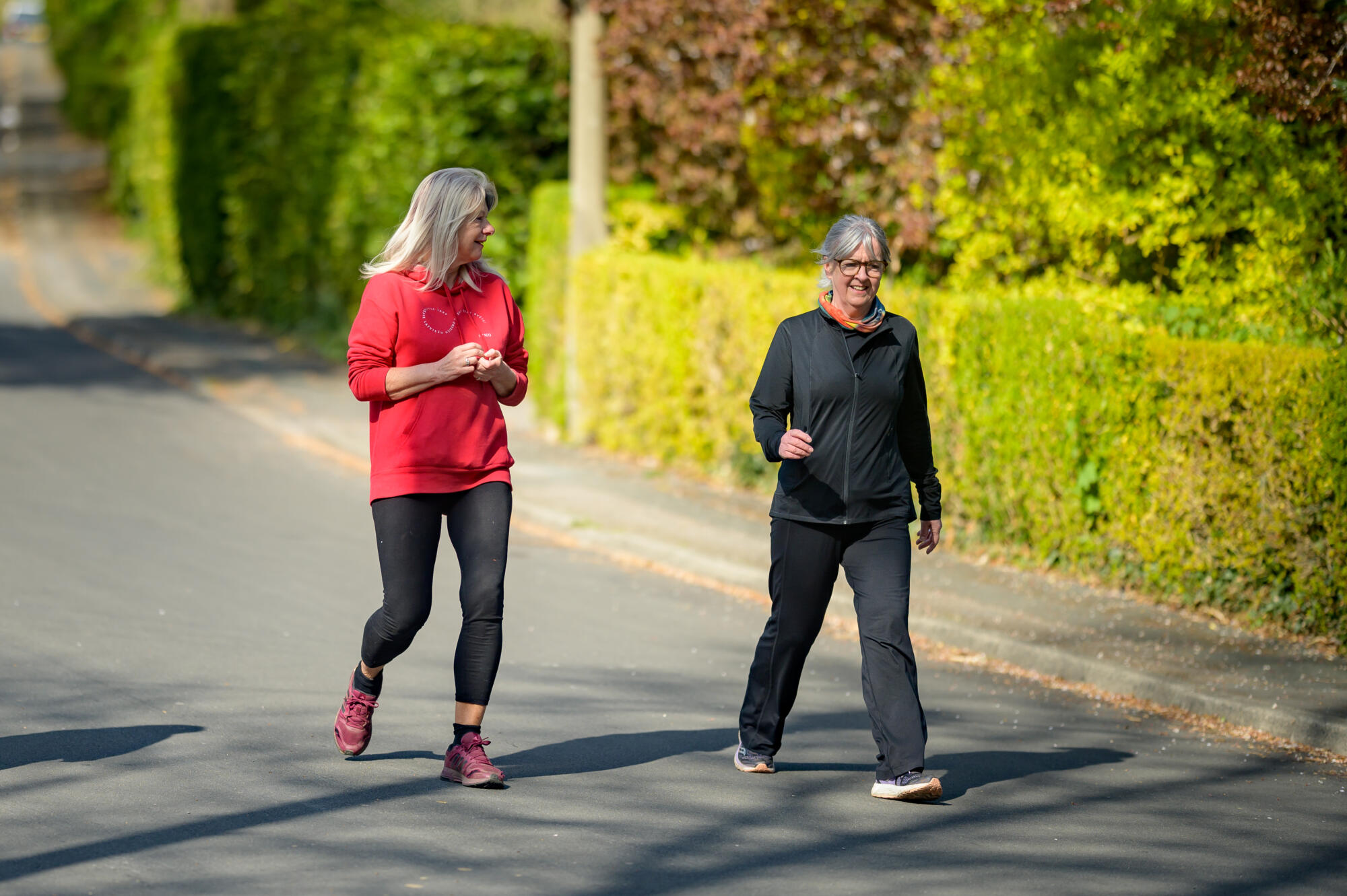 Credits: David Tett for the Centre for Ageing Better