
Ageing Gracefully, Moving Freely
Japan is redefining senior mobility. From shared electric vehicles to redesigned bus services, small and medium-sized towns are combining technology, health promotion, and community collaboration to keep older residents active, independent, and connected. Explore how the Smart Mobility Platform is transforming mobility for ageing populations.
Japan's population is ageing faster than that of any other developed country. While this may be less evident in large metropolises such as Tokyo, small and medium-sized cities and rural areas face a much harder reality: a significant portion of residents are over 65, and ensuring everyday mobility to support seniors' daily lives and needs has become a serious challenge.
As people age, their physical abilities decline, making driving difficult and eventually impossible. At the same time, these areas are heavily car-dependent, and low population density makes traditional public transport hard to sustain and provide. With most Japanese public transport services operated by private companies that have been forced to cease operations, some seniors experience reduced mobility—in the most extreme cases, they may even face 'mobility lock-in', meaning that they can no longer leave their homes. This can seriously contribute to social isolation and affect seniors’ quality of life.
To tackle these challenges, Japan is turning to a mix of traditional methods with innovative approaches. One such response is the ‘Smart Mobility Platform Development’ programme, part of a Cabinet-level initiative called the Strategic Innovation Programme (SIP). The SIP aims to eliminate mobility divides, and by redesigning mobility services and integrating digital technology, the programme is giving seniors the freedom to stay active and connected.
Here are two inspiring examples.
Nishio, Aichi Prefecture
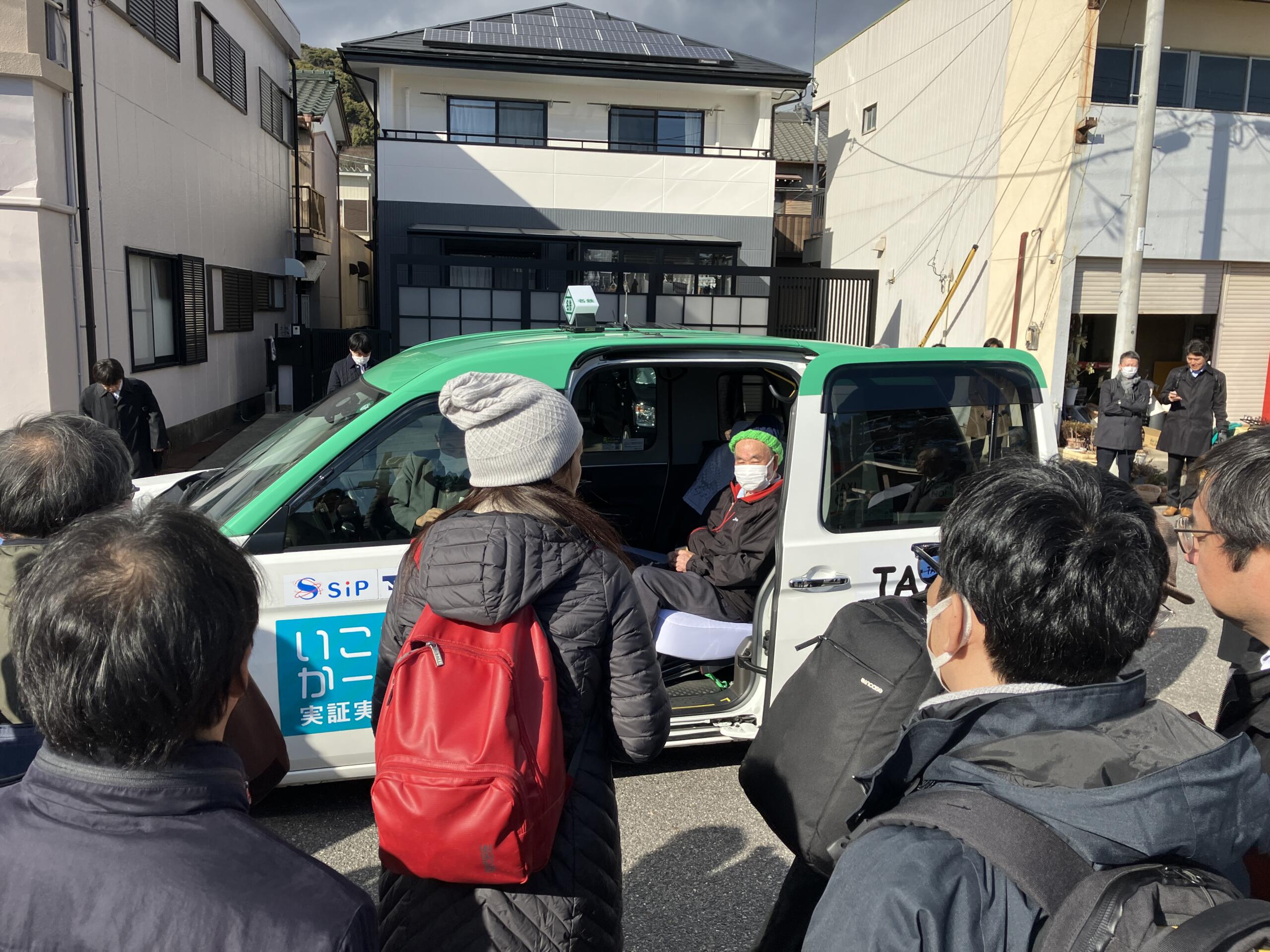
Affordable taxi service with convenient smart payment in Nishio, Aichi Prefecture, Cross-ministerial Strategic Innovation Promotion Program (SIP)
Nishio, Aichi Prefecture, is a typical small, low-density city with a population of around 160,000. After private bus operators withdrew services, the local government began running community buses at public expense. To improve access to bus stops and railway stations along these routes, the city also launched a low-cost taxi service.
However, the service faced challenges: complex registration and fare payment procedures, along with an inefficient dispatch system, hampered its growth and usability. To address these issues, members of the Nagoya University project team worked closely with the community, introducing a more efficient dispatch system and QR code payment options.
These improvements simplified fare payment for users, streamlined operations for drivers, and increased dispatch efficiency. As a result, the number of users skyrocketed, and local residents began taking trips more frequently, alleviating mobility challenges.
Encouraged by these outcomes, the local government is now exploring the expansion of this approach to other areas and different types of services. The operator has also become more cooperative, demonstrating how technology can strengthen collaboration between service providers and municipal authorities.
Niyodogawa, Kochi Prefecture
Niyodogawa is a small, remote community of 4,000 residents nestled in the mountains of Kochi Prefecture. For several years, a team from the Japan Automobile Research Institute has collaborated with the elderly community to promote frailty prevention. Their approach integrates daily health management, wellness activities, and mobility support.
As part of this initiative, the team introduced a community-shared electric vehicle service, the 'Sakura' car, and held discussions with local public transport planners to better meet seniors’ needs. This combination of health and mobility created new and enjoyable opportunities for seniors to go out, promoting both physical activity and social engagement.
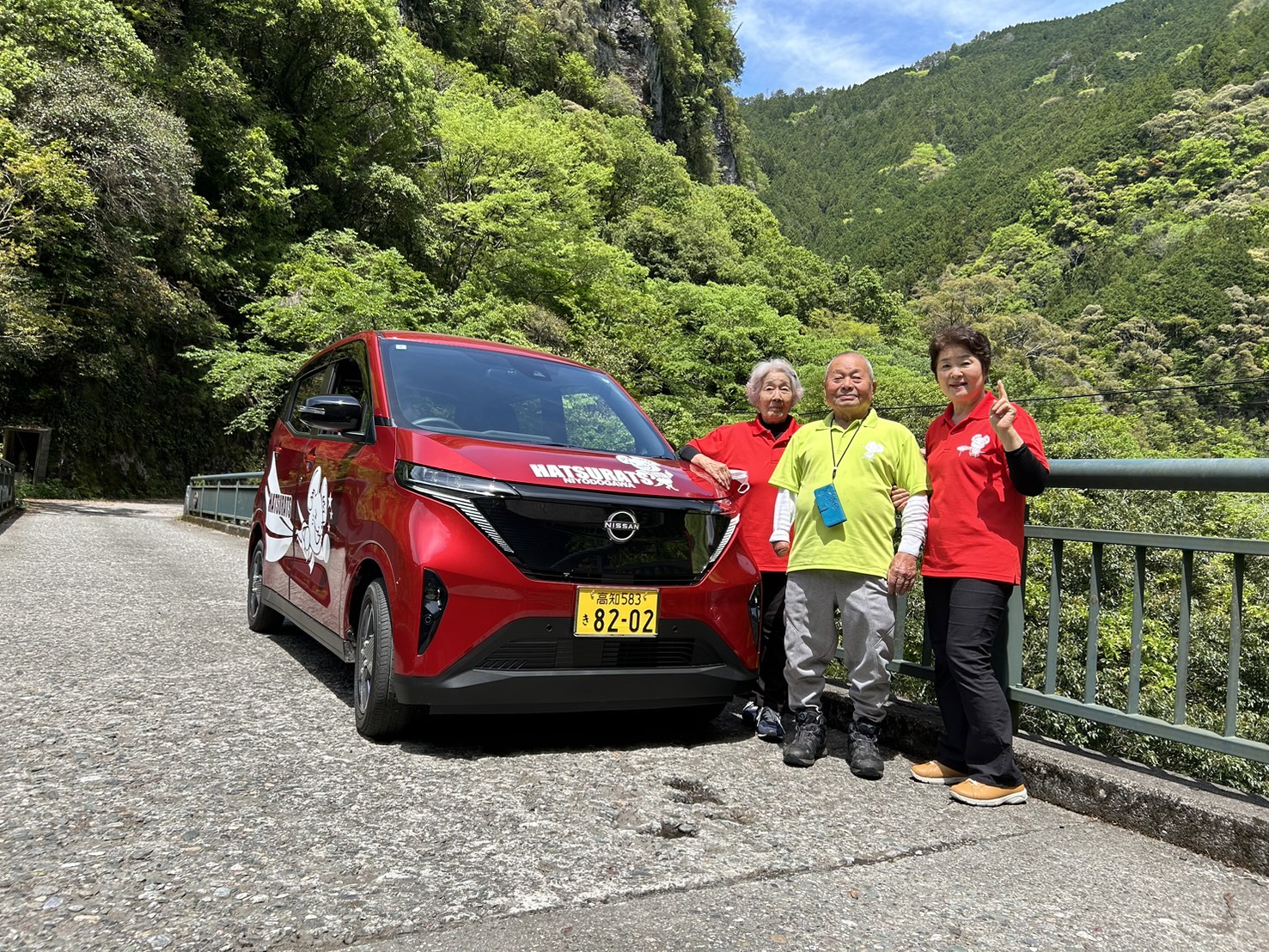
The ‘Sakura’ car is a community-shared electric vehicle service in use in Niyodogawa, Kochi Prefecture, Cross-ministerial Strategic Innovation Promotion Program (SIP)
A local non-profit organisation that had been running frailty prevention activities joined the effort, helping ensure that many elderly residents could access the electric vehicle service and, by default, their activities. This then led to the introduction of a shared small electric vehicle service sharing service that opened up new destinations for outings, encouraged social interactions, and fostered improvements in both physical and mental health. Notably, some seniors—previously only passive recipients of support because of this initiative—have now become active contributors and even service providers themselves, highlighting the transformative impact of this integrated approach.
A new approach
These examples demonstrate how small and medium-sized towns, as well as rural communities, can maintain sustainable mobility despite ageing populations and the disappearance of private transport services. Central to this effort is SIP’s 'mobility service redesign', which leverages all available mobility resources—including conventional buses, taxis, car-sharing, and shuttle vehicles—enhanced by digital technology.
Collaboration between government agencies, residents, and businesses ensures that these solutions are practical, sustainable, and adaptable to local needs.
Since 2020, Japan’s transport policies have supported various reforms in response to population decline, an ageing society, and the dwindling of private-sector passenger transport services in small and medium-sized, low-density cities. The SIP has contributed by providing guidance, expertise, and innovative strategies, helping communities implement effective mobility solutions.
The results have been encouraging: seniors regain independence, communities remain connected, and mobility services are now integrated with healthy promotion efforts. Combining these previously separate goals not only improves the physical and mental well-being of elderly residents, but also strengthens regional care policies, particularly in areas with limited medical resources.
Japan’s small towns are proving that, with creativity, technology, and cross-sector collaboration, mobility challenges do not have to lead to isolation. Instead, they can become an opportunity for innovation, community building, and a better quality of life for all.
Click here to read the article in its original format.
About the authors:
Fumihiko Nakamura, Project Professor, University of Tokyo, and Sub Program Director, the Development of Smart Mobility Platform under the cross-ministerial Strategic Innovation Promotion Program (SIP). Specialised in urban and transport planning, Nakamura has chaired and served on several Japanese government councils, including MLIT and METI. He is the Sub Program Director of the Cabinet Office’s SIP Smart Mobility Platform program, advancing ‘a society without mobility divides’.
Haruo Ishida, Professor Emeritus, University of Tsukuba, and Program Director, the Development of Smart Mobility Platform under the cross-ministerial Strategic Innovation Promotion Program (SIP). Dr Ishida specialises in transport planning, infrastructure, and national land policy. He has chaired multiple government councils, such as MLIT and the Digital Agency. He directs the Cabinet Office’s SIP Smart Mobility Platform program, promoting ‘a society without mobility divides’.
 SAND555UG, Shutterstock