Connecting Beyond Borders
North-Rhine Westphalia (NRW), Germany's most populous State and one of Europe’s key logistics hubs, sits at the heart of major national and European mobility networks. NRW’s State Secretary Viktor Haase shares the region’s ambitious plans to make sustainable transport a reality.
Interview with Viktor Haase, elaborated by Carlotta Inserra.
POLIS: North Rhine-Westphalia (NRW) is Germany’s most populous State and one of Europe’s key industrial and logistics regions. What are the Ministry’s top priorities for sustainable mobility today, and where do you see the greatest potential to accelerate change at a regional level?
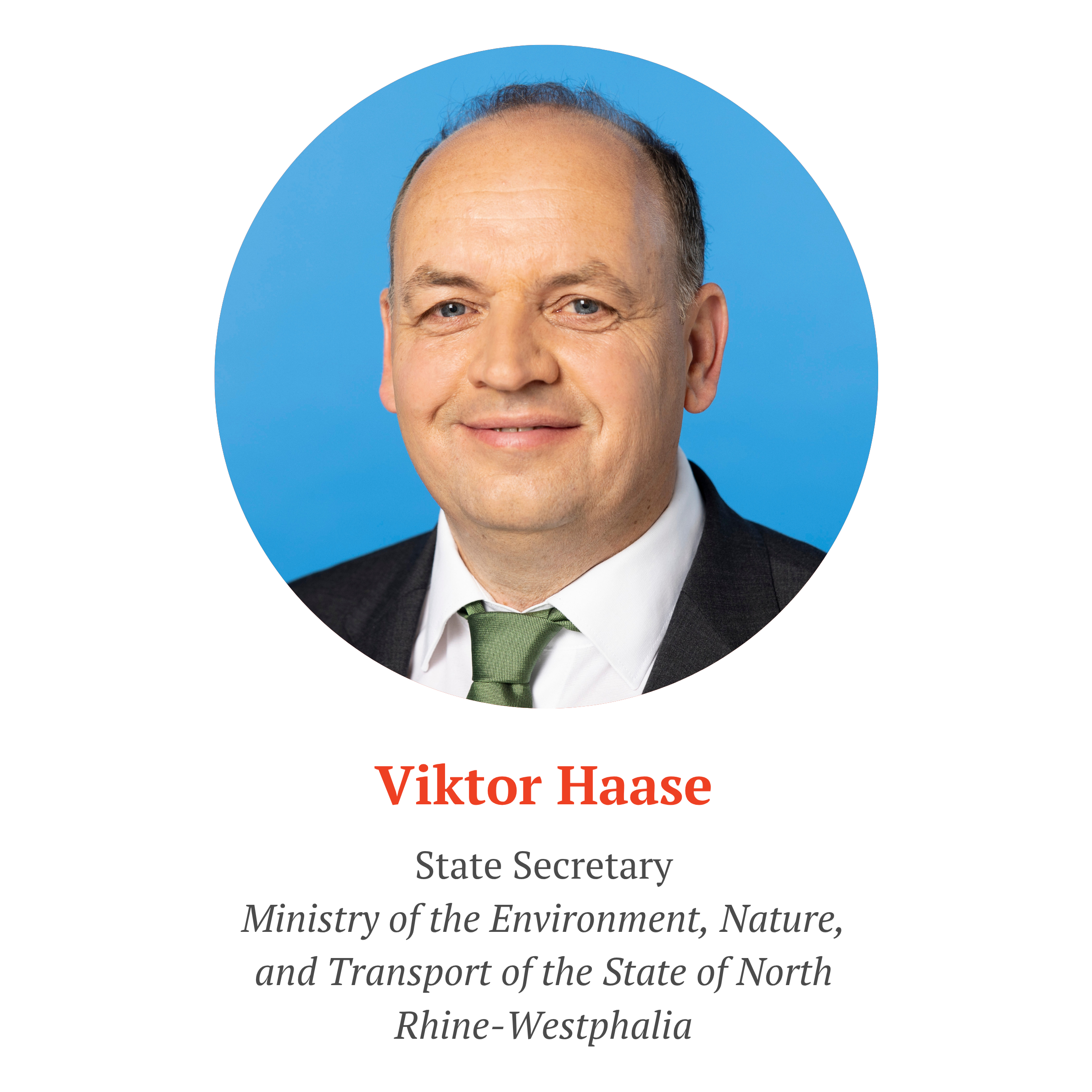 Viktor Haase: Our goal is to foster a mobility transition towards sustainable, climate-friendly, and connected transport that is also simple and accessible to all. Public transport and cycling are the backbone of this transition. Through network expansion measures, the reactivation of rail lines, and the introduction of new express bus services, we want to make public transport more efficient and reliable, with an overall aim to significantly increase its modal share by 2040. To facilitate this, a major structural step is currently underway: we are integrating the three existing transport associations into one organisation, to allow regional rail transport to be planned and delivered more efficiently in the future.
We are also investing heavily in cycling and in improving the connectivity of our services. Over five years, we plan to build 1,000 km of new cycle paths and aim to raise the modal share to 25%, while simultaneously expanding shared mobility schemes and integrating them into the fare system. To support these changes across the State, we have established Zukunftsnetz Mobilität NRW, a network for local authorities implementing mobility management. Regional cooperation, including across borders, is vital: mobility does not stop at administrative boundaries.
POLIS: NRW includes dense metropolitan centres alongside peri-urban and rural areas with very different mobility needs. How is the Ministry working to ensure that sustainable transport becomes a realistic everyday option across the whole State, and not only in the larger cities?
VH: With 27 cities recognised as urban nodes, some may consider NRW as one large metropolitan region. However, we also have rural areas with specific mobility challenges. Improving public transport and rail infrastructure is an essential aspect of meeting these challenges, with a focus on improving system efficiency, accessibility, and integration of different modes. Indeed, this also means improving everyday conditions for active travel and making it easier to switch between modes, whether in a city centre or in a smaller municipality. To achieve this, we are developing up to 1,000 mobility stations across the State, creating hubs that make it easier to combine different modes of transport and that are aligned with our mission to improve biking and walking infrastructure.
On-demand mobility services have also become increasingly important. That is why we are now funding new schemes and have launched a state-wide digital backend system to improve connectivity in underserved areas.
Digitalisation is another key pillar of our approach. In line with EU requirements on mobility data and accessibility standards, we are working to make mobility services more integrated and accessible—this effort is strongly supported by the Mobidrom, a newly established state-owned organisation that aggregates and provides mobility data on a non-discriminatory basis.
Making the system truly user-friendly also requires simpler ticketing. With the electronic fare system eezy.nrw, we have removed tariff barriers across the State, making public transport more seamless.
POLIS: NRW sits at the heart of several Trans-European Transport Network (TEN-T) corridors. How is the Ministry ensuring that TEN-T investments strengthen both long-distance connectivity and regional accessibility, including local rail and multimodal connections?
VH: NRW sits at the heart of Europe, and that is reflected in the TEN-T network, with two corridors running directly through our State. In Germany, the federal government is primarily responsible for long-distance rail, road, and inland waterways, and therefore for the core TEN-T infrastructure. However, we work closely with the federal level to ensure that corridor investments also deliver real benefits for NRW. This includes major projects such as the upgrade of the Betuwe rail line towards the Netherlands and improvements to navigation on the Rhine.
Our objective is to ensure long-distance, regional, and local mobility networks are fully aligned, providing seamless connections to our residents and boosting the efficiency of our economy. In this context, NRW’s urban nodes are becoming increasingly important. With more than one-third of all urban nodes in Germany, NRW is supporting significantly the development of Sustainable Urban Mobility Plans (SUMPs). Strengthening multimodal hubs for both passengers and goods enhances TEN-T corridors' efficiency while developing a more integrated and sustainable urban and regional mobility system. Ultimately, the success of TEN-T depends on strong local and regional implementation, and targeted EU funding under the next Multiannual Financial Framework will be crucial to make these ambitions real.
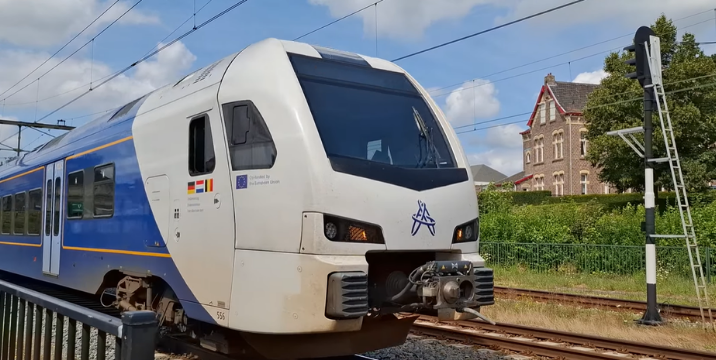
Three-Country Train on the line Aachen (Germany), Maastricht (Netherlands), and Liège (Belgium) — Credit: Jens Borgdorff, YouTube
POLIS: NRW has reinforced the long-standing cooperation with Dutch provinces and fellow POLIS members Gelderland, Noord-Brabant, Limburg, Overijssel, and Zuid-Holland in June 2025. What are the main priorities of this collaboration, and what improvements are already in motion for cross-border commuters and travellers?
VH: Cross-border mobility is part of everyday life in our region. People regularly commute, study, shop, and travel between NRW and the Netherlands. That is why we have been working closely with our Dutch neighbours for around 20 years through a structured cooperation framework known as Mobility NL-NRW.
This cooperation is built on a shared understanding of what needs to be improved and relies on a collaborative working environment, including dedicated working groups. Initially, our efforts focused on issues with a direct impact on daily cross-border mobility, such as improving cycling connections, strengthening public transport links, and developing digital solutions that make travelling easier.
Over time, however, the scope of this collaboration has expanded beyond regional mobility needs. Today, it also supports broader corridor development and contributes to the implementation of TEN-T regulation and SUMP requirements for urban nodes. Examples include the Three-Country-Train (Liège-Maastricht-Aachen-Express), the cross-border digital ticketing service easyConnect, and the cooperation on the Rhine Shipping Corridor, related to harbour development and multimodal freight hubs.
Looking ahead, our cooperation increasingly connects European policy and local implementation. This year, we initiated a work process on urban nodes and SUMPs with a cross-border conference in February 2026, bringing together all 53 urban nodes from NRW and the Netherlands. This event was a shining example of the importance of connecting European objectives with urban and regional mobility developments.
POLIS: As one of Europe’s largest logistics regions, NRW has a central role in the freight transition. How is the region working to decarbonise freight transport, particularly in shifting flows to rail and inland waterways, and accelerating zero-emission solutions for road freight?
VH: As one of Europe’s key logistics hubs, NRW is committed to transforming freight transport by strengthening climate-friendly rail and waterway modes. Through the initiative ’Prospects for sustainable inland navigation on the Rhine 2030’, in collaboration with around 100 partners on both sides of the border, we plan to boost inland waterway transport by modernising ports, targeting new markets, and accelerating the uptake of innovative propulsion and digital solutions. Concrete measures are planned for implementation by 2030.
Rail freight is another major focus. NRW is one of the most active federal states in this field, and we are investing strongly in infrastructure, particularly by promoting non-federal railways. Since 2018, we have invested around €50 million, supporting municipal rail freight companies through approximately 200 measures, ranging from improved track connections to stronger intermodal interfaces. To ensure that future investments are well-targeted, we are currently conducting a state-wide assessment of freight flows, capacities, infrastructure, and track connections. This will form the basis for further concrete measures to be taken.
At the same time, road freight remains essential, especially for last-mile delivery. That is why we are also supporting the shift towards electric trucks through investments in vehicle procurement and depot charging infrastructure. This contributes to our climate targets and offers opportunities for economic growth and competitiveness in the logistics sector.
POLIS: Being a new member, how do you see NRW positioning itself within European mobility discussions? Which areas are you most interested in learning from other cities and regions, and where can NRW take a leading role in sharing experience and shaping future solutions?
VH: POLIS offers a valuable platform for exchanging experience and learning from others, especially on topics such as integrated mobility planning, multimodal hubs, digitalisation, and the deployment of innovative public transport solutions. In return, NRW contributes its own experience, particularly in supporting local authorities through funding schemes and advisory programmes.
This is reflected in our close collaboration with neighbouring Dutch provinces, which are also fellow POLIS members, and highlights what can be achieved when regions work together towards a shared vision for sustainable mobility within existing governance frameworks.
Looking ahead, we also aim to support POLIS in strengthening the role of cities and regions in EU policy discussions. Debates on the next Multiannual Financial Framework show that urban and regional interests are often underrepresented, yet it is cities and regions that are expected to deliver many of the EU’s transport and climate objectives in practice.
For this reason, we see POLIS as a key platform to ensure that the role of urban nodes, the importance of SUMPs, and the need for adequate financial support are properly recognised. Our goal is to work with the POLIS community to ensure that European mobility policy is not only ambitious on paper, but also deliverable on the ground.
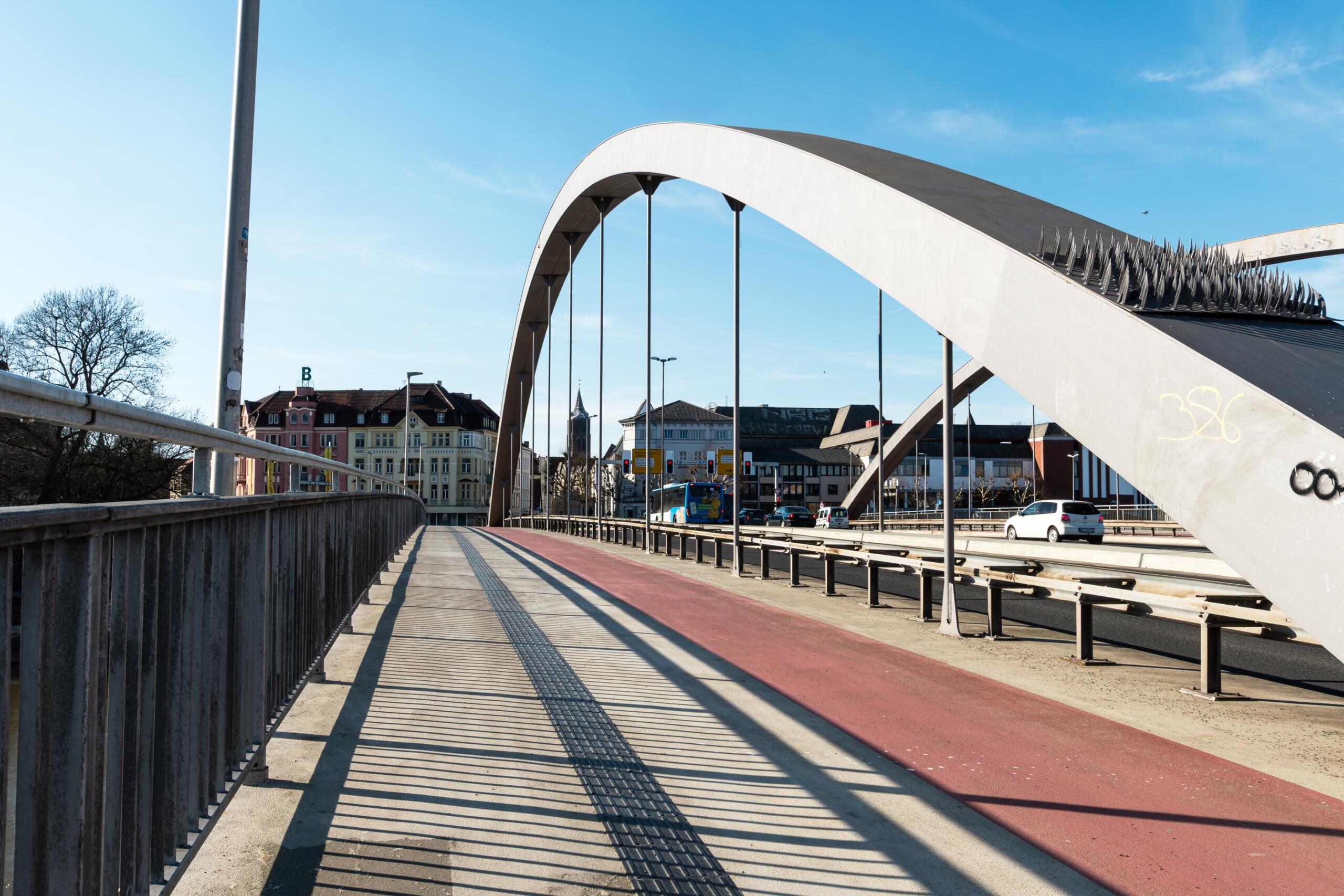
Pedestrian and bicycle path in Minden, NRW — Credit: Heidi Petrich, Shutterstock
Click here to read the article in its original format.
About the contributors:
Interviewee: Viktor Haase, State Secretary, Ministry of the Environment, Nature and Transport, State of North Rhine-Westphalia. Haase has served as State Secretary since 30 June 2022, when responsibilities for Transport and Environmental Protection were merged under the new government. As a biologist specialising in sustainability, he previously led the Department on Sustainable Development and Climate Change from 2014 to 2022.
Interviewer: Carlotta Inserra, Membership & Communications Manager, POLIS. Inserra is the main point of contact for the network’s expanding membership, where she oversees and supports members’ engagement and promotes POLIS’ Working Group activities. She also contributes to the Interreg SMALL project, where she channels her commitment to inclusive and accessible sustainable mobility for all.
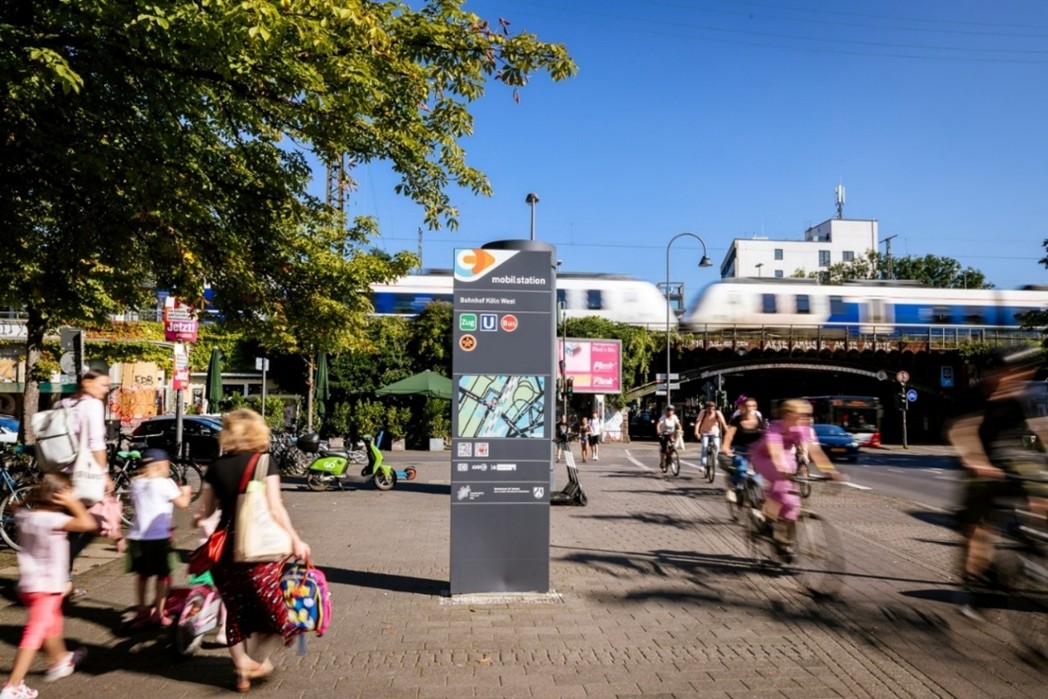 Credit: Smilla Dankert/Zukiunftsnetz Mobilität NRW