Bologna relaunches SUMP to accelerate metropolitan transport transition
POLIS member Bologna has approved an updated version of its Sustainable Urban Mobility Plan (SUMP), reinforcing its long-term strategy to deliver a more integrated and low-carbon transport system across the metropolitan area.
With the first tram lines set to begin operation in 2027, Bologna is preparing for a major transformation of its transport network. The Metropolitan City has approved a relaunch of its SUMP, marking the midpoint of the strategy first adopted in 2018 and focusing on the delivery of new projects and actions.
Rather than revising the plan itself, the new phase focuses on accelerating its implementation through a series of thematic studies and strategic actions. Covering all 55 municipalities of the metropolitan area, the initiative aims to improve mobility for more than one million residents while ensuring stronger links between the city, surrounding towns, and the Apennine area.
The relaunch will also support the development of the next public transport service contract and ensure that future mobility investments are aligned with wider objectives on urban regeneration and accessibility.
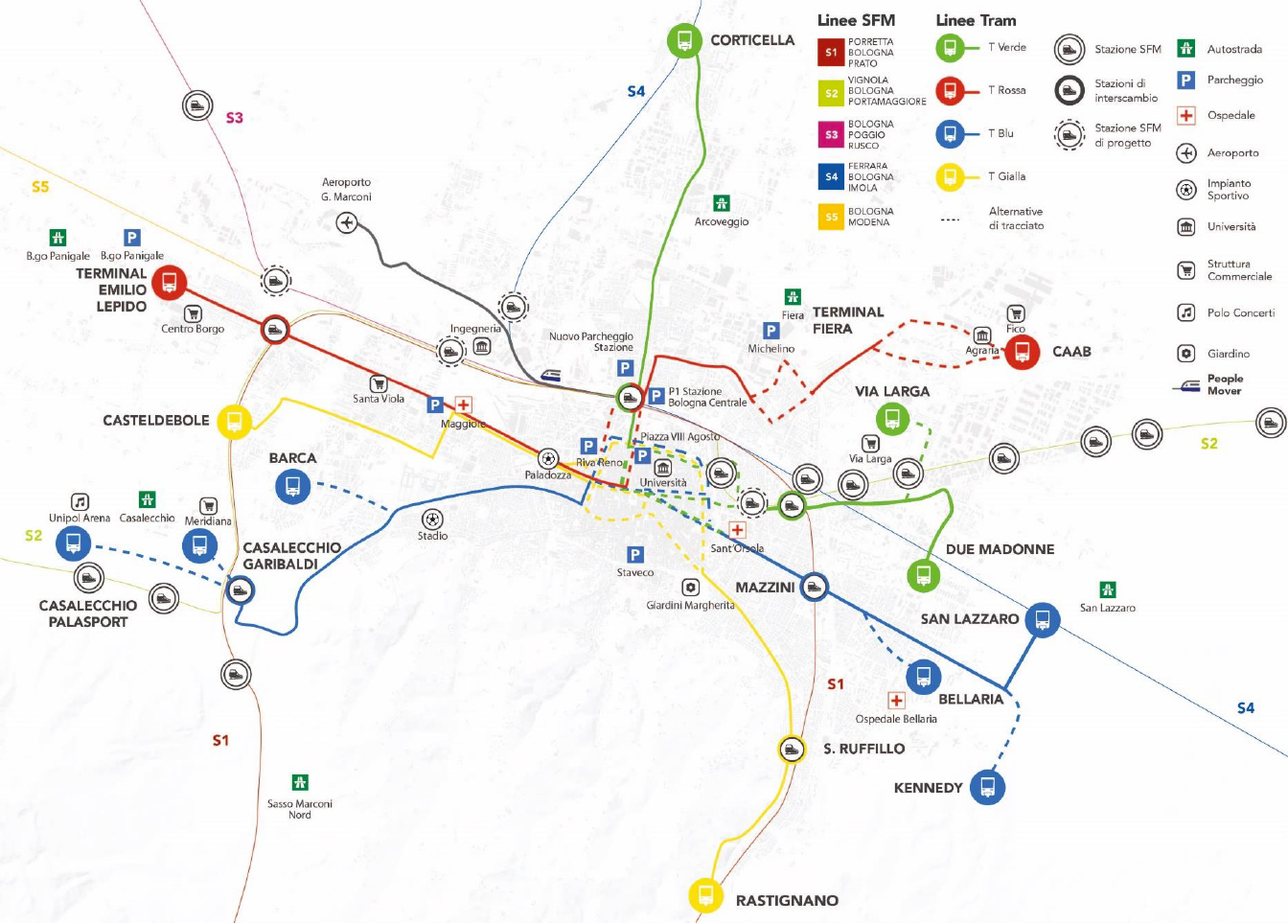
Bologna's public transport network map of metropolitan rail services and new tram system — Credit: Tram Bologna
Building an integrated public transport network
At the heart of the initiative is the reorganisation of the metropolitan public transport network around the new tram system. The new infrastructure will become the backbone of a wider network transformation, with bus services strengthened and redesigned to improve connections between urban areas, surrounding municipalities and more peripheral communities.
As part of this transition, Bologna has also approved the first strategic guidelines for the future tender of its public transport services, ahead of the expiry of the current contract in February 2028. The procedure, managed by SRM, the mobility agency for Bologna and its metropolitan area, will cover bus and tram services through a single metropolitan service package. According to the Metropolitan City, this approach will help improve coordination between different modes of transport, including timetable planning, fleet management, and infrastructure operations. The objective is to create a more integrated and efficient public transport system, fully aligned with the goals of the SUMP.
The future contract will also include Bologna’s parking management system, allowing transport and parking policies to work together through a combination of measures that encourage sustainable mobility while managing private car demand. This integrated approach aims to support intermodality and make public transport, cycling and shared mobility more attractive alternatives.
Expanding cycling connections
Active mobility is another key pillar of Bologna’s mobility transition. Alongside the development of the tram network, the metropolitan area is investing in cycling infrastructure as part of the wider Bicipolitana network and the updated Biciplan strategy.
One example is the ongoing construction of a new 10-kilometre section of the Sun Route. The new section will close an important gap in the metropolitan cycling network, improving connections between existing routes and supporting the completion of the EuroVelo 7 corridor across the region. The project, financed through Italy’s National Recovery and Resilience Plan (PNRR), is designed to support both everyday cycling, including commuting and local trips, and longer-distance cycling tourism. Once completed, it will strengthen the role of cycling as a practical mobility option within the metropolitan transport system.
Beyond cycling infrastructure, Bologna will also develop new guidance on traffic calming and safer street design, helping municipalities introduce more consistent approaches to reducing vehicle speeds and improving conditions for pedestrians and cyclists.
Planning for future mobility needs
The renewed SUMP implementation programme will be supported by a new Mobility Report analysing travel patterns across the metropolitan area and a Strategic Summary identifying priorities for the coming years. The work will focus on five main areas: metropolitan public transport, active mobility and shared public space, urban logistics, innovative mobility and automation, and integrated planning.
Urban freight will be one of the areas receiving further attention, with new guidelines aimed at improving last-mile delivery systems and reducing the environmental impact of urban logistics, particularly in response to the continued growth of e-commerce.
Bologna will also develop strategic guidance on automated transport, creating a framework to prepare the territory for future developments in connected and autonomous mobility for both passenger and freight transport.
The implementation of the next phase of the SUMP will be coordinated by the Metropolitan City of Bologna in cooperation with the Municipality of Bologna and SRM, with the involvement of local authorities and stakeholders through dedicated working groups. The programme is already financed through the Metropolitan City’s budget, with activities expected to conclude by spring 2027, coinciding with the introduction of the first tram services.