GREEN-LOG Policy Recommendations are now available to support cities transitioning to sustainable last-mile logistics
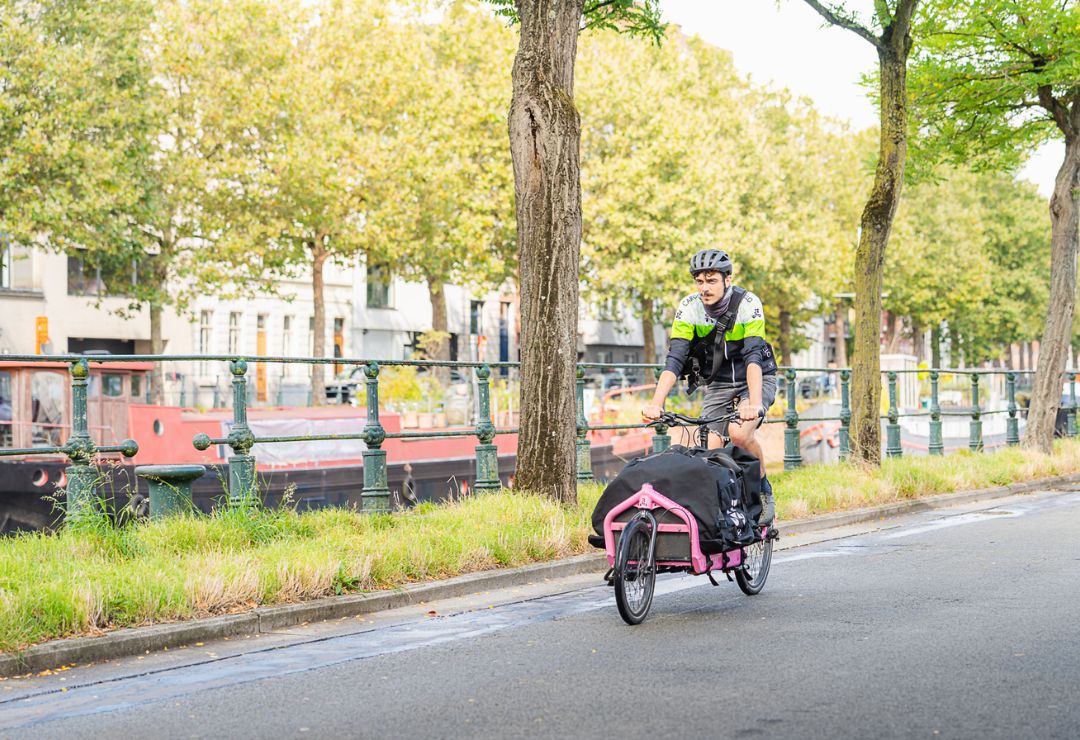
The GREEN-LOG project has published a Policy Recommendations brochure, bringing forward practical lessons from five Living Labs – including POLIS members Barcelona, Ghent, Leuven, and Mechelen - to help policy-makers accelerate the transition towards zero-emission and more collaborative last-mile logistics.
As cities seek to reduce emissions and improve the efficiency of urban freight, stronger cooperation between public authorities, logistics operators and citizens is becoming increasingly important. Over the past three years, GREEN-LOG has developed and tested innovative approaches to last-mile urban logistics through five Living Labs and simulation-based city logistics platforms in Athens, Barcelona, Flanders (Ghent, Leuven, and Mechelen), Oxfordshire, and Ispra, with Arad, Helsingborg and Valga participating as follower cities. By combining real-world demonstrations with advanced scenario modelling, the project explored how cities can design, test and validate sustainable last-mile delivery solutions that reduce environmental impacts while remaining operationally and financially viable.
The newly published GREEN-LOG Policy Recommendations brochure draws lessons from these experiences, with research-backed propositions, addressing the European Commission, national and regional policy-makers, local authorities, transport and logistics practitioners, logistics service providers and network organisations. Organised around five key themes, the document offers practical guidance for creating more sustainable, resilient and collaborative urban logistics systems.
Some of the key messages from the GREEN-LOG Policy Recommendations are:
- Building effective cooperation between cities and logistics service providers. Successful collaboration depends on flexible partnership models that reflect operational realities. GREEN-LOG found that allowing local authorities to select logistics partners closer to pilot implementation can improve engagement and adaptability, while established regional collaboration structures and regular coordination between stakeholders help ensure successful implementation.
- Improving data collection and data sharing. Better urban logistics requires better data, but cities and logistics operators often struggle to identify which data are needed and how they should be used. The recommendations call for greater harmonisation of data standards, clearer links between policy objectives and operational data, and trusted mechanisms for data sharing. The Athens Living Lab demonstrated that data anonymisation through the involvement of a neutral academic partner and clear cooperation agreements can enable competing logistics providers to share information without compromising commercial interests.
- Engaging consumers to support sustainable deliveries. Consumer behaviour can play a significant role in reducing the environmental impact of last-mile logistics. In the Flanders Living Lab, offering discounted delivery slots encouraged customers to choose consolidated delivery windows, reducing the number of delivery stops while improving operational efficiency. The results show that demand-side measures can support both sustainability goals and viable business models.
- Aligning policies across governance levels. Sustainable urban logistics requires more than successful pilot projects. Fragmented regulations and inconsistent local policies continue to create barriers for logistics operators. The recommendations encourage coordinated action across local, regional and European levels, combining incentives for cleaner fleets with long-term policy frameworks that support the transition to zero-emission logistics. Experiences from the Flanders Living Lab illustrate how measures such as low-emission zones, climate partnerships and urban logistics covenants can reinforce one another.
- Strengthening local innovation ecosystems. GREEN-LOG highlights the importance of Living Labs that bring together cities, research organisations and industry partners in a 'triple helix' approach. Across the GREEN-LOG demonstrations, intermediary organisations and academic partners played a crucial role in facilitating cooperation, improving data quality and ensuring robust impact assessments. These partnerships can be particularly valuable for smaller municipalities with limited technical capacity.
Together, these recommendations demonstrate that sustainable urban logistics depends not only on innovative technologies, but also on effective governance, trusted partnerships and active stakeholder engagement. By drawing on lessons from diverse urban contexts across Europe, GREEN-LOG provides practical guidance to help cities and policy-makers scale up collaborative, zero-emission last-mile delivery solutions.
Want to learn more? You can read the full GREEN-LOG Policy Recommendations brochure here.
- Related Projects
- Related Members