London’s releases second Vision Zero Action Plan
London is pushing the boundaries of what a city can achieve to make its streets truly safe. With the release of its second Vision Zero Action Plan, the capital is moving beyond early wins and confronting the deeper, systemic challenges of eliminating road danger entirely.
 Vision Zero is built on a single, uncompromising principle: no loss of life on the transport network is acceptable. In London, this commitment is formalised in the goal of eliminating all deaths and serious injuries by 2041. The new plan, developed by Transport for London in partnership with the police and local councils, lays out how the city intends to accelerate progress over the next five years, blending infrastructure redesign, enforcement, behavioural interventions, and vehicle standards into a coherent strategy.
The baseline for road casualties
Between 2010 and 2014, London established a baseline for road casualties, and by 2024, the number of people killed or seriously injured had fallen by 24%, equivalent to more than 1,100 fewer serious casualties in a single year. Looking at the decade since 2015, an estimated 262 deaths have been prevented, with annual fatalities dropping from an average of 136 in the early 2010s to just 95 in 2023 and provisional 2025 figures (the lowest recorded outside pandemic years).
Compared internationally, London’s improvements outpace those in New York City, Paris, and other major global cities, though the pace of change is slowing as the city reaches lower baseline risk levels.
Speed management comes with a slow (and well-earned) lesson
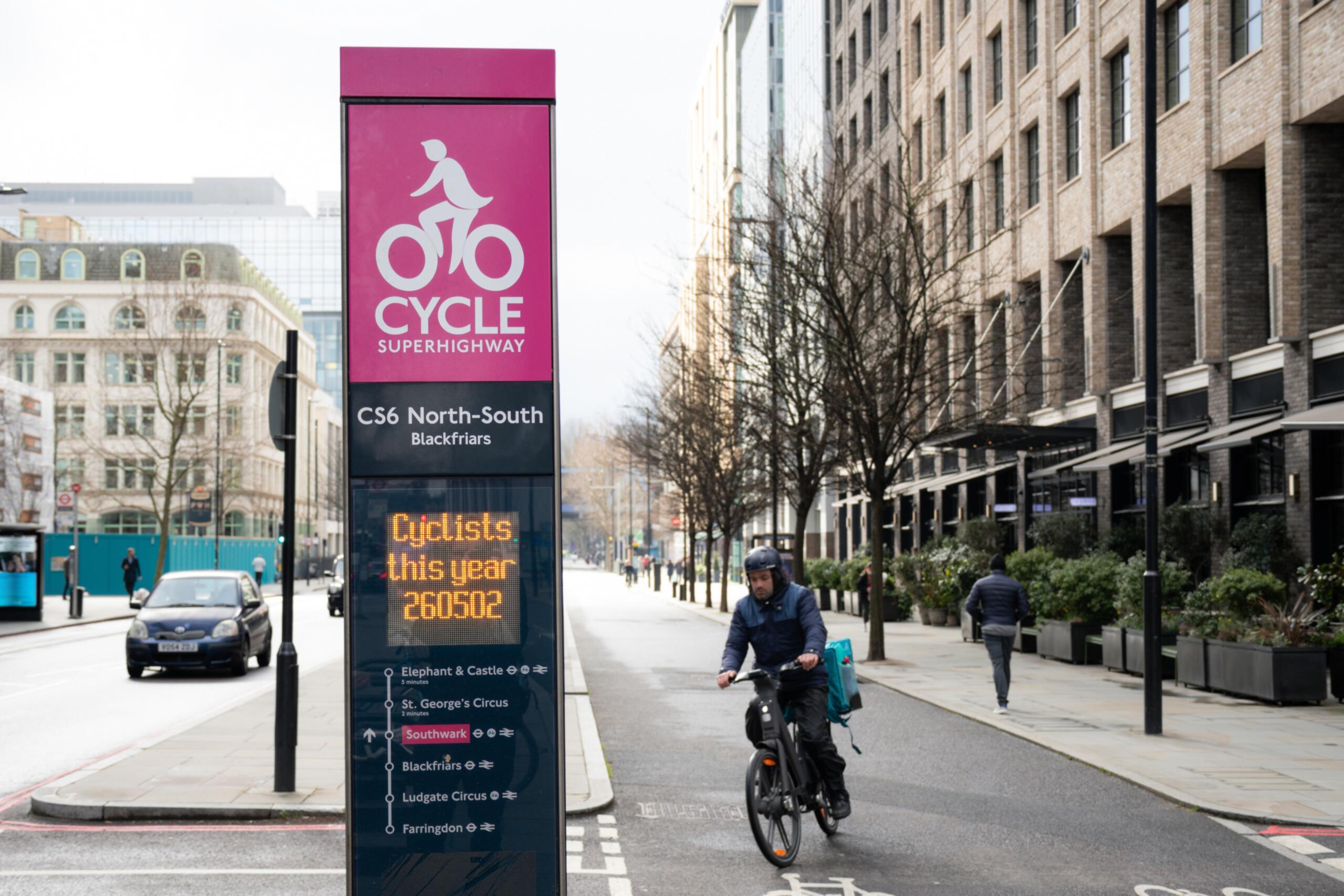
Cycle Superhighway in London — Credits: Henry Franklin
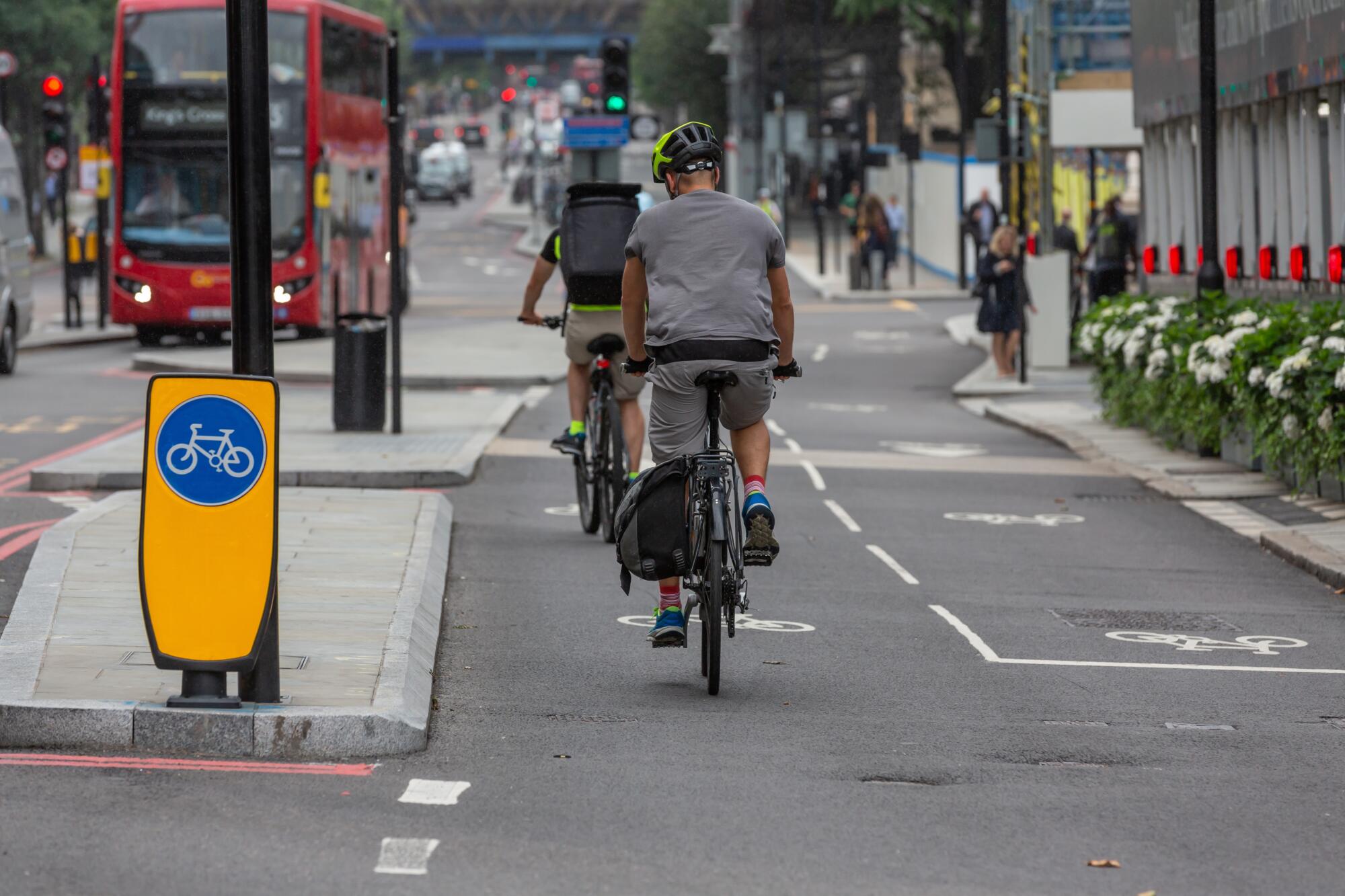
One of the clearest lessons from London’s data is the role of speed management. The introduction of 20 mph zones has reduced serious injuries on affected roads by 34%, and child casualties by as much as 50%. These measures, reinforced by expanded cycling infrastructure, which now spans roughly 430 km, supporting a 39% rise in cycling journeys, demonstrate that safer streets can coexist with greater mobility, creating conditions where risk and use evolve together.
Targeted interventions remain essential. Heavy goods vehicles historically contribute disproportionately to fatal collisions with vulnerable road users, and the introduction of the Direct Vision Standard has reduced related fatalities by an average of six per year. The new plan also addresses the 'fatal four' risk factors (speeding, distraction, impairment, and regulatory non-compliance) through expanded safety cameras and pilot AI systems to detect unsafe driving in real time.
Challenges that persist

An SUV in London — Credits: Marcus E Jones
Inequalities in risk, however, still persist. Pedestrians, cyclists, and motorcyclists remain disproportionately affected, particularly children and older adults in dense urban areas. London is responding with measures such as expanding School Streets to 1,000 schemes by 2030 and installing 1,000 new pedestrian crossings by 2031.
Emerging challenges, from the rise of SUVs to evolving behavioural risks linked to smartphones, show that the city’s work is far from done. The second Vision Zero plan integrates 43 actions into a single system, recognising that eliminating fatalities requires addressing complex, multi-factor incidents. It also aligns with broader mobility goals, aiming for 80% of trips to be on foot, by bike, or via public transport by 2041, linking safety to sustainable urban movement.