POLIS featured in new EU briefing on city networks and urban health
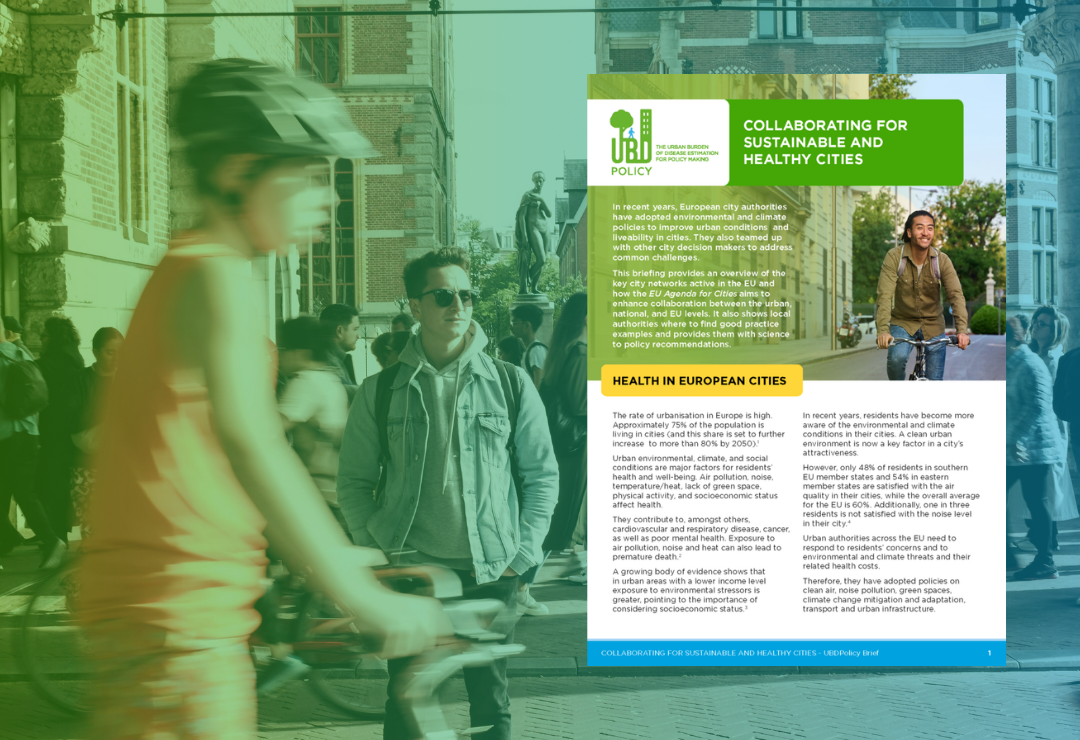
A new policy brief from the EU-funded UBDPolicy project highlights the role of European city networks in promoting healthier, more sustainable urban environments, and features POLIS as a key network supporting local action on sustainable mobility.
The briefing examines how the EU Agenda for Cities aims to strengthen collaboration between cities, national authorities, and the EU, providing guidance and resources to improve urban conditions and residents’ well-being (see our position on the matter here).
European cities are home to approximately 75% of the population, a share projected to rise above 80% by 2050, making urban areas particularly vulnerable to climate change. The UBDPolicy project tracks environmental, transport, and urban planning policies across nearly 1,000 cities, evaluating their impact on health outcomes such as air quality, noise, heat, green space access, and physical activity. The briefing highlights practical examples and science-based recommendations for local authorities, encouraging cities to join networks, adopt integrative planning approaches, and involve residents in policymaking.
The briefing also provides practical guidance for cities. It highlights Sustainable Urban Mobility Plans (SUMPs), climate city contracts, and other tools that support integrated planning across transport, environment, and health sectors. City networks featured include POLIS, the Covenant of Mayors for Climate and Energy, C40, Eurocities, and ICLEI, which offer peer support, knowledge exchange, and policy guidance. The EU Cities Portal, URBACT good practices, and city-level case studies show how authorities can implement effective climate and health policies, including low-emission zones, urban greening initiatives, and active mobility infrastructure.
POLIS is recognised for facilitating knowledge exchange on sustainable mobility and advocating for stronger involvement of cities and regions in policymaking at both national and EU levels. The briefing underscores the importance of integrated approaches, cross-sectoral collaboration, and resident engagement in delivering policies that improve urban liveability and health.