Leuven's self-driving shuttles put the city in Europe's mobility hall of fame
The Belgian city has been recognised for pioneering the deployment of autonomous shuttles in public transport. The award celebrates not only the technology itself, but Leuven's wider efforts to create a liveable, accessible, and sustainable city.
On 20 October 2026, POLIS member Leuven received the prestigious ITS Hall of Fame Award in the Local Government category for the Europe, Middle East, and Africa region, recognising its pioneering role in introducing autonomous shuttles into public transport. The distinction, awarded by ERTICO – ITS Europe, places Leuven alongside previous winners such as Barcelona and Tampere and highlights the city's growing reputation as a leader in urban mobility innovation.
Not just an award for autonomous shuttles
The award follows several years of work between the city and public transport operator De Lijn to move autonomous public transport from testing to everyday operation. Since September 2025, Leuven has been home to Belgium's first real-world deployment of autonomous public transport in complex urban traffic: two autonomous shuttles have been carrying passengers on Line 16 between Leuven Station and Heverlee, operating through the city centre and serving multiple stops. The project was developed in partnership with De Lijn and received support from EIT Urban Mobility and Interreg North West Europe.
But according to the city, the ITS Hall of Fame Award is about much more than self-driving vehicles. Rather, it recognises Leuven's broader approach to mobility innovation and its willingness to use new technologies to tackle urban challenges.
As Dirk Vansina, Leuven's Alderman, explained, the award is first and foremost 'a recognition of what we are achieving in Leuven together with De Lijn with the autonomous shuttles', while also reflecting what the city stands for, being 'open to new technology' and using it 'to make the city better'. For Leuven, autonomous mobility is not an end in itself, but a way of creating 'new possibilities for a liveable, accessible, and sustainable city'.
A broader vision for mobility
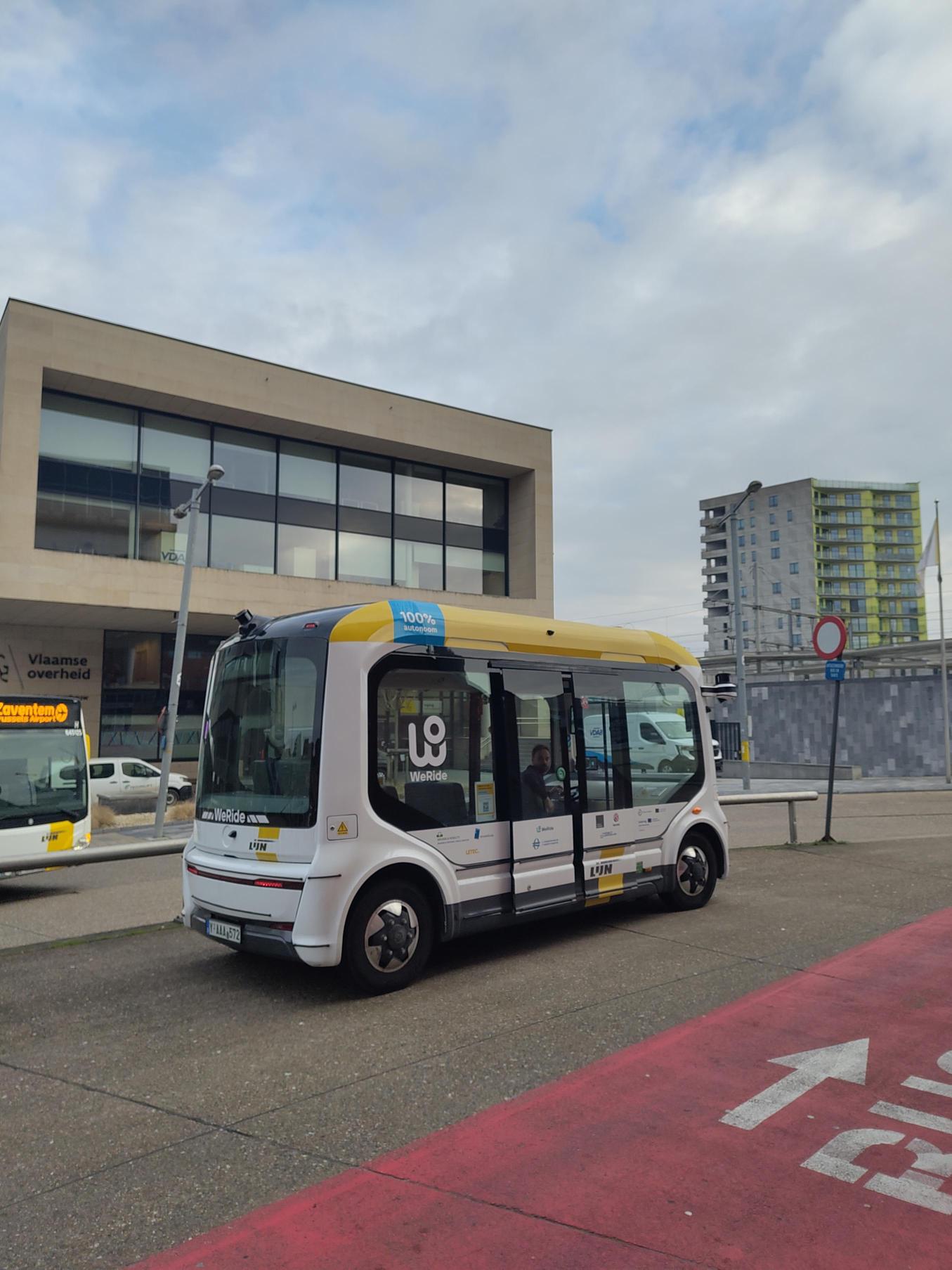
The Leuven autonomous shuttle bus — Credit: Alessia Giorgiutti
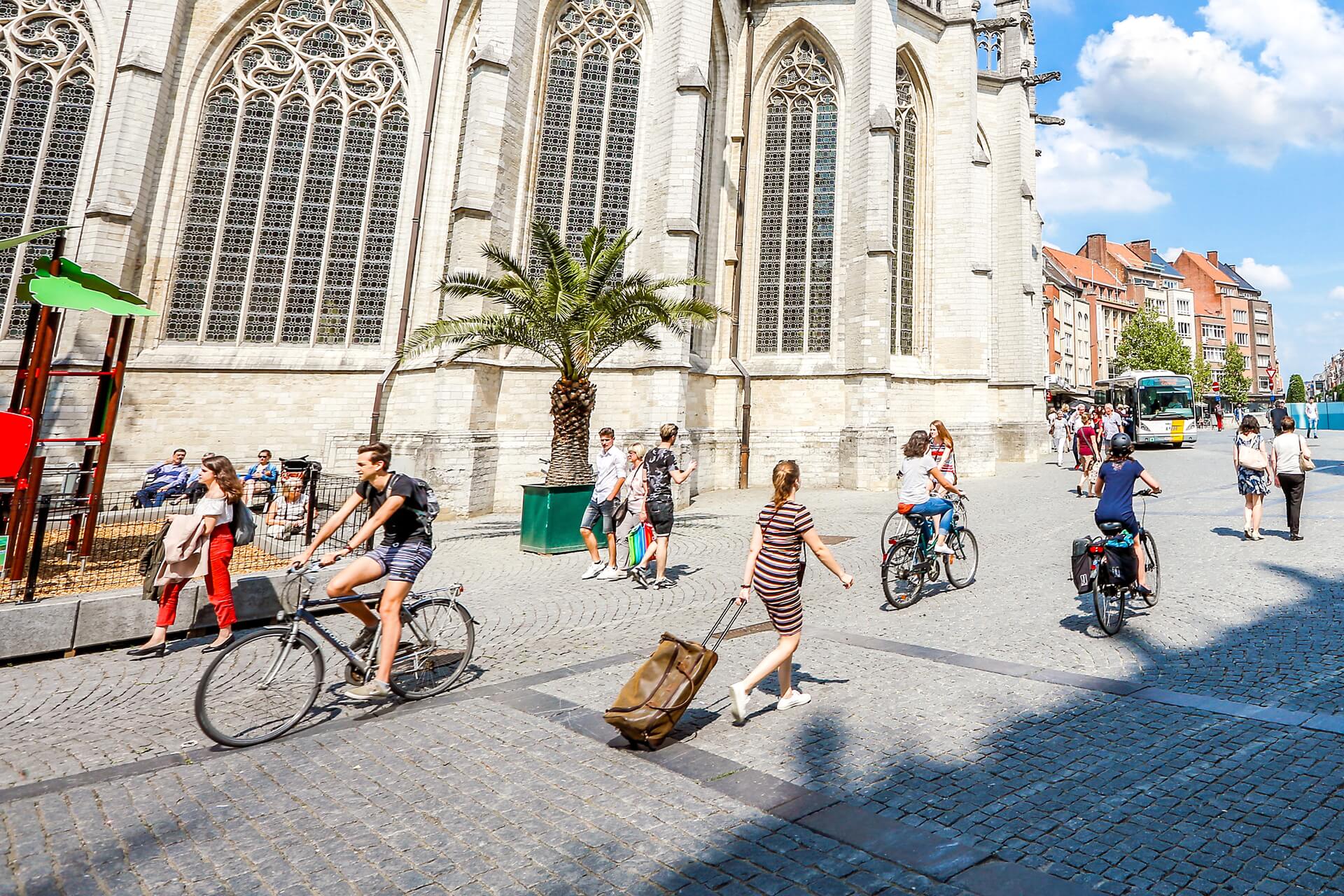
One reason Leuven stood out to the jury was its ability to integrate autonomous mobility into a wider transport strategy. The city combines investments in cycling infrastructure, strong public transport, data-driven mobility planning, and smart traffic management and has successfully registered a 25% reduction in transport-related CO₂ emissions thanks to its broader approach to sustainable mobility. In this approach, new technologies complement rather than compete with existing modes of transport. The autonomous shuttles are therefore not presented as a replacement for public transport but as part of a broader effort to give residents more travel options and make moving around the city easier without relying on a private car.
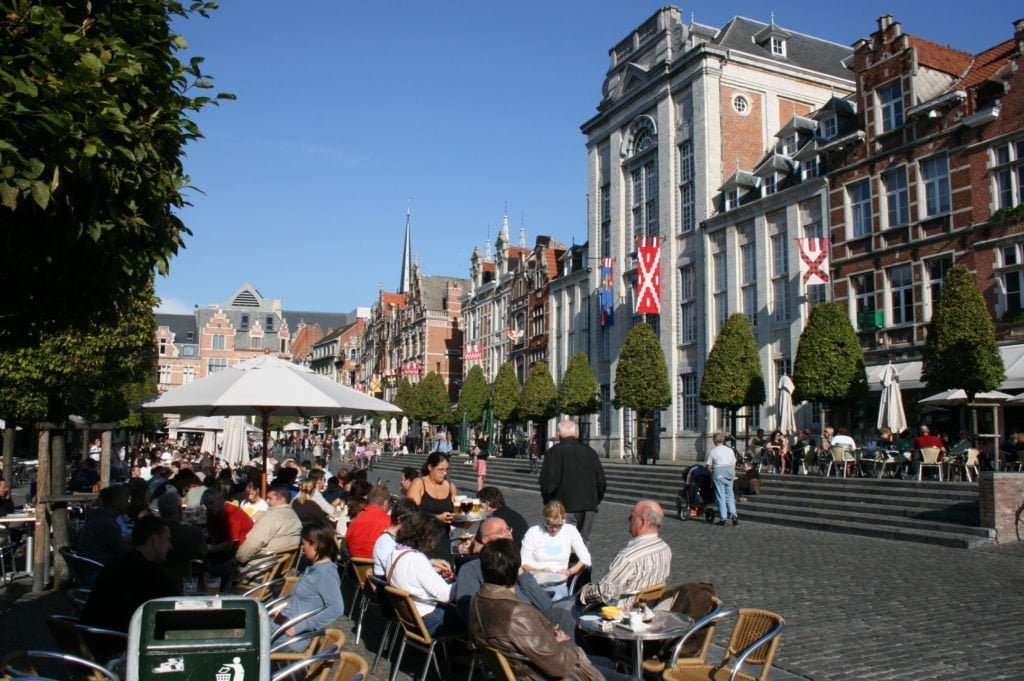
The recognition also reinforces Leuven's international reputation as an innovation hub. Home to organisations such as KU Leuven and imec, the city has long positioned itself as a place where research and new technologies are translated into practical solutions for urban challenges.
The autonomous shuttle project reflects this mindset. By testing new mobility solutions in real-world conditions, Leuven is seeking to understand how emerging technologies can contribute to the future of transport while delivering tangible benefits for residents today.
Recognition for a long-term ambition
For De Lijn, the award is also recognition of the partnership that has made the project possible. Ann Schoubs, Director-General of De Lijn, described the initiative as 'a precursor to the public transport of the future in Flanders.' She also highlighted the challenge of operating an autonomous public transport line in a busy student city and the close cooperation between the city and De Lijn that has enabled the project to progress.
While the autonomous shuttles may have captured international attention, the award ultimately recognises something broader: Leuven's willingness to experiment, collaborate, and integrate innovation into a long-term vision for sustainable urban mobility. In that sense, the ITS Hall of Fame Award is not only recognition of a successful pilot project, but recognition of the city's wider approach to shaping the future of transport.
- Related Members