
Flanders and Barcelona conclude a first demonstration of zero-emission logistics as part of the GREEN-LOG project
In June 2025, POLIS members Ghent, Leuven, Mechelen and Barcelona, complete a first round of demonstrations, as part of their activities in the Horizon Europe GREEN-LOG project, working on cooperative and interconnected green delivery solutions for optimised zero-emission last-mile logistics.
This achievement marks a significant milestone in the mission to advance sustainable urban logistics innovation by assessing the impact of zero-emission delivery solutions on logistics efficiency, sustainability, and stakeholder engagement. The demonstrations tested multiple innovative solutions tailored to each city's unique urban and peri-urban contexts, showing promising results in reducing emissions and improving delivery efficiency.
Innovative solutions demonstrate practical sustainability
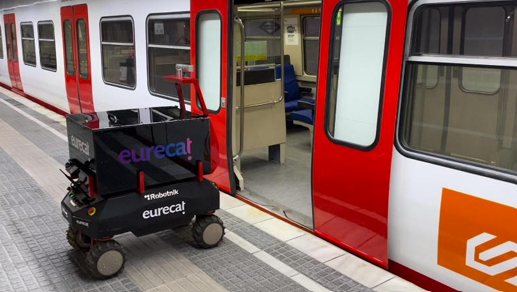
The first round of demonstrations implemented a variety of innovative logistics approaches and technologies developed by GREEN-LOG.The city of Barcelona focused on multimodal solutions that integrated public transport with cargo bikes, alongside testing autonomous delivery robots within railway station environments. The trials confirmed the operational viability of using trains to overcome geographical challenges and dependence on road vehicles, while the autonomous robot demonstrated reliable navigation capabilities in public transport .
Figure 1: An autonomous delivery robot in the Barcelona Demonstration. Credits:GREEN-LOG

In Flanders, Belgium, the city of Mechelen has developed a Logistics-as-a-Service (LaaS) platform, leading to a significant reduction in delivery tours (47%) through cargo consolidation. The platform successfully influenced consumer behaviour through dynamic pricing models, demonstrating how digital tools can drive sustainable delivery choices.
Environmental and operational benefits
Key environmental achievements include substantial CO₂ emissions reduction across all pilot cities. The Flanders pilot alone saved nearly 37kg of CO₂ and reduced NOx emissions by over 19g. ‘The results from the first round of pilot projects provide clear evidence of the effectiveness of GREEN-LOG’s approach in accelerating sustainable urban logistics through real-world implementation. Co-creation with local stakeholders to deliver systemic innovations in diverse urban environments is essential for achieving meaningful reductions in CO₂ emissions while maintaining or enhancing service quality,’ said Amalia Ntemou, Project Manager from the GREEN-LOG Coordination Team.
Stakeholder reception and future direction
The solutions demonstrated received positive feedback from end-users, including logistics operators and consumers. The users of the LaaS Marketplace platform in Flanders reported an average 69% increase in awareness of sustainable urban delivery solutions. ‘The identified challenges and feedback provided by stakeholders are being used to refine our use cases and further develop the GREEN-LOG solutions for the second round of demonstrations,’ added Panos Georgakis, Technical Manager for the project.
The second round of demonstrations will build on these initial insights, with refinements to simulation models, enhanced LaaS functionalities to improve user experience, and expanded consolidation efforts testing different policies through dynamic pricing and nudging models.
About GREEN-LOG
GREEN-LOG is a Horizon Europe project co-funded by the European Union, aiming to accelerate sustainable city logistics through the implementation of real-life solutions in multiple and heterogeneous last-mile delivery ecosystems. The project is centred around innovative co-creation in Living Labs across five European cities and areas: Athens (Greece), Barcelona (Spain), Flanders (Belgium), Oxfordshire (UK), and Ispra (Italy).
For more detailed information on these developments, please visit the GREEN-LOG website, or contact Cláudia Ribeiro or Elisa Gomez.
- Related Projects
- Related Members