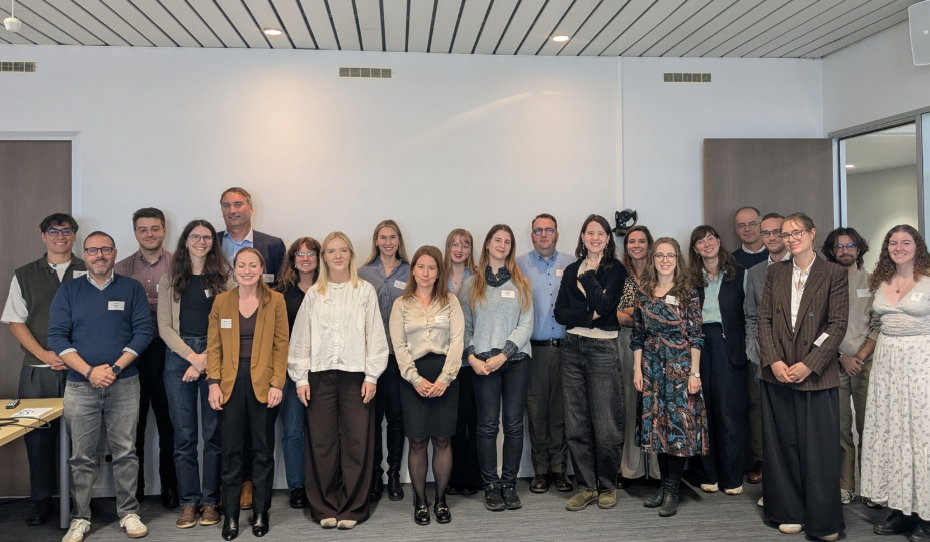
Brussels Bubble Band meets again to discuss EU mobility policy
In the latest Brussels Bubble Band, POLIS members' Brussels-based representatives came together to review the post-2027 budget, SUMPs, bus fleet decarbonisation, automation, and ETS2.
On October 8, POLIS hosted the autumn edition of the Brussels Bubble Band, where POLIS members' Brussels-based representatives spoke and compared notes on the latest in sustainable mobility policy.
The message running through the session was simple but powerful: sustainable urban mobility is essential for the Green Deal to succeed. Some European goals can only be reached at the regional level, and the cities, regions, and organisations working on them need to be treated as partners, not afterthoughts. The main ask? A mobility that is multimodal, affordable, and safe.
Shaping the next chapter of mobility
Members discussed several major EU mobility policy developments, with a strong focus on the next EU budget and future funding for sustainable transport. Participants welcomed efforts to strengthen support for urban transport hubs and stressed the importance of ensuring cities and regions play a central role in decisions on transport investment and planning.
The implementation of Sustainable Urban Mobility Plans (SUMPs) and new Urban Mobility Indicators was also highlighted, with members underlining the need for mobility planning that extends beyond municipal boundaries and reflects the realities of wider urban regions.
The transition to zero-emission bus fleets remained a key concern. While EU legislation is accelerating decarbonisation, participants pointed to ongoing challenges around affordability, manufacturing capacity, supply chains, and funding.
Discussions on automated mobility reinforced the importance of keeping cities at the centre of innovation and ensuring local and regional authorities are involved in shaping the deployment of connected and autonomous transport solutions.
The meeting concluded with an exchange on the Social Climate Fund and ETS2, focusing on how cities can help ensure the transition to cleaner transport remains fair and accessible. Members stressed that local and regional authorities must be closely involved in identifying vulnerable groups and developing measures to address transport poverty while supporting long-term decarbonisation.
A shared voice for Europe's cities and regions
The Brussels Bubble Band reinforced a message that resonated throughout the meeting: sustainable urban mobility is not a side issue, but a cornerstone of Europe's climate and competitiveness ambitions. From investment and planning to innovation and social inclusion, cities and regions will be instrumental in ensuring the transition delivers benefits for everyone.
POLIS will continue to bring together its members to exchange knowledge, coordinate positions, and ensure that the voice of cities and regions remains heard across the European mobility agenda.