
URBAN(E) Spark
Big ideas are not the preserve of large cities. Through the URBANE project, Mechelen and Karlsruhe are redefining what is possible in urban logistics—from autonomous deliveries to shared parcel networks. Their journey demonstrates how creativity and collaboration can transform everyday delivery challenges into cleaner, smarter, and more connected solutions, and spark a new era in sustainable logistics.
Interview with Roos Lowette and Thomas Benz, elaborated by Marina Martín Vilches.
POLIS: What role does your city play within the URBANE project?
 Thomas Benz (AEN/Karlsruhe): Karlsruhe serves as the Twinning Living Lab for Helsinki within the URBANE project. Both cities are exploring the use of autonomous robots for last-mile delivery solutions. However, while in Helsinki the robots handle the entire delivery process from origin to destination, Karlsruhe integrates its existing tram network into the system.
In our approach, the robots cover only the first and last segments of the journey—from the pickup point to the nearest tram stop, and from the exit stop to the final destination. This setup allows us to test how public transport infrastructure can be efficiently combined with autonomous delivery technologies to create a more sustainable and scalable urban logistics model.
 Roos Lowette (Mechelen): Mechelen participates in URBANE as a Follower City, observing and adapting insights from frontrunner cities such as Bologna to its own context. In Mechelen, parcel lockers are almost entirely operated by bpost, which has agreements with DHL and GLS.
However, interoperability is limited: DHL parcels are integrated into bpost’s network, while GLS can only deliver to larger lockers with screens—a restriction that limits impact in a city where many lockers lack screens. For a small- or medium-sized city (SMC) like Mechelen, this lack of open access is a structural barrier to achieving its ambition of zero emission city logistics, as it forces operators into door-to-door delivery, increasing traffic and emissions and slowing progress.
POLIS: So far, how has the project influenced sustainable logistics in your city?
Lowette (Mechelen): Through URBANE, we realised that open locker systems are no longer a technical barrier—the technology already exists and works well. The real challenge in Mechelen lies in developing a workable governance and business model: bringing together current locker owners and potential competitors, agreeing on shared access, and defining fair pricing arrangements. This insight has been crucial, as it shows that the obstacles are no longer technical but organisational and economic.
Benz (AEN/Karlsruhe): When it comes to Karlsruhe, the new delivery system is currently at the prototype stage and has not yet been implemented in regular operation. Nevertheless, the development and testing phase has already provided valuable insights into how autonomous delivery systems can interact with existing public transport infrastructure.
These early results help us understand the technical and logistical challenges of integrating such solutions into real urban environments and lay the groundwork for more sustainable and efficient delivery services in the future.
POLIS: What do you see as the biggest challenges for SMCs in developing and implementing innovations in this field? What actions could help address these challenges?
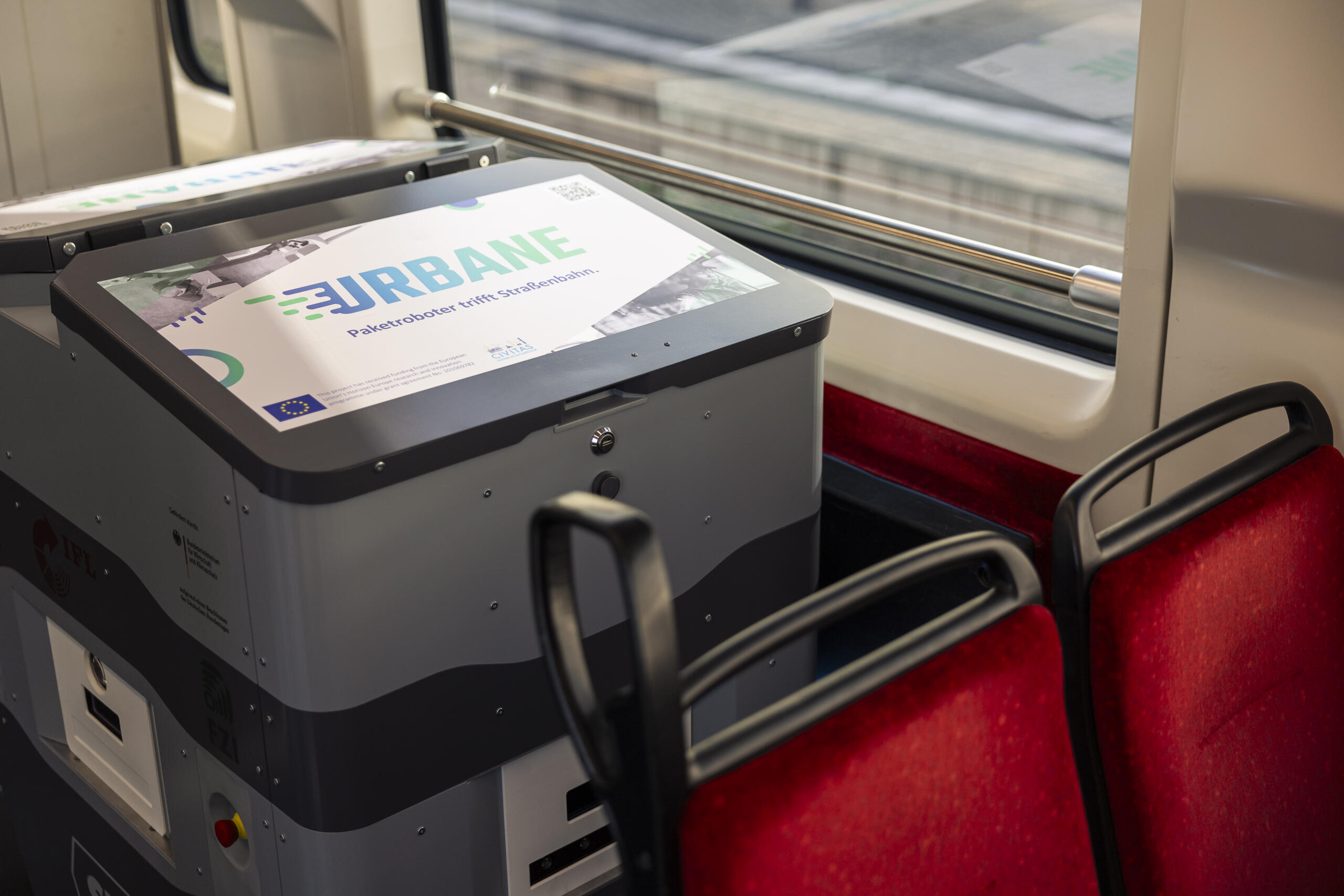
Autonomous delivery robot in the multifunction area of a tram in Karlsruhe, AEN/Paul Gärtner
Lowette (Mechelen): As a city, we are only a small player within a much larger system. Take open locker access, for example: a Belgian law already requires interoperability, but it is not enforced.
This leaves cities in a weak position: while we know that open lockers would reduce door-to-door transport for all operators and make urban logistics far more efficient, we cannot mandate it ourselves. Stronger action at the regional or federal level to require and enforce open access could be a real game-changer.
Benz (AEN/Karlsruhe): The main challenges are regulatory in nature. Passenger transport within public transport systems is governed by very strict rules and safety requirements. At present, these regulations do not permit the transport of goods within the same infrastructure. Only when the legal framework is adapted to allow goods transport alongside passengers will it be possible to implement such a service in regular operation.
Updating these regulations would open the door to new, more flexible, and sustainable logistics models that make better use of existing public transport capacity.
POLIS: What strengths do SMCs bring as demonstration cities in projects like URBANE?
Lowette (Mechelen): SMCs like Mechelen add value in two ways. On one hand, we can demonstrate the transferability of solutions piloted in larger cities, showing how they can be scaled down and adapted. On the other hand, our smaller size allows us to be faster and more agile in setting up pilot projects—sometimes even testing ideas before they are introduced in metropolitan areas. This flexibility makes SMCs powerful laboratories for innovation.
Benz (AEN/Karlsruhe): SMCs are, indeed, often more flexible and agile in testing and applying new systems and operational models than larger cities or companies.
Their manageable size, close cooperation between departments, and shorter decision-making processes make it easier to experiment, adapt, and learn quickly. This agility allows SMCs to act as effective living labs, where innovative concepts like those developed in URBANE can be implemented and evaluated under real-world conditions, providing valuable insights that can later be scaled up to larger urban contexts.
POLIS: What key lessons from this project could benefit other cities?

Bpost employee dropping off and picking up parcels in one of the parcel lockers in the city centre of Mechelen, Belgium, Kathy Goelen
Benz (AEN/Karlsruhe): Even highly futuristic systems can be developed and demonstrated within relatively short timeframes when partners work closely together. Moreover, our use cases have shown that these innovations can benefit the city beyond the technology itself. By enabling new types of services, such systems can help make urban areas more attractive and vibrant—not because of the technology itself, but because of the added value it creates for residents and businesses alike.
Lowette (Mechelen): For us, the main insight is that transfer requires translation: solutions must be adapted to the local scale, stakeholders, and culture!
POLIS: As a closing thought, what advice would you give other cities and transport operators for advancing sustainable logistics in SMCs?
Lowette (Mechelen): Follower cities can progress more quickly by learning from frontrunners and adapting solutions to suit their context. Start by testing ideas, demonstrate that they work, and then integrate them into the city’s policies.
That final step is crucial: without political backing, pilot projects remain isolated experiments with no lasting impact. Securing the support of city leadership and embedding successful initiatives is ultimately what makes the difference.
Benz (AEN/Karlsruhe): Stay creative and open-minded when developing new solutions! Cities and transport operators should not restrict themselves to small, incremental steps but instead think on a larger scale. Sustainable logistics demands bold ideas and a willingness to rethink established systems. By embracing innovation and collaboration, SMCs can take a leading role in shaping the future of urban mobility and logistics.
Click here to read the article in its original format.
About the contributors:
Interviewees: Roos Lowette, European Project Coordinator, City of Mechelen. Lowette has worked for the City of Mechelen since 2020, coordinating European-funded projects. These projects focus on two main areas: sustainable urban logistics and developing AI-based solutions to address mobility challenges.
Thomas Benz, Project Coordinator, AEN. Dr Benz holds a diploma in Mechanical Engineering and a PhD in Civil Engineering from Karlsruhe University (now KIT). With extensive experience at the intersection of vehicle and traffic engineering, particularly in Intelligent Transport Systems (ITS), he has held various roles at PTV in research, business development, and sales.
Interviewer: Marina Martín Vilches, Project & Communications Manager, & SMCs Platform Co-Coordinator, POLIS. Specialised in urban governance, Martín Vilches currently provides support for POLIS’ corporate communications with a focus on social media, works on electromobility projects, and co-leads the activities of POLIS’ Small and Medium-sized Cities Platform. She is passionate about active travel, inclusive mobility, and innovative governance approaches.
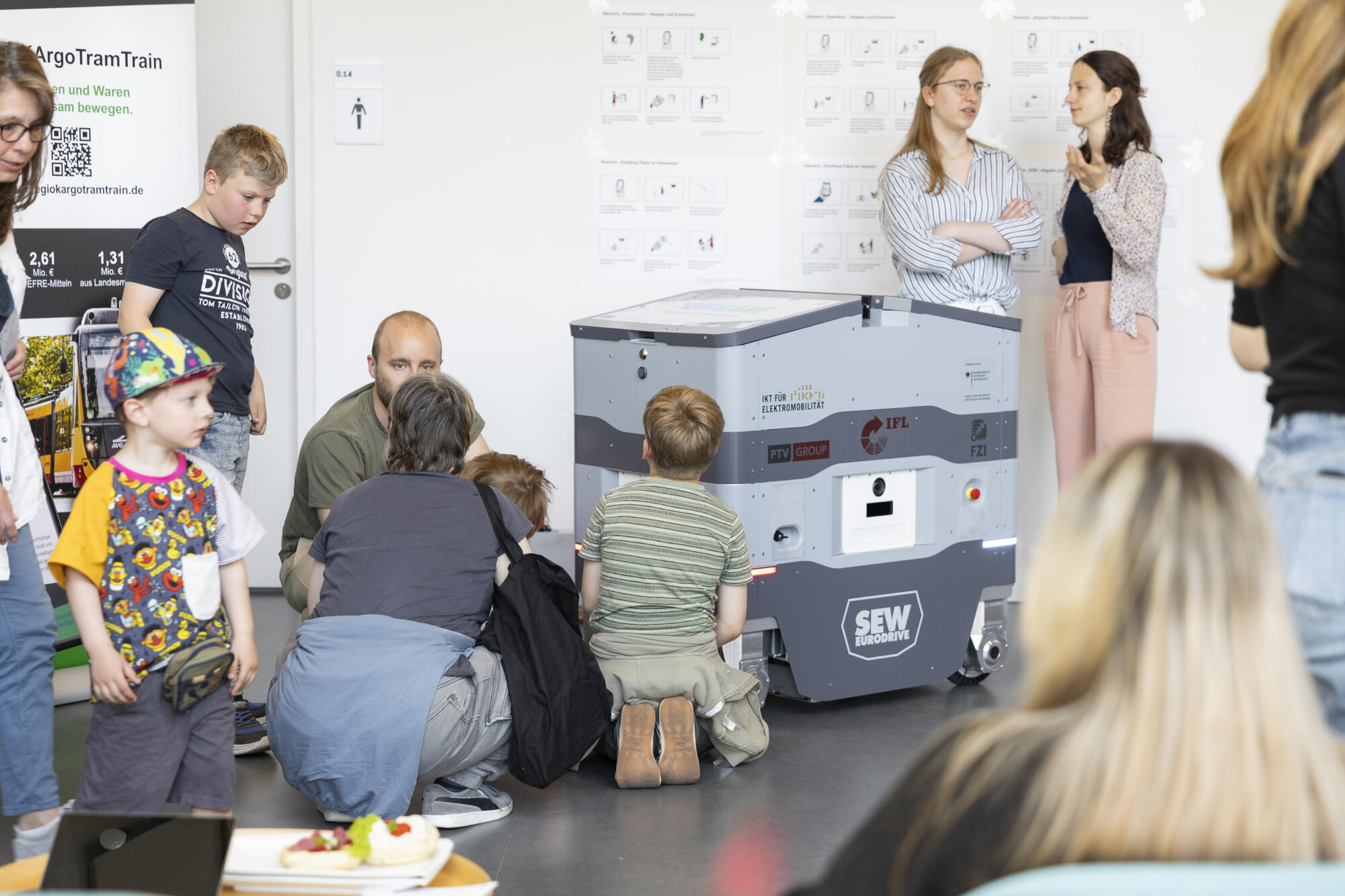 AEN/Paul Gärtner