
No Time Like the Present
In the last issue of Thinking Cities, Isobel Duxfield reflected on the state of gendered violence in our cities and the safety and security of women in public space and transport networks. Six months later and she is back, this time armed with a toolkit for action.
Study after study in almost every city across the globe echo the same findings. Harassment, particularly sexual harassment, is a significant concern for women using public transport, and one of the main factors deterring their use of transit services.
YouGov research revealed that over a third (39%) of Londoners have been subject to unwanted sexual behaviour while traveling on public transport, while Catalonia’s 2020 study put this figure nearer 65%.
Ensuring women’s security on public transport is no longer an issue on which cities and their operating partners can drag their feet. This is not just a question of basic human rights; women make up (more than) 50% of users, yet 40% avoid transit options out of fear of sexual harassment- twice as likely as men. Research in the UK forecasts the number of public transport users would increase by 10 per cent if passengers, especially women, felt safer. Put bluntly, if operators want to recoup dwindling profits and cities are serious about hitting modal shift targets, they need to systematically take sexual harassment seriously.
'We can no longer ignore demand for change, women everywhere are demanding action,' said Mandy Macgregor Head of Transport Policing and Community Safety at POLIS member Transport for London (TfL).
It is not just harassment of passengers which must be stamped out – employees are also victims. According to the International Transport Workers’ Federation (ITF), violence against transport workers is one of the leading factors limiting the attraction of transport jobs for women and hampering retention – especially for front-line positions in direct contact with the public.
Talk is cheap, but inaction is expensive
Tackling gender-based violence is a complex task. There is no quick fix to centuries of injustice and there is no denying the enormity of the mission ahead; however, this is no excuse for inertia, actions are available- and they work! From reporting mechanisms to infrastructural design adaptations, actions from our cities are proving that gender equality is not all podium promises, flowery academic prose and distant deadlines, it is direct and impactful operations which create immediate changes in women’s mobility.
To provide a flavour, here are a few items from the menu:
1. Data, data, data! You can't manage what you can't measure
Comprehending the prevalence and pattern of sexual harassment is the first step to a targeted and successful response.

Types of harassment experienced by women on public transport. Taken from Catalonia’s survey results, presented by Cristina Pou to POLIS’ Public Transport Lab Webinar - Credits: GenCat
Catalonia’s comprehensive survey of the prevalence of sexual harassment has been critical for the region’s ability to design a targeted response. By investigating the forms of harassment incurred, location of attacks (stations, vehicles, sidewalks, etc.), as well as in which transit systems (trains, buses, trams), the region was able to capture the magnitude and geography of harassment, while calibrating victims and bystanders’ responses.
'Our figures let us know how much work we still have to do to make women feel safe' said, Cristina Pou, Head of Road Public Transport for the Government of Catalonia, speaking at POLIS’ Public Transport Lab webinar discussing this issue.
This data driven approach has also been taken by the UK’s Rail Delivery Group, who built on the Women and Equalities report, British Transport Police data and their own national market research.
'We conducted a range of qualitative and quantitative surveys with passengers and employees, which revealed incidents of harassment and the ways women felt forced to modify their behaviour' said Sam Collins from the Group.
Keys to success?
- Design together: Catalonia’s survey was a collaboration between Barcelona Area Metropolitan Transport Authority (ATM), IERMB and GenCat– with extensive input from female employees. This enabled each stakeholder to bring in their unique insights and experiences.
- Learn from others: Contexts differ between cities – however, there is a growing body of research which cities can draw from to shape their own approach. TfL and the Rail Delivery Group both built on existing studies to develop their own data analysis.
- Share the data: Once collected, share it! Data on women’s safety on public transport is urgently required in many cities. Sharing approaches to data collection and lessons learned will be useful for others attempting to conduct their own data collection.
2. Reporting: Breaking the silence
The ability to report sexual harassment is essential for responding to not just individual incidents but understanding the extent of the issue across the transit network and identifying particular “pinch-points”.
At present, reporting mechanisms for victims in most cities are insufficient. According to Transport for London’s safety and security survey, 90% of victims were not reporting incidents to police.

Poster campaign highlighting sexual harassment at London's stations
- Credits: Rail Delivery Group
TFL’s campaign ‘Report it to Stop it’ exhibited how integrated and coordinated planning between transport operators, law enforcement and NGOs can raise awareness and improve victims’ confidence in reporting. The campaign was an initiative within the wider Project Guardian, which enhanced policing, investigation, and victim support in an effort to tackle harassment on public transport.
'The British transport Police did a fantastic job in making public transport a hostile place for offenders, and I recommend that other look at their approach when embarking on similar projects.'
Other cities have followed suit, with Quito’s 'Tell me Kiosks' and Mexico City’s Viajemos Seguras (We Women Travel Safe) initiative, providing spaces in stations to report violence.
Awareness of the wide spectrum of physical, verbal and emotional harassment is also critical. The Rail Delivery Group’s recent poster series defines the spectrum of harassment, encouraging passengers to speak out when experiencing it.
Keys to success?
- Communicate: TfL’s ‘Report it to Stop it’, exhibits the importance of good public engagement, with the media campaign viewed over 13 million times on YouTube.
- Collaboration: Efforts must unite law enforcement, transport operators and NGOs to create a coordinated, and sustained approach. TFL, the police service and the Rail Delivery Group have worked together to ensure reporting systems work effectively.
- Make sure the resources are there: Reporting mechanisms will only work when follow up actions from operators and authorities are in place. Therefore, they can only commence when all procedures are ready. Both Catalonia and TfL have been incredibly cautious to ensure this has been the case in Barcelona and London.
3. Training for staff and law enforcement: Getting the facts right
However, reporting processes must be coordinated with training for those responsible for responding.
The ability to tackle sexual harassment successfully requires expertise amongst the professionals involved. Knowledge of legal rights, procedures, ability to communicate with victims and establish dialogue are essential across the sector.
'This training is not just for a selection of employees, it must go right up to the top, creating a wholesale cultural change across the industry,' says Sam Collins.
This year, British Transport Police have almost tripled the number of officers who are specially trained to investigate sexual offences across England, Scotland and Wales and continue to complete plain clothed and uniformed patrols on the network. At the same time, gender-based training for technical and political staff involved in urban planning, mobility, housing, and the environment is built into Catalonia’s law.

British Transport Police have almost tripled the number of officers who are specially trained to investigate sexual offences across England, Scotland, and Wales - Credits: TheOtherKev, Pixabay
Dr Sian Lewis, who has published research on this issue as well as acted as an academic expert on the British Transport Police Sexual Offences Independent Advisory and Scrutiny Panel, echoes this.
'What is important is the training not only of the police, but of the front-line transport staff who are often the first to receive reports of harassment. These people are often the first person of 'authority' that a victim will see and speak to. If this is handled in a negative or complicated way, the report may never even make it to the police,' she says.
'An understanding of the trauma and the shock reaction when someone experiences assault is important to avoid questioning or revictimising someone – for example, freezing or remaining silent is both a physiological response and also a reaction to the social space in which it has happened (transit).'
Keys to success?
- Ensure everybody is on the same page: The information law enforcement and transport workers have on victims’ rights and reporting capacities should be the same, to avoid any conflicting information or gaps.
- Use experts: Utilising experts for training is critical to ensure the correct approaches and attitudes are developed.
- Train new employees: Front line staff should be trained from the outset to ensure they are competent in dealing with cases of harassment.
- Protect female employees too: The ITF toolkit provides a practical guide for implementing awareness training for gender-based violence and how incidents can better be recognised and confronted.
4. Infrastructural design: more than tinkering around the edges
For decades, the transport sector has been led and shaped by male decision makers, who often took “the average man” as the proper reference for their practices in planning, design, and management. This has systematically overlooked the needs and preferences of women, creating public transport infrastructure and services that not only fail to serve them properly, but can even subject them to high-risk environments.
While gender-based violence is part of a continuum of structural violence, interventions in the urban mobility landscape can have the capacity to prompt adaptions in behaviours.
However, this does not mean a hasty and random roll out of CCTV or female only train carriages; instead, it must be rooted in the needs and desires of female passengers.
So, what do women want? Well… Ask them! Some of the most successful approaches from cities including Vienna and Lisbon have conducted workshops and participatory walks, which allow women and girls to identify and communicate locations of concern and their suggestions for improvement.
Catalonia has published a comprehensive guide to designing and implementing participatory agendas which engages women (of all ages, races, backgrounds) across the process.
Keys to success?
- Co-design: Allow citizens to shape the design and location of public transport
- Infrastructure is only part of the solution: Recognising that action begins, not ends with changes in physical design of transit networks.
- Pilot projects first: Solutions are often the result of trial and error, gaging what passengers require, and how best to deliver solutions effectively. For example, The Barcelona Metropolitan Area (AMB) has been conducting a pilot test of intermediate on-demand stops for women on the NITBUS since March 2017 to establish the viability of such a scheme.
- Work with transport operators: Adapting transport services requires input from operators, therefore they must be engaged in the process.
5. Educate the masses
This is a harder one. Eradication of sexual harassment is but a pipedream without comprehensive education and bystander intervention programs, which address deep rooted sexism; violence begins far before women step onto a train.
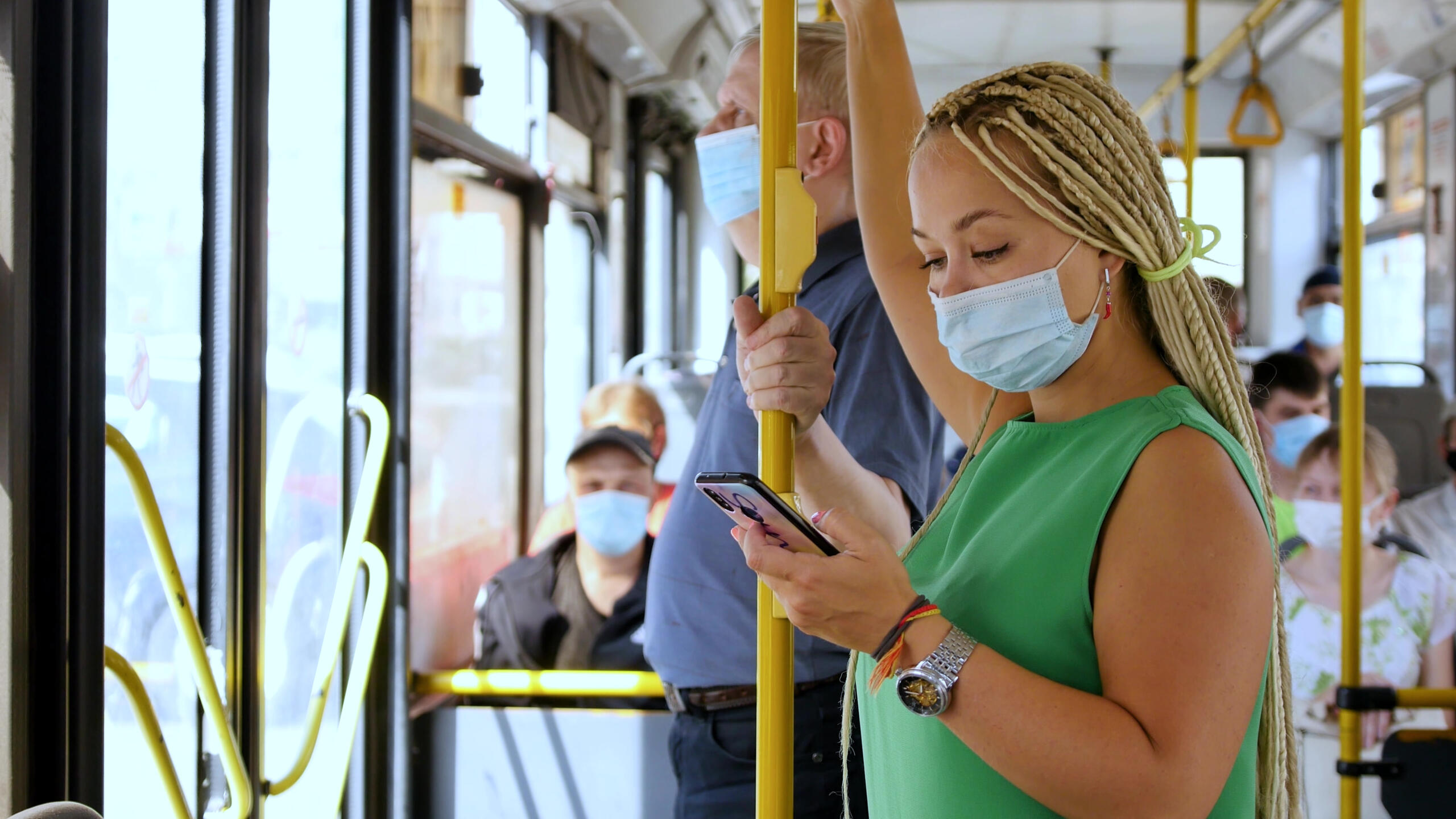
Woman travelling on public transport
- Credits: Ekaterina Byuksel, Shutterstock
While many operators may see such a task as beyond their remit, urban transit networks play a pivotal role. This requires collaboration between public authorities, schools, universities, and social services to continue to ensure gender equality is placed at the forefront of the curriculum.
Bystander intervention is a tangible in-road to public education on sexual violence prevention. A guiding principle of bystander education in interpersonal violence is to address audience members as active agents who can intervene to prevent and respond to sexual assault and violence- and has been found to effectively tackle sexual violence.
As a result, many bystander campaigns around the world, such as Stand Up and Not On My Bus, in Sri Lanka, have provided awareness and intervention training, while TfL runs educational sessions throughout the year in schools across London.
Keys to success?
- Education is ongoing: posters and social media campaigns (like those in London) are continually required to remind passengers what to look out for and their role in intervention.
- Training must be accessible: initiatives like Stand Up have made training virtual, and very easy to access for all.
- Create partnerships: education is often best delivered in spaces such as schools, universities and community groups; therefore, transport operators need to partner with these organisations to deliver lasting education.
____________________
POLIS gender perspectives in Mobility group
Through its working groups on Safety and Security, and Governance and Integration, POLIS has been coordinating cooperation on gender inclusive mobility planning. The cooperation brings together local authorities, private operators, and mobility experts for a pragmatic and methodical approach to building and sharing knowledge and best practices. We have discussed Sexual harassment, female leadership in the transport sector, data sharing- and more!
For more information on the group, please contact Pedro Homem de Gouveia.
____________________
Report it to Stop It
‘Report It To Stop It’ (RITSI) is a campaign implemented in London, UK, to tackle underreporting. RITSI aimed to encourage victims to report details of sexual harassment incidents to police and transit authorities through media campaigns. It was an initiative within the wider Project Guardian, an ongoing partnership commitment which involves a programme of activity including enhanced policing, investigation and victim support, communications.
Link: https://tfl.gov.uk/travel-information/safety/report-it-to-stop-it
____________________
Advice from Vienna
No exploration of gender and mobility would be complete without homage to Vienna. The Austrian capital – welcomed as a POLIS member last year – has been a frontrunner in gender-inclusive planning. Gender-specific aspects of urban planning were first addressed in the exhibition “Who owns Public Space – Women's Everyday Life in the City” in 1991, followed by the establishment of a Women's Office a year later, headed by Eva Kail, an urban planner who has become an instrumental figure in gender mainstreaming for city design and urban mobility. Eva shared her advice with POLIS, check it out here!
Vienna: The godmother of gender mainstreaming - POLIS Network
____________________
About the author
Isobel Duxfield was Communications and Membership Officer at POLIS Network.
 Credits: Pexels